
iCivics has partnered with the U.S. Department of Defense (DoD) to release a new online game that introduces students to the skills needed to engage responsibly in their local communities.
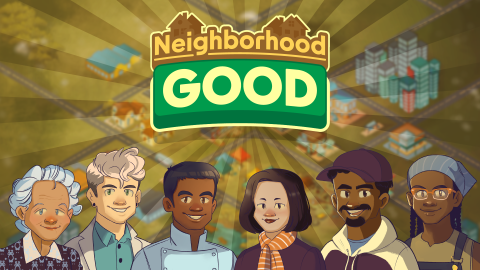
Neighborhood Good is a classroom game that invites players to learn about the issues impacting a fictional community and engage with community members in order to address those challenges.
While playing Neighborhood Good, students select a challenge facing their fictional community, such as access to fresh food deserts, resourcing of schools, limited access to healthcare providers, or food waste removal. The game directs players through the process of talking with other community members to understand the problems, identify possible solutions, and figure out what resources are available. Through these conversations, students develop a plan to address the issue and see if and how it works. Neighborhood Good allows students to build the muscle and capacity for civic engagement through making choices, receiving immediate feedback, and revising their community plans.
Designed primarily for middle and upper elementary school students, the game and accompanying educator resources are available for free at iCivics.org. Neighborhood Good has support for English and multilingual learners, as well as a full Spanish-language version.
“Neighborhood Good helps students build the skills and muscles needed to work together with their neighbors and fellow residents to fix everyday problems in a safe, nonpolitical environment,” said iCivics Chief Education Officer Emma Humphries. “We are grateful to our partners at the Department of Defense for their insight into the power of local involvement.”
iCivics developed the game in partnership with DoD STEM, the Department of Defense’s education and employment initiative to inspire, cultivate, and develop talent for the modern workforce. The game was funded as part of a through grant from the DoD to the iCivics’ Civics, Service, and Leadership (iCSL) program for students exploring careers in the military and public service.
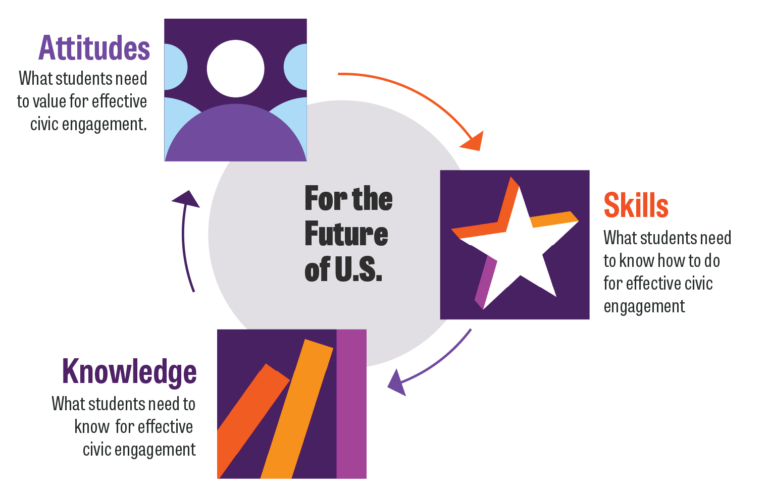
Through iCSL, iCivics is developing new resources, such as Neighborhood Good, and is working with teachers and students to approach civic education as an opportunity for building leadership skills and a service mindset. iCSL’s goal is to teach how the U.S. government works, and how to use that knowledge for the betterment of individuals and communities. The program also offers access to curriculum, a network of peers and master teachers, and professional development for educators.
The Department of Defense, through its National Defense Education Program (NDEP), has invested in civic education because it sees the lack of civic knowledge evident in the most recent NAEP Civics as a matter of national security, both internally and externally. It sees community involvement and volunteerism as key tools to combat these challenges.