
New Exploring Primary Sources Mini-Site Offers Free Primary Source Teaching Tools

New Exploring Primary Sources Mini-Site Offers Free Primary Source Teaching Tools

Primary sources get students closer to historical events and offer varying perspectives that spark inquiry, discussion and deeper learning. 

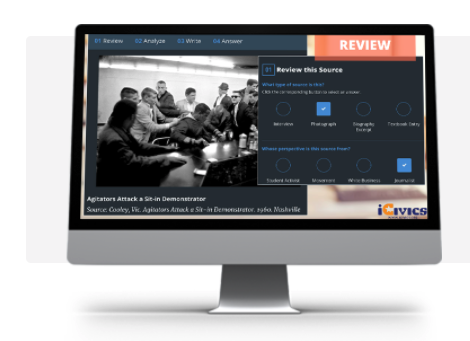
iCivics’ Exploring Primary Sources website, supported by a grant from the Library of Congress, is an exciting new resource for K–12 educators and their students. By using the website, you will:

  • Discover innovative, free products from iCivics and our partners that offer interactive, engaging learning experiences with primary sources
  • Build your knowledge, skills and confidence teaching with primary sources with our collection of professional development videos
  • Simplify lesson planning with this curated collection of high-quality primary source tools, including iCivics’ DBQuest, Eagle Eye Citizen, Engaging Congress, History’s Mysteries: Historical Inquiry for Elementary Classrooms, Journalism in Action, KidCitizen, and Voices for Suffrag

Primary sources take students beyond the textbook and help them see the past (and present) in new ways. We’re excited to help make primary sources more accessible to you and your students.

Explore more from the educator blog

Adam helps students extend the Constitution beyond the classroom

I’m the only teacher in Baltimore County Public Schools focused solely on Homeland Security. I sometimes describe the subject as “social studies with all the lessons coming from the last 30 years.” We mainly focus on the government response to threats – foreign, domestic, natural, and man-made. My classes are

Thank You, Educators!

Dear Educators, They say it’s cheesy to start a letter with a pun, but honestly? I think you all are just grate. 🧀 As we kick off Teacher Appreciation Week (May 4–8, 2026), we want to take a moment to pause and recognize the heart of our iCivics community: you!

Kennady starts hyper local to teach history to her students

I teach history as the story of people making choices and living with the consequences. But one of the biggest challenges I find in telling that story is apathy in the audience; students pick up the “why bother” attitude from wider culture. So I try to start local—hyper local, even—by