

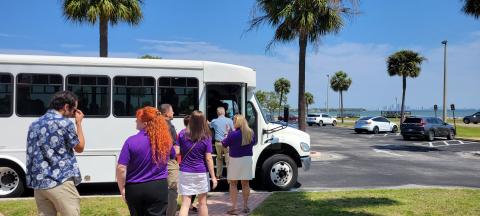
April is the Month of the Military Child. To honor our service members and their children, the iCivics: Civics, Service, and Leadership Program hosted an educator immersion day on MacDill Air Force Base in Tampa, FL in partnership with Blue Star Families and Hillsborough County Public Schools (HCPS).
MacDill Air Force Base is home to over 6,000 people, with an additional 20,000 coming to work on the base each day. The base is a world unto its own, but most military children attend school in the community through HCPS. Next week, MacDill will deploy about 200 service members, one of the largest deployments in recent years. This means a number of students will show up for school coping with that reality. The immersion day was an opportunity for iCSL educators to learn about the unique strengths and challenges our military-connected students and families face, so they might better support them in school.
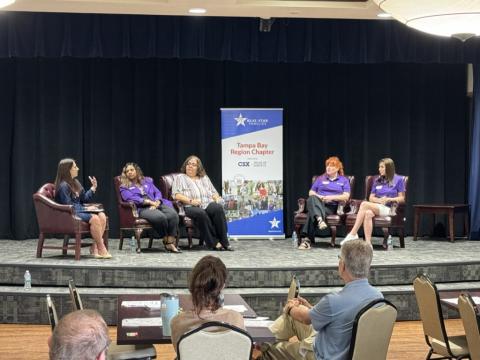
Teachers started the day with a panel discussion between military parents and school district staff. One parent shared that by the time her son was ready to graduate high school, they had moved 9 times. These transitions are one of the biggest challenges military-connected students face. Moving schools means integrating into a new school culture. It means that different state standards and requirements may delay academic progress. It means, as one parent shared, that key pieces to a child’s education–like learning the branches of government–can fall through the cracks. A parent’s deployment is equally challenging. Another panelist shared, “Deployment affects the whole family.” “Our children are deploying as well.”
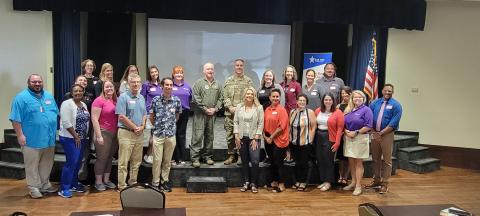
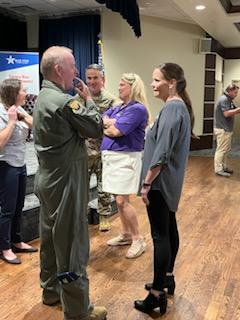
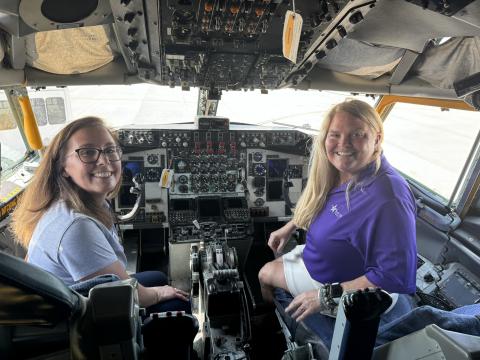
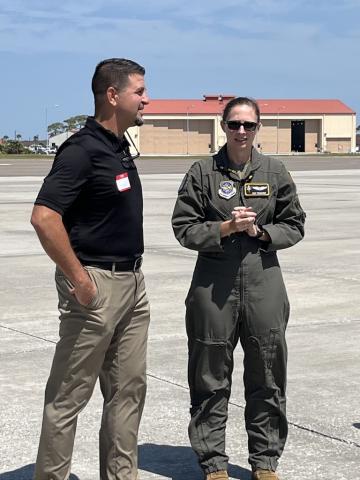
After the panel, our educators met Colonel Bingham, the base commander. They met Champa Boom, the base mascot. They toured the base. They talked with a young pilot and her crew. They walked the flight line and climbed into the cockpit of a KC-137. They learned that our military community, and the base itself, is a place full of opportunities for service members, civilians, and students. They gathered new resources and ideas for how to support military students when they return back to their school communities. We all learned that our military families, including the little ones, know and embody civic values and civic responsibility.
The goal of the day was to foster awareness across our military and school communities. Everyone left empowered and excited to keep building connections and opportunities on behalf of our students and civics education. It was a mission well accomplished!


Written by Frank Anderson
Frank Anderson is the director of special projects at iCivics and the program director for the Civics, Service, and Leadership program. Frank works with educators from across the country to connect them to civics education resources and to help students build a service mindset and leadership skills within the classroom. Before iCivics, Frank taught in alternative education in Baltimore and managed education programming for students involved with the juvenile justice system.
The Civics, Service, and Leadership (iCSL) program aims to prepare students exploring careers in military and public service with high-quality civic learning experiences that build critical thinking, media literacy, civility, civic knowledge and participation, and service. iCSL is sponsored by DoDSTEM, the National Defense Education Program.