
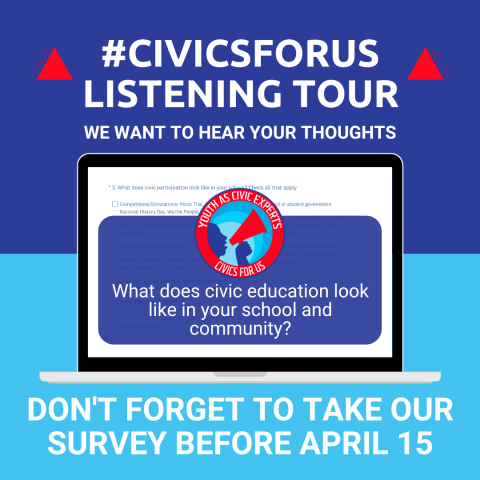
How do you define “civics” or “civic education”? The Equity in Civics Youth Fellowship is calling on all students across the country to help answer this question and provide insight into the current state of civic education.
The Equity in Civics Youth Fellowship launched the #CivicsForUS Listening Tour as an online survey open to all students in 6th grade through college. This anonymous survey will help our Youth Fellows learn more about what their peers across the country are experiencing regarding civic education. Fellows will use this data to continue highlighting the need for civic education that is equitable and relevant to all students in the United States.
“The Listening Tour will allow us to gather insight regarding the state of civic education in our country. We will be more informed on the similarities and differences within our communities and inspired with a sense of problem-solving as we strive to examine ways to make civics education equitable.” -Sophie Schmidt, Equity in Civics Youth Fellow from Mississippi.
Our Youth Fellows have been busy sharing this nationwide survey with their communities. So far, we have collected more than 300 responses from students across 29 states, Washington D.C, and Puerto Rico. However, we need your help to reach as many students as possible. The survey takes about 5 minutes to complete and will be open until April 15, 2022
As a former social studies teacher, I would encourage other educators to share this survey with their students. This survey will allow students to lend their unique voices to the conversation surrounding high-quality, equitable civic education. Our youth are important stakeholders in their civic education, and their experiences can help organizations like iCivics see what matters to students.
Whether you have your students complete the survey as a bellringer or encourage them to complete it outside of class, you will help our Youth Fellows learn more about the state of civic education across the nation and take the best steps toward achieving an equitable education.
Written by Michael Reyes
Born in Miami, Florida, Michael has nearly three years of teaching experience in his hometown. At iCivics, Michael manages the Equity in Civics Youth Fellowship and the Youth As Civics Experts Network. He supports our Youth Fellows in finding and using their voices towards their civic passion, a similar experience he went through in high school.