
New Exploring Primary Sources Mini-Site Offers Free Primary Source Teaching Tools

New Exploring Primary Sources Mini-Site Offers Free Primary Source Teaching Tools

Primary sources get students closer to historical events and offer varying perspectives that spark inquiry, discussion and deeper learning. 

iCivics’ Exploring Primary Sources website, supported by a grant from the Library of Congress, is an exciting new resource for K–12 educators and their students. By using the website, you will:

  • Discover innovative, free products from iCivics and our partners that offer interactive, engaging learning experiences with primary sources
  • Build your knowledge, skills and confidence teaching with primary sources with our collection of professional development videos
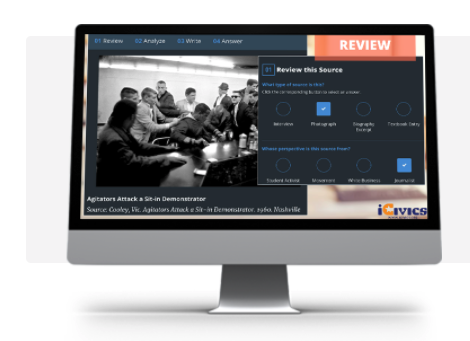
  • Simplify lesson planning with this curated collection of high-quality primary source tools, including iCivics’ DBQuest, Eagle Eye Citizen, Engaging Congress, History’s Mysteries: Historical Inquiry for Elementary Classrooms, Journalism in Action, KidCitizen, and Voices for Suffrag

Primary sources take students beyond the textbook and help them see the past (and present) in new ways. We’re excited to help make primary sources more accessible to you and your students.

Explore more from the educator blog

We Can Teach Hard Things, like Foreign Policy

Note: This blog post covers the concept of foreign policy, both from a traditional perspective and a current event standpoint, in response to U.S. military operations in Venezuela. On the morning of January 4, 2026 — about 36 hours after U.S. forces launched airstrikes and ground operations in Venezuela, resulting

Jennifer expands civic education beyond her classroom with Civic Star Challenge

Election Day provides one of the most authentic learning opportunities of the year. But what if it wasn’t just a single Tuesday in November? What if Election Day were every Tuesday, all year round? Through iCivics, I discovered On Tuesday We Vote, a biweekly initiative that invites students to engage

Community and Empathy: Supporting Students Through Difficult Conversations

Teaching American History and Government leads to many difficult conversations with students and families. One of my favorite emotionally difficult topics to teach is the Civil Rights Movement of the 1960s. This tense time, rife with conflict and blatant racism, can bring up very strong emotions for middle school students