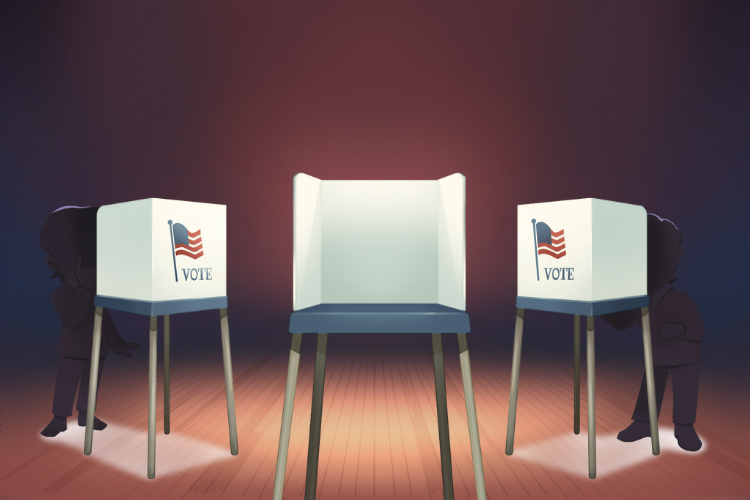


My main drive as an educator is to teach literacy as a way of understanding the world. My focus is not just reading and writing, but building literacy in how students navigate the internet, politics, and the world around them. It’s about vetting sources, understanding if what you’re reading is biased, and extrapolating from it meaning that can apply elsewhere.
The Civic Star Challenge speaks to those same goals. Literature always has a historical context, and it’s crucial for understanding the meaning of a text. Today, we’re bombarded with information every day. How do you decide what is relevant and actionable? This decision-making is at the heart of civic engagement.
Visual literacy is an element of the AP English test. And one of my favorite lessons in my AP seminar and research classes is around identifying patriotism and nationalism in visual media. We start by defining both terms in class. It’s often an unexpected challenge for the students: as one recently said, “I’ve never thought of those two things as being different.” And I thought, “Oh, you’re getting the lesson before I take you there! You’re doing it yourself!”
Then we turn to Merriam-Webster, where the differences are much more stark:
patriotism: love for or devotion to one’s country
nationalism: an ideology that elevates one nation or nationality above all others and that places primary emphasis on promotion of its culture and interests as opposed to those of other nations, nationalities, or supranational groups
Now the students are tasked with finding examples of both patriotism and nationalism in the media – and with finding examples that demonstrate the differences between the two. We look at 50 images together and analyze them, from WWII political cartoons to t-shirts sold at Walmart. Sometimes the line is really clear. It can manifest as xenophobia or isolationism in a racist post. But other times, it’s subtler and harder to define – like using the flag for marketing products and services that have nothing to do with being a patriot. This iconography is powerful and effective because it’s so deeply connected to our love of country. But as one student said, “They’ll turn anything into a flag! Is this patriotism or is it just pandering?”
Right now, disagreeing with politicians can be seen as unpatriotic. I believe patriotism is about loving your country so much that you are willing to work to make it better, even when that work is unpopular. Most of my students are 18 years old, finally able to vote and make other decisions about how they want to live their lives. I want them to know that there are many ways to be a patriot. As I often tell them, “You can plant trees under which shade you will never sit. Planting the trees for the next people – that’s what it means to be a good person and a good American.”
About Sam
- Teaching experience: 14 years
- Currently teaching: American Government, State & Local Government, Introduction to Political Science (all dual enrollment); African American Studies.
A recipient of the 2018 James Madison Fellowship for Colorado, Sam utilizes her Master’s degree in Political Science, teaching primarily 11th and 12th grade students the significance of civics, civic engagement, and the importance of making connections in the community.