We Can Teach Hard Things, Like Executive Powers

The executive Power shall be vested in a President of the United States of America.

—The Constitution of the United States. Art. II Sect. 1 cl. 1

Teaching executive power can be daunting in any political climate. Its scope is contested, oftentimes along political lines, and the Constitution offers minimal explicit guidance. Moreover, the powers of the President have evolved—mostly by expanding—throughout history, rendering the office almost unrecognizable from the office of the 1800s and even into the 20th century.

While the powers of Congress are explicitly stated (with the exception of clause 18), presidential powers are not. In outlining the legislative branch, the Founders drew on examples of citizen councils and representative bodies from throughout history, even drawing on their own experience with the Articles of Confederation. They benefited from real-life examples of various models as they sought to determine the best system for our young nation.

The same cannot be said for the executive branch. Instead, the Founders’ preferences were shaped by their experiences during Shays’ Rebellion and other early challenges facing the Continental Congress, such as collecting taxes, regulating commerce, and enforcing treaties. That said, they knew what they didn’t want: an executive with unlimited power and authority, akin to a monarch or dictator.

To learn about executive powers in my classroom, students conduct a side-by-side comparison of Articles I and II, allowing them to identify critical differences. The contrasting language, length, and breadth across the two articles provide insight into the Founders’ understanding and expectations of executive power, and students often arrive at some common conclusions.

We discuss how the office of the President is unique in that it is shaped by custom and tradition, the voice of the people, and checks from the other branches. Many of the limitations on presidential power arise after a president has attempted to extend their power beyond that of their predecessors. The example I use with my students comes from the ratification of the 22nd Amendment in 1951. We discuss the unofficial precedent set by George Washington, who served only two terms, until F.D.R. ran and won the office four times. What was once a custom became codified in the 22nd Amendment when the people decided a president should be limited to two terms.

We also discuss the changing scope of presidential power throughout history. I use F.D.R.’s Executive Order #9066, which was the removal and relocation of Japanese Americans to internment camps. I usually lead a discussion on the content of the order and its effects on the population. My next question to my students is, “If this action is constitutional, why hasn’t another president used this power?” Inevitably, my students conclude that the president would not likely be able to enact this power at this moment in time. I always follow up with “why?” They discuss the idea that this particular action would not be popular with the general population. After that, we discuss Richard Neustadt’s famous phrase, “presidential power is the power to persuade”. We also discuss the evolution of executive orders from simple directives to having “law-like” significance, such as the Emancipation Proclamation.

My students and I study presidential powers from a neutral observer perspective with the analytical lens of a political scientist. By adopting this observational stance, students can set aside their personal feelings regarding a person, a party, and specific issues. They then become a class of political scientists. As Hamilton states, “the people are the only legitimate fountain of power, and it is from them that the constitutional charter, under which the several branches of government hold their power” (Hamilton 1788, Federalist #49).

Resources to Use:

Written by Brittany Marrs

Brittany Marrs is a certified social studies educator with extensive experience teaching AP Government, AP Macroeconomics, Dual Credit Government, Dual Enrollment Microeconomics, and Economics at Magnolia High School in Texas. With a background in political science and law, she is passionate about empowering students to think critically, engage civically, and understand the institutions shaping their world.

Brittany is actively involved in numerous professional and community organizations and is currently pursuing National Board Certification in Social Studies. She is dedicated to developing meaningful assessments and creating inquiry-based classrooms. When she’s not teaching or writing, she is often collaborating with other educators to strengthen civic education and promote student voice. She has been a member of the iCivics Educator Network since 2021.

Through the We Can Teach Hard Things initiative, the perspectives of teachers across the country contribute to the public conversation about civic education in the United States. Each contributor represents their own opinion. We welcome this plurality of perspectives.
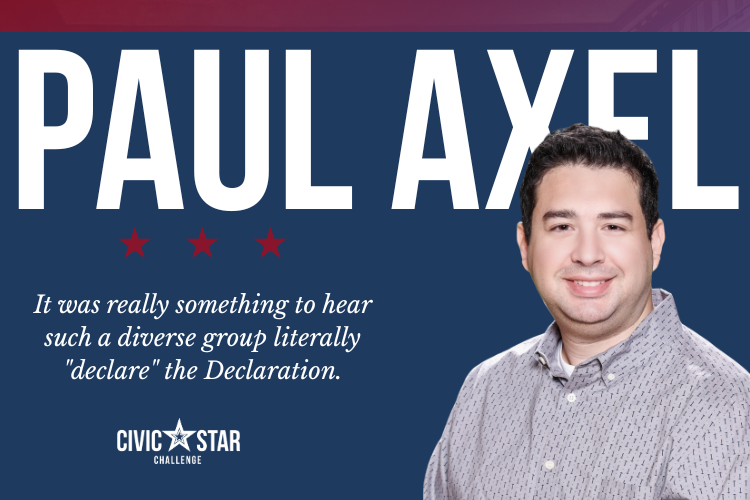
Paul’s students declare the Declaration for Civic Star Challenge

My approach to teaching has always been to prepare my students to be active, contributing members of their civil society. As I stated in my interview for my teaching position at Air Force Academy High School (AFAHS) years ago, the students of today are the Social Security payers of tomorrow—so I’d better make sure they’re taking care of me when I’m old!

In all seriousness, though, the majority of students at my school are Black or Brown, and many come into my classes not believing that they have a voice in our society. My mission is to change that. I work to make sure my students not only understand how they can participate in civil society, but why.

It’s not difficult for students to see how the civics lessons we cover in class impact them personally. They are watching tensions between our local and national governments play out on the news and in the streets. And they are drawing connections between their lived experience and the list of “injuries and usurpations” in the Declaration of Independence.

But it’s often challenging to get students comfortable with expressing their ideas and opinions in class. Students today are scared of being “wrong” or criticized for their beliefs. So, in my classroom, we spend a lot of time breaking that habit as I try to get students to understand that school is all about being wrong—that that’s generally how the learning process starts. I always tell students that we must debate the idea, not the person.

Recently, as part of the Civic Star Challenge, we did a deep dive into the Declaration. We started off by clarifying some key terms, such as “social contract,” “popular sovereignty,” and “natural rights.” I then asked students what Thomas Jefferson was trying to say in this “breakup letter” to King George III. What was his belief about the nature of government? As we talked, I watched the students put the pieces together in real time. One summed it up nicely:

“Governments exist to protect natural rights, like life, liberty, and the pursuit of happiness. Those governments are legit because the people agree to them. When the government stops protecting those rights, or starts hurting them, the people should change or end the government.”

As the other students nodded their heads and snapped their fingers, I couldn’t help but grin. I thought: I think we can really get something done in this class! Jefferson would be proud.

At the time it was issued, the Declaration would actually be “declared”—that is, it would be read aloud for everyone to hear. The language works better when you can emphasize and emote through speech. Every year, I ask my students to read the Declaration out loud, each taking a small part. My students are often a little nervous about doing that. My classes have a wide range of reading levels and English language comprehension. But recently, I was really gratified to see everyone giving it a shot. It was really something to hear such a diverse group literally “declare” the Declaration.

About Paul

  • Teaching Experience: 14 years in education; 8 years teaching
  • Currently teaching: social studies

Paul, a Chicago Public Schools teacher, endeavors to help students become thoughtful, empowered, and active members of civil society. When not doing that, he brings engaging stories to life as an accomplished comic book writer.

We Can Teach Hard Things, like Foreign Policy

Note: This blog post covers the concept of foreign policy, both from a traditional perspective and a current event standpoint, in response to U.S. military operations in Venezuela.

On the morning of January 4, 2026 — about 36 hours after U.S. forces launched airstrikes and ground operations in Venezuela, resulting in the capture of President Nicolás Maduro and his wife — I was sitting in a coffee shop to get a little work done. Before popping in my earbuds and blasting Mozart Radio, as I typically do, I overheard a father speaking to his middle school-aged daughter about the news.

Which is to say that I waited to pop in my earbuds. Obviously.

I then spent the next three minutes, that’s all, listening to an honest, authentic, and humble conversation in which it was clear that the father’s only goal was to help his daughter understand what was happening. In fact, I wouldn’t even try to guess the father’s politics, who he voted for, or if he approved of the military action. Here’s how it went:

Dad: I want to tell you about something that happened yesterday. The United States sort of invaded the country of Venezuela, captured the President and his wife, and declared that we’re running the country now. Have you heard anything about it?

Daughter: Kind of, but I have no idea what’s going on. Why did we do it?

Dad: Well, the President, his name is Maduro, isn’t a great guy. He’s a bit of a dictator. Our government is accusing him of drug trafficking, corruption, and other bad things.

Daughter: So we’re running the country now? Has that ever happened before?

Dad: Um, well, yes. But not in my lifetime. At least I don’t think so. Not like this.

Now hear me out, because I know what you’re thinking: I could give way more specifics than that! Yeah, but you’re a social studies teacher. This Dad is either a banker, doctor, or firefighter (I have no idea what this Dad does). That said, I thought his approach was masterclass! He asked his daughter if she had heard anything about it, and he provided his best and honest answers, admitting when he wasn’t sure of something.

Of course, as social studies teachers, we have a lot more to work with, including history, executive power, and foreign policy. I’ll admit, despite the uncertainty of what happened and what lies ahead, the history nerd in me started licking my lips. There is a lot of good stuff here!

Others have already written solidly-substantive pieces on how to teach the event, rife with facts, wisdom, and practical approaches. Our friends at CFR provide ‘Three Ways to Teach About Venezuela in a Nonpartisan Way,’ which I easily endorse.

However, another question has arisen that I’d like to address directly: Should social studies teachers be teaching this at all? Doesn’t the decision to cover the military operation betray a teacher’s commitment to non-partisanship?

In short: Yes. No. At least not necessarily.

To the first question: Should social studies teachers be teaching this at all? Yes, yes, they should. It is timely, interesting, and relevant to most of the social studies disciplines we teach in school:

  • American History
  • World History ✅
  • American Government ✅
  • Geography ✅
  • Economics ✅
  • Psychology (certainly not my area of expertise, but ✅)

And in this way, it is appropriate and prudent to cover in any of these classes, and therefore, the decision to teach it is not a partisan decision; it’s a professional and responsible one.

Let’s then discuss some approaches or frames for those very classes:

American History. This one depends on what period your American History course covers. Do you only teach through the Civil War or Reconstruction? Then perhaps you’ll want to spend a little time on the Monroe Doctrine (first articulated in 1832) or James Polk and the Mexican-American War (1846). If your course spans the 20th Century, then take your pick: Theodore Roosevelt and the Roosevelt Corollary (1904), Harry Truman’s use of the CIA in Guatemala (1948), or John F. Kennedy and the Bay of Pigs invasion (1961), among other historical examples.

American Government. Any U.S. Military action necessarily raises Constitutional questions related to the separation of powers, checks and balances, war powers, executive power, congressional oversight/approval, and more! I’ve written before about my suggestion to focus students’ attention on two places: the Constitution (including relevant legislation, such as the War Powers Act) and historical examples. Remember: the appropriate and timeless question is not, “What do you think about President Trump invading Venezuela?” but rather, “Should the president be able to conduct military operations without Congressional approval?” 

Geography. Where is Venezuela? Why would the United States have an interest there? (Encourage students to consider this question from a resource perspective, a national security perspective, a physical geography/settlement perspective, and a human geography/crisis perspective)

Does Venezuela feel too recent, too fraught, too political, too complex? Then skip it! Tell students that you are going to teach them about foreign policy, hoping that their stronger historical, political, and/or geographic understanding will help them make better sense of what is happening in the world at any point in time.

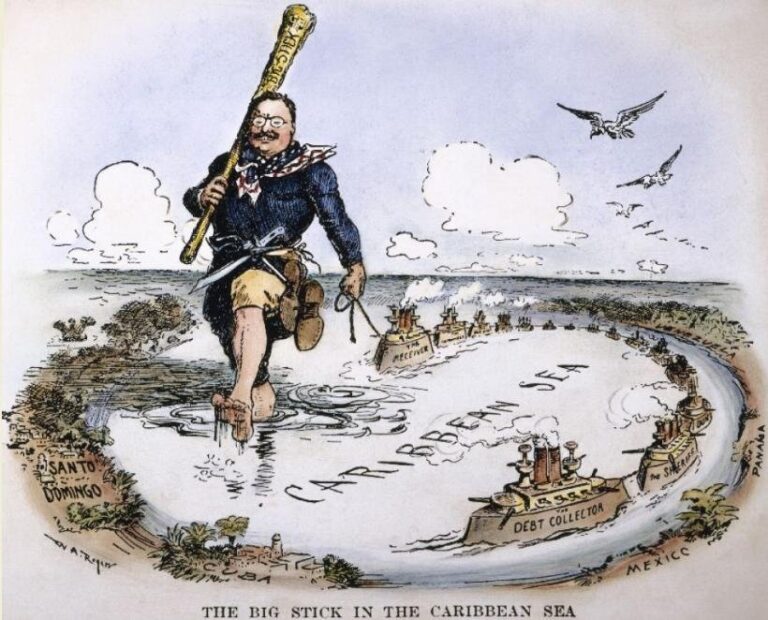
The first time I fell in love with foreign policy was when I learned about Theodore Roosevelt’s “Big Stick Diplomacy” in high school. That’s not to say that I was enamored with the approach, so much as I was immediately intrigued by the simplicity, imagery, and, well, chutzpah of it all. And as easy as it was to turn Teddy into a caricature — what with the round glasses, epic stache, and storied strength and bravery — adding a giant stick and transposing him over map drawings of Latin America just added to the allure.

But TR wasn’t the only president with unique doctrines and/or diplomatic approaches. There are plenty more under many other presidents, all of which students find interesting (if not comical), and, most importantly, probably won’t inspire the type of emotional response that more current events and approaches are likely to evoke. Some of my favorites, in addition to Big Stick, include The Monroe Doctrine, Dollar Diplomacy, Containment, and Shuttle Diplomacy.

Or, you could stick to the fundamentals! Here are some great resources to get you started:

iCivics Resources

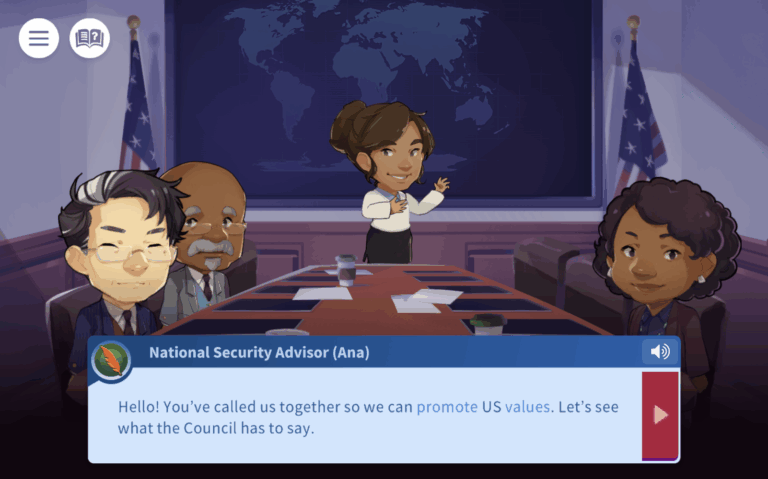
Step inside the White House Situation Room and make the tough choices as conflicts around the world escalate. In Convene the Council, your students will take on the role of president of the United States and discover why foreign policy matters. They will engage with members of the National Security Council to weigh the pros and cons of various policy options and make foreign policy decisions. They will address international crises through strategic action and work to improve core metrics of U.S. prosperity, values, security, and world health. Can your students make the tough choices as conflicts around the world escalate?

Objectives:

  • Explain the basics of foreign policy–making in the United States
  • Evaluate the effectiveness of various foreign policy options in a variety of situations
  • Distinguish among foreign policy tools such as aid, sanctions, and military force
  • Evaluate the potential effect of economic, military, and cultural influence on other countries

Admin Tip: Offer to sit in on a lesson plan or, better yet, co-teach it! Doing so signifies to the teacher, the students, and perhaps even parents/guardians (if you tell them or they otherwise find out about it) that you’re a champion for social studies and teaching hard things!

Jennifer expands civic education beyond her classroom with Civic Star Challenge

Election Day provides one of the most authentic learning opportunities of the year.

But what if it wasn’t just a single Tuesday in November?

What if Election Day were every Tuesday, all year round?

Through iCivics, I discovered On Tuesday We Vote, a biweekly initiative that invites students to engage with a thought-provoking question. Every other Tuesday, a new topic is presented for students to consider and cast their votes. I loved the approach of making civic participation a regular part of school life. So for the Civic Star Challenge, I decided to expand it beyond my classroom. By moving it into the hallway, all students, teachers, and staff members can take part.

My goal was to make voting and dialogue visible, accessible, and even routine. Civic education should be more than a class—it should be part of the culture of a school.

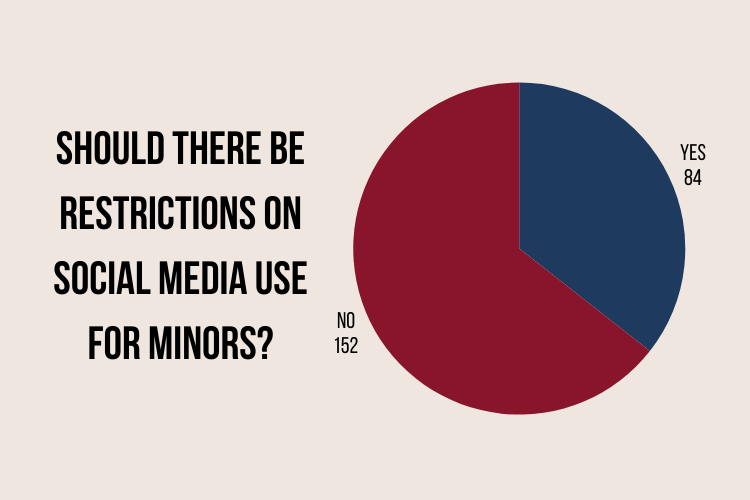
Between class periods, I loved watching students stop, talk about the topic with a friend, and then cast their votes. Some recent ballot measures included:

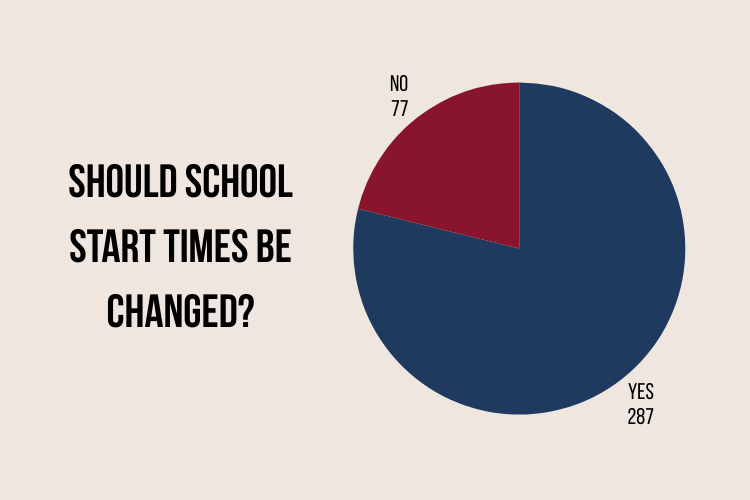
A pie graph showing the results to the question, "Should school start times be changed?" with 287 yes votes and 77 no votes.
The students voted overwhelmingly to start their school days later.
This question had students weighing personal freedom against the protections of oversight.
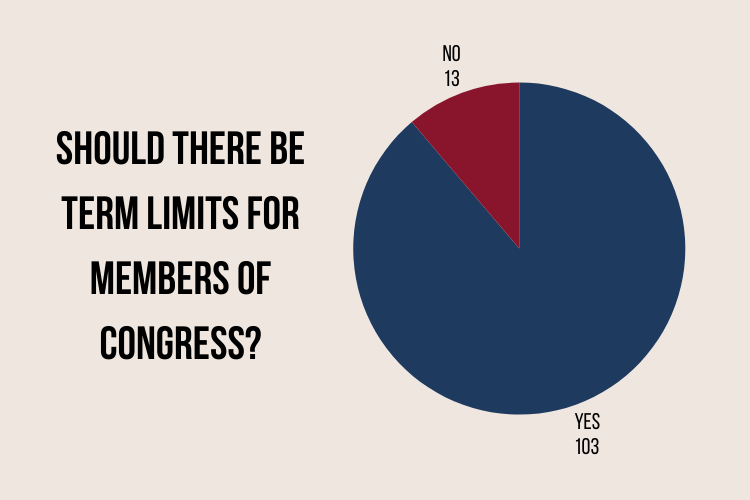
A pie graph showing the results to the question, "Should there be term limits for members of Congress?" with 103 yes votes and 13 no votes.
Despite the strong support for term limits, a few students made thoughtful arguments about experience and institutional knowledge.
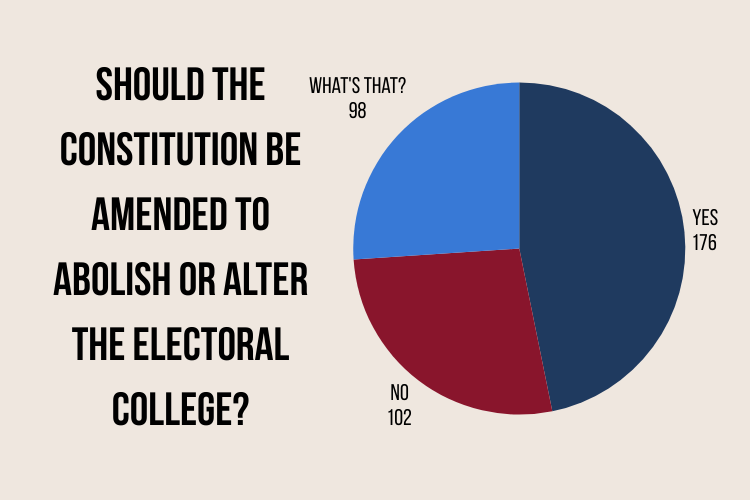
A pie graph showing the results to the question, "Should the Constitution be amended to abolish or alter the Electoral College?" with 176 yes votes, 102 no votes, and 98 voters who instead indicated that they do not know what the Electoral College is.
This vote exposed a real blind spot for students.

But that kind of result actually excites me as a civics educator. I spotted a group of ninth grade boys who had left lunch early to vote and were asking each other what the Electoral College was. I pulled out an electoral college map and explained it to them—yes, I’ll admit it was a hallway impromptu lecture! Seeing them interact with the content and each other, and then make up their own minds, was so unexpectedly fun. Now, all of the boys vote weekly and stop to say hi to me.

And perhaps the most contentious of all:

Is pineapple an acceptable pizza topping?

As of writing this post, I don’t have the official vote total. But I’ll say that my informal exit poll suggests that pineapple is on the way out!

It’s incredibly rewarding to witness civic confidence develop in real time. Students who were once hesitant to share their opinions are now leading discussions, listening thoughtfully, and even bringing in outside sources to support their views. Watching them evolve from passive observers into active participants is the most gratifying part of teaching civics. It’s also great to see friends voting differently and yet still being friends. Whether the subject is term limits or pizza toppings, these discussions are a starting point for creating a more civil society.

About Jennifer

  • Teaching experience: 30 years
  • Currently teaching: AP U.S. Government and Politics

In addition to her long-standing work as a public school teacher in Pittsburgh, Jennifer also serves as a College Board Table Leader and Retro Report Teacher Ambassador, and is a member of the National Constitution Center’s Teacher Advisory Council.

Community and Empathy: Supporting Students Through Difficult Conversations

Teaching American History and Government leads to many difficult conversations with students and families. One of my favorite emotionally difficult topics to teach is the Civil Rights Movement of the 1960s. This tense time, rife with conflict and blatant racism, can bring up very strong emotions for middle school students who are working through their beliefs and values. We cover events like the Greensboro Sit-ins, the Children’s Crusade, Martin Luther King Jr.’s speeches and assassination, and so much more. Students must learn to express themselves in our classrooms, but it can be terrifying to let go and trust them to have responsible, respectful conversations with their peers.

Diverse student groups can create many opportunities for growth and understanding, but they can also leave students feeling hurt when their peers express views with which they don’t agree. This, however, will continue throughout students’ lives, so learning how to deal with differences on moral and value-based issues is an important skill. It is also not a skill that can be taught without the support of the communities surrounding the students: home and school.

I used to experience great anxiety when I prepared to teach any topic that might elicit emotional responses from students. However, a few years ago, I found a way to support my students through these conversations. The protocol I use ensures the safety of my students, their families, and me. We start each class that may lead to difficult conversations by discussing why we need to look at the terrible things (to do better in the future, to remember what people did, to see how people stood up for their rights, etc.), and then we walk through the expectations I have for them.

I usually say something like this:

“We’ll be talking about some difficult topics today, like racism and violence. Since you are a human, you might have an emotional response to these things. That is totally normal! You might not understand what your emotions mean or where they come from, but it is okay to have these emotions! If you find yourself upset, you have two choices. One, you can raise your hand and tell me right away. We’ll go into the hallway and talk, or we can get you connected with the guidance counselor. Your second choice is to wait until the end of class if you want to see how the conversation ends. No matter when you tell me, we will call your guardian and the three of us will discuss what we talked about, how you’re feeling, and how we can move forward together.”

These expectations shifted multiple things in my classroom. Firstly, before we’ve even started, it emphasizes that all of us in the room are human beings who have feelings. One person’s feelings might look different than another’s, but they are all valid feelings. Secondly, it creates a home-school connection. Students know that I will speak with their parents while they are also in the conversation and that we will reach a common understanding. I have found that the expectation that I speak to parents/guardians makes them think a bit more before they speak, which can curb unkind remarks. It also proves my accountability in my students’ eyes because if I am willing to repeat anything I say in this lesson to their parents or guardians, no one will be able to misrepresent a conversation to create a hostile situation. We can unite around the awful things people did in the past to create a community of understanding in our school today.

If a student feels upset by the topic and we need to call home, the conversation might go like this:

Teacher: “Hello (Guardian Name). This is (Teacher) from (School). Do you have a minute to talk?

If they say no, I ask if there is a time we can talk later today or if they would prefer an email.

If they say yes, I continue: “Thanks so much. I have (student name) here with me. We’ve been learning about (overview of the topic) today, and (student) is feeling upset by the conversation. (Student’s name), can you tell us how you’re feeling?”

The student will share a bit of what upset them and how they are feeling about what happened or was discussed. The three of us can then decide what would be best for the student. Depending on the student, a walk up and down the hallway, a trip to the bathroom to regroup, a meeting with a counselor, or a continued discussion with me during lunch, electives, etc., might be the solution. It’s important to determine your options before the lesson so that you are not caught off guard.

To finish up the conversation, I ask if the student is okay with the solution and then ask if the parent is comfortable with the plan. I also ask the parent if they need me to call back later without the student, or if they would like to schedule a meeting with me at a later date, and offer to arrange that via email. Above all, approaching the student and their guardian with empathy and respect is the most important. It is also helpful to try to stay as calm as possible and remember that the situation you are teaching is not your fault.

This simple change in the rhetoric around difficult conversations makes it easier to discuss these topics with empathy, accountability, and respect, grounded in the community our students live in every day. It normalizes a home-school connection, and it creates safety for everyone involved. None of us signed up to teach U.S. History or Civics because we thought it would be easy; we’re here because we know that these difficult conversations are how we can improve our community’s future through our students.

Written by Bridgette Conboy

Bridgette Conboy teaches 8th Grade Social Studies at Lincoln Charter School in Lincolnton, North Carolina. She has taught middle school history for 7 years, and she is currently working toward her Master’s in American History at East Carolina University.

Through the We Can Teach Hard Things initiative, the perspectives of teachers across the country contribute to the public conversation about civic education in the United States. Each contributor represents their own opinion. We welcome this plurality of perspectives.