
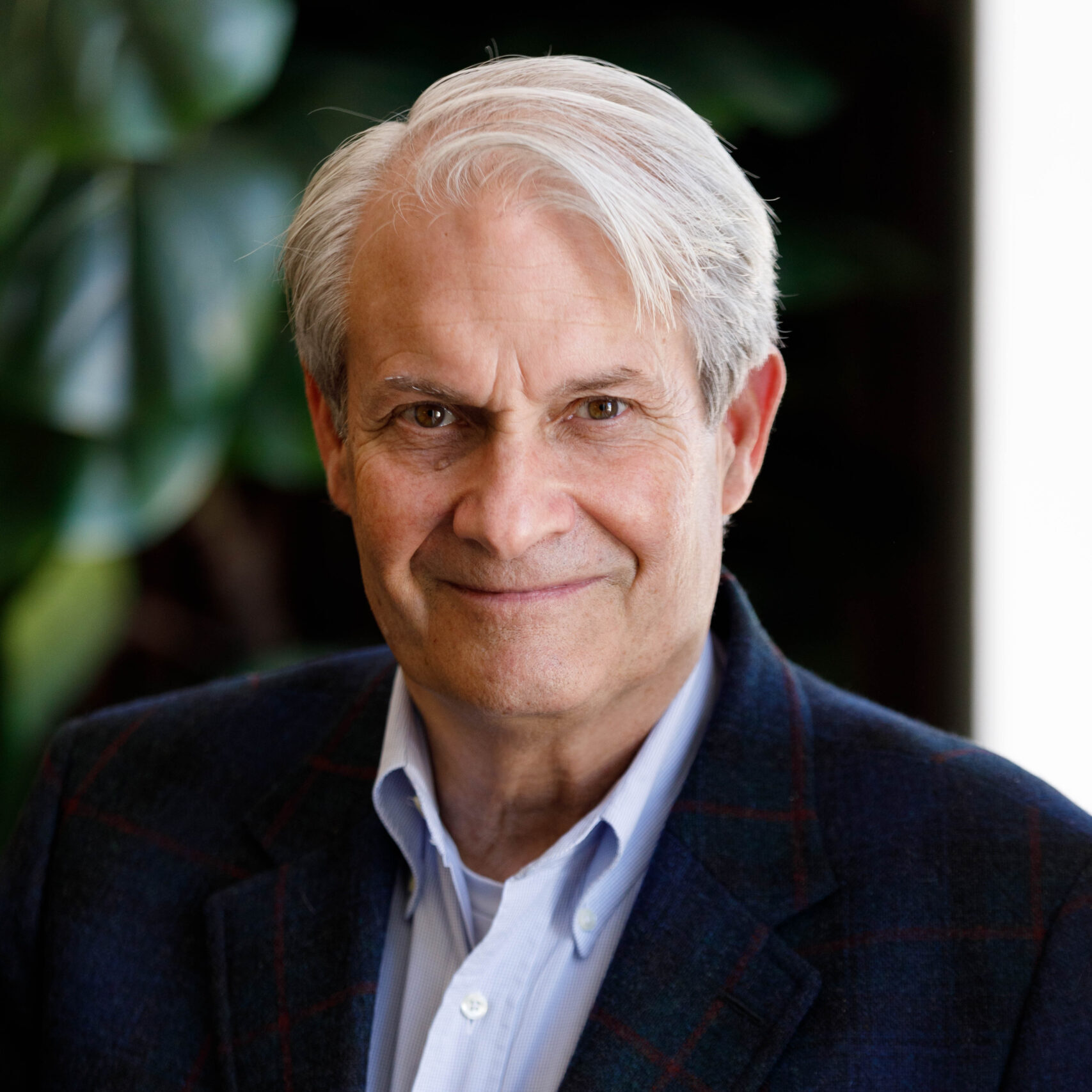
Thomas B. Griffith served on the U. S. Court of Appeals for the D. C. Circuit — often referred to as “the second most important court in the land” — for fifteen years. Before that he was the nonpartisan chief lawyer for the U. S. Senate and the General Counsel at Brigham Young University. President Biden appointed Judge Griffith to his Commission on the Supreme Court. Currently, Judge Griffith is a Lecturer on Law at Harvard Law School, works closely with Utah Governor Spencer Cox on his Disagree Better initiative, and is a member of the Board of Directors of iCivics.
Month: October 2025
Matthew Botvinick
Posted on by icivics

Matthew Botvinick is a member of the technical staff at Anthropic, where he leads the company’s work on AI and the rule of law. He joined Anthropic after serving as Senior Director of Research and Senior Technology and Policy Advisor at Google DeepMind, which he had joined in 2016 following 20 years in academia.
Botvinick’s academic career began with a Ph.D. in the neural basis of cognition from Carnegie Mellon University, followed by faculty positions at the University of Pennsylvania and Princeton University. Botvinick has authored more than 150 peer-reviewed articles spanning AI, deep learning, reinforcement learning, cognitive science, and computational neuroscience, as well as the book AI and Political Freedom from Princeton University Press.
Botvinick holds an M.D. from Cornell University with board certification in psychiatry. Alongside his work at Anthropic, Botvinick is a Senior Fellow at Yale Law School.
Barbara Jenkins
Posted on by icivics
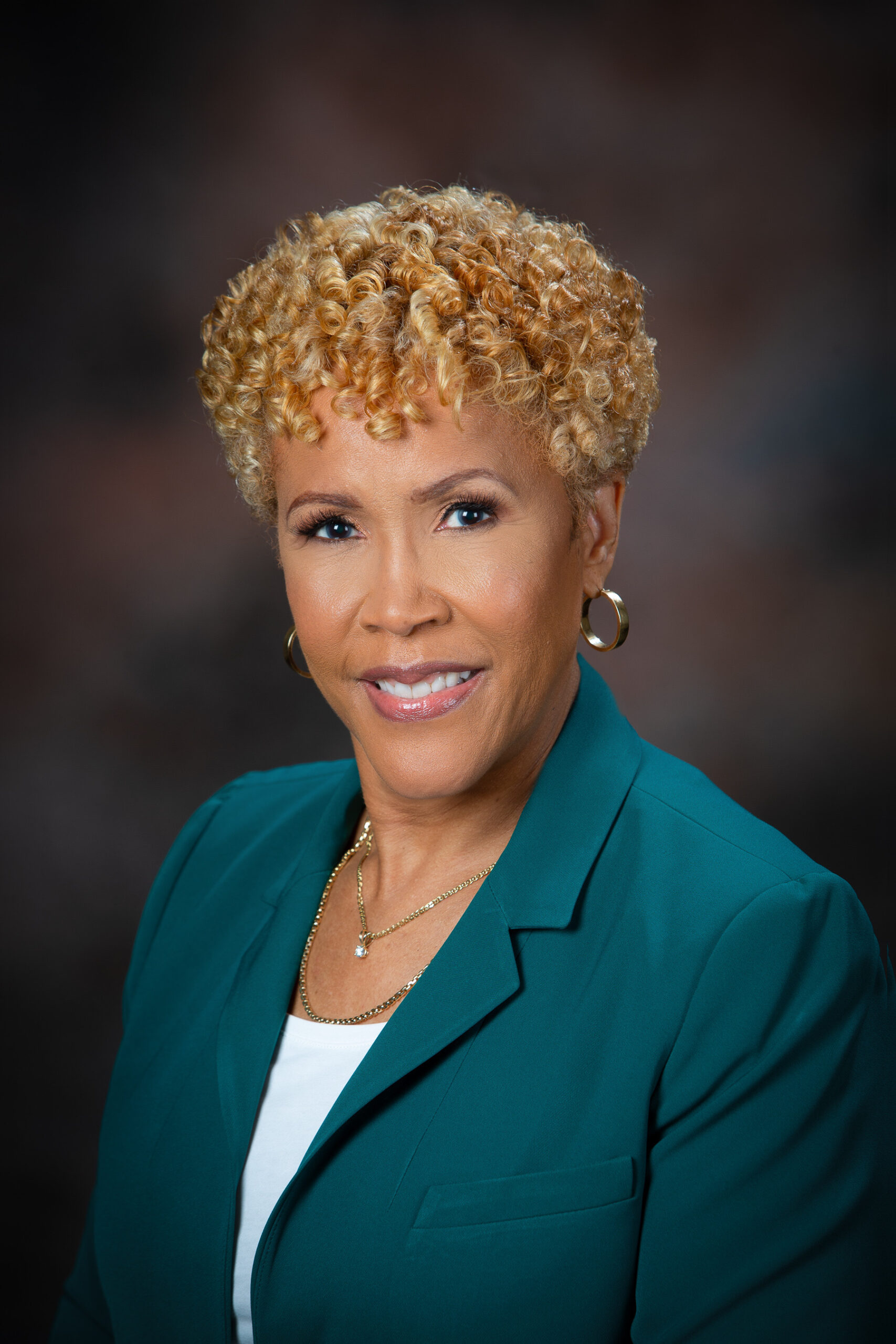
Barbara Jenkins, Ed.D., has been dedicated to serving the needs of students for more than 30 years. In 2012 she was named superintendent for Orange County Public Schools (OCPS), the eighth largest district in the nation, proudly serving 206,000 students. She retired from OCPS in December 2022.
Under Jenkins’ leadership, the district won the prestigious Broad Prize for Urban Education. The district also received the Governor’s Sterling Award and attained District Accreditation from AdvancED for its best practices in the education field. The Sustained Excellence Award was attained for exemplary performance using research-based best practices in business. The district passed a second half-penny sales tax referendum for capital projects totaling $2.4 billion and two property tax referenda for operations projected at $1.2 billion to support a $5.5 billion annual budget. Most importantly, the district reached an unprecedented graduation rate of 97% for traditional high schools during her tenure.
A highly recognized education leader, Jenkins received a presidential appointment to the National Board of Education Sciences in 2017 and received the Baldridge Foundation Award for Leadership Excellence in 2022. She has served as Chairman of the Board for the Council of Great City Schools, representing the nation’s large urban districts. Jenkins is a Chief in Residence and leader of the Women in Leadership initiative of Chiefs for Change, a national bipartisan group of district and state education leaders dedicated to the success of our nation’s youth. Jenkins also serves on the board of trustees and chairs the audit committee for ETS, the world’s largest private nonprofit educational testing and assessment organization.
Deeply engaged in the community, Jenkins has served on the boards of Advent Health, Orlando Economic Partnership, United Arts of Central Florida, Central Florida Regional Commission on Homelessness and the Orange County Youth Mental Health Commission. Jenkins is a graduate of the University of Central Florida.
Luke Selover
Posted on by Sophie Gordon
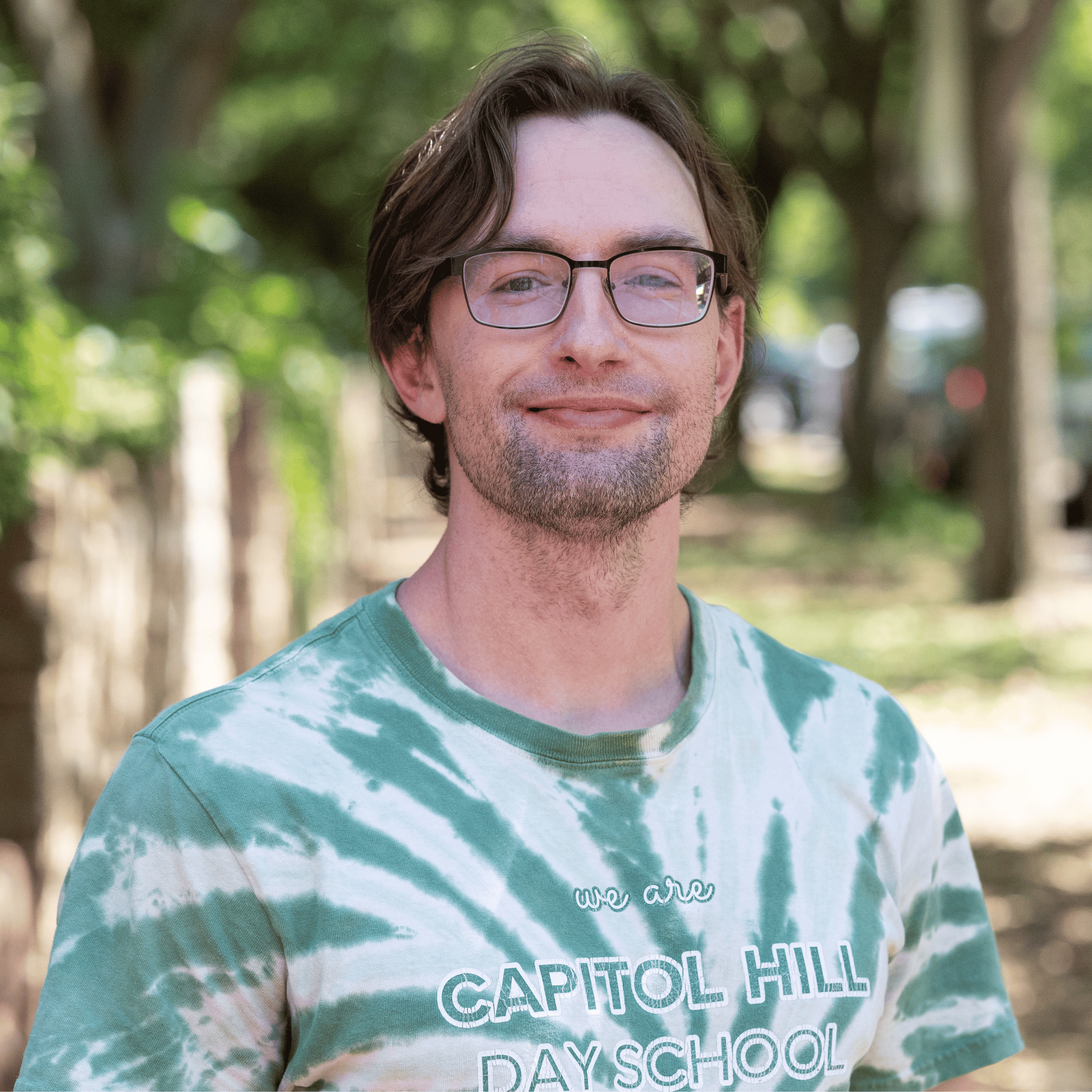
When Luke Selover, a humanities teacher at Capitol Hill Day School in Washington, D.C., discovered the Students Engage lesson plan from iCivics, he saw more than a classroom activity—he saw a model for empowerment.
“There is this lesson that I found in my second or third year of teaching, and I just thought the bones of it was so cool,” Selover said. “We essentially created an entire project based on Students Engage, where students propose changes to our school.”
Each year, Selover’s students identify issues they want to improve and present research-based proposals to school leaders. They create action steps and develop an explanation for why these improvements are needed.
“Some of them get approved; some of them don’t,” Selover said. “We’ve been able to enact some really cool changes, and it’s been great practice for them to advocate for things that they want to see and change in the school.”
One early project expanded the school community. In 2021, the school only had a couple of student groups that met regularly. Students recognized the need for more student unions and clubs that reflected the plurality of viewpoints at the school. They proposed adding more affinity groups after seeing the impact of the Black Student Union, and the school’s community has grown to include clubs for young men, neurodivergent students, Latino students, and many more.
“All of that came from this push from the students—‘Hey, we want a space to meet in these different groups,’” he said. “We were able to create all these different affinity groups and give people space to be in affinity with others.”
Another project tackled something close to every student’s heart: lunchtime. Students argued that outdoor lunch would simplify cleanup, extend recess, and improve focus later in the day. The idea stuck, and students are now able to eat outside when the weather is good.
Most recently, students turned their attention to improving their shared learning environment. They spoke to their peers and discovered that noise from transitions and limited access to water were persistent sources of frustration. After doing research and considering roadblocks, like budget and classroom needs, students proposed practical solutions: a noise-blocking curtain and a water bottle filler to replace the water fountain. They even researched pricing and created diagrams illustrating how the space could be altered.
“I was really proud of this group,” Selover said. “I think the water filler is happening, and they’re still considering some different things we can do to be able to create an easier transition for the folks who are moving throughout the building.”
Selover views the Students Engage project as a training ground for active citizenship, as reflected in the students’ answers to questions on the project’s rubric. Selover’s favorite question asks students to explain why it’s important to advocate for change they want to see in their communities, even if the goals are not achieved.
“I’m always really blown away by their answers on this question,” he said. “They recognize that advocacy itself is valuable. It was good practice for them to understand someone else’s perspective and propose a change that would help make their lives easier.”
For Selover, the lesson’s impact is undeniable.
“This project wouldn’t exist without that iCivics lesson. It has created so many positive things in our school. Y’all gave me the inspiration, and we just made it a little bit bigger.”
About Luke
Teaching experience: 10+ years—5th and 6th grade humanities
School/Organization: Capitol Hill Day School
From Monuments to Movements: Inspiring the Next Generation of Civic Leaders
Posted on by Sophie Gordon
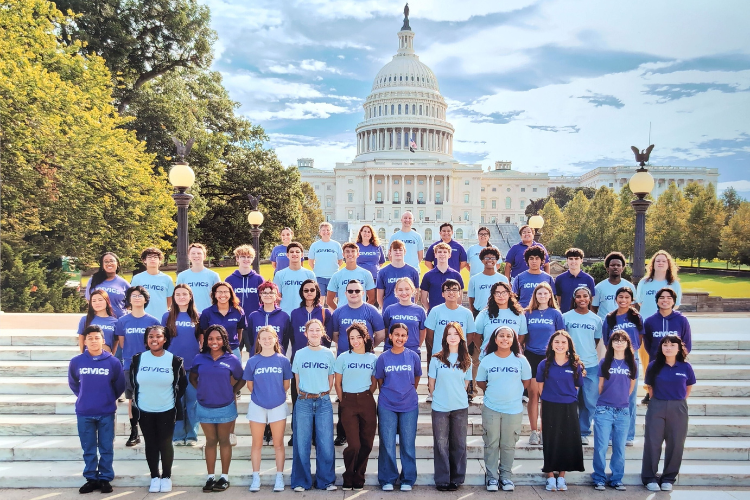
Huddled beneath umbrellas on a drizzly day in our nation’s capital, the newest cohort of iCivics Youth Fellows sat in small groups at the edge of the Tidal Basin. Deep in conversation, they reflected on the words and legacies of some of America’s most influential voices, encountered through the surrounding monuments and memorials. Though nearly complete strangers, the students engaged with one another’s perspectives as they looked ahead to the year they’ll spend together.
Held September 25–29, the Washington, D.C. Symposium serves as the in-person kickoff to the fellowship year. Fellows connected and built community while learning alongside alumni mentors and iCivics staff. They explored the home of the federal government with visits to the U.S. Capitol, the Supreme Court, and the White House, and spent time among the monuments and museums of the National Mall, including the Library of Congress, the National Museum of African American History and Culture, the National Gallery of Art, and the National Museum of Natural History.
Here’s some of what the Fellows had to say about the trip:
- “The iCivics Youth Fellowship has given me the opportunity to understand perspectives that I hadn’t otherwise interacted with. The amount of passion each fellow had for their platforms is a picturesque example of civic engagement and advocacy. Seeing other people my age lobbying for change gives me great anticipation for the future.” – Ava June T. (KY)
- “The trip to Washington, D.C. made me think about not only the foundations of American democracy, but my role within it; it made me question what it truly means to be civically engaged, and why civic engagement is so important. Seeing monuments like the MLK Jr. and Korean War memorials made me think about our moral obligation to stand for what’s right, not just as Americans, but as humans. Conversing with my peers expanded my mindset and helped me better understand varying perspectives, even when I didn’t always agree. Overall, the trip represented the very purpose of this program, which is to inspire students across the country to uphold America’s democracy.” – Camryn H. (OH)
- “I am very thankful for the D.C. trip. It helped me to see the real workings of our government in person, which I find really awesome. Thanks to iCivics, I was able to foster discussion with youth fellows who share a passion for civic engagement, and diversify both my own perspective and those of my peers.” – Bradley M. (Alumni Mentor, CA)
The iCivics Youth Fellowship is a paid, yearlong program for U.S. high school students to build a movement led by and for young civic leaders. Designed to elevate and center youth voices, the fellowship fosters a pluralistic, talented community of students from across the country. Over ten months, Fellows engage in an immersive civic learning experience, investigating, discussing, and sometimes debating questions like: How can I identify civic issues I care about and connect them to others’ experiences? How do we use civil discourse to find common ground in disagreement? And how can I share my voice as an advocate for civic learning and engagement?
The connections and friendships established in D.C. are invaluable as Fellows embark on building their Civic Engagement Portfolios throughout the year, selecting from a range of experiences in their communities related to local policy, news, decision-making bodies, and service. They also conduct and share Community Research Projects that highlight their lived experiences with civic education and engagement. Later in the year, Fellows collaborate on Student Panel Discussions focused on regional or national civic education topics that connect across their local communities.
Upon completion of the program, Youth Fellows join our ever-growing Alumni Network. This network provides myriad opportunities, including applying to serve as an alumni mentor to a new cohort of Youth Fellows, representing youth voice and the civic movement at various iCivics events, and collaborating on the creation of iCivics resources. They have even been featured in media such as The Wall Street Journal, Chicago Tribune, and WBUR in Boston.
Spending a long weekend with this group of students filled my cup as I got to know each of their unique stories and interests, engaged in critical thinking and dialogue together, and shared laughs over meals. As iCivics works to inspire young people for informed civic engagement, these young leaders will no doubt help shape the future of civic learning and engagement in our country.
Whether you’re a Youth Fellows alumnus who’d like to share how the D.C. Symposium impacted you, a high school student interested in applying for next year’s cohort, or an educator eager to learn more, I’d love to hear from you!
Contact: [email protected]
Written by Troy Petrie
As the Associate Director for Youth Engagement at iCivics, Troy leads efforts to empower young people to find their civic voice and engage in their communities. Before joining iCivics, his happy place was in the classroom as a National Board Certified social studies teacher. Troy’s work is driven by a deep belief that we all have more in common than we do apart and that young people are the real changemakers in our society.
iCivics Youth Fellowship Marks its Seventh Year
Posted on by Sophie Gordon
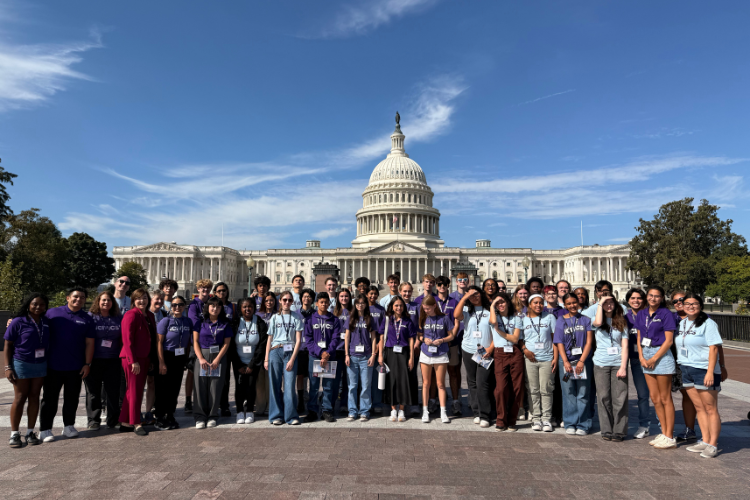
The iCivics Youth Fellowship helps students from across the country build civic leadership skills and explore how they can help make civic education relevant and accessible to all young people.
CAMBRIDGE, Mass. [October 17, 2025] – Earlier this year, iCivics selected 34 talented high school students from across the country to take part in the iCivics Youth Fellowship. The students were selected after a competitive process that garnered over 500 applicants from 46 states and Washington, D.C.
The yearlong fellowship helps students develop leadership and communications skills as they collaborate with their peers and learn from experts in the field of civic education. Throughout the year, students research and explore youth engagement in civic spaces and the state of civic education across the United States. Fellows utilize their own lived experiences to become ambassadors for civic education and shed light on how civics can include student voices from every background.
The fellowship kicked off in August and moved into full gear with an in-person symposium in Washington, D.C., at the end of September.
“The Washington D.C. Symposium is a foundational experience for the Youth Fellows,” said iCivics Associate Director of Youth Engagement, Troy Petrie. “For some, it’s the first time traveling on their own. For most, it’s the first time they get to engage with viewpoints and perspectives different from their own. For all of the fellows, it’s a realization that we have more in common than we do apart. That’s exactly what the Youth Fellowship is all about.”
The fellowship will run through the 2025–26 school year, during which fellows will engage in virtual group discussions, workshops, and lectures with experts in the field, and undertake projects designed to strengthen their listening and collaborative skills. The fellows’ work centers around ensuring that civic education is available and relevant to all students in the United States.
Over the past seven years, students from across the country, representing rural, urban, and suburban school districts, have participated in the fellowship and become an integral part of informing the broader civic education movement. Fellows and alumni have shared their experiences and thoughts at convenings for the Educating for American Democracy initiative, Ronald Reagan Institute, Civic Learning Week, Commonwealth Club, and Andrew Goodman Foundation. They have been featured in media such as The Wall Street Journal, Chicago Tribune, and WBUR in Boston.
iCivics is proud to announce this year’s participants:
Arizona | Arkansas | California |
Kosomak L. | Athena C. | Maxine P. |
Colorado | Florida | Georgia |
Lorenzo W. | Justin C. Frank U. | Dante E. Naomi L. |
Illinois | Iowa | Kentucky |
Jackson T. Jocelyn M. | Katherine H. | Ava June T. |
Maine | Maryland | Michigan |
William C. | Makayli G. Raizel H. Rebecca M. | Logan S. |
Minnesota | Missouri | New Jersey |
Fatima A. Abdullahi H. | Ridhima K. | Kayla H. |
New York | Ohio | Pennsylvania |
Eva F. Summer H. | Camryn H. | Charlie L. Landon F. Miguel R. M. |
Tennessee | Texas | Utah |
Majdi A. | Marco M. | Wyatt H. Lahpo K. |
Virginia | Wisconsin | Alumni Mentors |
Jacqueline A. Ayden B. | Ethan W. | Liana A. ‘23 (ME) Addison A. ‘23 (LA) Imre H. ‘24 (OH) Anvitha M. ‘21 (CA) Bradley M. ‘24 (CA) Carina M. ‘24 (WA) Fola O. ‘23 (MI) Tanner O. ‘24 (NM) |
We Can Teach Hard Things, like Separation of Powers
Posted on by Sophie Gordon
You’re a social studies teacher, and it’s time to teach the separation of powers. Easy peasy! The Separation of Powers is as fundamental a civics topic as can be found. No controversy here!! *record scratches*
Don’t worry! I’ve got you covered.
The first thing you want to do is consult your state standards. Let’s use an example. Since my favorite crises of the Separation of Powers revolved around Senator Joseph McCarthy from Wisconsin, let’s go with the Badger State!
According to Wisconsin’s Standards for Social Studies, students in grades 6-8 should “Analyze the structure, functions, powers, and limitations of government at the local, state, tribal, and federal levels.” Students in grades 9-12 should “Evaluate the structure and functions of governments at the local, state, tribal, national, and global levels. Evaluate the purpose of political institutions at the local, state, tribal, national, global, and supranational or NGO levels, distinguishing their roles, powers, and limitations.”
There you go — if you teach in Wisconsin (and most other states), it’s absolutely part of your job to teach this topic. Remember that.
Moving beyond standards, one of the best parts about teaching government is that many of its concepts are structural or procedural and abstract. One of the worst parts is that many of its concepts are structural or procedural and abstract.
Put another way, on one hand, we merely need to explain and describe. It’s pretty straightforward. On the other hand, these concepts are dry, emotionless, abstract, and otherwise difficult for students to fully grasp.
Here’s the good news, which is also the bad news: in practice, most government concepts are not straightforward. They are complex and controversial.
What’s a dedicated, well-meaning teacher to do?
Let’s start by looking at the bright side (this stuff is structural and procedural!!) and leverage one of our go-to tips: “Leaning into structure and process for civics and government.”
With the separation of powers, it’s actually best to start with structure and then move to process. Structure is even easier to explain, especially since we can use actual structures as symbols of the institutions we’re describing. Take this graphic:
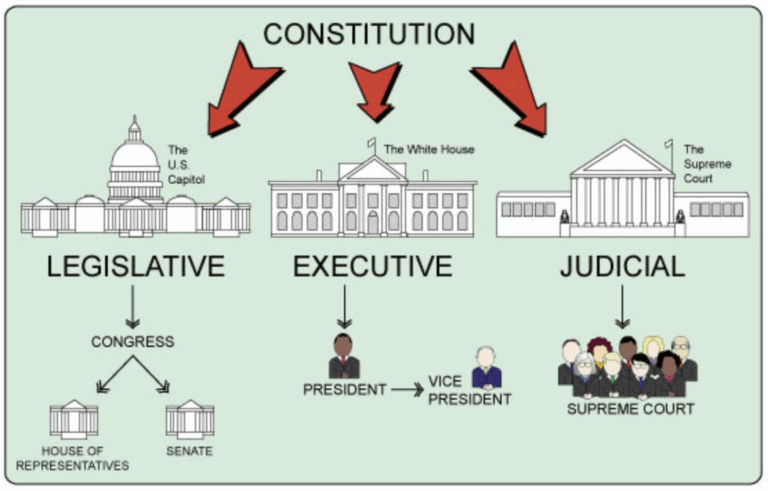
This graphic is so old, I think my own government teacher used it in 1999 when I was in her class. But it’s great! It’s perfect! It’s listed under a Creative Commons license. Phew!
Here are some additional iCivics Resources to help you through it, should you (appropriately) believe this graphic to be inadequate:
Now, you may feel tempted to avoid the hard things and end your lesson here. But remember, the standard says, “Analyze the structure, functions, powers, and limitations of government.” I suppose you likely scratched the surface here with functions when you talked about the Legislative Branch making the law, the Executive Branch enforcing the law, and the Judicial Branch interpreting the law, but a) that doesn’t cover powers and limitations, and b) none of that means anything to your students without context and examples.
This brings us to another go-to tip: Use historical examples instead of current ones. Various events in American history have tested the limits of the Constitution’s separation of powers. These events demonstrate the ongoing tension and potential for conflict between the different branches of government.
Here are some of my favorite examples of the separation of powers playing out in American history:
- The New Deal
- FDR’s Court Packing Plan
- Steel Mill Seizure
- The McCarthy Era
- The Civil Rights Movement
- Watergate
- The Iran-Contra affair
Additionally, these events allow us to examine the separation of powers and controversies surrounding it without the partisan preferences and emotions that often accompany more recent or current controversies. I mean, I know my history, but I don’t get all worked up over President Truman seizing control of the steel mills to prevent a devastating strike that would disrupt military production during the Korean War, even if it does seem like a reach of executive power. Let’s assume our students won’t either.
Once we’ve covered the structure, functions, powers, and limitations, and provided some historical examples, it’s time for the students to think about what it all means. That brings us to…
Important Questions to Ask
- What do we mean when we refer to the separation of powers as a system of checks and balances?
- Can you think of an example when it might be necessary for one branch to exercise more power than the other branches?
- What would happen if too much power were concentrated in one branch of government without checks by the other branches?
Now, I know what you’re thinking: “What should I do if Susie in the front row responds to that last question by asking, ‘Do you mean like how the President is acting right now?’”
This very thing happened to me when I was teaching in the 2000s. Here’s my advice:
- Take a breath.
- Acknowledge the question, but don’t validate, correct, or otherwise answer it.
- If you’re so inclined, praise the student for paying attention to current events (and to your lesson!).
- Don’t assume anyone else in the classroom knows what Susie in the front row is talking about. This point is extra important! There is no need to spend valuable class time having an unplanned 1:1 conversation with just one student when no one else in the room has the foggiest idea what y’all are talking about.
Here’s a sample response: That’s a great question, Susie. I can tell you’ve been paying attention, both to the news and to what we’ve been exploring in class. The current administration has been in the news a lot, and its actions are related to what we’ve been covering. We’re not going to talk about current events right now, but here’s something for you to think about as you continue following the news: “What exactly is happening right now, and is this how it’s always been done? How is it similar or different?”
Alternatively, you could ask these questions preemptively and suggest that students follow the news, consider the questions, and discuss them with fellow students and/or family members. I realize that last suggestion may seem a little risky, but remember: you haven’t made any political or value judgments. If anyone challenges you, you can confidently and politely respond that you are encouraging students to engage in compare and contrast thinking between historical and current events, and that you’re so glad to know they’re doing their homework!
Remember: you’re doing your job, and your job matters a whole lot.
Admin Tip: Reach out to your social studies teachers and ask if they need any additional help with content this year. Maybe a subject matter expert can help them understand how the separation of powers has evolved over time. As always, tell your social studies teachers you are there to support them!
A New Generation of “iCivics Kids”
Posted on by Sophie Gordon
This guest blog post was written by Rachel Gärlick and Lynnie Lucas, close friends and young attorneys who, inspired by their own civic education, are now advocating for more and better civic education for school-age Americans.
We met on the first day of law school and quickly bonded over a shared goal: harnessing the legal system to expand access to education. In our second year, we channeled that passion into researching civic engagement among American youth and the state of civic education in the United States through the lens of education law and policy. Our work culminated in the publication of our article, Civics Education: The Unsung Guardian of Democracy, by the Charleston Law Review earlier this year. In it, we argue that a strong, enduring constitutional democracy requires engaged citizens of all ages, and the key to that engagement among young Americans is robust civic education.
Simply put, it is impossible to understand the implications of modern legislation or jurisprudence, or the importance of civic engagement (especially voting), without a baseline understanding of how the democratic system works. And yet, students across the United States do not receive adequate civic education in school. Our research shows that while STEM subjects have been prioritized in recent years, civics has been sidelined. This is not only evidenced by education standards but also by the vast disparity in funding across the two disciplines. Accordingly, students are left without the tools they need to understand government, legislation, or their role as voters—the very knowledge required of them to maintain our democratic republic.
There is ample evidence that young voters are not receiving the tools they need to meaningfully participate in our democratic system. A 2024 survey by America’s Promise Alliance found that nearly “one quarter of young people (24%) did not learn about or discuss civics at all during the past school year. . . . About one in 10 young people (13%) have not had any coursework focused on civics, politics, and democracy at any point while in school or college.” It is no surprise, then, that young Americans reported they are “regularly asked to weigh in on politics, but they feel uninformed—and these feelings of being uninformed often lead to sitting out.” Notably, 91% of young Americans surveyed agreed that “[e]veryone should have access to opportunities to learn about democracy and civics,” and 83% agreed that “[c]lasses on civics and government should be a requirement for high school graduation.”
In other words, young people are asking for civic education; the adults are failing to provide it.
We propose a number of solutions in our article, but we also highlight the important work that is already being done—that’s where iCivics comes in. Those fortunate enough to have access to iCivics early on (we lovingly refer to them as “iCivics Kids”) are building foundational knowledge that will allow them to be strong civic leaders. An “iCivics Kid” is passionate about respectful political debate, intentional in researching and understanding news sources before sharing content online, and excited to keep learning about our democracy and how we can improve it in the future. We could share additional healthy democratic dispositions that iCivics cultivates, but you get the point: iCivics is what our young people deserve and what our form of government demands.
Our personal journeys illustrate both sides of the civics gap.
Lynnie became an “iCivics Kid” in elementary school—she won the White House, got in “argument wars,” and briefed the chief. Lynnie credits her early experience with iCivics with providing the foundational skills she needed to be an informed and engaged citizen. In contrast, Rachel’s civic education was inadequate at best, and nearly non-existent at worst. When she started studying for the AP Government exam, she realized just how large the gap in her civic education was—she might have been able to explain checks and balances, but she couldn’t articulate why they were important.
Lynnie’s passion for democracy and civic education is rooted in her belief that all students should graduate with the same strong foundational understanding she did, while Rachel’s is rooted in her belief that no student should graduate confused about what Congress actually does and unsure whether her vote matters as she did.
While our paths to becoming civic education advocates differ, we share the core belief that it is vital, undervalued, and essential to safeguarding democracy. We believe in the importance of cultivating a new generation of “iCivics Kids.” We are incredibly grateful and honored to partner with iCivics and CivxNow and support their efforts to improve access to high-quality civic education.
After becoming licensed attorneys, we both sought legal careers that allow us to advocate for children and families. Lynnie is an attorney in Denver, Colorado, practicing education and youth rights law. She stands up for kids on the school-to-prison pipeline, steering them away from the criminal legal system by helping them obtain the educational resources they need. Rachel is a family law attorney in Denver, Colorado, focused on championing parents and their children as they navigate the domestic relations legal system.
But we both understand that the role of citizen belongs to all of us, regardless of our profession. Whether future “iCivics Kids” pursue law, medicine, business, tech, the trades, or any of the other meaningful career options before them, every one of them will have the job—the duty—to actively engage in our constitutional democracy.
Written by Rachel Gärlick and Lynnie Lucas
Rachel Gärlick is a family law attorney focused on advocating for parents and their children as they navigate the domestic relations legal system. Rachel co-authored the article Civics Education: The Unsung Guardian of Democracy, which was published in the Charleston Law Review earlier this year, with her dear friend and colleague Lynnie Lucas. Rachel believes that education is not only a cornerstone of democracy but also a pathway to justice and empowerment and is dedicated to advancing access to education for all students. Rachel lives and practices law in Denver, Colorado.
Lynnie Lucas is an education and youth rights attorney providing legal services targeted to slow the school-to-prison pipeline. Through discipline, special education, truancy, and other school-based defense, she works to keep kids in classrooms and out of the criminal legal system. Lynnie is passionate about civic engagement and learning. She co-authored an article about access to civics education, which was published in the Charleston Law Review this spring. She is in active pursuit of education equity every day, and she hopes to encourage school districts and school boards to break barriers and come up with creative solutions for students of all backgrounds. Lynnie lives and practices law in Denver, Colorado.
iCivics Featured in the New York Times
Posted on by Sophie Gordon

While this may be a good time to take advantage of the public’s attention, it’s also a time when teachers increasingly fear repercussions for offending students.
Reclaiming Our Story: Integrating Indigenous Perspectives into Civic Education
Posted on by Sophie Gordon
Yáʼátʼééh! As educators, we’re committed to preparing students to be informed and engaged citizens. We teach the foundations: the Constitution, the three branches of government, elections, and the rights and responsibilities that come with being a citizen. But if we truly want to build a just, inclusive, and accurate understanding of civic life in this country, we must look beyond the traditional curriculum. We must make space for Indigenous voices and perspectives.
Speaking as a Native American educator, I can tell you that my people’s histories and systems of governance aren’t just footnotes—they’re foundational. Including them doesn’t just fill historical gaps; it offers a profound and necessary expansion of what civics can be.
Why Indigenous Perspectives are a Core Part of the Civics Story
Long before the United States was a nation, Indigenous peoples across this continent had sophisticated systems of governance, diplomacy, and community. Take, for example, the Haudenosaunee Confederacy, whose Great Law of Peace established a democratic framework that influenced early American political thinkers. These are not just historical curiosities; they are living examples of governance rooted in values of accountability, collective well-being, and a long-term view of our relationship with the land and each other.
To teach American civics without including these contributions is to tell an incomplete story. By bringing Indigenous perspectives into the classroom, we can help our students understand that government is not a static concept but a dynamic, evolving process shaped by many peoples and traditions.
Teaching the Four Levels of Government: Federal, State, Local, and Tribal
A truly complete civic education explores all four levels of government: federal, state, local, and tribal. Each has a distinct and essential role in shaping the laws and services that affect our lives.
Tribal governments are sovereign nations. This means they have the inherent authority to govern their people, their lands, and their resources. Like other governments, they have executive, legislative, and judicial branches that create laws, provide services, and protect their citizens.
While tribal nations maintain a unique nation-to-nation relationship with the U.S. federal government, they also regularly engage with state and local governments on critical issues, like natural resource management, education, and public health.
This reality offers a powerful teaching moment. We can help students compare and contrast:
- Structure: How do the branches of government operate differently across all four levels?
- Authority: What powers are unique to federal, state, local, or tribal governments? Where do their authorities overlap or interact?
- Citizenship: What does it mean to be a citizen of a tribe, a state, and the U.S.? How can someone participate in multiple systems?
- Collaboration & Conflict: How do these different governments work together—or come into conflict—over issues like land use, voting rights, or environmental stewardship?
Studying all four levels together provides a more honest and complex picture of governance in the United States, reinforcing that tribal nations are active, essential participants in civic life today.
Connect to the Land and the People
Every classroom in the U.S. sits on Native land. Learning about the Indigenous peoples of your region—both past and present—makes civics relevant and immediate.
Take a moment to investigate:
- Which Native Nation(s) are near your community?
- What does their government structure look like?
- What treaties or agreements exist between that Nation and the U.S. government?
Consider inviting a guest speaker from a local tribal government or exploring their official websites. Many include information about their leadership, departments, and priorities. By doing this, your students can compare decision-making processes, elections, and services with those of their own city or state. It’s an act of respect and a powerful way to make civics a living, breathing topic.
Highlight Contemporary Indigenous Civic Leaders
It is critical that our students understand that Indigenous governance and civic participation are not historical artifacts. They are happening right now.
Across the country, Indigenous leaders are serving in government, advancing policy, protecting the environment, and revitalizing their communities. We have a responsibility to highlight these figures and show our students that civic engagement is vibrant and deeply rooted in Indigenous communities.
Here are a few examples to get you started:
- Deb Haaland (Laguna Pueblo) – The first Native American to serve as a cabinet secretary as the U.S. Secretary of the Interior.
- Sharice Davids (Ho-Chunk Nation) – One of the first two Native American women elected to Congress, representing Kansas.
- Paulette Jordan (Coeur d’Alene Tribe) – Former Idaho state representative and advocate for renewable energy and Indigenous rights.
- Fawn Sharp (Quinault Indian Nation) – 23rd President of the National Congress of American Indians, a champion for tribal sovereignty and environmental justice.
- Tokata Iron Eyes (Oglala Lakota) – A young Native American activist, Lakota Law organizer, and member of the Standing Rock Sioux tribe.
By highlighting the work of these leaders—as well as local tribal council members, educators, artists, and community organizers—we demonstrate to our students that civic engagement is diverse and deeply rooted in Indigenous communities.
Broaden the Definition of Civics
Finally, incorporating Indigenous perspectives expands our understanding of what it means to be a citizen. Indigenous values, such as collective responsibility, reciprocity, and a deep respect for land and future generations, add depth to our ideas about citizenship and governance.
These perspectives can encourage students to ask profound questions:
- What does responsible leadership look like when we prioritize community and environmental health over short-term gain?
- How can our governance systems honor and protect diverse voices?
- What does a “just” society look like from a perspective that values the well-being of all living things?
When we include Indigenous perspectives, we move toward a civic education that is both more truthful and more transformative.
Let’s teach the full story. Let’s make sure our classrooms reflect the truth that tribal nations are not just a part of America’s history but a vibrant part of its present and its future. We have the opportunity to empower a new generation of students to be informed and respectful citizens who understand the complexity and richness of our shared civic landscape.
Written by Rachel Lamb
Rachel Lamb is an award-winning educator and civics advocate with nearly two decades of classroom experience. A Colorado Teacher of the Year finalist, Apple Distinguished Educator, and PBS Digital Innovator, she brings creativity and cultural relevance to civic learning. As a member of the iCivics Educator Network and a National Geographic Certified Educator, Rachel integrates storytelling, technology, and Indigenous perspectives to help students understand their role in democracy. Her work has been featured in national conferences and educational initiatives that empower young people to think critically, lead with empathy, and engage meaningfully in their communities.
Through the iCivics Educator Network, the perspectives of teachers across the country contribute to the public conversation about civic education in the United States. Each contributor represents their own opinion. We welcome this plurality of perspectives.