Incorporating iCivics in Back-to-School Prep

It’s that time of the year again, and no matter what help you need prepping for the school year, iCivics is here to help.

Are you an experienced teacher who has used iCivics for years? Or maybe a veteran teacher who is teaching civics for the first time? Or even a brand new teacher with no idea where to start? No matter where you’re at, iCivics has your back.

First things first, figure out what it is you need.

If you don’t know how you want to progress throughout your course (either because you have no starting point or want to change things up), check out the Scope and Sequence for your grade band. It can be overwhelming at first glance, so if you’re just getting started, avoid getting bogged down with all the topics in the units until you’ve built up a good frame. You can go back and place the topics, lessons, and games they have listed into whichever units you think they fit best with.

If you’ve already got a solid course outline and just want to tweak how you present a unit or add new related topics, check out the curriculum units. iCivics constantly adds new materials to these units. These materials come out so quickly that sometimes there is a delay between when they are released and when they are listed on the scope and sequence documents.

If you’re looking to simplify how you track student work and access iCivics resources, play around with their integration tools and set up your classes to find the most efficient ways to bring and manage iCivics to your classroom. It definitely beats repeatedly explaining to students how to take a screenshot of their game progress screens or dealing with a frustrated student who lost all their game progress because they weren’t signed in. You can still keep a nice blend of paper and digital assignments with these integrations, and they’re incredibly helpful for supporting absent students, multi-language learners, and facilitating a variety of accommodations and modifications to assignments.

If your focus is providing greater support for different groups of students or providing more variety in the instructional approaches you’re using, search the materials by resource type and pedagogical tags to find a variety of materials and supports to increase student engagement and differentiation. I know I’m going to be digging into their simulations and document-based questions this year as I’m looking to increase student engagement and primary source analysis skills.

If you’re looking for how to incorporate media literacy skills into your curriculum that hasn’t had the chance to catch up with rapidly changing technology, check out iCivics’ Media and Influence unit that can be applied across disciplines and is great for the start of the year to prepare students for more reflective analysis throughout the school year.

Lastly, if you’re looking for ways to make civic learning more accessible for other teachers and students’ families, check out iCivics’ information pages that provide detailed resources on how they can support teacher professional growth throughout the school year and help keep families connected and informed about what civics looks like and why it matters that their students engage deeply and meaningfully in their learning.

I hope that no matter where you’re starting, you know iCivics has your back with high-quality, nonpartisan resources to bring civics alive for your students this school year!

Written by Shae Parks

Shae Parks is starting her seventh year teaching 10th-grade U.S. Government & Economics and A.P. U.S. Government and Politics at her alma mater, Milford High School in Milford, Delaware. She is an iCivics Educator Network member, the 2023 James Madison Fellow for Delaware, recipient of the 2025 Delaware Civics Educator Award, and will be presenting at the 2025 National Social Studies Conference on her passion: bringing democracy to our kids in the classroom, school building, and beyond.

Through the iCivics Educator Network, the perspectives of teachers across the country contribute to the public conversation about civic education in the United States. Each contributor represents their own opinion. We welcome this plurality of perspectives.
Kwesi Jackson

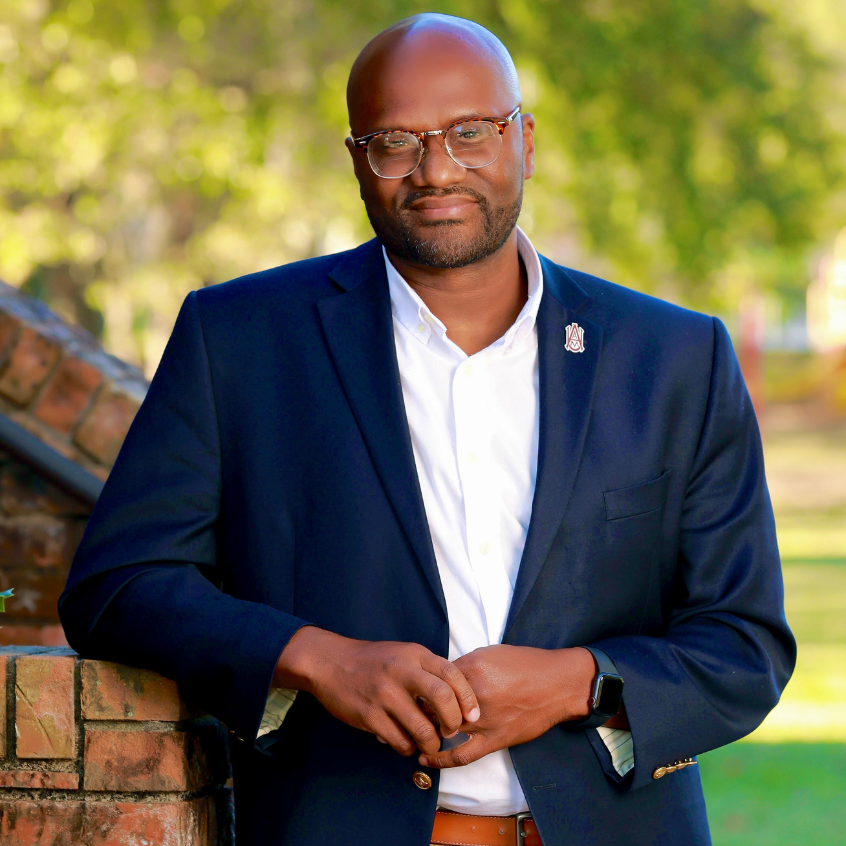
For 16 years, a dedicated 7th-grade social studies teacher at a Title I school in Huntsville, Alabama, has faced challenges many educators know all too well: large class sizes, diverse learning needs, and a growing population of students who struggle with literacy and attention.

But everything shifted when Kwesi Jackson discovered iCivics.

“It was a game changer,” he said. “I’m working with children whose literacy rates are so low. So you’re trying to teach at one level, but some of the students aren’t going to get there.”

That’s where iCivics made a difference: our platform’s visually engaging resources, built-in reading supports, and interactive games helped him meet students exactly where they were.

“The vocabulary is bold and highlighted, with definitions embedded. Just the fact that it’s chunked is helpful—it’s one of the literacy strategies that we’re told to use. It’s already where it needs to be.”

For this veteran teacher, one of the biggest advantages was how quickly he could implement iCivics lessons without sacrificing quality. “If a new teacher comes into the building today and they’re lost and they need a lesson, what do they do? I tell them: Go to iCivics. I think you’ve laid it all out for us. I really do.”

He’s seen the impact firsthand. Students who once hesitated to participate are now raising their hands. Those who struggled to comprehend traditional texts are thriving with the scaffolded, student-friendly resources. iCivics isn’t just a resource—it’s a bridge to engagement and understanding for students who need it most.

“Every now and then, there’s a bright light in my class. I listen to their conversations, and I’m like ‘We’re going to be okay,’ you know? I hope to see the students start to do the work and support what they believe. If you believe it, just as they say, ‘stand on it.’”

About Kwesi

Teaching experience: 20+ years in education; 15 years teaching — 7th grade social studies

School/Organization: Huntsville Junior High

How I Plan My Year with iCivics

As a teacher, one of the most important things I do at the start of each school year is map out my curriculum—and iCivics makes that process not only manageable but genuinely exciting.

On the iCivics website, in the Educational Resources section, teachers can browse materials by grade level or resource type. But my go-to move? I scan all the way to the right and click on the unassuming “Scope and Sequence.” (Personally, I think there should be arrows and sparkles surrounding this hyperlink because this is where the magic begins.)

Each year, I download the Scope and Sequence document directly to my desktop so I always have it on hand. iCivics offers versions for elementary, middle, and high school, and they’ve even included Spanish-language resources for middle and high school. These Spanish-language documents are incredibly user-friendly—every lesson plan, game, and infographic is hyperlinked, making it easy for teachers to access exactly what they need with just a click.

Since I teach high school, I use the High School Scope and Sequence. It’s organized into clearly defined units, each with a suggested sequence that helps me see the big picture. Every resource is labeled by type—WebQuest, DBQuest, lesson plan, video, mini-lesson, or infographic—so I can quickly identify what will work best for my students. I never worry about missing a resource—even if it fits into multiple categories, iCivics has it linked everywhere it’s relevant.

When I first made the move from elementary to middle school civics, I would browse resources by grade or type. Usually, I would start with the curriculum units. These were a lifesaver! They were laid out in a logical, chronological order and came with detailed lesson plans and student activities that helped me build confidence and structure in my classroom.

Now, as a more (ahem) experienced teacher, I’ve grown more comfortable adapting the materials. Now, using the Scope and Sequence as my foundation, I pick and choose the resources that best fit the needs, interests, and learning styles of my students. Whether I’m diving into a DBQuest to build document analysis skills or using a mini-lesson to introduce a new concept, iCivics gives me the flexibility to teach civics in a way that’s both rigorous and engaging.

Planning my year with iCivics isn’t just about staying organized—it’s about empowering my students to become informed, active citizens. And with tools this thoughtfully designed, that goal feels more achievable every day.

Written by Anne Walker

Anne Walker brings a wide perspective to iCivics, having taught Kindergarten through Dual Enrollment American History and Government over her 20+ years in education. A proud Madison Fellow, she holds master’s degrees in both Curriculum, Instruction and Assessment, as well as American History and Government. A member of iCivics’ Steering Committee, she is also proud to have a seat on the National Constitution Center Teacher Advisory Council and RetroReport Teacher Ambassadors. She currently serves on the National Council of Social Studies Board of Directors.

Through the iCivics Educator Network, the perspectives of teachers across the country contribute to the public conversation about civic education in the United States. Each contributor represents their own opinion. We welcome this diversity of perspectives.

2 iCivics Games are GEE! Award Finalists

Two iCivics Games are finalists in the 2025 GEE! Learning Game Awards. Uncovering Loyalties and the yet-to-be-released game, Investigation Declaration, have both been recognized as finalists in the Formal Learning category. 

“We are honored to be a finalist in the GEE! Awards again,” said game creator and iCivics’ Senior Director of Digital Learning Carrie Ray-Hill. “This organization really champions educational video games, and we are grateful to be among such innovative competitors.”

Uncovering Loyalties helps young learners in grades 3–5 understand the tensions of pre-revolutionary Williamsburg and encourages them to learn how people from different backgrounds brought unique perspectives to American history.

Investigation Declaration challenges middle and high school students to track how Enlightenment ideas and themes from the Declaration of Independence influenced rights and freedoms for a century. Investigation Declaration will be released in August! 

“It’s exciting to see our two newest games get recognized for excellence in game design,” Ray-Hill said. “We always put students at the forefront of our designs, and we challenged ourselves to find new, engaging ways to immerse them in the games.”

The GEE! Awards recognize excellence in educational game design. Finalists showcase their games during the Play Make Learn conference, which “is a place for collaboration and discovery in the design, research and practice of playful learning, games for learning and positive social impact, making and makerspaces, STEAM education, and arts in education.”

Both games are also in the running for the People’s Choice Award, which recognizes the game people are most excited about. Voting is open now and ends at midnight on August 21.

GEE! winners will be announced live at Play Make Learn on August 21.

Shari Conditt

The 2000 presidential race was the first election veteran teacher Shari Conditt taught about, and she’s learned a lot since then. In her more than 25 years of teaching, Shari has taught through seven presidential elections, six midterms, and many local elections.

“Elections are always tricky,” Shari said. “It doesn’t matter which election we’re talking about, really. Even midterms are tricky. With that said, I think presidential elections tend to feel a bit more divisive—and not just on sort of a regional level like you might feel when you’re talking about a local election or the House of Representatives, but rather sort of on the national level because of the amount of media attention that’s garnered through the election. And because of that, there’s a domino effect, and it trickles down to students.”

Last year, with political tension high and the country once again divided, Shari and her team of tight-knit social studies teachers at Woodland High School decided to approach election instruction with a plan, and iCivics was at the heart of it.

“I need to be really thoughtful about how I maneuver through students’ questions by maintaining a nonpartisan, neutral lens and ensuring that I’m providing the resources that students need in order to come up with their own opinions, without necessarily indicating where I might stand on any sort of issue. And iCivics helps me do that.”

The team curated a set of nonpartisan resources, lesson plans, and talking points not just for their own classrooms but for educators across the school and even in their middle school. They gave all teachers these materials because they knew students would have questions about the election in places outside of their social studies classrooms.

At the center of this toolkit were iCivics materials like the Popular vs. President lesson, which helps students understand the relationship between the electoral vote and the popular vote. They also made use of iCivics games like Win the White House to engage students in learning about the election process through interactive simulations.

One of the most powerful aspects of iCivics for Shari is the peace of mind it brings. “iCivics allows me the opportunity and materials to live in a nonpartisan place. There’s nothing about them that opens the door to a political agenda or to policy issues, and they really focus on the things that I, and we, want fidelity to: sustaining our democracy.”

Shari zeroed in on systems thinking: electoral processes, media literacy, and constitutional frameworks. She made it clear that she operates from a party-neutral position and provides high-quality, nonpartisan resources. Focusing on the structures, she says, gives students an opportunity to lean in without feeling divided by political opinion.

“The goal was to talk about systems and continuity. So I was less interested in digging in on the political issues that differentiated the candidates and was more interested in talking about the structural nature of elections, so that my students could see how the Constitution supported elections or the role of citizenry in elections. Because regardless of political differentiation or whatever policy area that might be hot in this election versus four years from now, the structures that underlie or act as the foundation of the election should be consistent over time, and that is the takeaway I want them to have.”

The results? More civil dialogue. More curiosity. Less chaos.

“I find that it tempers a bit if I’m able to live in that structural way of thinking. And it keeps things a little more calm and, maybe in a weird way, more engaging because it doesn’t turn off or dissuade students who think differently.”

Understanding the structures of government and being able to have civil discourse has taken Shari’s students beyond the classroom. They’re attending city council meetings. They’re hosting public events about zoning regulations. They’re paying attention to social media and leaning into their communities.

“At the end of the day, I just want my students to be engaged citizens in a democracy, and I want to give them the tools to do that. They’re going to do amazing things. I know they will. They already know how to practice civil dialogue. They already see the structures and the importance of them, and they know how to set political opinions aside and work with the person as a human in front of them. And because they have practiced these things here, they’re going to be able to make this a better place for us. All of us.”

About Shari

Teaching experience: 20+ years—high school social studies, including AP U.S. History, AP Government, economics, etc.

School/Organization: Woodland High School

Select Awards:

  • 2024 National Civics Teacher of the Year, Bill of Rights Institute
  • Runner-Up Washington History Teacher of the Year, Sons of the American Revolution
  • 2016 Washington State History Teacher of the Year
  • 2015 Regional Teacher of the Year
  • 2013 Nancy Lyman Roelker Mentorship Award—awarded by the American History Association to honor teachers who have inspired students in a way that’s changed their lives
  • 2009 James Madison Fellow

How to Ask for Professional Learning (Plus a Ready-to-Use Template!)

We all know the feeling: that spark of inspiration from a new teaching strategy, the desire to deepen our understanding of a subject, or the need to implement a new curriculum effectively. Professional learning opportunities and collaboration with fellow educators, like the Collaborative Learning Pathway offered by iCivics, can be the fuel that keeps our passion for education burning bright and directly impacts the learning experiences we provide for our students.

But often, the cost of high-quality professional learning can feel like a personal hurdle. While funding from your district or school for the entire staff may be limited. That is why advocating for your own professional learning and development can be a game-changer for your growth and, ultimately, your students’ success.

But what does it look like to advocate for yourself, and how should you get started?

Before you submit your request, take a moment to reflect on why your district should invest in this specific professional learning opportunity for you. Consider these points:

  • Improved student outcomes: How will this learning directly translate to a better learning experience and improved outcomes for your students? Be specific! Will it help you implement more engaging strategies? Address learning gaps? Enhance critical thinking skills?
  • Alignment with district initiatives: Does the professional learning opportunity align with current district-wide goals or initiatives? For example, if your district is focusing on inquiry-based learning, highlighting an offering on that topic strengthens your case.
  • Enhanced teaching practice: How will this learning enhance your instructional skills, classroom management, or assessment strategies?
  • Leadership potential and collaboration: Will this learning equip you to be a better resource for your colleagues or take on leadership roles within the school?
  • Staying current and innovative: Education is constantly evolving. Professional learning ensures you stay up-to-date on best practices and innovative approaches.

Your Advocacy Toolkit

  1. Do your research: Identify specific professional learning opportunities that align with your needs and school goals. Be prepared to provide details about the content, duration, cost, and potential impact.
  2. Connect to the curriculum: Clearly articulate how the professional learning will enhance your ability to deliver the curriculum effectively and meet learning standards.
  3. Highlight the benefits for students: Always bring it back to the students. Explain how your enhanced skills and knowledge will directly benefit their learning journey.
  4. Be specific and concise: Clearly state the professional learning opportunity you’re interested in and why you believe it’s a valuable investment.
  5. Offer to share: Suggest sharing your learnings with colleagues through a write-up for the school or district newsletter or blog, a presentation, or informal discussions, demonstrating a return on the district’s investment beyond your own classroom.
  6. Be professional and respectful: Approach your administration with a well-thought-out and respectful request.
  7. Follow school and district procedures: Understand the proper channels for submitting professional development requests.

Ready-to-Use Letter Template

To help you get started, we’ve created a customizable letter template you can adapt and send to your administrator. This template provides a solid framework for articulating your request effectively. We recommend updating the letter and benefits to fit the needs of your classroom and district.

How to Integrate iCivics into the End-of-Year

As a high school teacher, the end of the school year is a pivotal time—especially for the seniors in my classroom. Between AP exams, final projects, and wrapping up the last quarter, it’s easy for both students and teachers to feel overwhelmed.

Adding to the pressure, assessments today go beyond rote memorization. Increasingly, end-of-year tests focus on higher-order thinking, requiring students to analyze, argue, and write in more sophisticated ways. On top of that, we educators want to ensure students leave our classrooms equipped with the skills they’ll need in college or next year’s courses.

It’s a lot to juggle. But iCivics offers a simple, effective solution—one that supports students’ learning while easing some of the pressure on teachers.

Gamify Review Sessions

While end-of-year study time is important, it can quickly become monotonous. One of my favorite ways to energize review days is by incorporating iCivics games. In my classroom, I often use Argument Wars, Branches of Power, and Constitutional Compromise to help students revisit key content like court cases, foundational principles, and the structure of government.

These games keep students actively engaged—and they’re more than just fun. Each one provides teachers with real-time data on student comprehension. That data can guide review sessions, helping us target the concepts students need to strengthen before final assessments.

Data-Informed Re-Teaching

Sometimes, the data from review sessions reveals topics that need to be revisited. That’s where the iCivics resource library becomes invaluable. With just a few clicks, you can find full lessons, videos, and activities covering everything from the Constitution to westward expansion to the civil rights movement.

My students especially love the civil rights unit. The engaging videos and interactive lessons help bring the material to life—and they’re a lifesaver when I need to quickly pull together a targeted review lesson based on student performance from the previous day.

Ending the Year with Meaning

The final days of the school year should be more than just a countdown—they should be a chance to reflect, reconnect, and celebrate all that students have accomplished. With iCivics, educators can spend less time scrambling to prepare and more time creating meaningful moments with their students.

Whether you’re reviewing content, identifying areas for reteaching, or planning engaging activities, iCivics provides high-quality resources that meet the moment. At a time when we’re all feeling the pressure, it’s a partner that helps us—and our students—finish strong.

Written by Jessica Mahoney

Jessica Mahoney is a third-year social studies educator who teaches Virginia and U.S. History at Norview High School in Norfolk, Virginia. She is a member of the iCivics Educator Network, the Virginia Museum of History and Culture’s Teacher Advisory Council, and a teacher ambassador for Retro Report. Jessica also serves as an at-large board member of the Maryland Civic Education Coalition, the Legislative and Advocacy Liaison for the Virginia Council for the Social Studies, and an educator consultant for the Center for Civic Education. She is passionate about engaging students in history and civic life through hands-on, inquiry-based learning and advocates for elevating teachers’ and students’ voices in education policy at both the local and national levels.

Through the iCivics Educator Network, the perspectives of teachers across the country contribute to the public conversation about civic education in the United States. Each contributor represents their own opinion. We welcome this diversity of perspectives.

Engaging Multilingual Students with the Help of iCivics

Seniors in my Government & Citizenship class engage with the class material in a variety of ways. Some days, they’re deeply analyzing political cartoons, revising bills based on party pressure and Congressional testimony, or organizing evidence to argue for and against impeachment during historic presidential scandals. Other days, they play games! For multilingual students, some of these activities can be especially challenging given the cultural components of understanding symbols in a political cartoon, for example. When there’s the opportunity for English language learners to deepen their learning without the roadblock of Google Translate, it makes such a big difference!

Recently, my students began the week by examining President Nixon’s resignation letter; it’s a single sentence, so every detail matters. I started to see the power that the brief document afforded multilingual students, since they could more easily access the material. Instead of spending a chunk of class time working to translate, they spent class time really addressing the purpose of the activity: WHY those words were there, rather than what the words were. While some of our classes are co-taught with an EL/ML instructor, we all know that there are never enough resources to go around, and unfortunately, our English Language Learners don’t have access to modified assignments that might better support them. If only there were more hours in the day to create these for my seniors!

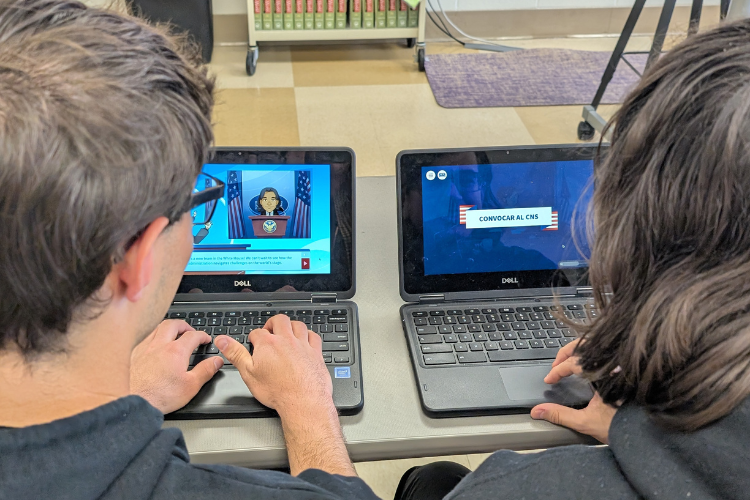
The success of the Nixon primary source activity challenged me to search for additional ways to honor my English language learners. Thank goodness for iCivics! The iCivics site includes a “Pedagogy Tags” search option, including filters for EL/ML and Spanish lesson plans, games, infographics, and slideshows. The Convene the Council game and associated resources, created alongside the Council on Foreign Relations, enabled students to learn and demonstrate understanding in Spanish without the intermediary of a clunky translation tool. When I pointed out the “Jugar en Español” option, I saw the transformation in two of my Spanish-speaking students in one hour. Their body language changed, scooting their chairs towards their Chromebooks and bending over the screen to select the Spanish option. They built avatars that looked like them, and convened their National Security Council as iCivics shared fictional global crises to which they could respond and delegate.

I know that these students would have been successful if the game had only been offered in English, but the Spanish option increased their enthusiasm and participation level. In fact, one student finished so much more quickly than usual that he thought he’d done it wrong! As he saw students around him still playing, he assumed that he must have missed something; he was used to being one of the last students to complete an assignment, not because of a lack of understanding but because of translation challenges. When I explained that he’d done a great job and played the game just right, the pride in his face reinforced how powerfully he connected to the activity. The next day (I promise I’m not making this up!), at the end of class, he came up to me to say thank you, giving me a piece of his favorite Colombian candy. It was a powerful moment: getting to access a class activity in an authentic way was so important to this student that he was still thinking about it the next day and felt compelled to show his gratitude.

Convene the Council is just one of hundreds of iCivics options that support multilingual students. I plan to use the “6 Roles of the President” Infographic next, as we deepen understanding of presidential responsibilities beyond our initial foreign policy focus. I hope these resources will help my Spanish-speaking students feel like accessing activities in their native language is part of our class culture rather than something that necessitates a show of gratitude. And it was some great candy!

Written by Megan Thompson

Megan Thompson is in her 20th year teaching social studies. She has worked with iCivics Educator Network, National Constitution Center’s Teacher Advisory Board, and Eastern State Penitentiary’s Justice Education Collaboratory. With the support of a James Madison Fellowship, she earned a master’s in political science and co-created her school’s dual enrollment program. She teaches Crime & Justice, Government, Dual Enrollment Government, and Dual Enrollment World History just outside of Minneapolis, and she leads professional development on the Supreme Court, Foundations of the American Revolution, media literacy resources, and mindfulness in the classroom. Megan’s passion is in developing rigorous and relevant classroom materials that connect the past and the present, and supporting teachers in their implementation.

Through the iCivics Educator Network, the perspectives of teachers across the country contribute to the public conversation about civic education in the United States. Each contributor represents their own opinion. We welcome this diversity of perspectives.

Don Jenkins

Since August 2024, Don Jenkins has traveled around Norway as a Fulbright Roving Scholar in American studies. In this capacity, he spends about three days at a given school teaching lower secondary students (ages 14–16) about U.S. history, government, culture, and current events. By the end of the school year, he will have taught approximately 6,000 students.

Don uses iCivics as part of the curriculum he’s developed for some of his workshops on topics like the Bill of Rights, how laws are passed, and the Civil Rights Movement. As a teacher for 30 years, Don is familiar with iCivics:

It’s been successful in my classroom back in the United States, so I kind of thought that it would be a good way for kids to learn more about the presidency, the separation of powers, and the checks and balances—important governmental ideas in the United States. I think kids really remember what they learn from playing games these days, and I thought it would be kind of a fun way to highlight and have them go deeper into the points that we were discussing from the activities earlier in the workshop.

Don’s most popular workshop is “So You Want To Be President?” which focuses on the role of the president and the unique process of choosing a president in the United States, including discussions about the Electoral College and the two-party system involving Republicans and Democrats. He ends the course by giving students time to play Win the White House and Executive Command.

As the “foundation of any democratic country,” Don notes that civic education is not just about “learning the basics of how governments work and how bills are turned into laws, but it can teach all the subjects. You can teach how to read. You can teach how to write.”

Case in point, Don highlighted the benefits of using iCivics games for helping students practice their English skills. One of the goals of the Fulbright program is for the students to practice their English with a native speaker. Don likes that Win the White House can be played on different levels, so the vocabulary can align with the Norwegian students’ English language abilities:

They can kind of adapt it to whatever they think would be the best language level for them. A lot of kids are not entirely confident with using English, so I think it also helps them build some confidence, and it’s also good because they can work in groups and talk about what’s going on.

“We spend about half an hour on the games and talking about them. We had lunch after one of the classes, and many of the kids were still playing the game,” Don said, explaining one of the ways he gauges the game’s impact and how they engage his students.

“Whenever people ask, like, ‘Hey, I’m stuck. How can I get kids excited about government?’ I’m always like, ‘Use iCivics! That’s a good way to get them hooked.’”

About Don

Teaching experience: 30+ years — Middle and high school social studies

School/Organization: Fulbright

Select Awards: 2019 Civic Engagement Champion (National Association of State Boards of Education)

A Fluorescent Moment for Civics

As we carry the energy of Civic Learning Week (CLW) 2025 forward, I am reflecting on the momentum we witnessed across the country.  The key takeaway for me coming out of CLW is that the civic fabric of America, while frayed, remains durable. New research shows public support for civic education is sky-high. Large majorities believe that what unites us are the founding principles of our constitutional democracy and that the highest responsibility of citizenship is protecting each other’s liberties.

A heat map of local civic action from recent weeks, covering everything from classroom lessons about the Constitution to people attending town halls and Governors signing civic education legislation, would show bright fluorescent splashes across all 50 states. That is what CLW is all about, and it is worth celebrating. We have excellent opportunities to maintain this momentum on the horizon, including around Constitution Day in September.

We also know that polarization, plummeting faith in institutions, and technology-driven disconnection will continue to stress our civic fabric to a degree we haven’t seen in generations. Coupled with the intensity of disruption in politics and policy right now, these trends are creating a fluorescence of their own, in the sense that just keeping up is akin to staring into the sun.

In this environment, civic education is the most powerful, underutilized tool we have to ensure that our individual liberties and our voice as the ultimate democratic arbiter are protected and that our children are prepared to navigate an increasingly complex world.

The fast-approaching 250th anniversary of the birth of the American experiment provides a fleeting opportunity to return civic knowledge, pride, and action to the center of American life after so many years of atrophy with obvious consequences. To paraphrase Sharon McMahon, the popular author and civics podcast host who graced us with her presence at CLW, too many of us have been robbed of this rich knowledge for too long – and it is time to get it back.

We built momentum for this critical work at CLW. I want to offer my heartfelt appreciation to all the individuals and organizations that spoke up for civics across the country, with special thanks to our CLW National Forum co-hosts from the Center for Revitalizing American Institutions at the Hoover Institution and our CLW and forum sponsors Bezos Family Foundation; Corporation for Public Broadcasting; Daniels Fund; Democratic Knowledge Project; Microsoft; More Perfect; PBS LearningMedia; Stuart Foundation; and Travelers.

Here are five additional steps forward I believe we all must take together to bring civics back to the center in our nation:

The Founders unequivocally believed that civic education should be a sustaining pillar of constitutional democracy:

  • Thomas Jefferson and James Madison extolled civic learning as a way to safeguard individual freedoms.
  • And President George Washington, in his final Annual Address to Congress in 1796, said that the “education of our Youth in the science of Government” would prepare them to be “future guardians of the liberties of the Country.”

To them, civics and an ethos of service were at the heart of what education in America should be, but we have strayed very far from that vision in our schools and communities.

Key takeaway: Collectively, we need to lead with the Founders’ vision as we argue for returning high-quality civics to the center of how our children learn and prepare to be responsible citizens. We can tell this story and tell it often over the next 18 months.

More to explore:

  • Watch the Civic Learning Week closing plenary with Condoleezza Rice, Tad and Dianne Taube Director & Thomas and Barbara Stephenson Senior Fellow on Public Policy, Hoover Institution, and Spencer Cox, Governor, State of Utah.

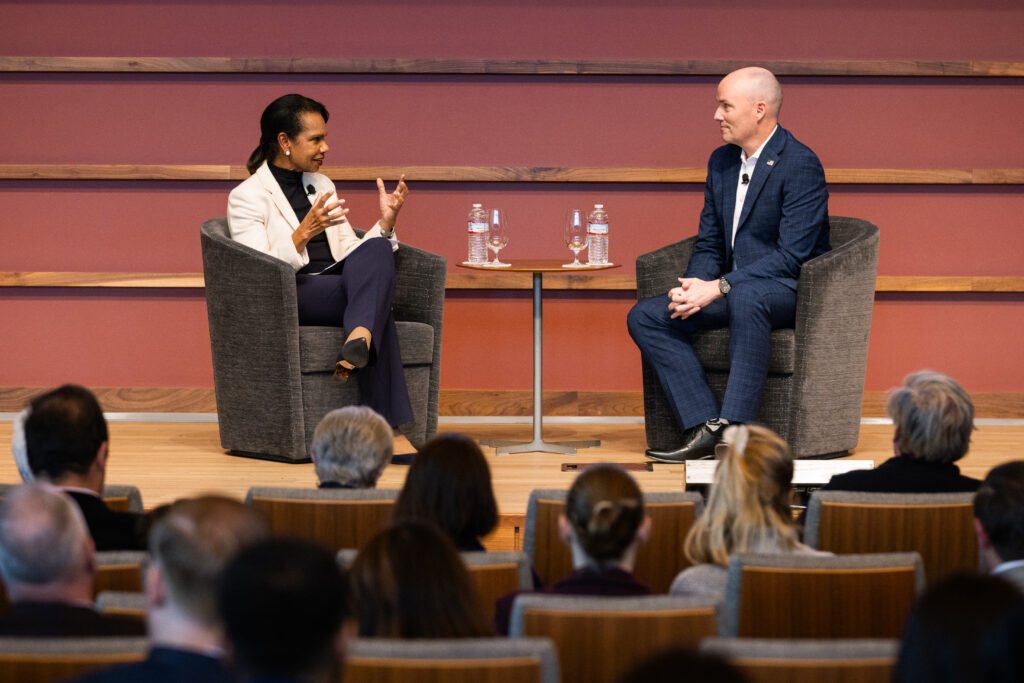
Condoleezza Rice and Utah Governor Spencer Cox converse during the Civic Learning Week closing plenary.

It would be hard to overstate the importance of continuing to go local and back to basics on civics at this moment:

  • Local communities are where the most trusted institutions and leaders still reside.
  • Policy gridlock and our saturated media environment make it difficult to operate productively at the federal-national level.
  • Our federalist system, and many of the Trump Administration’s early policy moves, mean that states and locales will have even more power to set the direction of education and other issues in the future.

This means that public dialogue and policy change are coming in all 50 states, focusing on what the goals of education should be (hint: look back to the Founders!) and how to manage and fund it moving forward.

Key takeaway: Funders and partners can immediately get behind an array of local efforts to build civics coalitions, advance good policy based on local context, and help bridge the gap between the civics classroom and local communities, where civics can be experienced first-hand in a way that solidifies student learning and nurtures longer-term civic engagement. The work of the CivxNow coalition and growing momentum behind state Civic Seals programs and the National Civics Bee are examples of new energy in this area.

More to explore:

Gen. Jim Mattis speaks with Hahrie Han and Sharon McMahon during the Pluralistic Civic Learning in Practice panel at Civic Learning Week.

We are long past due to evolve our thinking about how civic learning happens in the following ways:

  • Start in kindergarten and never stop providing civic learning experiences (rather than focusing mainly on grades 6-12).
  • Build new approaches to imparting civic knowledge that are fit for the way young people – really all of us – learn and live today, including engagement in all types of school, out of school, and informal learning environments.
  • Expand our argument for civics to include the importance of core skill building (communication, critical thinking, and collaboration) for the economy of the AI age.
  • Evolve our thinking about measuring attainment.

Of course, to do any of this effectively, we also have to become comfortable with some uncomfortable things: embracing responsible AI use, walking the walk on pluralism and celebrating a huge range of local approaches, and inviting students and parents into the heart of the conversation about where we go from here.

Key takeaway: We have a moment of opportunity to strengthen nascent collaboration among stakeholders across the learning cycle (K-Grey) and learning environments, and between the public and private sectors. Engaging the business sector, including technology organizations, will be critical here and across all that I propose in this document.

More to explore:

A panel of four youth and young adults discuss civic education with moderator Rajiv Vinnakota, President of the Institute for Citizens & Scholars.

In many recent conversations, I have sensed latent skepticism about whether schools are worthy of focus any longer in terms of delivering quality civic education. I cannot argue strongly enough for us to resist this temptation, for a few key reasons among many:

  • For 250 years, there have been civics teachers in every community advancing the Founders’ vision of protecting individual liberties and preparing the future defenders of our democratic traditions. There are no other scaled, locally trusted channels like this for reaching young people and their parents and communities.
  • The further shift of power over curriculum and instruction to the states, coupled with decreased federal funding streams, mean that civic educators will have to navigate a Wild West environment to access professional development opportunities and deliver high-quality civic learning.

These shifts provide openings at the state and local level to build support for educators and for returning civics to the center. At CLW, we unveiled a new annual prize honoring an exemplary civics teacher from our network in the name of iCivics’ founder, the late U.S. Supreme Court Justice Sandra Day O’Connor, which we hope will be part of a larger surge of support to civic educators.

Key takeaway: Our transformative aspirations for civic education will fall apart if we overlook teachers and their frontline role as defenders of both our democracy and our children. We need to support teachers and encourage them to be engaging America’s young people on both our democratic traditions *and* contemporary public issues in the classroom. Strong civics instruction that effectively brings these two things together, and makes space for students to engage with a variety of viewpoints, propels the development of core democratic knowledge, civic pride, critical thinking, communication, and collaboration skills – all so important in the challenging contemporary environment and economy.

More to explore:

  • Read about our Chief Policy and Advocacy Officer’s full circle moment during Civic Learning Week.
  • Check out the CivxNow State Policy Menu, your one-stop shop for crafting strong civic education policies for K–12 schools.
  • Learn about Teachers Advancing Civic Learning (TACL), a grassroots network of educators trained and empowered to advance and strengthen civic learning through policy at the local, state, and national levels.

Even a milestone commemoration of the birth of the American experiment isn’t immune from national cultural conflict right now. But below the national level, evidence shows a huge yearning among Americans to reach out across differences, build more connections, and solve problems together – in other words, to act according to pluralism. And so we must:

  • Tell a better story about democracy by telling better stories about America, to paraphrase Republican strategist Sarah Longwell. America250 provides a generational opportunity to do that.
  • As a means of rebuilding broader trust in institutions and democracy, raise up and celebrate local (more trusted) institutions and local (more trusted) civic educators and leaders who protect our liberties and deliver results in communities.

Stitched together, these many actions will represent a nationwide civic reawakening at a pivotal moment in our history. The huge scope and variety of these efforts will be pluralism in action.

Key takeaway: The greater opportunity here is to give all Americans something they can feel prideful about throughout their lives. Today’s young people likely won’t remember the division and distortion of this moment, but they may remember the cool things they helped make happen in their community for America250.

More to explore:

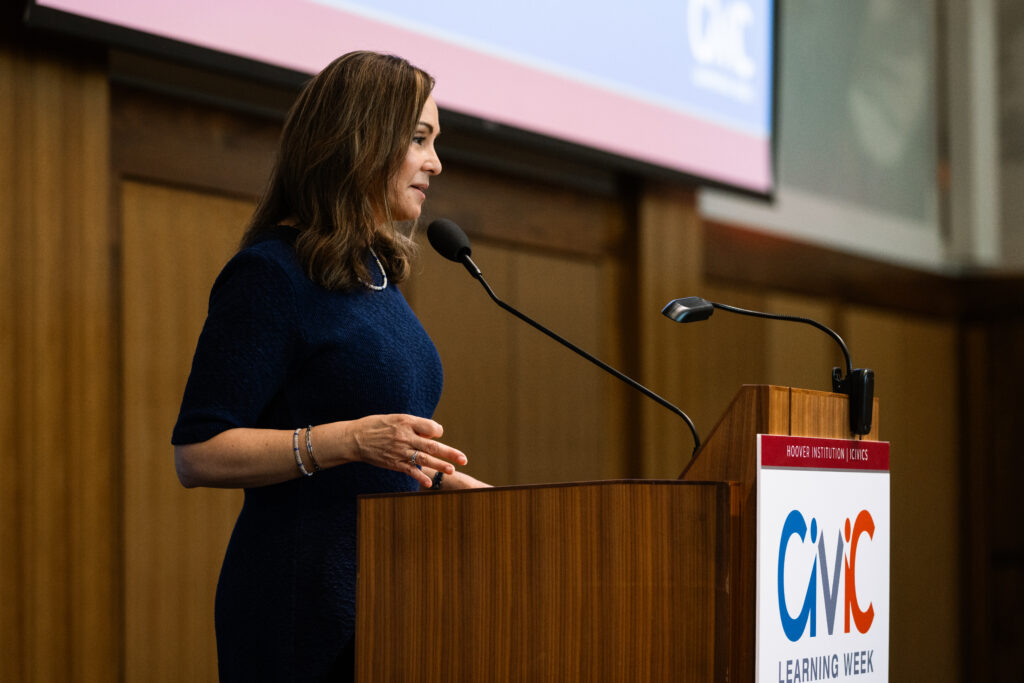
Rosie Rios, Chair, America250, speaks at the Civic Learning Week National Forum.

I hope the civics community can coalesce and do our best work to take advantage of the generational moment that is upon us. As Civic Learning Week exemplified, we are best suited to tell the vividly colorful (fluorescent) stories about America and our constitutional democracy that can bring people together at the community level. There is no more important calling on the road ahead, and as always, I’m reminded of a quote from iCivics’ founder, the late U.S. Supreme Court Justice Sandra Day O’Connor: “We pay a price when we deprive children of the exposure to the values, principles, and education they need to make them good citizens.” My only edit would be to have this quote apply to all people, and my call to action is civics for all, one community at a time.

Civic Learning Week photos courtesy of Patrick Beaudouin | Hoover Institution