Using DBQuests for Test Preparation

Teachers are teaching more than facts in high school history and government classes. If you ask them, most will agree the content is a platform for teaching life skills; cultural awareness, civic engagement, and communication come to mind. Above all, teachers want their students to leave their social science classes with strong critical thinking skills, the ability to analyze events, evaluate sources for reliability (and determine the validity of that source based on its biases), and understand multiple perspectives.

As the focus of our instruction has changed, so has the way we assess the learning of these skills. Teachers are moving away from straight multiple-choice tests (although there is something to be said about the ease of grading A, B, C or D) and focusing on students’ analytical skills demonstrated through essay or free-response prompts. Similar to the long division of old, teachers are looking for students to show what and how they are thinking and, while a “right” answer is appreciated, so is the process by which students arrive at that answer.

We all know practice makes “better” (nothing is perfect). Teachers can not hand students an essay question or send them off to take their AP test without practice answering these types of questions. It would be setting students up for failure. Speaking from experience, though, creating quality practice questions is time consuming, more so if you are not an expert in the topic. How can you find quality sources if your own understanding is rudimentary at best?

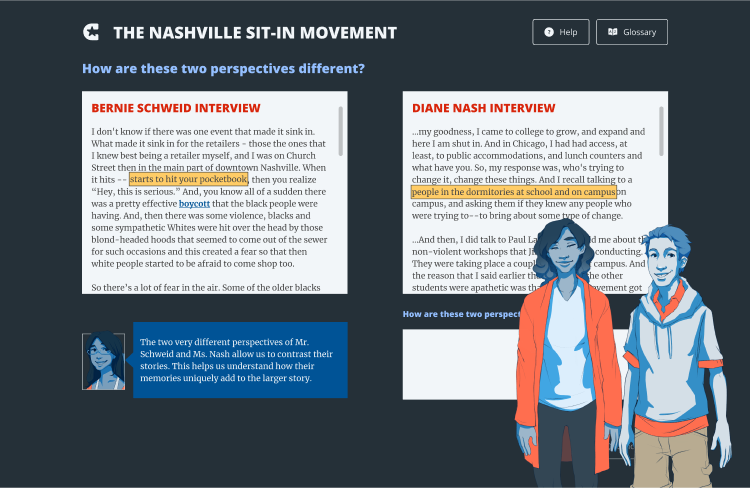
This is where iCivics DBQuests come in. DBQuests are a learning tool that uses document-based questions to guide students in primary source analysis. I have used the same ready-to-go DBQuests with middle and high school (Dual Enrollment no less), picking and choosing which supports from the teacher resources were needed for my English Language Learners and Gifted and Talented students as needed with great success thanks to the built-in support. DBQuests guide students through analyzing a primary or secondary source to identify its perspective and usefulness, identify the source type, and analyze it to answer a central question. The Teacher’s Guide includes supports like student printables and glossaries, perfect for your EL/ML students needing that reinforcement.

Students who are being introduced to DBQuests and essay writing will benefit from the guided mode. Guided mode prompts students to identify different parts of the source while thinking critically using that overarching question. More experienced students can be assigned the same activity without the support in freeform mode. This is more similar to what your AP students could expect to see in the FRQs. The true beauty? You can assign the different levels to students based on their individual needs simultaneously without anyone being aware of what level of support they are receiving using iCivics’ LMS. Set up different classes for students (all they would need is your class code) or assign Lesson A and Lesson B in the same class, specifying who does which version. It is up to the teacher.

As teachers, we understand how important it is to meet students where they are, rather than where we want them to be. By using these scaffolds I was able to meet the needs of all of my students (and no one knew they were doing different lessons), which encouraged each of them to stretch their skills. By the end of the year, I have seen significant growth in the reasoning and evaluative skills of all my students.

No prep. Personalized scaffolds. DBQ practice. What reason do you have NOT to use them?

Written by Anne Walker

Anne Walker brings a wide perspective to iCivics, having taught Kindergarten through Dual Enrollment American History and Government over her 20+ years in education. A proud Madison Fellow, she holds master’s degrees in both Curriculum, Instruction and Assessment, as well as American History and Government. A member of iCivics’ Steering Committee, she is also proud to have a seat on the National Constitution Center Teacher Advisory Council and RetroReport Teacher Ambassadors. She currently serves on the National Council of Social Studies Board of Directors.

Through the iCivics Educator Network, the perspectives of teachers across the country contribute to the public conversation about civic education in the United States. Each contributor represents their own opinion. We welcome this diversity of perspectives.
Unlocking the Constitution for Multilingual Learners: The Power of Video

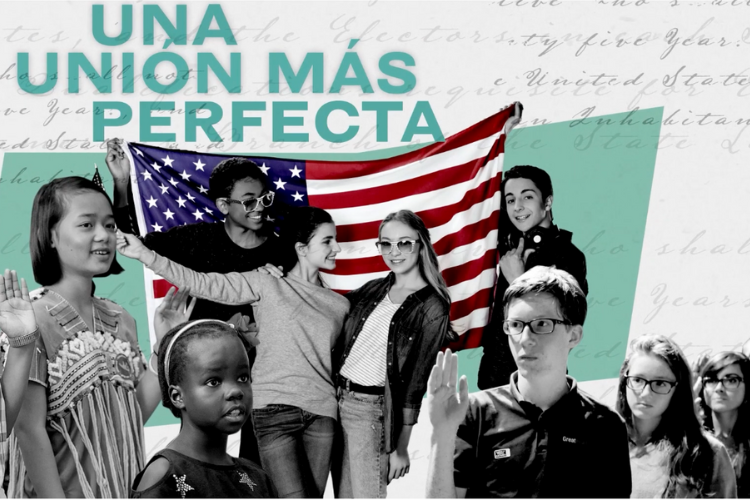
As we celebrate National Bilingual/Multilingual Learner Advocacy Month this April, it’s the perfect time to explore effective strategies for supporting these students, and our Constitution EXPLAINED, or Todo sobre la constitución (in Spanish), video series offers a powerful example of how to do just that.

Videos are a great resource for teaching English and multilingual learners (ELs/MLs) because they provide:

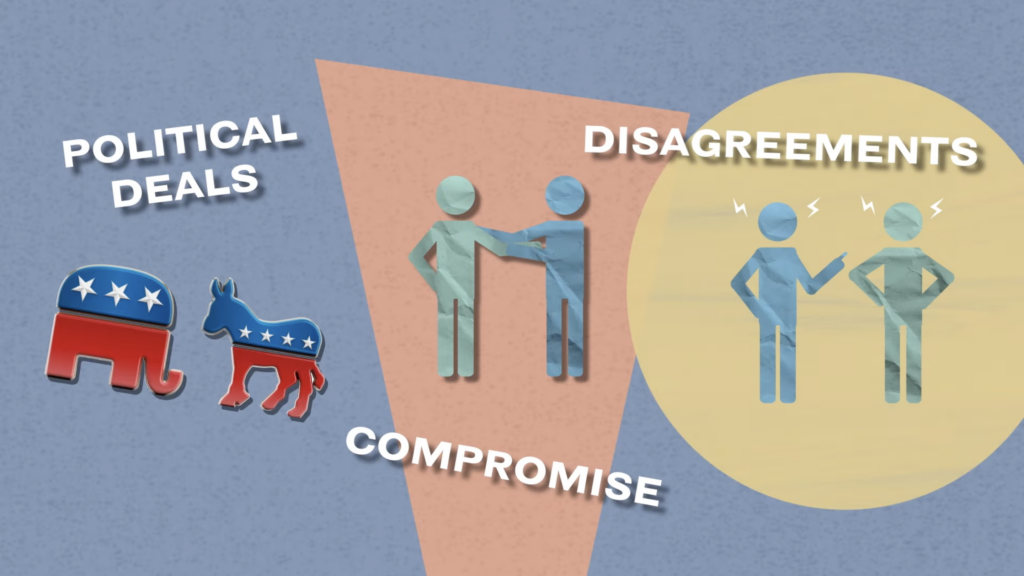
  • Multimodal Input: Videos don’t just present text; they combine audio and visual cues. This is crucial for ELs/MLs, who benefit from seeing concepts illustrated. For example, when explaining the “separation of powers,” visuals show the three branches of government in action. This helps ELs/MLs connect complex legal terms with concrete images, enhancing comprehension and retention. This is especially helpful with the complex vocabulary of social studies. Visuals can help explain the meaning of words like “legislative,” “ratification,” and “compromise.”
Screenshot from The People's Branch episode of the Constitution EXPLAINED visually explaining the terms "political deals," "compromise," and "disagreements."
The People's Branch episode uses visuals to explain the meaning of "political deals," "compromise," and "disagreements."
A screenshot from the El poder del pueblo episode of Todo sobre la constitución that visually explains the terms "negociaciones políticas," "acuerdos," and "desacuerdos."
The Spanish version of the episode, El poder del pueblo, uses the same visuals to explain the meaning of the same terms in Spanish.
  • Authentic Language and Context: These videos use a conversational approach and were designed with students in mind. ELs/MLs see and hear about constitutional concepts in everyday language in a way that builds upon their background knowledge, exposing them to new concepts along with familiar language, thus providing valuable and relatable context.
  • Engaging and Motivating Learning: The short, digestible format of the Constitution EXPLAINED videos keeps MLs engaged. The clear, concise explanations, coupled with visuals, make learning about the Constitution less intimidating and more enjoyable. The call to action questions at the end of each video encourage the students to want to learn more.
  • Listening Comprehension and Language Support:
    • Videos provide valuable listening practice, helping MLs develop their ability to understand spoken English within an academic context.
    • Crucially, the availability of both English and Spanish versions, along with bilingual Teacher Guides, provides essential support. Spanish-speaking MLs can listen in their native language and then reinforce their understanding in English.
    • Subtitles/closed captioning or transcripts can be used to support comprehension, allowing learners to connect spoken and written language.
  • Flexibility and Accessibility: The short video format (2-3 minutes in length) allows for flexible learning. Teachers can assign videos as needed, and MLs can review them at their own pace. This is particularly beneficial for students who need extra time to process information. They can watch the videos multiple times.
  • Extending Learning with Teacher Guides: Our bilingual (English/Spanish) guides are designed for maximum versatility, supporting diverse classroom needs and maximizing and extending learning. The English component benefits all multilingual learners, regardless of their native language, while the Spanish component specifically caters to dual-language programs and Spanish-speaking MLs, ensuring targeted support. The guides include:
    • Content-specific vocabulary: Taken directly from the video scripts, these terms are presented in context, aiding comprehension.
    • Guiding questions: These questions activate prior knowledge and encourage critical thinking, both before and after viewing.
    • Video Viewing Strategies and Instruction Strategies: These provide teachers with tools to support MLs, such as: “Turn and Talk” activities for collaborative learning; Identifying cognates in Spanish and English to build connections; Sentence frames to guide writing and discussion, and more.
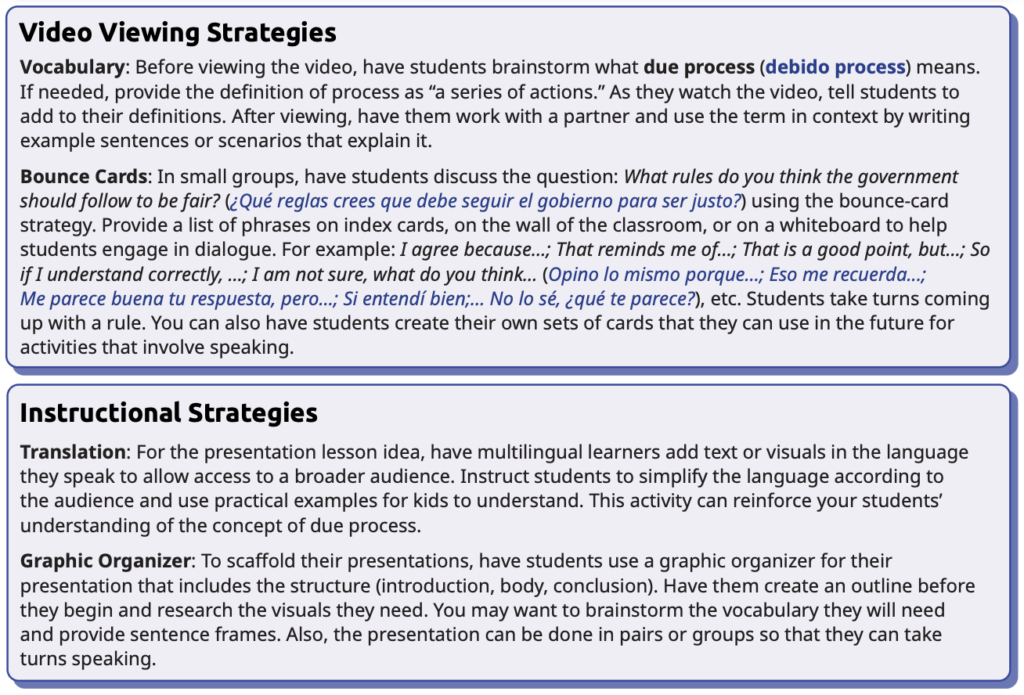
Screenshot of the Video Viewing Strategies and Instructional Strategies sections of a lesson plan.

In conclusion, the Constitution EXPLAINED video series harnesses the power of video to make learning about the Constitution accessible and engaging for all students, particularly English and multilingual learners. The combination of multimodal input, language support, and flexible resources creates a rich learning experience that promotes both language acquisition and civic understanding.

Written by Kristen Chapron

Kristen Chapron is Senior Editor of Digital Learning and ELL at iCivics. She worked on the Todo sobre la constitución series and looks forward to creating even more materials for English and multilingual learners.

Emma is Proud of You

Man, it’s not easy to be a civics teacher right now. No matter where you teach, things may feel a bit tricky. For some of you, it may feel like a minefield. You may think, “I’m not sure how to do my job.”

We recognize that. We get it.

Here’s what I want to say: Yes, you do. You know how to do your job. Moreover, the parents of America want you to do your job. The public overwhelmingly agrees that our country needs K-12 civic education. It’s more than popular. It’s more than bipartisan. Americans from all political stripes think civic education will have a positive impact on strengthening our national common identity. I have receipts. See here and here.

There are lots of ways to be a patriot. For us civics teachers of America, it is by doing our jobs—teaching the knowledge, skills, and dispositions our students deserve and our constitutional democracy requires.

With full appreciation for just how busy you are, I’d like to suggest that this moment calls for even more from us. It calls for us to take our mission to our students’ parents.

When we’re scared or uncertain, it’s only natural to seek shelter and weather the storm. As someone who is extraordinarily afraid of lightning (I grew up in South Florida—the trauma is real), I don’t take this metaphor lightly. But now is not the time to hunker down and hope the tempest soon retreats. We need to put on our <insert your preferred regional term for rainboots> and take our case to parents and even the broader community.

Here are some ideas on how to structure your outreach:

    • Start with the Personal. Share what drew you to the teaching of history and civics. For me, it was a passion for our founding ideals and an enthusiasm for the complexity of our system of government (I’m looking at you, federalism and the Electoral College). I’m always telling folks, “Listen, social studies teachers don’t go into this line of work because we hate America. On the contrary, we love our country, our history, our founding documents, and our system of government, and nothing gives us greater joy than sharing this passion with our students.”
    • Move to the Philosophical: No, I’m not talking Socrates or Kant, but if that’s your jam, you do you. I’m talking about your teaching philosophy. Briefly, here’s mine, which you are welcome to borrow from: I’m not here to tell students what to think. I’m here to help them learn how to think. My job is to bring enthusiasm and knowledge and just enough self-deprecating nerdiness to protect myself from students’ relentless if not clever (and sometimes hilarious) jabs at my civics teacher identity. When students leave my classroom, they will know more, care more, and feel more confident in their ability to think critically about and contribute to their communities. As for this talk of indoctrination, I don’t mean to be trite, but we can hardly get our students to write their names on their assignments. It’s quite a stretch to think we can get them to fundamentally shift their worldview.
    • Highlight the Practical: High-quality civic education has a lot of known benefits, including but not limited to literacy gains, college and career readiness, enhancement of durable skills, and thriving communities. Also…ALSO, it’s a requisite for healthy democratic governance. As Thomas Jefferson wrote in an 1818 letter to William Jarvis, “I know no safe depository of the ultimate powers of the society but the people themselves; and if we think them not enlightened enough to exercise their control with a wholesome discretion, the remedy is not to take it from them, but to inform their discretion by education.” Research shows that education does precisely what Jefferson suggests. Students who receive a high-quality civic education are more likely to vote and discuss current issues and events at home, be confident in speaking publicly and communicating with elected officials, and volunteer and work on community issues.
    • Celebrate the Promise: Thomas Jefferson wasn’t the only President who expressed strong support for civic education as a sustaining pillar of liberty in a constitutional democracy. James Madison posited that civic education and engagement were bulwarks against “crafty and dangerous encroachments on the public liberty.” And George Washington, in his Eighth Annual Address to Congress in 1796, said, “a primary object of such a National Institution should be, the education of our Youth in the science of Government. In a Republic, what species of knowledge can be equally important? And what duty, more pressing on its Legislature, than to patronize a plan for communicating it to those, who are to be the future guardians of the liberties of the Country?” As a parent myself, I can think of no greater honor than for my children to be grow up to be guardians of liberty in our country.

Lastly, INVITE.THEM.IN. Forgive the all-caps, but I feel strongly about this one. It doesn’t have to be a literal invitation to visit your classroom, although it can be. Rather, it could be as simple as inviting them into your scope and sequence or a particular unit or lesson plan. You’re teaching your state-mandated standards. You have nothing to hide! So make that visible. Visibility promotes transparency, and transparency promotes trust.

Just know that I trust you. I always have.

And if you need a little help to get started on that parental outreach, I’ve got you covered. Here’s a letter template for parents/guardians you can customize for your voice and local context.

We’re also happy to provide a separate letter template for parents/guardians that introduces iCivics and our approach and academic values that you customize and use.

Written by Emma Humphries

Dr. Emma Humphries, iCivics’ Chief Education Officer, brings extensive classroom experience teaching government, history, and economics, where she discovered the impact of engaging learning tools. With a deep commitment to empowering educators, she continues to champion innovative civic education resources and strategies.

Honoring the Hard Work of Our Civic Educators

We are grateful for you, civic educators. That’s the first thing I want to say in this post-election environment. We have no doubt that you have experienced a range of emotions over the last several days, and that’s to be expected.

What binds us together, regardless of how we are processing this moment in time, is the fact that you continue to do your best to show up for your students. As our CEO, Louise Dubé, wrote several weeks ago, you also stand shoulder-to-shoulder with election workers and volunteers, community leaders, and so many others as “civic frontline workers,” safeguarding our best democratic traditions.

Through this election cycle, you did something that I suspect many Americans didn’t have the privilege of seeing—you supported one another as civic educators. I saw members of the iCivics Educator Network join monthly meetings to share their experiences. I saw civics teachers on social media stand up for their peers and offer ideas for engaging students about the election and our constitutional democracy.

On Constitution Day, I visited City High School in Pittsburgh, Pennsylvania, where I witnessed firsthand what it looks like and what it takes to build a strong civic culture and ethos of caring for things beyond oneself. To say that the teachers, administrators, support staff, and students at City High are inspirational would be an understatement.

I’m carrying that inspiration into the days ahead, and I want to issue a call to action for all of us:

This is our moment to step up for civics. To continue to sustain and strengthen our constitutional democracy, we have to keep teaching it. This election cycle brought us into a modern-day Wild West of misinformation, disinformation, and AI-fueled confusion. Together, we carry the heavy responsibility of preparing the rising generations for this transformed environment, and we must redouble our efforts to put civics front and center for students. iCivics has resources to continue teaching around the election as we look toward Inauguration Day and beyond.

We call for peace and understanding. After one of the most contentious elections in our nation’s history, we acknowledge that nerves are still raw in many cases. We urge people to practice empathy for their fellow Americans who may hold different beliefs or have supported a different candidate.

We look to the future. We need to take advantage of this moment to unite people in sustaining and strengthening our constitutional democracy, while celebrating the incredible experiences, contributions, and perspectives of the many groups that constitute American society.

As we move forward, my appreciation for all of you is exemplified by a quote from the great Fred Rogers of Mr. Rogers’ Neighborhood: “Anyone who does anything to help a child in [their] life is a hero to me.”

Thank you for continuing to help. We see you and we appreciate you.

How to Teach Critical Thinking in the Digital Age

With information at our fingertips like never before, the sharing of misinformation happens faster than you think. In fact, by the time you see that post or check the credibility of the information, it has been shared hundreds of times, has thousands of likes, and everyone already has an opinion.

As educators, we know to question the credibility of what we see and share online; we’ve learned and honed those skills and put them into practice constantly. But most students don’t have those skills yet, or they haven’t practiced those skills enough for them to become second nature. And because our students have grown up in the digital era, the speed at which they receive and share information is often more important than the credibility of the information itself.

The problem isn’t just misinformation or disinformation. In reality, we are missing something very important: students’ curiosity and desire to know.

Educators have a unique opportunity to foster that curiosity and critical thinking in ways that help students develop a positive and ethical relationship with media and information. Imagine a future where the desire to have credible information sparks a change in the information that is shared. Imagine a future where misinformation isn’t leading the narrative, dividing society, and preventing people from receiving the help that they need. Now don’t just imagine it; join us in making that future a possibility.

How, might you ask? It starts with teaching students media literacy and information literacy. This includes teaching the critical thinking skills students need to:

  • verify the information they encounter,
  • assess the credibility of sources,
  • identify biases in the media,
  • understand how they influence what is shared and how it is shared, and
  • evaluate the use of advertising techniques to grab their attention.

This is an opportunity for educators to foster a culture where students feel comfortable expressing their thoughts and are respectful of others’ opinions. By developing students’ media and digital literacy skills, they learn what is happening in the world around them. And being able to acknowledge, trust, and share that information is how they feel able to participate. The classroom gives students a safe place that encourages their exploration and provides them with opportunities to engage with information, digital tools, and online resources.

We recognized the need for resources that foster learning opportunities and environments. We partnered with the digital literacy experts at Digital Inquiry Group to create Civic Digital Literacy, a collection of nonpartisan, evidence-based, classroom-ready resources that prepares students to skillfully verify the various pieces of information they encounter online. From understanding the value of conserving their attention to investigating the purpose of interest groups, these lessons and videos encourage students to apply digital literacy skills to real-world situations. Use these lesson plans and videos to give students regular opportunities to practice these important critical thinking skills. We even have professional development videos to help teachers understand and teach the key pillars of digital literacy.

My personal favorites are the resources focused on artificial intelligence. Before teaching the topic, familiarize yourself with some of the impacts that AI can have on civic life by watching our professional development video, What Students Need to Know About AI, featuring Sam Wineburg, co-founder of the Digital Inquiry Group.

From there, introduce students to the topic of AI and elections with the video, How Artificial Intelligence Could Influence Elections. It explores how AI could influence elections and comes with a teacher’s guide that includes discussion questions, lots of ideas, links to other lessons, and resources for teachers. It also includes worksheets for guided and independent practice that encourage students to think deeply about the benefits and concerns that the use of AI could pose.

With the foundation set, venture into the lesson, Artificially Speaking: AI Chatbot Claims. Here, students practice lateral reading to investigate claims produced by AI chatbots. We all know that chatbots are pretty impressive, but are they really as smart as they seem? Have students investigate how and where they use chatbots.

Or, use each resource independently or with other amazing iCivics lessons. Each resource is designed to support and complement your needs. Society will give us inquisitive students curious about the world. By equipping them with digital literacy skills, they’re empowered to become informed and engaged citizens, ready to navigate the complex landscape of the digital age and contribute to a thriving democracy.

Written by Emeka Barclay

Emeka Barclay is a Curriculum Associate at iCivics where she helps create and cultivate curricular materials for educators and students. Prior to joining the iCivics team, Emeka taught secondary language arts and social sciences and worked as a technology and learning coach in Alabama. She then relocated to Florida where she was a dean of students. When not helping save the world, Emeka enjoys exploring the sites with her family and friends, searching for the perfect sip of coffee and nibble of cheese, and supporting public libraries.

Thanking Educators and Other Civic Frontline Workers for Their Service to Our Democracy

We have reached the final weeks of a very closely contested and tumultuous election campaign, and I want to acknowledge the nerves that many of you in our community may be feeling right now amidst the cascading challenges around us and the nature of our work together. I am feeling the weight of the moment, too.

In times like these, sometimes the best we can do is channel our energy into something simple and positive, which for me is often gratitude. In that spirit, I want to ask you to join me in thanking America’s civic frontline workers—educators of all kinds, election officials and volunteers, local leaders and advocates, public servants, and others—who are upholding the essential ideals and traditions of our constitutional democracy. Let’s reserve special appreciation for the civic frontline workers who have been impacted by the recent hurricanes across the southern U.S. Our thoughts are with you.

Our nation’s educators are particularly underappreciated champions of our democracy. They bring civics and history to life in classrooms and communities. Especially during election cycles, they do indispensable work helping young people make better sense of the world around them, including the increasingly fraught digital landscape. And yet, they have too often been targets for criticism and worse as our country has become so deeply polarized.

The path to bringing our country back together and strengthening our democracy will be lined with educators and other civic frontline workers. Why? Because they are the ones best situated to do the urgent work of helping students learn civics and develop the knowledge, skills, and dispositions to navigate our increasingly diverse society and digital democracy, including artificial intelligence and whatever lies beyond it.

In a world where rapid change feels like one of the only constants, it makes no sense that we aren’t paying more attention to the teaching of civics, history, and related topics. Today, the spending in these areas in K–12 education is only about 50 cents per student, making it one of the most under-resourced subjects in the entire education system, according to our research.

This shocks my conscience every time I hear it, but it also clarifies my belief that civics represents an incredibly high-value and cross-cutting investment opportunity for anyone looking to strengthen our education system and our democracy.

Right now, our focus should be on:

  • Making sure educators feel supported with resources to help them bring the election into the classroom (check out our Election Headquarters for more on that) and looking ahead to what support will be needed to make the 250th anniversary of our democracy in 2026 as powerful a teaching and learning experience as possible;
  • Dramatically expanding our movement’s engagement in policy, with a goal of increasing federal support to $1 billion annually for civics and driving commensurate policy changes at the state level; and
  • Elevating civic education at the cultural level and driving greater conversation about the importance of teaching and learning of our democracy.

We hardly need more evidence that the time has come for civics. In addition to answering the urgent challenges our nation’s young people (and many of the rest of us) are facing in our transformed digital democracy, we have a generational opportunity for civics ahead of us in the form of the 250th anniversary of our nation in 2026.

We have little time to waste, so we can take a big cue and some comfort from the words of our founder, the late U.S. Supreme Court Justice Sandra Day O’Connor, who said, “We don’t accomplish anything in this world alone.”

In that vein, join us in acknowledging, supporting, and celebrating educators and other civic frontline workers by showering them with praise on social media, thanking them when you see them out in the world, and otherwise spreading the message that they are our Fellow Americans walking that democratic walk and doing their part to ensure our nation endures for another 250 years.

New Collection of Resources Teaches Students How to Verify Online Information

Civic Digital Literacy, developed by the Digital Inquiry Group and iCivics, is a collection of nonpartisan, evidence-based resources to help middle and high school students learn how to navigate misinformation, disinformation, and AI-generated content.

CAMBRIDGE, MA [August 26, 2024] – As Election Day nears and Americans are flooded with related online content, iCivics and the Digital Inquiry Group (DIG) have released a collection of resources to equip students with everything they need to know about deciphering the veracity of what they encounter online.

The new Civic Digital Literacy collection is designed to prepare young people to be informed, engaged members of our democracy. It meets an urgent need to make digital literacy a key component of civic education.

These new materials help students better understand how to navigate online sources and to build the digital literacy skills integral to our democracy.

Civic Digital Literacy helps students understand a range of topics, including who’s behind cloaked websites, how to evaluate political claims on social media, and whether online content is clickbait or legitimate.

“In a digital age, civic engagement requires the ability to find credible information online,” DIG’s co-principal Sam Wineburg said. “The internet, however, can be a perilous place to become informed. Social media is a minefield of misinformation where bad actors peddle mistruths. Fortunately, there are evidence-based approaches to teaching people how to better discern online information. The Civic Digital Literacy materials are based on a decade of research by our team at DIG to develop and rigorously evaluate curriculum tools in real classrooms.”

Designed for middle and high school students, Civic Digital Literacy currently has nine lesson plans, ten student-facing videos, and six professional development videos for teachers. It was built with the digital literacy and curriculum expertise of DIG, an independent nonprofit established by the team behind the Stanford History Education Group, and the curriculum and pedagogy expertise of iCivics, the nation’s leading civic education nonprofit. The nonpartisan resources are research- and evidence-based.

“The average young person spends more than eight hours per day online, but even though they are digital natives, that does not mean they have the skills needed to counteract the information overload in which we all live,” iCivics Chief Executive Officer Louise Dubé said. “Teaching young people how to understand the information they receive is critical so they can become informed and engaged participants in our now digital democracy.”

Civic Digital Literacy is a valuable tool for any civics or social studies teacher. The resources are flexible and can be woven into existing curricula or expanded into lessons of their own. The critical thinking skills that Civic Digital Literacy teaches are applicable across many content areas.

Each of Civic Digital Literacy’s videos and lesson plans can be used independently. Lesson plans include step-by-step instructions for teachers and learning objectives that help make the content relevant to students—and guide them through a productive conversation. Each student-facing video features a call-to-action question to encourage students to reflect on and discuss the content.

Celebrating iCivics’ First Educator Convening in California

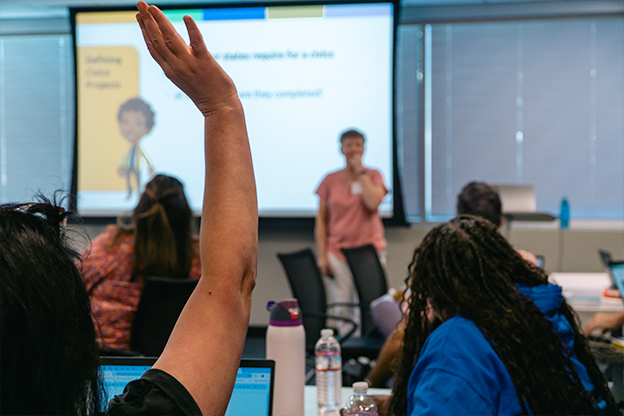
On July 17, 2024, we were filled with excitement and anticipation to bring together 60 K–12 educators for our first iCivics Educator Convening held in Sacramento, California. This event was hosted in partnership with California’s Power of Democracy Civic Learning Initiative, sponsored by Chief Justice Patricia Guerrero to bring equity to civic learning across the state of California by connecting courts with educators.

The majority of the participants consisted of 44 educators representing 19 counties from across California, who were thrilled to connect with the educators who traveled from 14 other states: Alabama, Arizona, Florida, Idaho, Illinois, Louisiana, Nebraska, New York, Oklahoma, Pennsylvania, Rhode Island, Texas, Utah, and Virginia.

Teachers came to the convening with a vast range of personal goals, from learning how to “utilize strong resources in helping students understand our government and their role within it,” to “meeting with enthusiastic civics teachers, get[ting] inspired and energized.”

The agenda for the day was packed with learning opportunities, including a student panel discussion, two sets of breakout sessions exploring a variety of topics and resources, and a conversation about building relationships with the judicial branch. The two Californian students from the iCivics youth fellowship kicked off the day with a conversation around the importance of engaging youth in politics and sparking conversations that show how civics can be relevant in students’ daily lives and future career paths.

New and current iCivics educators got great insight into iCivics curriculum resources and how to implement them in the classroom. Sessions helped participants understand how to amplify their voice to advocate for civic education, teach the 2024 election using the iCivics Election Headquarters, engage students in civics projects using our step-by-step approach, bring U.S. Supreme Court cases from iCivics’ Landmark Library and games like Brief the Chief into civics classrooms, and integrate inquiry into classroom instruction.

After the interactive sessions, educators reconvened for a plenary session featuring Justice Judith McConnell, who presides over the state’s Fourth District Court of Appeal, and Santa Clara County Superior Court Judge Julia Alloggiamento. Together they presented why and how courts support educators in classrooms starting in elementary school. Teachers were invited to connect with the Power of Democracy’s Judges in the Classroom program, modeled after similar efforts in the state of Washington. Many put in their requests on the spot for visits this September, Constitution Month.

We worked hard to make sure that our iCivics Educator Convening felt unique. We were intentional about designing an experience for our educators that not only focused on the knowledge, skills, and dispositions of civic learning, but also modeled best practices for the classroom. Educators were given space to connect with peers, collaborate, and process the information they were exploring in sessions to help the learning stick a little bit stronger. And we were delighted this was reflected in participating educators’ feedback!

“I was SO impressed by the convening. I am used to being disappointed by professional developments... This experience was a full 180 for me. The civic project curriculum was DIVINE. ... [It] has SO much more than I have learned yet, and is perfectly and expertly laid out for students. I was also deeply heartened to be in a room full of teachers like me—that kind of solidarity is so precious and rare in K–12 education. ... You all inspired me to keep pushing for civics education—which presently does not exist at all for 6th graders in my district. I am going to be told that there ‘is no time’ to teach the election, and I feel much stronger and prepared to defend my stance now.”

“I felt very seen as an educator. I enjoyed getting to know people from around the country and making new friends. This has also sparked an excitement in me when I've been feeling burnt out and a bit hopeless… so thank you for re-lighting my spark!!”

“The tools and resources provided through today's convening illustrate how important civics education at the elementary school level needs to be implemented statewide. This education directly impacts the trust and understanding of our civic responsibilities and our democratic process; it shouldn't be a mystery or a ‘figure it out’ mindset.”

Our first iCivics Educator Convening in California concluded with a sense of optimism and determination among educators to elevate civic education as a priority. We hope to make this an annual event to bring together educators to re-energize, build community, and leave with a deeper understanding of the amazing resources available for their classrooms.

Our great thanks to the Koret and Stuart Foundations for making this event possible as part of their commitment to supporting iCivics’ robust professional learning for CA civics educators.

Written by Natacha Scott

As the Director of Educator Engagement at iCivics, Natacha focuses on growing the engagement of educators in-person and virtually through professional development sessions, curriculum, and other experiences. Prior to joining iCivics, Natacha was an educator at Boston Public Schools for 14 years, serving in various roles from elementary classroom teacher to the district K-12 Director for History and Social Studies. She is passionate about place-based learning and engaging educators in meaningful learning experiences that can immediately translate into the classroom.

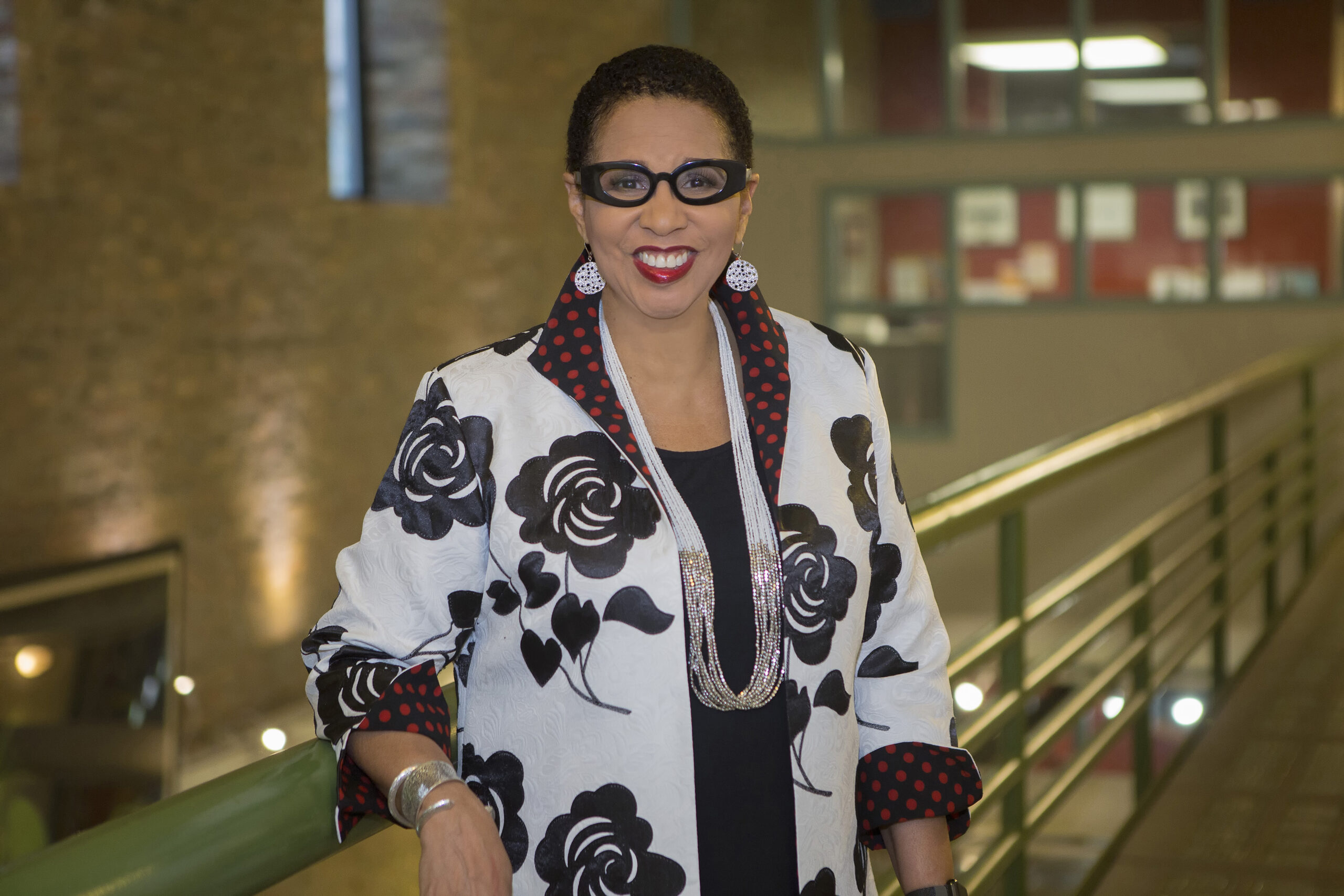
Judge Ann Claire Williams (Ret.)

Judge Ann Claire Williams (Ret.), a trailblazer and leader, heads Jones Day’s efforts in advancing the rule of law in Africa. Devoted to promoting the effective delivery of justice worldwide, particularly in Africa, she has partnered with judiciaries, attorneys, NGOs, and the U.S. Departments of Justice and State to lead training programs in Ghana, Indonesia, Kenya, Liberia, Namibia, Nigeria, Rwanda, Tanzania, Uganda, and Zambia. She also has taught at the International Criminal Tribunals for Rwanda and the former Yugoslavia.

President Ronald Reagan nominated her in 1985 to the U.S. District Court, Northern District of Illinois, making her the first woman of color to serve on a district court in the three-state Seventh Circuit. In 1999, President William Clinton’s nomination made her the first judge of color to sit on the U.S. Court of Appeals for the Seventh Circuit and the third woman of color to serve on any federal circuit court. She brings her vast experience on the bench to serve as a resource for the Firms leading trial and appellate practices.

Judge Williams has served on many judicial committees and, as treasurer and president of the Federal Judges Association, was the first person of color to become an officer. Committed to public interest work, she helped found Just The Beginning — A Pipeline Organization, the Black Women Lawyers’ Association of Chicago, Minority Legal Education Resources, and the Public Interest Fellowship Program for Equal Justice Works. She serves on the boards of the Carnegie Corporation of New York, iCivics, NAACP Legal Defense and Education Fund, Weinstein International Foundation, Museum of Science & Industry Chicago, University of Notre Dame (emeritus), and National Institute for Trial Advocacy (NITA) (emeritus), the Board of Counselors for Equal Justice Works, and chairs the Advisory Board of the International Law Institute-South African Centre for Excellence. She is also chair of the American Bar Association’s Standing Committee on the Federal Judiciary for 2021-2022, 2022-2023, and 2023-2024.

Posted in Bio

Pritesh Shah

Pri provides advice and strategic counseling on the intellectual property, data privacy and technology aspects of transactions including commercial and licensing agreements, mergers, acquisitions, JVs, financings, restructurings and collaboration arrangements. He advises companies in numerous industries, as well as private equity and other investors.

He negotiates and advises on bespoke agreements in commercial matters, including software, algorithm and mobile apps; data monetization; artificial intelligence and machine learning; brand and franchise licensing; programming rights; manufacturing, supply and distribution; payment services, e-commerce and IT outsourcing; and mobile virtual network operator (MVNO) and IoT connectivity. Pri also advises clients on IP and commercial issues related to generative AI, the metaverse, NFTs and blockchain-related platforms.

Pri is one of Davis Polk’s two hiring partners and serves on the boards of iCivics and Volunteer Lawyers for the Arts.

Posted in Bio