

Civics for All: Empowering English and Multilingual Learners

“For me, civic education is the key to inspiring kids to want to stay involved in making a difference,” says Associate Justice Sonia Sotomayor, U.S. Supreme Court, Board Member of iCivics, a nonprofit focused on civics education. 

Civics has been getting a lot of attention lately, with many adults scrambling to recall and apply basic concepts as history is made around us. Even with a rise in this civic awareness, many social studies teachers report discomfort with teaching civics in the current political climate.

Social studies teachers can create classrooms that are safe spaces for students to talk about current events and have discussions about issues that many deem controversial. Civic education prepares students with the skills and attitudes that are necessary in a democracy including a sense of civic responsibility, critical thinking, and agency. iCivics is committed to providing high-quality and effective civic learning materials that are accessible—and engaging—for all students, including English language learners. Confianza, a professional learning organization that collaborates with iCivics, is focused on ensuring equity for language learners.

English language learners, also known as ELLs, ELs, emergent bilinguals, multilingual learners, and MLs, represent a growing segment of the U.S. public school population where almost 1 in 10 students nationwide is identified as an English learner. While ELs all have learning English and content simultaneously in common, this group is extremely diverse, speaking more than 400 languages across all kinds of school districts—urban, suburban, exurban and rural—with Spanish being the most common language. Most English learners are students of color who may be facing systemic racism within and beyond the classroom door. How can we deliver civics instruction to this student population in a way that can make an impact? How can we help empower them with the knowledge and skills they need to thrive in America?

Proficiency in English is linked to academic success and is a key role in preparing them to be knowledgeable and engaged. ELs/MLs score very low in civic knowledge: they fared the worst of any population measured, with only 1% demonstrating proficiency. In fact, four out of five ELs do not even have “basic” understanding in civics. (NAEP, 2014) Therefore, English learners, and all students, need access to high-quality civic education.

“We are not going to be able to prepare citizens of the world if they can’t debate or think critically. And the debate needs to be open and civil.” Dr. Socorro Herrera, professor in the Department of Curriculum and Instruction, College of Education at Kansas State University and Executive Director of the Center for Intercultural and Multilingual Advocacy (CIMA). 

Teachers need materials to help foster civic engagement and skills in an engaging, culturally-relevant way that is tailored to the needs of all students—especially ELs/MLs. Game-based learning is a great way to fill this need. Experiential learning is a fun and engaging way for students to learn. With iCivics games, students have agency; they get to “be” a Supreme Court Justice, the president, a constitutional lawyer, and more. They learn about civic institutions and government while playing. They can also make mistakes and try again. All of this helps build the confidence and critical-thinking skills they need to then engage in class discussions.   

“If we do this right, we are opening spaces for our ELs/MLs not only to have access to learn the language, but also the critical space to analyze the ins and outs of how America works. As an immigrant coming in, in my own formation, that was exactly how it did.” says Dr. Katherine Barko-Alva, Assistant Professor and Director of the ESL/Bilingual Education program at William & Mary School of Education. She added: “To come here and have a class where they can explore differences and ramifications of those actions. How powerful is that? That’s why I love culturally, linguistically diverse biography-driven instruction.”

According to Larry Ferlazzo, author, blogger, and English and Social Studies teacher at Luther Burbank High School in CA, “I think it’s critical that civics education be an important part of classes we teach for English Language Learners (and, of course, for ALL students). Political participation has not always been a safe or effective option in their home countries.  Schools in the U.S. have traditionally viewed one of their responsibilities as developing responsible citizens, so we need to help equip our English Language Learners with the knowledge and tools to become “active citizens”—to know not only how our political process works, but to know how to use their power to make that process, and our communities, better.  Being able to pass a civics or citizenship test is one thing, but I think we teachers need to also equip our students with the skills to be able to apply that knowledge to create social change.”

So, where can educators go to find tips and strategies for teaching civics to English learners? Kristen Chapron from iCivics and Sarah Ottow from Confianza have pulled together some free resources to help you get started:

About Confianza:

Confianza is a professional learning organization that builds cultural understanding, communication, and collaboration between educators and multilingual learners. Our framework is based on fostering equity-based mindsets and language and literacy practices. Through tailored coaching, practical guidance, and world-class content, we positively change the lives of teachers and students. Check out our free blog at: www.ellconfianza.com.
Youth As Civic Experts Network Launches Social Media Campaign

How can we improve civic education to make it more relatable and equitable for all?? The Youth As Civics Experts Network is calling all students across the country to help answer this question and provide insights into what an equitable civic education means for them so that stakeholders in their local school communities can use youth feedback to inform policy writing and curriculum.

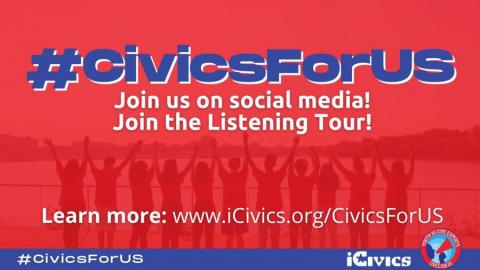
The #CivicsForUs social media campaign, which launched this week, is a new project from the Youth As Civic Experts Network, iCivics’ nationwide network of middle and high school students advocating for equitable civic education. Between March and June, the Youth As Civic Expert Network students will use the hashtag #CivicsForUS to engage other young people in a conversation and give them the opportunity to share their experiences in their local communities. The listening tour asks students from 5th grade through college to share first-hand why they feel civic education is so important right now, and how it can be more equitable and relevant to them and their peers. 

So far, the effort has collected more than 4,700 responses from 43 states, Washington, D.C., and Puerto Rico. When asked what civic education and civic engagement look like in schools, the top two selections from students 5th through college were U.S. Government or social studies classes and student council or student government. A full analysis and report will be provided this summer.

“Our students worked hard to gain insight from peers, including students who are not usually brought into these kinds of discussions, while also learning important digital skills to tell this story. I’m really excited to see what these students come up with,” said Amber Coleman-Mortley, iCivics’ Director of Social Engagement and Fellowship Program Director.

Do your students have a vision of what equitable civic education looks like to them? Share this project and encourage them to add their voice through the #CivicsForUS hashtag and https://www.civicsforus.org.

About the Youth As Civic Experts Network

The Youth As Civic Experts Network, a project of iCivics funded by the William and Flora Hewlett Foundation, was designed to engage students in conversation so that adults and stakeholders in school communities can use youth feedback to inform policy writing and curriculum, and ultimately change the way they engage with students to create civic experiences. The Youth As Civic Experts Network includes paid and unpaid fellows and alumni program students grades 8–12 from 15 states representing a diverse cross-section of experiences throughout the U.S. These students meet monthly for seminars to discuss equity in civic education with the iCivics team.

Women’s History Month in the Classroom: Teaching Resources and Activities to Celebrate Pioneering Women

March is Women’s History Month. At iCivics, March has always been a meaningful time as we celebrate pioneering women like our founder, Sandra Day O’Connor, the first female U.S. Supreme Court Justice. For educators and students, this month also provides an opportunity to celebrate the myriad accomplishments of American women. To get you excited about bringing this celebration into the classrooms, we’re highlighting resources to inspire celebration and discussion around women’s contributions, struggles, and triumphs throughout history. 

In this video, part of our new student-facing video series,students learn about the activism of teenager Barbara Johns, who organized over 400 students to protest in support of better conditions at their segregated high school in Prince Edward County, Virginia. This protest would lead to a lawsuit that became one of the five cases represented in the landmark Supreme Court case Brown v. Board of Education.

We’ve heard a lot about the role the Founding Fathers played in the early United States, but what role did our Founding Mothers play? This mini-lesson looks at the contributions of women in the Revolutionary War and the founding of the U.S. 

How did women win the right to vote? What civic actions were taken to gain political equality? In this WebQuest, students will learn about four civic tactics that supporters of women’s suffrage took to move the nation to ratify the 19th Amendment, which granted women the right to vote.

Dive into voting rights! Our latest customizable Google Slide Deck that provides an overview of voting in the U.S. from the 19th amendment and beyond— exploring the evolution of voting and how disenfranchised groups gained the right to vote.

Empower Students to Become Active Citizens During Civics Week in New York, March 8-12

Voting is an essential part of a citizen’s civic responsibility. The classroom, young citizens’ first civic space, provides a unique opportunity to prepare students for a life of active citizenship. This Civics Week in New York, we invite you to celebrate youth voice, civic empowerment, and the importance of registering to vote with your class and help students understand how they can make a change in their communities.

From lesson plans to interactive games, iCivics has compiled a list of resources to engage students and empower them to become informed active voters:


Just in time for ranked-choice voting to be introduced to New York elections, iCivics has released our new infographic, Rank Your Choice, diving into this unique election system. This printable infographic walks students through the process step-by-step and discusses the pros and cons of ranked-choice voting.

While registering to vote and heading to the polling place is a critical step, doing the proper research on the candidates and the issues that matter is just as important. This game is all about teaching students how to evaluate the candidates, the issues they care about, and the arguments on both sides.

Becoming a voter starts with voter registration. Even if students may be too young to vote, it’s never too early to learn. This lesson plan helps students understand the importance of voting and the process of getting registered.

Beyond the ballot box, there are many more ways for students to take civic action and influence an election. In addition to teaching the voter registration process, this lesson plan also discusses issue advocacy and how to encourage others to vote as well.

New DBQuest on Historical Monuments & Meaning

Civil War memorials have been in the news over the last few years, and we’re sure your students have questions. Why are some being removed? Why do people want to keep them? It’s just a statue, right?

The monuments and statues honoring individuals from this period play a critical role in shaping our memory and understanding of the Civil War today. There is no one right way to view a monument. Each has its own unique history and motivation of how it came to be. And that history is ripe for inquiry, exploration, discussion, and consideration in understanding the monuments around us.

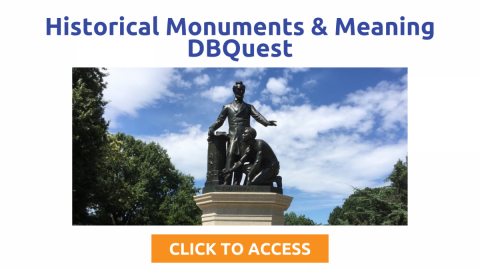
To help students gain a broader understanding of these monuments and the legacy of this period, iCivics has released a new DBQuest focusing on one of these monuments, the Freedmen’s Memorial in Washington, DC. This DBQuest examines the complicated nature of memorial statues by diving into primary sources that reveal the statues origins, design elements, and a critique by a leading voice of the time, Frederick Douglass.

Great for remote learning, our new DBQuest allows students to:

  • Explain how monuments are historical sources that need to be analyzed and interpreted
  • Use a variety of primary sources to make an argument about the monument’s intent
  • Develop historical empathy
  • Use evidence from informational texts to support analysis and answer questions

Please note that the language and terminology used in this content reflects the context and culture of the time of its creation, and may include culturally sensitive information. As an historical document, its contents may be at odds with contemporary views and terminology. The information within this collection does not reflect the views of iCivics, but is available in its original form to facilitate research.

Education and Philanthropy Leaders Larry Kramer, Andrea Foggy-Paxton, and Gerard Robinson Join iCivics’ Board of Directors

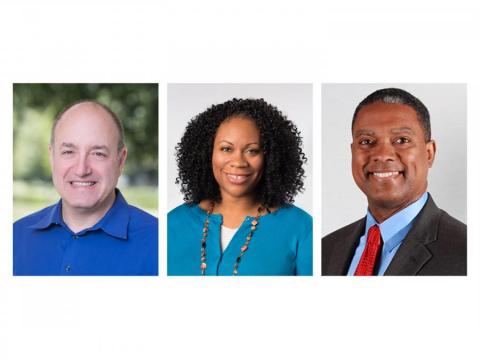
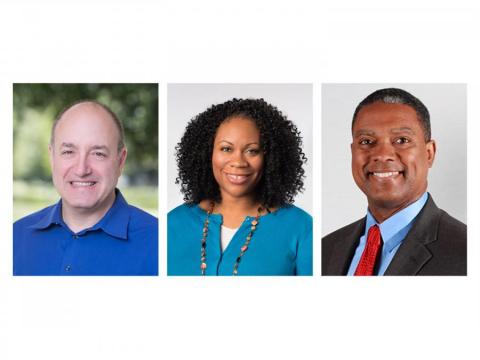
iCivics today announced that three remarkable leaders in education and philanthropy, Larry Kramer, Andrea Foggy-Paxton, and Gerard Robinson, have joined the organization’s Board of Directors.

Kramer, Foggy-Paxton, and Robinson will play a critical role in iCivics’ expanded scope to help create an American school system that is committed to providing high-quality civic education to all students.

iCivics, which U.S. Supreme Court Justice Sandra Day O’Connor founded in 2009, has long been the country’s leading provider of civic education content, creating online games and digital resources that are now used by more than 120,500 educators and 7.6 million students annually. All of its content is free to use and completely nonpartisan.

The organization has expanded its scope in recent years and has embarked on a strategic mission and plan to help create an American school system that is committed to providing high-quality civic education to all students, regardless of the color of their skin, zip code, or native tongue—and to helping all young people build civic agency.

Kramer, Foggy-Paxton, and Robinson will play a critical role in iCivics’ expansion, as each brings a unique professional background and personal perspective to the Board, as well as an incredible depth of knowledge and experience in education.

“I am delighted that our Board will benefit from such great talent,” says iCivics’ executive director, Louise Dubé.” We have added significant depth of expertise in strategy, education and policy, which will be very useful to iCivics as we seek to expand and re-imagine civic education to strengthen our constitutional democracy.”

American legal scholar and non-profit executive Larry Kramer has been President of the William and Flora Hewlett Foundation since 2012. He has guided the foundation in maintaining its long-standing commitment to areas of concern, such as education, and has overseen initiatives to respond to pressing and timely problems, such as democratic dysfunction and cybersecurity. Kramer previously served as the Richard E. Lang Professor of Law and Dean of Stanford Law School. Earlier in his career, he served as law clerk to U.S. Supreme Court Justice William J. Brennan Jr, and as professor of law at the University of Chicago, New York University and University of Michigan law schools.

“I’m honored to join the Board of iCivics and contribute to its important mission of strengthening civic education in America,” Kramer said. “I welcome the chance to work with the talented team at iCivics and its broad coalition of partners to help ensure that every young person has the knowledge and skills necessary to fulfill their potential to be an informed, engaged participant in civic life.”

The founder and CEO of Foggy-Paxton Consulting, Andrea Foggy-Paxton, has devoted her career to expanding excellence and equity in education in the non-profit sector, including hands-on experience with translating theory into practice and implementing innovative new curricula in the classroom. She served as the Managing Director for Partner Strategy for the Broad Center and oversaw the L.A. Promise Fund Schools Committee. Previously, she was the executive vice president at Reasoning Mind, a nonprofit organization dedicated to providing first-rate math instruction for all students and worked for the Bill & Melinda Gates Foundation, developing and managing innovations in professional development, high-school transformation, college completion and personalized-learning grants. Previously, she worked for L.A. Youth at Work, Rock the Vote, and Freedom Schools.

“I am excited to join the iCivics Board given the importance of civic education in my own K-12 experience and the overwhelming need to deepen and evolve our civics education across all grade levels so that every child is prepared to participate in our democracy,” said Foggy-Paxton.

Vice President for Education at the Advanced Studies in Culture Foundation, Gerard Robinson, has more than 30 years of professional experience in both the public and private sector. He has a significant knowledge of and commitment to education policy, both in theory and practice, having served as Commissioner of Education for the State of Florida and Secretary of Education for the Commonwealth of Virginia. Previously, he was the executive director of the Center for Advancing Opportunity and was the director and president of the Black Alliance for Educational Options. He is the co-editor of Education for Liberation: The Politics of Promise and Reform Inside and Beyond America’s Prisons (2019) and Education Savings Accounts: The New Frontier in School Choice (2017).

“Joining the iCivics Board is a great honor for me,” said Robinson. “I look forward to working with a group of people who come from different walks of life, yet, choose to walk together on a highway called civic knowledge to improve civic participation for young people and adults through technology, public policy, and fun.”

iCivics is still committed to creating high-quality, free and nonpartisan content that every teacher and school can use. But it will also look to the new Board members to help build upon the work of its new strategic plan to achieve a system-wide mind-shift about civic education, with the goal of putting in place new and more rigorous policies to ensure high-quality civic education in 20 states by 2026.

In 2018, iCivics founded the CivXNow coalition—a cross-ideological movement of more than 150 influential organizations, foundations, universities and civic education providers who are collectively working to make high-quality and equitable civic education a centerpiece of modern education nationwide.

And on March 2, 2021 it will help unveil the Roadmap to Educating for American Democracy, an unprecedented, cross-ideological effort to build excellence in civic and history education for all K-12 students. The Educating for American Democracy (EAD) initiative was funded by the National Endowment for the Humanities (NEH) and the U.S. Department of Education and was led by a team drawn from iCivics, Harvard University, Arizona State University, and Tufts University’s Tisch College of Civic Life and Center for Information and Research on Civic Learning & Engagement (CIRCLE).

“We are incredibly excited that Larry Kramer, Andrea Foggy-Paxton, and Gerard Robinson have agreed to join the iCivics’ Board,” the chair of iCivics’ Board, Wendy May, said. “We believe iCivics will benefit immensely from their diverse perspectives, relevant professional experience, impeccable reputations in the field of education, links to relevant networks of influence, and, most importantly, their deep commitment to the cause of civic education.”

For more information contact [email protected].

About iCivics
U.S. Supreme Court Justice Sandra Day O’Connor founded in 2009 to transform civic education and rebuild civic strength through digital games and lesson plans. It is the country’s largest provider of civic education content and is currently used by more than 120,500 educators and 7.6 million students annually. All of its games are free, nonpartisan, and available at www.icivics.org.

iCivics, XanEdu Partner to Provide Students with Workbooks to Meet the New Massachusetts Civics Project Requirement

CAMBRIDGE, MASS — iCivics, the country’s leading civic education provider, has partnered with custom content publisher XanEdu to help Massachusetts students discover the power of creating positive change. Through the partnership, teachers will be able to purchase materials that will help them fulfill the state’s new civics project requirement, which encourages students to use what they have learned to address problems in their communities.

iCivics, an educational nonprofit, has created a student workbook titled, Civics Projects: A Workbook for Civic Engagement, and an accompanying teacher’s edition that guides students through the six stages of nonpartisan student led civics projects outlined by the Massachusetts Department of Elementary and Secondary Education to fulfill the requirements of the state’s civic law, The Act to Promote and Enhance Civic Engagement.

XanEdu, which delivers custom content solutions to thousands of educational institutions each year, is teaming with iCivics to ensure that Massachusetts school districts can access and receive the workbooks.    

The student workbook answers a question posed by many Massachusetts educators as they prepared to teach the civics unit: “Where do I begin?” The student workbook and teacher’s guide, which was created by iCivics specifically for this project, provide the nonpartisan, high quality information to ensure students fulfill the requirement.

“We’re excited to be working with XanEdu to make our high-quality civics materials widely available to students and teachers in Massachusetts,” said Dave Buchanan, Director of Massachusetts Programs at iCivics. “Young people are often the source of many creative solutions to social problems in our country. This partnership will help them learn how to put what they have learned into action by experiencing the practical aspects of participating in democracy.”

Since it was founded in 2009 by U.S. Supreme Court Justice Sandra Day O’Connor, iCivics has created a library of digital games and hundreds of digital resources that teach every aspect of civic life and engagement — from presidential elections to media literacy to the workings of local and county governments. All of the material is free and nonpartisan. The games are played by more than 7.6 million students every year, and used by more than 120,500 teachers nationwide.

The partnership with XanEdu comes at a time when educators in Massachusetts and across the U.S. are helping students to understand the complex and rapidly changing events in the world. More school districts have turned to iCivics to provide context for students as they attempt to understand news events such as demands for social justice in the summer of 2020, the 2020 presidential election, and the insurgency against the U.S. Capitol on Jan. 6.

iCivics and XanEdu are taking that one step further by empowering students to translate that understanding of national and world events into action. The student workbook provides step-by-step instructions for how to start and successfully complete a civics project, and contains lessons on key content and vocabulary. Since it provides space for students to record research, track their progress and reflect on their accomplishments, the workbook serves as a student’s portfolio.    

The teacher’s edition includes all of the pages from the student workbook, plus answers, lesson plans and suggestions for activities.

“Our partnership with iCivics is one of our most exciting and rewarding projects in recent years, because it not only demonstrates to students the power of civic responsibility, it translates it into action,” said Brett Costello, Chief Operating Officer of XanEdu. “The iCivics curriculum shows students how to make an impact in their communities, and we’re proud to have a role in ensuring that they receive this most important message.”


About XanEdu

As the leading provider of custom education materials, XanEdu has been increasing student engagement and enhancing learning outcomes since 1999 by delivering innovative solutions across the education spectrum. Accessibility and engagement for all learners is our mission. Thousands of education organizations work with XanEdu each year to customize and deliver content that is affordable, engaging, and accessible, digitally and in print, for over 1.5 million students. We are committed to advancing the learning tools for tomorrow through innovative products and services that address evolving learning styles, incorporate cutting edge technology, and provide flexibility for customization while maintaining our commitment to affordability and accessibility for all learners. XanEdu is a privately held company headquartered in Ann Arbor, MI.

iCivics and Kami Partner to Provide Educators With Accessible, Interactive Digital Lessons for Teaching Civics

CAMBRIDGE, MASS — iCivics, the U.S.’s leading civic education provider, has partnered with Kami, one of the world’s fastest growing educational technology companies, to equip educators with interactive, accessible digital lesson plans. The new partnership will make iCivics’ curriculum even more adaptable for use in-person or remotely as virtual learning continues into the spring of 2021 due to COVID-19. And with social and political crises, more and more educators are in need of non-partisan, high-quality, engaging civics lessons to approach challenging conversations around current events to help inform their students—whether they are behind a desk or a screen.

Kami, which is based in Auckland, New Zealand, is used by more than 23 million educators and students around the world, including more than two thirds of US-based schools. Kami’s innovative technology allows teachers and students to annotate digital documents or teaching resources of any kind, empowering them to think, collaborate, and succeed in more creative ways. 

iCivics offers digital games and a full civics curriculum that includes hundreds of lesson plans, and is used by more than 120,500 teachers and 7.6 million K-12 students each year across the U.S. The partnership with Kami will help bring iCivics’ lesson plans to life by enabling teachers and students to write, draw, type, annotate, comment, augment, enhance, illustrate, embed audio or video, all within their web browser. And it will enhance both individual and collaborative student work in real-time or asynchronously. 

This partnership comes at a time when educators across the U.S. are striving to help their students grapple with complex current events, and must do so from home or in hybrid settings. iCivics has seen a significant increase in usage over the past year, as teachers seek more help dealing with civics topics in the news such as the 2020 presidential election, social unrest, and the insurgency against the U.S. Capitol on January 6, 2021. 

“We are thrilled to partner with Kami to make our high demand digital civics resources even more accessible and interactive for teachers and students alike. Teachers asked, we answered,” Julie Silverbrook, iCivics’ Senior Director of Partnerships, said. “We are grateful to the Kami team for helping us make our resources even more engaging, especially at a time of hybrid and remote learning. We are committed to making sure we continue to meet the real-time needs of civic educators and students across the country.”

Use of Kami on iCivics.org will be free for educators, as is all of iCivics’ content. Kami will allow teachers to assign iCivics lessons, and then students can use Kami’s interactive tools to complete their work and submit the assignments. 

“I have been using my own Kami account with iCivics for several years now and am so excited that Kami will now be accessible right on iCivics’ website. I strive to have a paperless classroom, and Kami allows students to interact with documents in a number of ways, including typing in answers, highlighting text, and drawing on the documents. It helps students who learn in different ways be able to manipulate the documents in a manner that best suits their learning style, and the fact that Kami and iCivics integrate fully with Google Classroom is an added bonus,” noted Kymberli Wregglesworth, a high school social studies teacher from Onaway, Michigan and member of iCivics’ Educator Network. “I know that this partnership will save me time and allow me to better serve my students, both those who are in-person and remote.”

Kami will add a number of new features to iCivics’ lesson plans, including:

  • Text box: allows students to place text anywhere in the document
  • Highlighter: students can mark up readings and activities (active reading support)
  • Drawing: freehand drawings to be placed anywhere on the document
  • Dictionary: allows students to select and define a word
  • Text-to-speech: reads text aloud
  • Equation: create equations by using the symbols palette 
  • Shapes: draw shapes, ideal for marking areas that need to be quickly recognized
  • Eraser: erase shapes, text, and drawings that have been made on the PDF
  • Insert Image: easily insert images into a document, such as maps or diagrams for drawing on

“At Kami our goal is to make the lives of educators and students easier by making learning more accessible, engaging and equitable. We’re excited to be partnering with the team at iCivics to reimagine civic education and create a more informed generation during these challenging times,” said Kami CEO, Hengjie Wang.

For more information, visit: iCivics.org/Kami  

About iCivics:

US Supreme Court Justice Sandra Day O’Connor founded in 2009 to transform civic education and rebuild civic strength through digital games and lesson plans. It is the largest provider of civic education content in the U.S. and is currently used by more than 120,500 educators and 7.6 million students annually. All of its games are free, nonpartisan, and available at: www.icivics.org

About Kami:

Kami is a leading digital classroom app built to transform an existing document of any kind into an interactive learning experience. Kami is currently used across 23 million educators and students looking to improve engagement and collaboration while teaching in the classroom or online. Learn more about Kami at: www.kamiapp.com 

Meeting the Needs of EVERY iCivics Student

Millions of students play “Do I Have a Right?” each school year. Within the game, they have the opportunity to create new identities for themselves, to exercise agency, and to behave altruistically through helping people solve problems around constitutional law issues. Students bring their knowledge of the outside world into a fictitious environment, and along the way become well-versed in the legal protections provided in the Bill of Rights and other amendments. An additional bonus is that it’s just fun!

What about students who are learning English as an additional language, emergent bilinguals? How can they reap the same educational benefits? What opportunities are there for them to connect their personal experiences with the world of “Do I Have a Right?” How can they access the content of this game? How can their teachers best support them in the process?

Developing answers to these pressing questions was the charge of the iCivics ELL Convening. For two days in May, a small group of bilingual researchers, teacher trainers, curriculum experts and classroom teachers, along with a video game designer and members of the iCivics team met for this important task. The work was simultaneously expansive, philosophical, and precise, as we wrestled with issues such as:

  • How can the curriculum materials be designed to focus on the rich academic assets emergent bilingual students bring instead of on the learning obstacles they may face?
  • Would it be possible to add voice-over audio files in English for the lawyer-client conversations within the game?

How can the prohibition of cruel and unusual punishment in the Eighth Amendment be represented appropriately in a visual?As I write this a week later, I am still trying to process the experience. It was transformative both professionally and personally. I teach United States history and government to emergent bilingual students. My students come to this country in pursuit of the American dream. As they learn about our country’s history and system of government, they also explore ways in which they can participate in the civic life of their new home. To work closely with a group of professionals so passionately invested in the success of these children, whom I love, was awe-inspiring. To tour the Supreme Court building later on with the group and experience the deep feeling of history in my bones was powerful.

I left the iCivics ELL Convening inspired and invigorated. The guiding words from our final session:  

Dream big! Contribute freely!

Listen enthusiastically! Write stuff down!

Ada Bélanger teaches ESOL and US history/government at Fox Lane High School in Bedford, New York. She is excited to continue her work with the iCivics ELL project and is eager to introduce a new version of “Do I Have a Right?” to her students in the fall.