¡Vamos a jugar! Let’s play!

In 2016, the U.S. House of Representatives recognized April as National Bilingual/Multilingual Learner Advocacy Month. English and multilingual learners are one of the fastest-growing populations in U.S. schools. 

According to the U.S. Department of Education, there are currently more than 5 million English (ELs) and multilingual learners (MLs) in the public school system and 75% of them (about 3.8 million) are Spanish speakers.

In 2017, iCivics began creating resources designed specifically to support ELs/MLs as they learn content and develop their language skills simultaneously. We convened a council of EL/ML experts at the U.S. Supreme Court in Washington, D.C., and they helped us brainstorm ways to make the game Do I Have A Right? more accessible for our students. The new game featured supports—both inside and outside of the game—including the option to play in Spanish.

We added these supports to ensure that our resources are adaptable and appropriate. These materials:

  • build on students’ strengths
  • challenge and support multilingual learners
  • offer engaging opportunities to learn including practice with reading, writing, listening, and speaking
  • have supports/scaffolds as needed
  • help build a classroom culture that is a welcoming place where students can speak respectfully to one another, diverse perspectives/viewpoints

As part of our mission, iCivics wants to encourage multilingual learners to become engaged members of their communities, within and beyond the classroom.

 ¿Quė? ¡¡10 JUEGOS!! What? 10 Games!! 

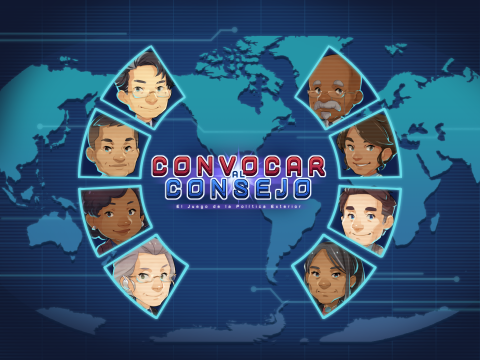
We now have 10 games with supports for ELs/MLs and the option to play in Spanish, including English-language voiceover, glossary, decision support tools, and a content guide, as well as pre- and post-game activities found in the game-specific extension packs. (See all 10 games listed on our ELL landing page.) Our newest game is Convene the Council, or Convocar al consejo in Spanish, with an Extension Pack that includes pre- and post-game activities and instruction. 

 ¡Y hay más! And there’s more!

Lau v. Nichols Lesson Plan

This mini-lesson covers the basics of the Supreme Court’s decision that required public schools to provide language supports to English and multilingual learners. 

Make iCivics Lessons accessible and EL student-friendly with Kami

Whether your classroom is online, hybrid, or in-person, EL-student-friendly and accessible learning are more important than ever. This blog post highlights a few tools from Kami that help students engage with iCivics lessons in an inclusive way.

Written by Kristen Chapron

Kristen Chapron is Senior Editor of Digital Learning and ELL at iCivics. She has worked on all 10 bilingual games and looks forward to creating even more materials for English and multilingual learners. ¡Adelante! Let’s go!

Help Our Fellows Learn About the State of Civic Education

How do you define “civics” or “civic education”? The Equity in Civics Youth Fellowship is calling on all students across the country to help answer this question and provide insight into the current state of civic education.

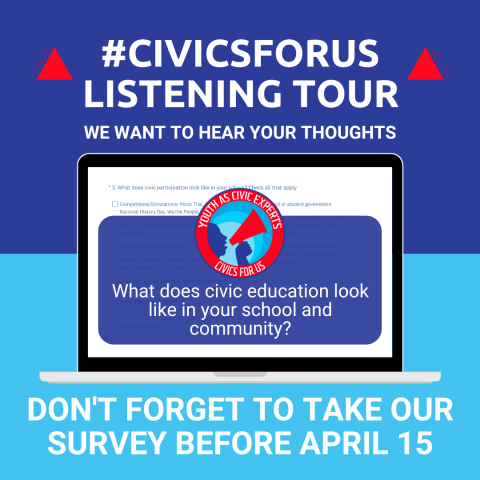
The Equity in Civics Youth Fellowship launched the #CivicsForUS Listening Tour as an online survey open to all students in 6th grade through college. This anonymous survey will help our Youth Fellows learn more about what their peers across the country are experiencing regarding civic education. Fellows will use this data to continue highlighting the need for civic education that is equitable and relevant to all students in the United States.

“The Listening Tour will allow us to gather insight regarding the state of civic education in our country. We will be more informed on the similarities and differences within our communities and inspired with a sense of problem-solving as we strive to examine ways to make civics education equitable.” -Sophie Schmidt, Equity in Civics Youth Fellow from Mississippi.

Our Youth Fellows have been busy sharing this nationwide survey with their communities. So far, we have collected more than 300 responses from students across 29 states, Washington D.C, and Puerto Rico. However, we need your help to reach as many students as possible. The survey takes about 5 minutes to complete and will be open until April 15, 2022

As a former social studies teacher, I would encourage other educators to share this survey with their students. This survey will allow students to lend their unique voices to the conversation surrounding high-quality, equitable civic education. Our youth are important stakeholders in their civic education, and their experiences can help organizations like iCivics see what matters to students.

Whether you have your students complete the survey as a bellringer or encourage them to complete it outside of class, you will help our Youth Fellows learn more about the state of civic education across the nation and take the best steps toward achieving an equitable education.

Written by Michael Reyes

Born in Miami, Florida, Michael has nearly three years of teaching experience in his hometown. At iCivics, Michael manages the Equity in Civics Youth Fellowship and the Youth As Civics Experts Network. He supports our Youth Fellows in finding and using their voices towards their civic passion, a similar experience he went through in high school.
Teaching About the Russia-Ukraine Crisis: Using Convene the Council to Bring Foreign Policy to Life

How do you teach students about what is happening in Ukraine?

If you are like many teachers, your students are asking for help in making sense of what is in the news. One of the best things we can do for our students is to meet this moment and offer some insight into processes, demystify complicated concepts, and cultivate their civic-mindedness. But how many of us are foreign policy experts? With the right resources, you don’t have to be!

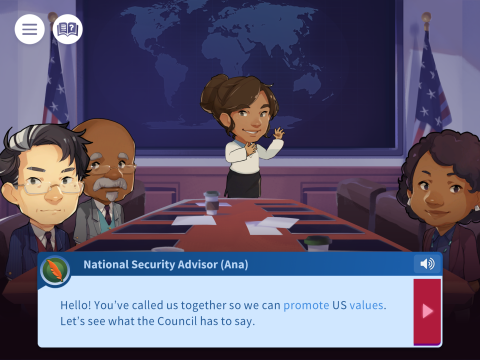
iCivics just launched the perfect tool to help! Created in partnership with the Council on Foreign RelationsConvene the Council is a new game that engages players in the basics of foreign policymaking. Playing as President of the United States, students face global challenges, consult with the National Security Council, and make tough foreign policy decisions. The goals of the game, as well as the goals of U.S. foreign policy, are to skillfully balance the safety, prosperity, and values of the United States within its global context. As president, do you address a crisis with sanctions or diplomacy? Foreign aid or military engagement? These questions have very clear and present connections to the past, present and future. 

And—unlike real life—results are immediate. Players see outcomes and impacts of their choices as they make them. The game allows students to evaluate the effectiveness of their decisions, adapt as needed, and learn from the process. 

A great place to start is the Game Guide, which provides insights and tips for playing the game. It’s great for all educators, non-gamers and gamers alike. In addition to a walk-through of the game, the guide offers discussion questions and extension activities.

For a deeper and more comprehensive teaching tool, check out the game’s Extension Pack, which offers everything needed to build your perfect “game sandwich,” from introducing the topic to engaging with the game and reinforcing the learning after the game has ended. (And if you need differentiated lessons or multilingual/English language learner supports, there is a vocabulary worksheet and modifications for the game and lessons already prepared for you.)

A customizable slide deck introduces students to important foreign policy concepts, guides them to debrief their game experiences, and helps you assess what they’ve learned. The Extension Pack also comes with activities that are both printable and available in Kami so students can have guided practice through the activities and discussion. 

The learning doesn’t have to stop after the game. Here are some ideas from the Extension Pack and beyond to engage students with what’s happening in the world around them today:

  • Have students research a modern foreign policy challenge or read a short article on what is happening in Ukraine, for instance. (Also a great way to practice those news literacy skills!)
  • Create a formative assessment in which students apply their game experience to explain some of the foreign policy choices of the current administration in the United States, given the recent actions of Russia. (Think podcast, comic strip, game mock-up!) 
  • Ask students to replay the game and note which challenges they faced, then see if they can connect it to a similar situation in U.S. foreign policy history. (Spoiler alert: Each one has a real-world twin! But we will never tell. It’s Top Secret.) 

But wait, there’s more! The NSC Department Guide is a great reference for players and, like the game, is available in Spanish. We also offer an NSC-focused timeline activity that helps students see real events in our nation’s history and which foreign policy tools were put to use.

To further deepen your students’ foreign policy knowledge, you can also check out materials such as World101 and Model Diplomacy from our partners at the Council on Foreign Relations.

Engaging students in games, activities, high-level assessment, and civil discussion not only connects to state standards, but also brings students to this powerful intersection of learning and application, showing them why school matters and how what is learned will be important as an adult.

Written by Carrie Ray-Hill and Amanda Setters

 Carrie Ray-Hill is the Senior Director of Digital Learning and oversees the conceptualization and development of iCivics’ educational resources, with a particular concern for teacher usability. She is responsible for maintaining a consistent focus on iCivics’ educational mission. Prior to joining the iCivics team, Carrie taught middle and high school social studies and language arts in St. Louis and Washington, DC. In addition to seeking out the finest of cheeses, Carrie spends her spare time watching British panel shows, making cookies for the office, and killing zombies.

 Amanda Setters is a Curriculum Associate at iCivics. She is responsible for creating and revising curricular materials for teachers and students. Prior to joining the iCivics team, Amanda taught middle and high school social studies in Cincinnati, Ohio. In addition to reading and spending time with her family, Amanda enjoys learning from her favorite historians.

Preparing for AP Tests with iCivics

As a former Advanced Placement History teacher, I can confidently say that one of the most essential skills for our students is comprehensive source analysis. The College Board AP History (U.S., World, European) exams in May require students to analyze sources for both the multiple choice and writing portions of the exam. In addition to being able to summarize a document, students in AP courses need to “HIPP” the document to analyze things like historical context, intended audience, point of view, and purpose. And iCivics is here to help make sure all students have the preparation to meet that rigorous demand!

Check out the highlighted resources below:

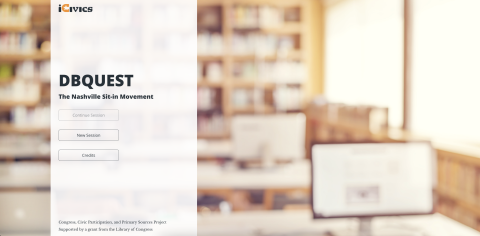
DBQuests

A great tool for the younger grades as well as the start of the AP year is the iCivics collection of DBQuests. DBQuests are already prepared with a big question and walk students through source analysis and summary skills. By starting with a review of the author and audience, the students practice those analysis skills in a structured way. If a student makes a mistake, the DBQuest redirects them to try again until they get it right. That in-the-moment formative feedback is a fantastic tool to support student mastery.

After analyzing the source, the DBQuest has students pull evidence from the document to answer comprehension questions using a drag-and-drop tool. After students select textual evidence to answer the questions, that evidence is presented and students use the textual evidence to summarize the main ideas. By scaffolding students through the analysis and summary of these primary and secondary source excerpts, teachers can foster development of this important skill using a ready-made and high-quality resource!

DBQuests are assigned using an iCivics teacher account and are Google Classroom and Clever compatible. The teacher materials also have printed copies of the documents, as well as enrichment and scaffolding activities, so teachers can differentiate to meet the needs of every student in their classroom. Using this ready-made resource will help free up your plan time, empower and engage your students, and can allow you to work in the role of facilitator. Coach and circulate the class to review student progress and provide formative feedback as students are engaged in the work.

Exploring Primary Sources 

Another great resource to use when preparing for AP tests is iCivics’ Exploring Primary Sources mini-site. You’ll find even more tools and activities to help students practice working with sources, as well as some professional development for yourself.

In addition to our DBQuests, teachers can discover partner resources like Eagle Eye Citizen, KidCitizen, and Journalism in Action (and more!). Eagle Eye Citizen gets students practicing sequencing, contextualization, and close reading, while KidCitizen’s videos engage students with primary source photographs and develop their critical literacy skills. Journalism in Action is an interactive learning tool that helps middle and high school students examine the role of a free press in different moments in history using historical primary sources. We all share the support of the Library of Congress Teaching with Primary Sources Program. 

Be sure to use these iCivics resources to help you reduce your planning and delivery work, so you can spend your classroom time facilitating high-quality source work and enjoy a fresh cup of coffee!

Written by Amanda Setters

Amanda Setters is a Curriculum Associate at iCivics. She is responsible for creating and revising curricular materials for teachers and students. Prior to joining the iCivics team, Amanda taught middle and high school social studies in Cincinnati, Ohio. In addition to reading and spending time with her family, Amanda enjoys learning from her favorite historians.

Find Support, Collaboration, and Inspiration with the iCivics Educator Network

What a crazy time it is to be a teacher! The COVID-19 pandemic has created such uncertainty and much of what I thought I knew about teaching and learning has been upended. While trying to figure out how to handle this new environment, I’ve come to realize that my need for support, collaboration, and inspiration is greater than ever. I’ve found all that and more in the iCivics Educator Network.

I’ve been teaching ESOL and bilingual social studies in middle and high schools for more than two decades, but the past three school years have been unlike any in my experience. My students are among the most vulnerable to the economic, physical, and educational effects of this pandemic. As I approached the beginning of last school year, I felt such trepidation about going back into the classroom in-person. I worried about how safety protocols and hybrid scheduling would affect my ability to engage with my students and to share my love of all things government.

Fortunately, as a member of the iCivics Educator Network, I was able to connect with peers around the country and learn how they planned to deal with the same concerns. There was such camaraderie as we bounced ideas around and shared resources. During my five years in the Educator Network, I’ve always appreciated the passion and expertise of my fellow members, but now I more fully realize the exceptional nature of this group. Going back into the classroom was still scary, but thanks to this wonderful network, I felt more empowered to continue the work I love under trying circumstances.

Members of the iCivics Educator Network enjoy many more benefits than the wonderful collegiality. We have opportunities to beta test new iCivics resources, learn about the latest features and updates, and access amazing educational opportunities for ourselves and our students. I hope you’ll join us and share your own passions and expertise. We’d love to have you!

Written by Ada Bélanger

Ada teaches ESOL and US history/government in Bedford, New York. She has been a member of the iCivics Educator Network since 2016. She accidentally stumbled across iCivics during an Internet search several years ago, and today iCivics features prominently in her classroom.

4 Ways to Build Classroom Community Through Feedback Using Kami & iCivics

A strong classroom community is vital for empowering students and making them feel valued. Creating such an environment should foster kindness, responsibility, compassion, empathy, and more. Though there are many ways to build toward a strong classroom community—including through family involvement, identity, and predictability—feedback is one aspect that is often overlooked.

Feedback is an important component for building classroom community because it is what students rely on to understand and reflect on their actions. Decisions are based on this feedback and impact how students will operate in the future. Students need adequate feedback about their work in order to improve. Therefore, a method for providing feedback needs to give teachers plenty of options for communicating with students. Fortunately, iCivics and Kami have you covered!

Kami allows teachers to markup, discuss, and provide feedback on iCivics lessons using Kami’s text, comment, and media tools.

Here are four ways to use iCivics and Kami to provide feedback to students:

1. Utilize the comment tools

Kami’s comment tools allow teachers to respond directly to a specific spot in students’ work. This flexibility means that teachers can pinpoint targeted areas for improvement and praise. Kami’s comment tools also allow for teacher and student reply. Why not try using the comment tool to ask a scaffolded question that will help students rethink something they answered incorrectly? Then allow students to try again by replying to your comment! Rather than seeing feedback as failure, students will see it as an opportunity for growth and repeated practice.

2. Give praise with correction

Some students will respond well to corrective feedback, while others will struggle with it. One way to balance this is by offering praise along with corrective feedback. Studies show that praise boosts student confidence and motivates them to complete or stick with challenging tasks. Kami’s media tools allow teachers to add stickers to student work indicating “great effort”, “excellent work”, and “good idea.” You can follow up the visual appeal and excitement of a sticker with a more specific explanation of what the student did well with Kami’s comment tool.

3. Use student exemplars with the class

Using a projector or smartboard, share student exemplars with the class. Kami’s markup tools like the text highlighter and the drawing or shapes tool let you emphasize for students what to focus on. We recommend sharing a range of student exemplars at varying performance levels and discussing them with students. When students see and have opportunities to discuss examples of real student work, they gain a better idea of what success looks like at different levels.

4. Offer real-time feedback on assignments

As students think through their own ideas and grapple with an assignment, circulate around the room to monitor students’ progress. Take note of what students seem to be struggling with and what they are getting right. With students’ permission, select a sample to project on the whiteboard to model and discuss with the class. Use Kami’s annotation tools to draw students’ attention to important pieces of evidence or keywords that underscore the concept you are teaching. If you need to provide this feedback virtually, Kami allows teachers to make comments in real-time on iCivics lessons and provide students with the opportunity to improve their work as they continue to complete the assignment.

Using Kami’s tools with iCivics assignments will allow teachers to give students the formative feedback they need to build confidence, resilience, and a classroom culture of learning. Try using Kami with iCivics today!

Using iCivics in Special Education

This may sound like an obvious statement, but working with students in special education is not like teaching in general education. I know I’m not breaking any new ground with that statement, but you might be surprised at how few resources are out there for teaching social studies in special education. 

In some cases, like with iCivics, resources can be easily adapted to accommodate the different needs of varied classrooms.

As someone who has spent most of the past eight years teaching middle and high school social studies content at non-public, special education schools in the Baltimore area, I can tell you that iCivics materials have to be used a little bit differently in my context. 

For example, it seems like most Gen Ed teachers have their students play iCivics games individually. Students can go through the game at their own pace, and this setup also allows for friendly competition. This method is undoubtedly appropriate for many students. Others, however, do not always work best on their own, which brings me to my biggest piece of advice: Play the games as a whole group.

When I started using iCivics games in 2014, the entire class played together out of necessity. The school I was at had great technology, but we didn’t have a class-set of laptops, let alone individual laptops for each student. I had my desktop and a projector. So, I had no choice but to project my screen onto the board and ask my students to help me make decisions. 

My students made it quite clear that they did not care what I said or did; they didn’t want to learn anything about the government or civics because they saw no use for it. Mind you, these special education classes are full of kids on a diploma track whose life experiences have often included negative encounters with aspects of government, including the public school system.

It’s for this reason that playing Executive Command with that first group of students was a transformational moment for me. To see the excitement my students had being President of the United States was truly awe-inspiring.

After helping me navigate the executive branch, that first group of students (and most of the subsequent groups of students) were so excited, they wanted to play iCivics games again and again. They wanted to play so badly, they were willing to take turns and watch each other play on the board.

That’s right: students who often had trouble being in the same room with each other for more than 30 minutes were willing to take turns, watch politely, or sometimes even help each other navigate the game! 

So, next time you play an iCivics game with your class, try playing with the whole class. When you play the games as a whole group, you can better manage how engaged students are in the game.

You can: 

  • make sure students actually read and understand what the game’s asking them to do. 
  • make sure students understand what all the symbols and logos stand for. 
  • scaffold the reading and listening portions of the game, if necessary. 
  • fill in some of the missing content knowledge they may need to fully understand the game. 
  • ask probing questions to encourage deeper thought.

An important addition to this is to realize that when playing as a whole group, the game takes much longer. The first time you play with your class, build in at least two days to complete the game, allowing time to fill in the content knowledge, ask probing questions, etc. 

There are undoubtedly benefits from students playing iCivics games individually, but I would at least start by playing the game as a whole group and then build up to students playing independently or in small groups. Either way, you’ll know that you’re helping to prepare your students to be more civically engaged.

Written by Neil Wrona

Neil is currently a Special Educator at Mount View Middle School in Howard County, MD, but has taught the gamut of high school social studies for most of his eight years as a teacher. He has been a member of the iCivics Educator Network since 2017 and has been a book reviewer for Solution Tree Publishing since 2020. You can follow him on Twitter @neilwrona.

 Through the iCivics Educator Network, the perspectives of teachers across the country contribute to the public conversation about civic education in the United States. Each contributor represents their own opinion. We welcome this diversity of perspectives.

Are Your Students #VoteReady?

The U.S. Government class started the same way it has every semester for the past three years. Students faced the following question:

If/when you are eligible to do so, will you register to vote?

(And for those who do not meet the citizenship or residency requirements: Will you encourage those who can register to do so?)

And, as with every other time students have faced this question before we actually got into the curriculum, the answers were roughly the same:

“I don’t really care about politics.”

“I don’t know enough to figure out who to vote for.”

“Those people are all the same; it doesn’t matter if you vote.”

“Elections aren’t real—‘they’ already know who is going to win. The voting is just a show.”

“I’ve got to save my money for other things, I can’t pay to register to vote.”

“One vote doesn’t matter.”

“What difference does it make?”

“ I have to answer ALL those questions to register?”

“I don’t have an ID.”

I have heard these same responses from dozens of students. Our public high school in Allentown, PA, is relatively new, and has graduated only three classes of seniors so far. This year, I enter into preparing my fourth cohort of 17-18-year-olds to take their place in adult civic life in our community. As with past years, I will be faced with several sections each day of students promising me that I will not succeed in convincing them that voting should be in their toolbox of ways to have an impact on their future.

Allentown is a city of more than 121 million people. Set in the Lehigh Valley in southeastern Pennsylvania, Allentown is home to a population that is more than 68 percent BIPOC (Black, Indigenous, People of Color), most of whom belong to the city’s Hispanic/Latino majority. Around a quarter of the population lives below the poverty line, and almost a fifth of the population is foreign-born. These demographics are reflected in Allentown’s public school district, where 84 percent of the 16,000+ students are BIPOC, with almost 70 percent identifying as Hispanic/Latino. Additionally, 89 percent are from low-income families, and 100 percent qualify for free or reduced lunch. 

We know that nationwide, communities of color and communities with high levels of poverty have the lowest rates of voter registration and voter turnout. Allentown is no different. While Pennsylvania as a whole has a higher-than-average rate of voter turnout (in 2020 approximately 71% of Pennsylvania’s eligible voters turned out to vote, compared to 68 percent nationally), and the Lehigh Valley rate was higher than both the statewide and national turnout rates (75% in 2016), voting rates across Allentown’s neighborhoods vary widely. Voter turnout in Allentown’s affluent and mostly White West End is more than three times the rate in Allentown’s Center City neighborhoods. 

It is from these neighborhoods, where voting isn’t a tradition seen and practiced in most households, that my skeptical students come by their beliefs about voting. They often report never having seen someone vote, not knowing anyone who has ever voted, and sharing a general disbelief that the government represents or serves the people in their homes and neighborhoods. They look at candidates for office and do not see themselves. 

My students are the perfect representation of research published in 2016 listing the most common reasons why people don’t vote.

  1. Registration is hard
  2. Lack of education and/or lack of a community of peers who are voters
  3. Lack of enough choices
  4. Apathy and burnout.

Luckily, several of those obstacles to voting can be addressed within the civics classroom—and that’s where our classroom investigation of voting comes in.

Voting Starts in the Classroom

Voter registration drives are common sights in U.S. high schools. Often consisting of decorated tables in the school cafeteria, energetic student volunteers with clipboards at Back-to-School Nights, and colorful posters hanging on bulletin boards with directions to registration websites or stacks of paper registration forms, registering voters is the work of extracurricular clubs and outside organizations partnering with volunteers within the schools. But in communities where the act of opting into formal participation in the institutions of civic life isn’t a given, it isn’t enough to merely hang a poster and hand a student a form to fill out. 

We show students what we value through what is given a place in the classroom. In our school building, this has meant giving voting a place front-and-center in civics instruction.

The opening discussion around “will you be a voter?” is the launch of an eight-week investigation around the history of voting rights and voter suppression, trends in voter participation, analysis of access to government resources compared to voter turnout, and current proposed state and national legislation to either expand or restrict voting access. At the end of these eight weeks, students complete two culminating tasks—an argumentative research paper on methods needed to improve voter participation and a personal decision: will they register to vote or not?

The sequence of instruction is as follows: Before entering their senior year, students are immersed in a civics-focused social studies curriculum, where all instruction culminates in some form of civic action. The anchor of this curriculum is the iCivics’ Foundations of Government curriculum unit. Each year, students have grappled with their role as “We the People” and what it means to be responsible for self-governance under a republican democracy based upon popular sovereignty.

Over the course of the first half of their U.S. Government semester, students work through the following activities:

  1. Comparing voter turnout: Students begin by looking at examples of allocations of federal resources to states as they are influenced by voter turnout. Students learn that politicians are driven to pay more attention to the needs of populations that vote.
  2. Investigate the following areas
    • Who should have the right to vote?
    • Why don’t people vote?
    • What stops people from voting?
    • Who votes? (A map-based investigation of voter turnout)
    • Should we make voting mandatory?
  3. Culminating task: Students then research state and federal voting reform proposals, select one or propose one of their own, and produce argument papers to support their ideas. Time permitting, students translate their formal papers into posters, public service announcements (PSAs), social media posts, and letters to the editor to share their learning and persuade the community.
  4. Voter registration drive: This happens within the classroom, not the cafeteria. Research shows that difficulty completing the registration process is a major obstacle for individual voters, so we make space for it during regular instructional time. The iCivics resource Got Ballot? is a great tool for supporting new voters as they grapple with their first ballot. We also celebrate new voters by throwing a “First Political Birthday” party the day after each election day, with cupcakes and candles for each student who voted for the first time.

The Proof is in the Progress

Voter registration takes place three times a year in our high school: once in early fall for those eligible students who turn 18 before the November elections; again in mid-winter for those who turn 18 before the April Pennsylvania primaries; and a third time before graduation to support those who turn 18 after those dates. Students become ambassadors and reach out to peers who need support, and even bring home their newfound expertise in the registration process. Many parents, aunts, cousins, and neighbors have also been registered as part of student voter registration drives. 

Has facilitating deep student investigation into voting and the consequences of low voter turnout had an impact on student belief in their ability to raise their voices through voting? Judge for yourself!

Remember where the students started off each semester? Overwhelmingly skeptical and disinterested in anything related to voting. 

At the end of each semester? In 2020, our high school was one of 20 recognized nationwide by When We All Vote and MTV for excellence in new voter education and registration. What’s more, we have earned the Governor’s Civic Engagement Award all three years that we have had 18-year-olds as students—twice at the gold level. 

This award recognizes Pennsylvania high schools for success in voter registration. Schools must register 65 percent of eligible students to earn the silver level or 85 percent for the gold level. (Only COVID prevented us from reaching Gold status last year). 

One of my students from the Class of 2019 came to me as a student who believed that voting in Pennsylvania had nothing to do with her. Most of her family still lived in Puerto Rico, and she claimed that there was no reason for her to vote any place else. After a semester of learning, she had not only registered to vote, she was also one of three students who represented us in Harrisburg to accept our first award from the Governor. 

What changed her thinking? That fall, her home community was devastated by Hurricane Maria. In the classroom, she learned that although Puerto Rico is part of the United States, and Puerto Ricans are U.S. citizens, the island has no votes in the Electoral College and, therefore, does not participate in general presidential elections. Her family, then, had not been able to vote for the President who would decide on relief and recovery efforts in Puerto Rico and could not vote him out if they were unhappy with his decisions. But this student realized that she could use her vote in Pennsylvania to speak for her island and her family. She is a perfect example of what can happen when we connect student learning to authentic experiences in students’ lives.


Written by Shannon Salter

Shannon Salter is in her 10th year teaching high school social studies. She has worked under a National Science Foundation grant, published research in Social Education and The Science Teacher, and spoken at National Geographic, the National Council for the Social Studies, and several professional development sessions. Shannon is a member of the iCivics Educator Network, the National Geographic Educator Advisory Panel, the National Constitution Center Teacher Advisory Council, and is currently serving on the Educating for American Democracy Implementation Consortium. Her passion is creating opportunities for students to use the skills of civic action to take their learning in all subjects out of the classroom to make an impact on their community.

Through the iCivics Educator Network, the perspectives of teachers across the country contribute to the public conversation about civic education in the United States. Each contributor represents their own opinion. We welcome this diversity of perspectives.

Hispanic Heritage Month 2021: Courage, Integrity and Commitment

I started my 20th year in education in the second year of a global pandemic. Teachers, doctors, nurses, and countless other medical and educational personnel are exhausted, drained physically and emotionally—and yet they keep showing up to do the job.

As I listen to the academic conversations in my classroom, I can’t help but remember how emotionally and physically exhausted my students must be, too, yet they keep showing up to do the job.

I think of those in this amazing country that, despite a global pandemic, continue showing up to fight for justice, for peace and for recognition.

As a Latina, entering Hispanic Heritage Month always fills me with pride. I can’t help but be grateful for the commitment, the courage, and the integrity of those that lobbied for Hispanic Heritage Week to be created in 1968—and even more so for those that continued the fight into 1988, which led to the Hispanic Heritage Month we celebrate today.

As a Spanish/English Dual Language teacher, I am so thankful for those that had the courage to fight for equality of education for English Learners. Cases like Lau v. Nichols paved the way for an incredible shift in education for our ELs. I think of Dr. Antonia Pantoja who founded ASPIRA and fought endlessly for educational access for the disadvantaged Latinx students in New York. Thanks to her efforts, and the efforts of those who supported her, the ASPIRA Consent Decree is now the foundation for many EL Programs across the country!

And finally, I think of Justice Sonia Sotomayor who, after overcoming her own insurmountable obstacles, became the first Latina Supreme Court Justice! In 2015, she became a board member of iCivics and her mission was to make sure that the games and support materials were accessible to all learners, especially English learners. In 2017, Do I Have A Right? became the first game with supports for English and multilingual learners and a Spanish version, ¿Tengo algún derecho?. It’s also the first game I ever used in my Dual Language classroom! I love how it not only allows my students to learn about their rights in this country, but their parents can, too! Thanks to Justice Sotomayor’s efforts to ensure a civic education for everyone, I am able to provide educational support to my Spanish-speaking EL students through iCivics’ ELL resources.

iCivics continued to provide support to our ELs during the pandemic. They teamed up with Kami to provide additional support to students learning online. Online learning proved to be difficult for many of our ELs who learn best by working together, hearing language spoken, and applying language. Thankfully, Kami provided an opportunity for students to continue to interact with language by providing ways to record verbal responses, as well as written responses in both languages. The typing capability and highlighting features allowed students to interact with the language depending on the tasks provided by the teacher.

So during this Hispanic Heritage Month, take time to remember those who demonstrated, and continue to demonstrate courage, integrity and commitment by fighting to level the playing field for our Latinx students!

How will you share stories of courage with your students?

Other iCivics Resources for Teaching English and Multilingual Learners:

Written by Verónica Schmidt-Gómez, MEd

Verónica Schmidt-Gómez teaches Dual Language World History, Dual Language Civics, and Dual Language U.S. History at Turner Bartels K-8 School in Tampa, FL. She has been a member of the iCivics Educator Network since 2020. Follow her on Twitter at: @SraGomezDual.

I ❤️ Support: My Time Helping Teachers as an iCivics Intern

Hello there! My name is Jerry Vogel, and I am currently an intern at iCivics. I’ve been working here since the end of May, and it’s been a crazy ride all the way through. But let me tell you, it’s been fun. Allow me to tell you the abridged version of my life as a part of the iCivics family.

I started off working as a standard tech intern. I tested code and a few programs, sifted through databases for various pieces of information, and performed other simple—but useful—tasks. It wasn’t much, but it was honest work. However, the real fun began in June. Our dearly beloved Curriculum Associate Molly Launceford announced that she was leaving the company to pursue a law degree and needed someone to take her spot as a member of the Support staff. She trained me on how to respond to inquiries from our educators, fill out the weekly report, and warned me that while the job may feel easy, work would soon ramp up. Not much happened in June or July with Support. Occasionally, a teacher reached out to ask about data privacy. Some questions about games came in and other pretty tame stuff. But then… the back to school season rolled around.

August has been a crazy month here at iCivics as the school year kicks off and teachers head back to the classroom – and begin using iCivics! As many of you may know, we released new features on our website! As a member of the Tech team, I worked on what we called the “site migration.” It’s tech speak for an upgrade. I helped make sure certain parts of our analytics worked correctly, but my main task was monitoring support inquiries from educators. And as soon as we migrated the site, the tickets started coming in. 

I could have never expected the rush that I’ve experienced as a part of the Support team. It’s been crazy! We’ve had a lot of teachers asking us for help and direction. And I have LOVED it. It’s been so much fun. I really feel like I’m making a difference to our users. Whenever I press send on a response detailing how to sync a Google Classroom class or a response telling someone that their bug has been resolved, I feel a twinge of happiness. It’s wonderful to be able to help so many people all from the comfort of my big desk chair. Knowing that what I am doing is not only helping the person I am responding to but many others experiencing the same issue brings a big smile to my face.

This is far from the end of my time at iCivics. My internship will be extending into December, and I’m looking forward to continuing my work here. Support does not end with back to school! I’m excited to see what comes of my time with the Support team. Then of course there’s programming—my true speciality. I’m looking forward to seeing what sorts of programs I will get to work on for iCivics. All I know is that whatever I do, it’s going to be a good time for me. And of course, it’ll make the experience of everyone who reads this better. We’re always looking to make iCivics as amazing as possible. I’m happy to do my part.

Written by Jerry Vogel

Jerry Vogel is a Computer Science student at Northeastern University currently working on the Tech and Support teams at iCivics. He loves to listen to music, cook, and watch videos of cute animals.