Blog

iCivics Releases Private i History Detectives, a Curriculum that Uses Inquiry to Teach History and Civics to K-5 Students

Private i History Detectives is iCivics’ first product made specifically for elementary students and fills a significant need for resources that teach the fundamentals of history and civics in K-5 classes. Product will be unveiled to teachers during a live webinar Nov. 1 for educators.

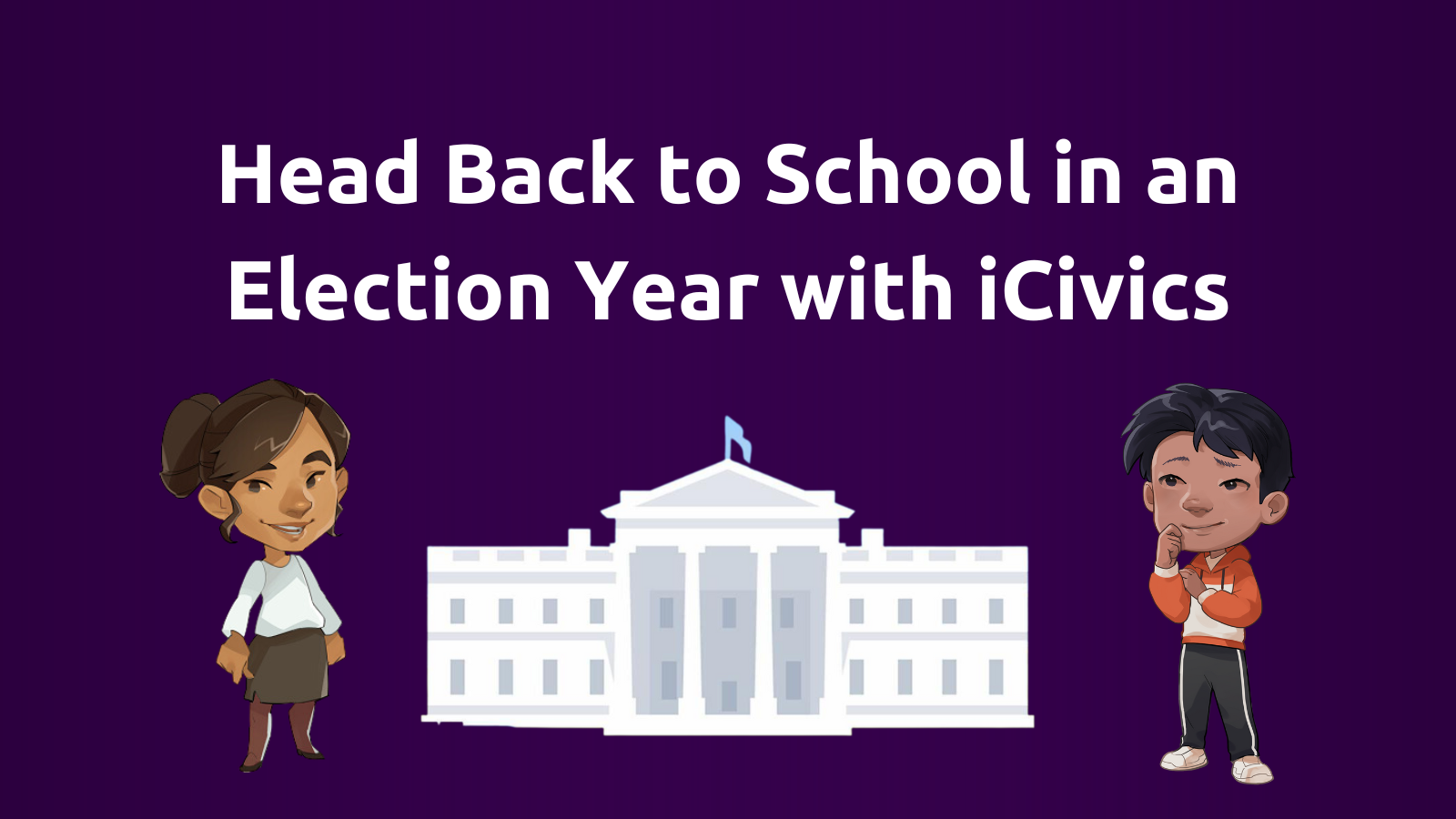
CAMBRIDGE, Mass. – October 25, 2022 – iCivics has released Private i History Detectives, a new curriculum for K-5 that taps into young learners’ natural curiosity and uses inquiry to teach the basic skills that students need to understand history and civics.

Private i History Detectives is a powerful new tool that elementary educators can now use to help their students build foundational historical and civic knowledge, as well as inquiry and critical thinking skills early in their education. This will ensure that students understand how history has and continues to shape our country’s institutions and our own roles as citizens as they continue through middle and high school and into adult life.

Born out of a collaboration between iCivics and History’s Mysteries, through the Library of Congress’s Teaching With Primary Sources (TPS) initiative, the curriculum challenges young learners to take on the role of history detectives. They must use primary sources and inquiry skills to answer “big questions,” such as “What does it mean to be a citizen?” It then guides them through age-appropriate discussions with teachers. The curriculum is easy to use and aligned with state standards.

Private i History Detectives is the first curriculum iCivics has developed specifically for the youngest learners, a segment of the learning population that is traditionally underserved when it comes to civics. Over the next few years, iCivics will continue to expand its K-5 resources.

“For civic education to be effective, we must approach the subject just like we approach STEM and literacy, teaching the fundamental skills starting in elementary school,” Taylor Davis, iCivics Director of Curriculum and Content, said. “Private i History Detectives, breaks historical inquiry skills into simple, easy to grasp concepts in a way that is fun and engaging so that we can meet young learners where they are.”

The full K-5 curriculum is now available for teachers to use, for free, on iCivics’ website.

“After working with many educators, it became clear to us that elementary teachers were hungry for quality, primary source based lessons that would excite and engage their students,” said Laurie Risler, Elementary Education Instructor at Westfield State University, and History’s Mysteries co-creator. “Private i History Detectives requires even the youngest students to think deeply and draw conclusions based on primary source evidence. In the role of history detectives, students do the work of historians as they answer questions using evidence from primary sources.”

Private i History Detectives will be officially unveiled at a launch webinar that is open to educators and school administrators on Nov. 1, 2022, at 7 P.M. EST. The webinar will feature Taylor Davis, Director of Curriculum and Instruction for iCivics, History’s Mysteries co-creators Kelley Brown and Laurie Risler, who are both educators, and Natacha Scott, Director of Educator Engagement at iCivics.

A Reflection: Common Ground in Our Divides

A couple of weeks ago, I left Atlanta in the morning where I had attended a meeting with a conservative libertarian group. Given iCivics’ commitment to nonpartisanship and engaging with viewpoints across the political spectrum, I had been invited to the annual event to test out the appetite for coming together on common sense solutions around issues facing our constitutional democracy.

I then flew to New York City, where I attended a meeting of what might be deemed a more liberal group. 

The juxtaposition was startling. I traveled between a corporate-looking hotel space to a large industrial space. From a large group of 1,400 folks mostly in suits and ties to an eclectic, colorfully dressed, and diverse group, most of whom likely lived on the eastern corridor and attended the same set of institutions of higher education. I went from an exploration of whether Americans are as divided as they seem to exploring human connections, building relationships across humility, and offering listening as an act of love. From conversations spanning cowboy boots and a universal dislike for elites to discussions about the “bravery” of social justice work.

These were very different spaces. Very few people get the opportunity to travel so far across the political spectrum. When you do the work I do, you learn the codes from each camp, the throwaway lines that mark you as part of the tribe. I expected the contrasts and stereotypical icons, but this day was memorable not for the contrasts, but for the similarities. I was startled because I heard the same EXACT words in both spaces:

  • Policy is impossible without trust
  • Polarization is overcome by engagement
  • Trust needs to be built amongst difference
  • Fear of the other side must be overcome
  • It’s beneficial to get out of our bubbles 
  • Social media’s role in supporting, encouraging, and even causing the divisions

Most of all, there was a clear recognition that actors are profiting either financially and/or politically by dividing and “outraging” Americans. While divisions were acknowledged, it was noted that the vast majority of Americans continue to hold moderate positions.

The experience was not easy. I heard comments that I found very difficult, but the richness of the experience I would not trade. I am grateful to both groups for allowing me into their bubbles, to see the points of commonality and hopes for our country and life together. While the work I do may give me insight into the demarcations of different groups, it also reminds me of the power of our life together—e pluribus unum—and the important role that civic education has to play in building civic friendships across differences. 

At iCivics, we advocate for more and better civic education. This experience says something about the “better” part. The civic education we need for all students must reflect the diversity of our nation, community by community. It should foster debate across a plurality of ideas, and encourage reflection about whether we have more in common than what divides us.

—Louise Dubé, Executive Director, iCivics

Ana goes to the WIDA Conference!

Last week, #FlatAna came to the WIDA conference in Louisville, Kentucky, with three members of the iCivics staff to learn more about the best ways we can continue to support ELs and MLs in our games and other resources. Ana has many roles in iCivics games. She is a campaign manager, guide, assistant, and all around helper. She’s bilingual in English and Spanish, and she believes in the iCivics mission of reaching all learners, especially multilingual and English learners. And if you follow our social media, you know that since June, #FlatAna has been doing a lot of exploring! 

The WIDA Annual Conference is for educators, administrators, and curriculum developers to share best practices and learn new classroom strategies.The opening keynote address featured Juliana Urtubey, 2021 National Teacher of the Year, who talked about the value of being multilingual: “If you speak another language, you are linguistically gifted…” Her message focused on building a “joyous and just education for all.” She said, “Celebrate your successes, compost your failures. Nobody loses when we are all empowered. It is possible when we build a world of wonder and justice around our students.” 

Game-based learning follows that idea. You get to empower your students by having them play the role of a presidential candidate, a lawyer, a county chair, a legislator, etc. In games, it’s ok to make mistakes, or fail. Like Juliana Utrubey says, you can “compost your failure” by playing again. At iCivics, we give students the opportunity to explore content through games which engages all learners and generates wonder in the classroom. What did Ana’s colleagues think?

Kristen Chapron, Senior Editor of Digital Learning and ELL: “The best part about the conference is learning new tips and strategies that we can apply to our games, activities, and lesson plans. In the session, Teaching Language Objectives Using Next Generation ESL Curriculum Resources, Dr. Jennifer Altavilla-Giordano broke down the components of creating language objectives. Participants were able to practice using and adapting the tools. Function and features are key. I also learned innovative ways to engage students with academic language from Nadra Shami, ELL Language and Literacy Trainer, in an interactive session called Developing Academic Language in the Content Areas. I also loved the energy and great ideas from other sessions, and I am excited to get back to curriculum writing, apply these practices, and share them with our team.”

Kristen Chapron with Dr. Jennifer Altavilla-Giordano, lecturer and program director for TESOL & Bilingual Education at BU Wheelock College of Education & Human Development.


Angela Clay, Curriculum Associate for EAD: “I had the privilege of learning about James Baldwin’s speech “A Talk to Teachers” from Dr. Carl Grant. Dr. Grant related Baldwin’s 1963 speech to the contemporary world. He articulated eloquently the significance of how a student’s self-image is mirrored in history and the classroom. When students recognize themselves in the lesson, they develop a sense of belonging in the classroom and in society. Dr. Grant was also able to illustrate the overlap between English learners and minority students. Both groups are resilient and, as Baldwin argued, they belong in today’s society. In order for all students to develop a good self-image, it is the responsibility of educators and curriculum leaders to guarantee that we educate our children and acknowledge the complex layers necessary to create a more inclusive learning environment for students to have a positive self-image. Dr. Grant charged us as educators to ensure we empower our students to build a more inclusive classroom and society.”

Angela Clay with Dr. Carl Grant,Hoefs-Bascom Professor in the Department of Curriculum and Instruction and former Chair of the Afro American Studies Department at the University of Wisconsin-Madison

Amanda Setters, Curriculum Associate: “As a former Social Studies teacher, I really enjoyed exploring new classroom strategies. In my new role creating resources, I fall back on that knowledge to develop materials that are not only rigorous, but also include impactful scaffolds that save teachers time and effort. In my session on Scaffolding Strategies for High School EL Students, I did just that. High School English Teacher Noel Emilius gave an excellent presentation on strategies she implements to scaffold grade level content assignments to support all learners. In addition to taking us on a tour through one of her lessons, we also took some workshop time to discuss how we have used strategies in the field. Then we had time to apply the knowledge in our work. What is so powerful is that the time investment in creating these lessons can benefit a wide range of learners in today’s classroom so it is truly time well spent. It also highlights the need to network with other teachers to collaborate and share the workload. The exhibitor hall also had tons of resources that can help classrooms leverage technology to develop language skills so I really enjoyed seeing the variety of materials and tools that are available.”

In Leadup to 2022 Midterm Elections, iCivics and CalMatters Provide News-Based Lesson Plans and Resources for California’s Teachers

Partnership combines CalMatters award-winning nonpartisan nonprofit state news with iCivics lesson plans, games and content to help educators engage students in activities and discussion around the 2022 midterm election.

California’s educators now have a powerful new tool to help teach the 2022 midterm elections through a partnership between the country’s leading civic education nonprofit, iCivics, and California’s premier nonprofit news outlet, CalMatters.

California Election Headquarters, which is available for free for all California teachers and students, is a new portal that combines nonpartisan local journalism and election information with interactive lessons and games to help students improve media literacy skills and increase civic knowledge and skills.

The portal will be updated weekly with relevant news stories from around California that relate to the election as the state determines who will be its next Governor and new U.S. Senator, and weighs a number of important propositions. iCivics will provide games, exercises and lessons to aid discussion in the classroom by helping students understand the news and key civic terms and concepts underlying the news.

Geared toward high school students, the portal includes curated elections resources, organized by week and topic; curricular suggestions and teacher tips for pairing CalMatters news articles with iCivics lessons; and a listing of free professional learning opportunities in teachers’ areas.

“We’re thrilled to be able to share our nonpartisan journalism with California’s social science teachers,” said CalMatters CEO Neil Chase, “supporting them as they educate California’s newest and next voters about the important issues facing our state. We’re especially pleased to partner with iCivics, relying on their expertise in curriculum development and their strong relationships with teachers and students.”

This new and unique resource brings teachers what they need most:

  • Extensive iCivics resources about elections and democracy combined with CalMatters’ midterm-focused reporting and Voter Guide in a California-specific “Election Headquarters” site.
  • Teacher resources including 10-minute discussions, 45-minute lesson plans, interactive games and more.
  • Materials available in a variety of reading levels, in both English and Spanish.
  • Ways to combine important news stories with engaging concept-based lessons.
  • News stories and curriculum updated throughout the fall election period.
  • Live, virtual professional development with free resources, strategies and routines for engaging students on election information.

“Most elections-related teaching resources are either too heavily focused on national elections or simply cover generic information midterms,” iCivics Director of State Professional Programs Tammy Waller said. “This collaboration is different because it provides the California-specific resources focusing on state and local elections that teachers want and students will find most relevant. This makes it easier for teachers to focus on the state and local issues and races that matter to students and their communities.”

The partnership with CalMatters is part of a move toward greater state-based engagement for iCivics in California. As part of these larger efforts, iCivics is implementing a Teacher Facilitator Fellow program to cultivate through a train-the-trainer model a strong network of California educators with the knowledge, skills, and demonstrated abilities to provide each and every student with the kind of high-quality civic education needed to become engaged and informed members of our self-governing society. The first year will focus on Northern California, and expand statewide in coming years. 

FOR MORE INFORMATION:

For media inquires, please contact [email protected]

About iCivics

iCivics was founded in 2009 by U.S. Supreme Court Justice Sandra Day O’Connor to transform civic education and rebuild civic strength through digital games and lesson plans. iCivics is the country’s largest provider of civic education content and is currently used by up to 145,000 educators and 9 million students annually. All of its games are free, nonpartisan and available online at icivics.org

About CalMatters

CalMatters is a nonpartisan and nonprofit news organization bringing Californians stories that probe, explain and explore solutions to quality-of-life issues while holding leaders accountable. CalMatters is the only journalism outlet dedicated to covering America’s biggest state, 39 million Californians and the world’s fifth largest economy.

Apply to become an iCivics Teacher Facilitator Fellow (TFF)

  • Do you teach 7–12th grade social studies or civics in Northern California?
  • Are you interested in being a teacher-leader and facilitating social studies and civics professional development for teachers in your district, county, and state?
  • Are you interested in being part of a community of practice learning together to transform social studies and civics teaching and learning across the state of California?
  • Do you want to earn $2,100?

If you answered yes to these questions, consider becoming an iCivics Teacher Facilitator Fellow!

What is the iCivics Teacher Facilitator Fellow Program?

iCivics is building a train-the-trainer model to cultivate a strong network of California educators with the knowledge, skills, and demonstrated abilities to provide the kind of high-quality civic education to each and every student in their state, that is essential to sustaining and strengthening our constitutional democracy. We know that we can only reach this goal with the leadership and support of skilled teachers! This fellowship program creates a cohort of Teacher Facilitator Fellows who will work collaboratively with iCivics, other content and pedagogical experts, and each other to strengthen civic education content, pedagogy, and facilitation skills. 

After completion of this fellowship, Teacher Facilitator Fellows will receive a stipend to provide professional development opportunities to other educators in their district, county, and state.

The fellowship will be limited to 20 educators from Northern California for its inaugural year (School Year 2022–23). We are excited to expand the program statewide during the 2023 and 2024 school years!

As part of the fellowship, you will:

  • Attend an in-person kick-off event in late fall where you will meet, connect, and collaborate with other TFFs in your cohort, examine best practices for civics teaching and learning, and hear from guest presenters;
  • Participate in monthly professional development through webinars and coursework from iCivics staff and guest presenters;
  • Be part of a statewide community of practice learning together and supporting high-quality civic instruction;
  • Attend a statewide convening during the summer;
  • Become a certified iCivics Teacher Facilitator and be awarded a digital badge; and
  • Be compensated $2,100, upon fulfillment of fellowship obligations, with potential opportunities to participate in other stipend work. 

How to apply: 

Complete the application.

Embracing National Hispanic Heritage Month

Growing up in Miami, Florida, I was surrounded by Hispanic culture, Hispanic leaders, and the Spanish language. Thanks to my parents, I grew up speaking both Spanish and English. I was exposed to my Guatemalan heritage and explored how that intertwined with growing up in the United States. Unfortunately, this did not include a lot of civic knowledge or skills. My parents had not been a part of the electoral process in their country of origin or in the United States. They also never attended school due to the violence and poverty that had struck their country throughout the 20th century. Thankfully, I was able to develop my passion and knowledge for civics from my school and was able to take a dedicated civics course—something solidified for all Florida middle schoolers with the passage of the Justice Sandra Day O’Connor Civics Education Act in 2010.

It was not until I left Miami that I understood the importance of National Hispanic Heritage Month. This month of celebration and recognition allowed me to come together with other students at my university and recognize the importance of Hispanic contributions to the American story. As an educator, I had the opportunity to teach a World Cultures course every year, in which students got to explore different cultures through projects and research. It was always a special time when we got to the unit in Latin America, which I ensured landed during Hispanic Heritage Month. The majority of my students identified with this region because it was where their families were from. That is when I noticed how powerful Hispanic Heritage Month could be in the classroom. Acknowledging these stories and celebrations was one way of creating and celebrating community in the classroom.

These steps in my journey led me to iCivics. At a personal level, I understand how essential civic education is to those of the youngest generation who may not have a family that is civically engaged. Civic education serves as a way to overcome generational barriers to civic engagement. Luckily, my mom will have an opportunity to vote for the first time in her life on November 8.

I challenge educators and students to use this month’s significance and incorporate it into their school community however possible. One way is by studying leaders like U.S. Supreme Court Justice (and iCivics board member) Sonia Sotomayor, the first Latina and first woman of color to serve on the land’s highest court. Another way is by using iCivics’ ELL resources to make civics accessible to your English and multilingual learners. As a Latino, I feel proud to be able to continue to celebrate Hispanic Heritage Month.

Written by Michael Reyes

Born in Miami, Florida, Michael has nearly three years of teaching experience in his hometown. At iCivics, Michael manages the Equity in Civics Youth Fellowship and the Youth As Civics Experts Network. He supports our Youth Fellows in finding and using their voices towards their civic passion, a similar experience he went through in high school.

CHCI R2L NextGen Program Creates Full-Circle Moment for iCivics Team Member

Earlier this summer, iCivics’ Director of Curriculum and Content Taylor Davis and I held a workshop for R2L NextGen students from the Congressional Hispanic Caucus Institute (CHCI) to help them learn more about their constitutional rights.

These high school students discussed the importance of our Constitution and the rights it protects for the people of the United States. They then proceeded to play our game, Do I Have A Right? While playing, students reflected on their experience of stepping into the role of a lawyer and learning to navigate their constitutional rights.

Here is what they had to say:

“I learned how critical our lawyers are in our government and how we depend on our amendments.”

– Linsi Perez, Florida

“I relearned which rights went with which amendments. I learned more in depth details about many amendments. I realized the applications of these amendments and how they help to solve issues that people have.”

– Nicolas R., Florida

“I am wondering whether or not most people are actually aware of these rights and I wonder how these games can continue to impact those who don’t.”

– Alexandra C., Florida

This session was a full-circle moment for me because I was part of the inaugural cohort of CHCI’s R2L NextGen program in the summer of 2011. This civic youth experience was pivotal to my life-long civic journey. R2L NextGen prepared me to get more involved in my hometown of Miami, Florida, and seek more civic opportunities. It taught me that civic participation was vital to your community and it empowered me to become part of my high school’s Student Government Association and later be involved in campus elections at the University of Florida.

Without the experience with CHCI’s R2L NextGen as a sophomore in high school, I would not have the motivation I have today to be civically engaged and connected to my community. I was very impressed with how engaged this group of students was during the game and all the wonderful questions they had! I hope they continue playing our games and making the most of their life-long civic journey.

Written by Michael Reyes

Born in Miami, Florida, Michael has nearly three years of teaching experience in his hometown. At iCivics, Michael manages the Equity in Civics Youth Fellowship and the Youth As Civics Experts Network. He supports our Youth Fellows in finding and using their voices towards their civic passion, a similar experience he went through in high school.

Series of 35 Short-Form Videos Exploring Every Article and Amendment of the U.S. Constitution Launches for Constitution Day

With the support of Citadel Founder and CEO Ken Griffin, “The Constitution EXPLAINED” gives middle and high school teachers a new, no-cost tool to educate students about the U.S. Constitution with modern context and relevance.

 CAMBRIDGE, MASS. – Sept. 9, 2022 – Leading civic education providers iCivics and the Center for Civic Education today announced the release of a new short-form video series to educate middle and high school students about the U.S. Constitution using a medium that teachers are finding incredibly effective and engaging in the post-pandemic classroom.

Funded by Citadel Founder and CEO Ken Griffin, “The Constitution EXPLAINED” will be available for free in the lead-up to Constitution Day and Citizenship Day, when public schools commemorate the Sept. 17 signing of the U.S. Constitution and reflect on the rights and responsibilities enshrined in this seminal document. 

The video series was created in collaboration with noted constitutional scholar Linda R. Monk, author of The Words We Live By: Your Annotated Guide to the Constitution, and produced by Makematic. The 35 short videos dig deep into the U.S. Constitution by exploring every article and amendment in straightforward and easily digestible 2- to 4-minute segments that provide both context and modern relevance. 

The information-packed animated videos provide a new approach to teaching the U.S. Constitution with maximum flexibility for multiple audiences, differentiating them from existing long-form explainer videos and publications. The videos are geared toward middle and high school students and can also be used by the general population as an engaging refresher on one of the country’s foundational documents.

A preview of the videos can be found on the iCivics website and the Center for Civic Education website.

“iCivics and the Center for Civic Education have created these videos to meet teachers where they are right now,” said Julie Silverbrook, Senior Director of Partnerships and Constitutional Scholar in Residence at iCivics. “Research shows that short videos are an incredibly effective tool, as they hold student attention from start to finish and can be a compelling entryway into teaching even complicated subjects. We know this will be an invaluable tool for educators across the country, as well as for adults and families who are looking for a fun and engaging way to learn more about the text and history of the U.S. Constitution and Bill of Rights.”

“I’m incredibly excited about the launch of ‘The Constitution EXPLAINED,’” said Christopher R. Riano, President of the Center for Civic Education. “This collaborative effort shows what is possible when organizations work together, and has produced a rich collection of resources that can be used by students of all ages. We’ve made a special effort to tell the story of American constitutional democracy in an intellectually and visually engaging way and are very proud of the result.”

The video series is already generating anticipation among teachers, who are looking for new tools to educate students about the U.S. Constitution.

“I’m really excited about this collaboration between iCivics and the Center for Civic Education,” said Katie Boland, an AP Government and We the People: The Citizen and the Constitution teacher in Trumbull, Connecticut. “These quick videos will enable teachers to bring experts in the field into our classroom and allow us to explore different topics related to the Constitution in a nonpartisan manner. It’ll be an invaluable resource to all civics teachers and also citizens to watch and learn about our government.” Katie is also a member of the iCivics Educator Network. 

For media inquiries, contact [email protected] or [email protected].

About iCivics

iCivics was founded in 2009 by U.S. Supreme Court Justice Sandra Day O’Connor to transform civic education and rebuild civic strength through digital games and lesson plans. iCivics is the country’s largest provider of civic education content and is currently used by up to 145,000 educators and 9 million students annually. All of its games are free, nonpartisan and available online at icivics.org. 

About Center for Civic Education

The Center for Civic Education has long been recognized as a leader in providing civic education to K–12 students and adults, with its research-based curricula reaching more than 42 million students and 440,000 educators in the United States and in more than 80 countries since 1965.

iCivics and All Vote No Play Engaged Athletes: Learning from Civic Greats and GOATs

On September 13, iCivics will host a special event with All Vote No Play featuring athletic leaders who will discuss the motivation and choices behind their work and collective impact.

Participants will have the opportunity to listen and learn from great leaders like four time NBA Champion and “Team Democracy” superstar, Stephen Curry; former Secretary of State, Condoleezza Rice; the most winning NCAA coach of all time, Tara VanDerveer; and, NFL champion for social change, Demario Davis. These individuals will be interviewed by student athletes, giving attendees chance to understand and explore their individual and collective civic dispositions, skills, and leadership postures.

To make civics experiential, relevant, and meaningful to all learners and students, we invite your classrooms to participate and learn about creating and nourishing civic values, civic cultures, and civic communities. Consider assigning this event as homework to your civics, government, or social studies classes and inviting further reflection, inquiry, and conversation.

Some learning questions you might offer to your students, include:

  • What does civic engagement mean to you? How does it show up in these leaders’ lives and intentional choices? 
  • How do you think about civic power and what’s required to create positive change? What kinds of power did you hear about in the conversations? How did these leaders use their personal platforms and power in community building and value-amplifying ways?
  • As an athlete, and as a citizen, what is your responsibility to serve the communities around you? How do you do that in your life – in big or small ways?
  • What are other instances in your community where athletic or cultural leaders are making a difference?

In addition to your class discussion, we have other readings and resources that explore the intersection between civic power and possibility available on our websites.

We’re excited to hear how this experience goes for you and your class! Be sure to let us know by emailing us at [email protected], and tag us in any social media posts, @AllVoteNoPlay and @iCivics.

30 Students Take Civic Education into Their Own Hands Through iCivics Equity in Civics Youth Fellowship

Now in its fourth year, the fellowship works with students from across the country to build civic leadership skills and explore how civic education can become more relevant to all youth in the United States


iCivics has selected 30 talented high school students from across the country to take part in the iCivics Equity in Civics Youth Fellowship (ECYF). The students were selected after a competitive process that saw nearly 650 applicants—more applicants than it has in the previous three years combined—from 43 states, Washington, D.C. and Puerto Rico.

The yearlong fellowship helps students develop leadership and communications skills in collaboration with peers and experts in the field of civic education. Throughout the year, students research and explore how civic education can become more equitable for students across the United States, utilizing their own lived experiences to become ambassadors and shed light on how civic education can include student voices from every background. 

“It’s important for the field of civic education to have a student perspective on what we as a field are trying to do to improve civics and create a high-quality education and experience for all students,“ said iCivics Youth Engagement Coordinator Michael Reyes. “Based on the number of applicants we had for this year’s fellowship, and what each of them wrote in their applications, there is a huge appetite for students to be involved. I’m excited for this year’s fellows to come together and learn from each other and hear the perspectives of students from different backgrounds who they may never have met otherwise. That’s a key part of this.”

The fellowship kicked off in late August, moving into full-gear with an in-person symposium in Washington D.C. in early fall. It then continues through the 2022–2023 school year as fellows engage virtually in group discussions with their peers, workshops and lectures with experts in the field, and projects designed to strengthen listening and collaborative skills. All of the fellows’ work will be centered around ensuring that civic education is available and relevant to all students in the United States. 

Over the past four years, students from across the country representing rural, urban and suburban districts have taken part in the fellowship. They have become an integral part of informing the broader civic education movement, sharing their experiences and thoughts at convenings for the Educating for American Democracy initiative, the Ronald Reagan Institute, and the Commonwealth Club. They have been featured in media such as The Wall Street JournalChicago Tribune, and WBUR in Boston. 

“We are incredibly excited to welcome this year’s group of ECYF fellows,” iCivics Executive Director Louise Dubè said. “They are a fantastically talented and diverse group of students, whose voices we value more than our own words can capture, and hope to help empower them as they take the monumental task of improving civic learning into their own hands. We look forward to learning from them.”

iCivics is proud to announce this year’s Equity in Civics Youth Fellows:

  • Camila Alfaro – Egg Harbor Township High School, New Jersey
  • Anaum Allimulla –Newark Charter School, Delaware
  • Denzel Augustin – Dr. Michael M. Krop Senior High School, Florida
  • Grace Clemente – Cambridge Rindge and Latin, Massachusetts
  • Samantha Corpuz-Giron – Salesian High School, California
  • David Culver – Ozark Jr High School, Arkansas
  • Amanda Donley –Fishers High School, Indiana
  • Raymond Fraser – St. Andrews Episcopal School, Mississippi
  • Anika Gamburg – Canyon Crest Academy, California
  • Sophia Gish – Heritage Hall High School, Oklahoma
  • Aine Griffin – Spark Academy of Advanced Technology, New Hampshire
  • Athena Holloway – Classical High School, Rhode Island
  • Milton Hernandez – Gramajo Aiken High School, Ohio
  • Mark Hu – Hamden High School, Connecticut
  • Jatayvia James – King College Prep, Illinois
  • Rose Kelly – Clinton High school, Iowa
  • Jeramie Kim – Crescent Valley High School, Oregon
  • Kate Larsen – Weber High School, Utah
  • Shivi Manchanda – Spring-Ford Senior High School, Pennsylvania
  • Angeles Mejia – College Academy @ BC, Florida
  • Jacob Montney – Alma High School, Michigan
  • William Olmstead – Washington Community High School, Illinois
  • Saturnino Pajkos – Tanque Verde High School, Arizona
  • Autumn Parsons – Walter Wellborn High School, Alabama
  • Mia Quirino – Lubbock High School, Texas
  • Luis Garcia Rivera – East High School, Missouri
  • Kriti Tatia – Johns Creek High School, Georgia
  • Ilelta Tezera – C.D Hylton High School, Virginia
  • Anjali Walsh – Lakeside School, Washington
  • Julia Wolfe – Bosque School, New Mexico

For more information about the iCivics Equity in Civics Youth Fellowship, and how to participate, visit civicsforus.org.