10-Year Reflection

As I enter my second decade with iCivics, I wanted to take a moment to reflect on what a ride it’s been!

During my interview dinner with iCivics Founder Justice Sandra Day O’Connor in May of 2014, I remember not speaking more than three words between people coming up to her and mostly listening to her bold vision.

I was conflicted about accepting the position. Friends were dubious about taking a position with a small (6 staff) and financially unstable nonprofit that was reliant on a high-visibility champion. As one iCivics board member stated, “when you work at a more mature organization, you get paid whether you raise money or not. Here, if you do not raise the funding, you don’t get paid.” That was sobering.

I weighed those concerns against what I saw: an incredible product with a dedicated fan base on an issue I cared deeply about preparing young people for civic engagement.

The founding team had done the hard work. Abby Taylor, Jeff Curley, Carrie Ray Hill, Allison Atwater, Julie O’Sullivan, and so many others designed products with unusual attention to, and care for, educator needs. They understood what teachers needed: meeting state standards while crunched for time and striving to hold student attention. Justice O’Connor truly listened to educators and allowed her team to design what was needed. They were meticulous and connected with users frequently. In my 20+ years in education, I had rarely seen that.

What’s more, I remembered my son using Win the White House while in 4th grade. At the time, I was skeptical about games as homework, but he told me, “All of school should be like iCivics.” That won the day.

The first couple of years were stressful. In the first few weeks, we got a transformative gift from the MacArthur Foundation, which gave us the runway to grow. From there, we built on the assets the founding team had developed and sought to make Justice O’Connor’s vision a reality.

By 2017, it was clear that if we wanted civic education to have an impact, we would need a nationwide movement to make civic education a priority. That year, the Carnegie Corporation of New York invested in and supported our development of the “Democracy at a Crossroads” conference, expanding the visibility of civic education and incubating the CivxNow coalition.

But at a time of great division, such a movement needs a north star. What kind of civic education does our country need? Along with 300 colleagues, we sought to answer that question, culminating in Educating for American Democracy in 2021. 

This vision of a thriving American democracy supported by informed and civically engaged young people animates us today. Our resources are now used in every state in the nation to serve 9 million students every year. We have hundreds of resources to support educators and added services to our product mix. This expanded reach and support for students and educators is made possible today by a staff of 70 across 25 states, and a budget that has grown tenfold.  

Most of all, we have had an impact. We have helped more than quadruple federal funding for civic education. Our coalition—now 340-strong—has helped pass policies to advance civic education in 24 states.  We know that states where strong quality civic education has been implemented have better results on assessments of civic learning.

I am deeply grateful to iCivics and to the team who has done an enormous amount of hard work over the years. I am also grateful to our extraordinary supporters, who have shared their insights as well as their financial resources to make this work possible.

iCivics is growing up! Here’s to the next 10 years…

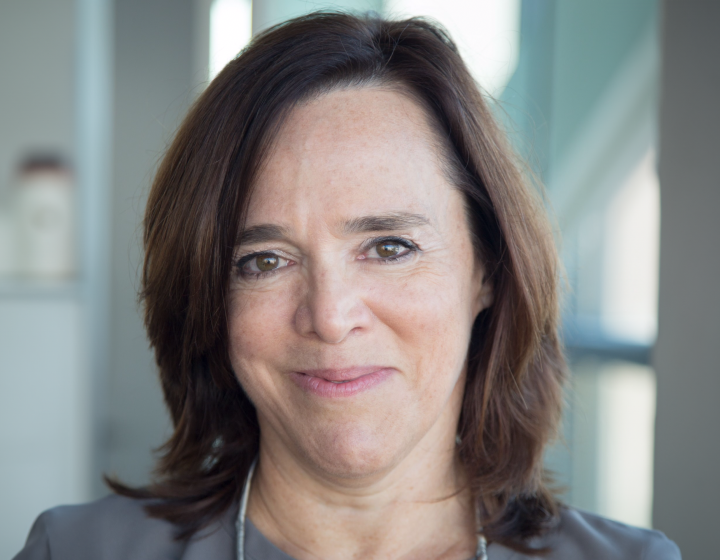
Louise Dubé

Louise joined iCivics as its Chief Executive Officer in July 2014.

Louise discovered the power of education in the early 1990s as a co-founder of CASES, a New York alternative-to-incarceration program for youthful offenders where education helped reshape lives. Inspired by a deep commitment to creating pathways to lives of learning and purpose, she has devoted her career to ensuring that all students are prepared for civic life.

Louise has successfully led K-12 growth organizations that use educational media to improve student achievement across the private and nonprofit sectors. Most recently, as Managing Director of Digital Learning at WGBH, Louise helped launch PBS LearningMedia, a platform with more than 87,000 classroom-ready digital resources reaching 1.5 million educators.

Louise has received national recognition for her work. She received a Civvys award from Bridge Alliance, the People’s Voice Award from the Diane Von Furstenberg/Barry Diller Foundation, and was selected as a Donaldson Fellow in 2019 at Yale SOM. She is also a Draper, Richards, Kaplan Fellow. As a civic education expert, Louise has published and been interviewed widely in national and education press.

Louise began her career as an attorney in Montreal, Canada. She holds a law degree from McGill University and an MBA from Yale’s School of Management.

Louise, a native of Quebec, has two children who share her love of travel, reading, debating, and learning.

Interested in interviewing Louise or having her as a speaker? Contact [email protected]

Amanda Donley

On Civic Education and the iCivics Youth Fellowship

I was fortunate to get one of the best civic educations possible when it comes to the iCivics Youth Fellowship and my 8th grade “We the People” class. As a result, I know my constitutional rights and I feel very prepared to vote and otherwise engage. 

But there were 200 other students in my grade level who opted out of civics, and I’m not sure a lot of my peers understand much about what is going on in government, how they are affected by it, and how they can affect it in return.

As part of the iCivics fellowship, I interviewed two groups of students—those who got the same classes I did those who did not.. The first group gave long, elaborate answers and there was open communication between the students. But when I interviewed kids who did not get this form of civic education, they gave one- or two- word answers, didn’t seem to really be familiar with the word “civics” or what it entailed, and didn’t really talk to each other. This exercise really put into perspective how even one single class can alter a person completely.

On the State of the Nation

It’s hard to imagine that there was a time when members of opposing political parties could “agree to disagree”—or even come together on certain issues. Today, it seems our elected officials are punished for working with members of another party, yet that’s the very foundation of the U.S. Constitution. As someone who is civically engaged, such actions don’t feel like serving the community—they feel antithetical to what they teach us in civics class.

When I think about what our nation could be, the word that springs to mind is “open.” Open to differences of opinion—not always having to be right. More open to listening to each other, and not always yelling.

On iCivics

With iCivics, it’s not just about supporting a program or a website. but actively supporting the next generation of this country. What iCivics does is amazing: it helps young people find the answers to questions they’re too afraid to ask. If “the next generation will “fix it,” then we need tools, knowledge, and support systems. We need the space to meet up a few times before figuring it all out and supporting programs that provide just this—a space to try, and mess up, and try again, and succeed—it fosters a true interest in our country.It’s about supporting an entire generation that can finally find its voice, and that will want to create a better world for all.

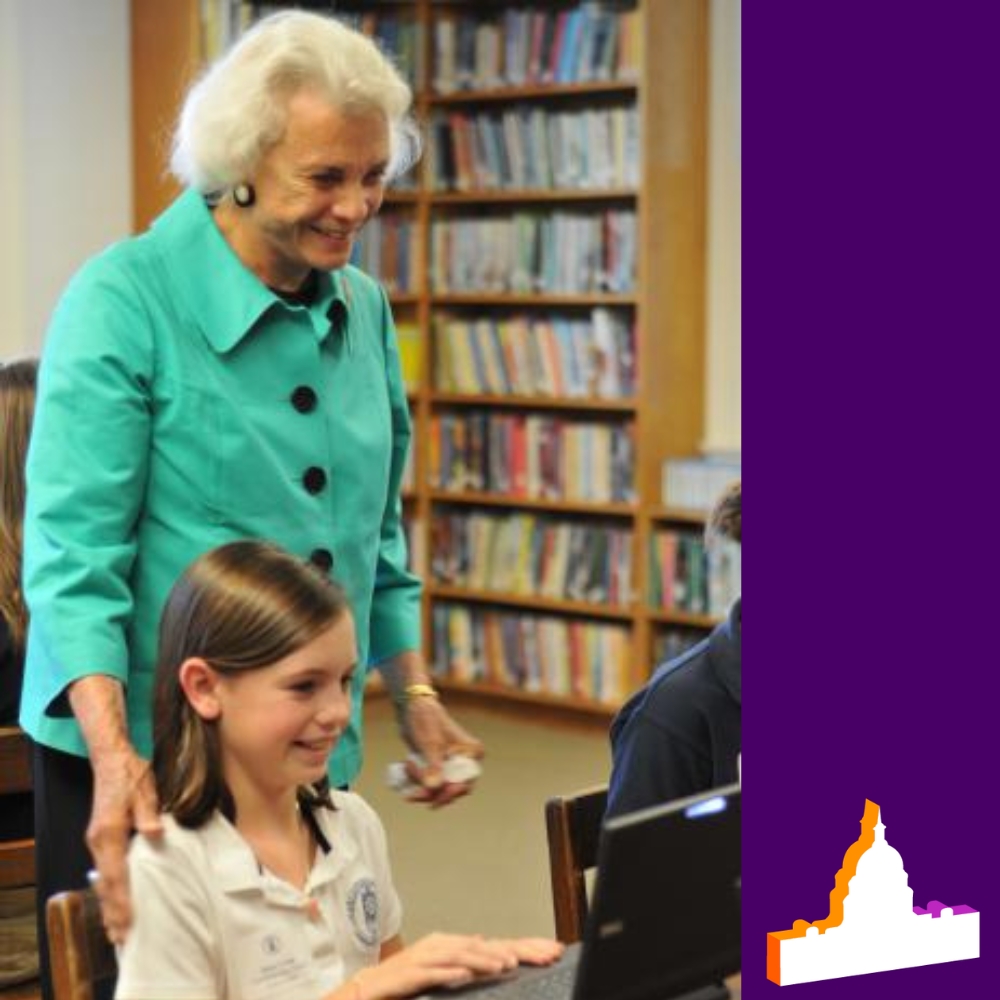
Today, iCivics lost its leader, but we continue to be guided by Sandra Day O’Connor

by Louise Dubé, Chief Executive Officer, iCivics

In 2014, I met with Sandra Day O’Connor for dinner at a restaurant in Washington, DC, to interview for the position of executive director of her nonprofit iCivics. I barely got a word in between interruptions from other diners who wanted to shake her hand, tell her a story, or take a picture with her. When dessert was served, the Justice was clear in articulating my marching order: “Louise, we need to be in all 50 states.”

I have been working to make her vision a reality ever since.

When we met that day, iCivics was just past its startup phase. Today, up to 145,000 educators and 9 million students use iCivics resources every year. We now provide professional learning to educators to support their practice in all 50 states. And, we are working to advance bipartisan legislation on both the national and state level that supports civic education through CivXNow, a coalition that iCivics founded that includes more than 300 organizations from across the viewpoint spectrum.

Justice O’Connor was a true leader. Beginning in 2006, she was determined to “crack” civics, to reimagine how we teach a “boring” class in new and exciting ways, and to ignite the passion of young people to become involved in our constitutional democracy. Her determination, devotion to high quality, and find common ground continue to animate iCivics’ work. 

She was not just a luminary, but unique in her ability to drive change and follow through on her passions. 

Many important and famous people have started initiatives that have not succeeded. iCivics has grown and flourished because she spent time listening to the customers—educators and students and their families—to find out what they needed. She hired educators to work on curriculum development. She built products that were easy to use, engaging to students, did not require a lot of preparation time, and closely aligned to the state educational standards. That is iCivics’ recipe for success. 

And she did this because she cared not just about this country but about the very people that make up our nation.

Justice O’Connor saw into the future. She lived and worked within institutions her whole life. Yet much of her time was spent outside of these institutions, forging personal friendships and building trust. She knew that the formal was not sufficient. Institutions are nothing without people, without those who bring to bear the very norms, beliefs, rules, and behaviors that make institutions function well. Justice O’Connor understood that our country’s institutions cannot survive without support from “We the People.” 

Civic education is an investment in developing the knowledge, skills, and dispositions of a citizen so that they can both understand how our system functions and hold it accountable. Justice O’Connor understood that schools are the best way to ensure we reach each and every student in the United States in order to sustain and strengthen our constitutional democracy.

To this day, iCivics’ culture is a reflection of Justice O’Connor’s determination and commitment.

I came to iCivics to honor the legacy of a woman who pioneered the way forward for professional women. As she said, “It was good to be the first, but you did not want to be the last.” 

I feel an obligation to ensure that the contribution of the women from a generation prior to mine is understood, honored, and respected. My mother had an eerily similar story to Justice O’Connor’s. She was the second woman Supreme Court Justice in Canada. Also like Justice O’Connor, my mother could not get hired out of law school and ended up posting an ad in the newspaper. 

But both women persevered and did not let the conventions of their time get in the way of their talent and wisdom. They are superwomen, and we owe them a debt of gratitude.

Shortly before she died, I was deeply honored to speak with Justice O’Connor one last time. I assured her that iCivics was successful and that her vision is now a reality.

We will miss you, Justice O’Connor, but we continue to be animated by your vision.

Thank you for your service.

First Woman on Supreme Court Sandra Day O’Connor Will be Remembered as Country’s Foremost Advocate for Civic Education

CAMBRIDGE, MASS. [December 1, 2023] — As the nation mourns the passing of former U.S. Supreme Court Justice Sandra Day O’Connor, she will be remembered not just for her seminal work with the Court, but as the founder of a movement to revitalize civic education. 

Appointed to the U.S. Supreme Court in 1981 by Ronald Reagan, O’Connor was known as a moderate and master of intelligent compromise. When she retired in 2006, O’Connor began work on what she would see as her true legacy—ensuring that millions of young Americans were educated on how our government works and empowered to become informed and engaged participants in our self-governing society.

In 2009, O’Connor founded the nonprofit iCivics with the goal of transforming civic education for every student in the United States. 

iCivics started this work by creating innovative, engaging online games and resources. Since its inception, iCivics’ games have been played more than 189 million times. All iCivics content is completely free and nonpartisan—and is now used by up to 9 million students and 145,000 teachers annually in all 50 states and the District of Columbia. 

“Justice O’Connor was both a great Justice and a great person. She brought such experience and integrity to everything she did. Her legal and political career was exceptional, at a time when the obstacles for women were formidable; providing a thoughtful ballast and balance to the Court, and continuing to make important contributions to America and its civic institutions after she stepped down,” iCivics Board Chair Larry Kramer said. “iCivics was her brainchild. She spotted the need and importance of reinvigorating civic education before others, and she led the creation of an innovative leader in the field. As important, she was kind and generous, a friend and mentor to countless young people.”

Remembered as a trailblazer for her work on the Court, it was the path Justice O’Connor blazed after she retired from the U.S. Supreme Court—as a pioneer in advancing civic education—that she stated both privately and publicly was what she considered her true legacy. 

“If we want our democracy to thrive, we must commit to educating our youth about civics, and to helping young people understand their crucial role as informed, active citizens in their communities and in our nation,” Justice O’Connor said in her final remarks to the public in 2018, as she withdrew from public life because of her health. “We must arm today’s young people with innovative civic education that is relevant to them. Bringing high-quality civics to every school in every state of our union is the only way that the next generations will become effective citizens and leaders.”

Over the last decade, iCivics has supported its work in the classroom through its leadership of a movement to make civic education a nationwide priority. iCivics founded CivXNow.org, a politically and culturally diverse coalition of more than 300 major organizations, universities, and foundations that are working across political lines to improve civic education. 

In 2021, iCivics along with Harvard, Tufts and Arizona State Universities unveiled the Roadmap to Educating for American Democracy (EAD). The initiative, first funded under the Trump Administration and continued under the Biden Administration, crafted a framework that charts the path toward a vibrant and diverse constitutional democracy through civics and history education. 

“I came to work at iCivics to fulfill Justice O’Connor’s vision for a civic education that prepares students for civic engagement. During my interview for the position, she told me that it was not enough for students to know, they must also do, be engaged and solve problems,” iCivics Chief Executive Officer Louise Dubé said. “The Justice’s career is a testimony to civic service and dedication to the country. My goal remains to fulfill her vision and make her proud. And there are no words for how much she has meant for iCivics, civic education, and how deeply we will miss her.”

For more information about Justice O’Connor’s work with iCivics, visit iCivics.org. To arrange an interview, please contact [email protected].

34 Students Take Civic Education into Their Own Hands Through iCivics Equity in Civics Youth Fellowship

Now in its fifth year, the fellowship helps students from across the country build civic leadership skills and explore how civic education can become more relevant to all youth in the United States

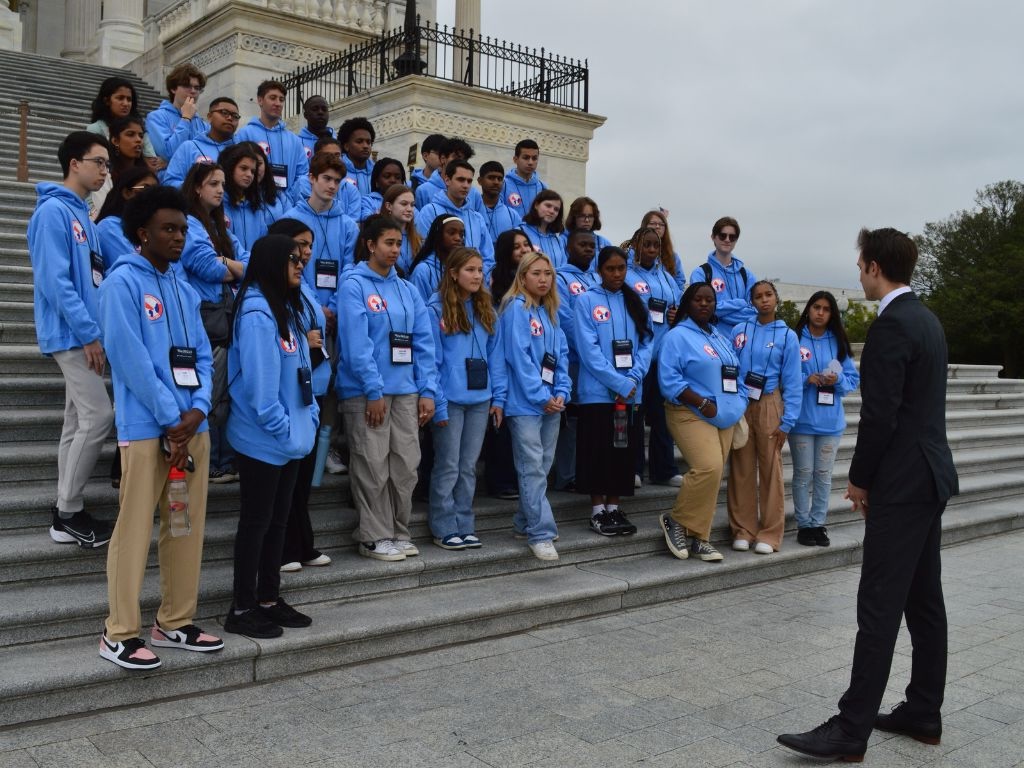
September 20, 2023—iCivics has selected 34 talented high school students from across the country to take part in the iCivics Equity in Civics Youth Fellowship (ECYF). The students were selected after a competitive process that saw nearly 350 applicants from 38 states and Washington, D.C.

The yearlong fellowship helps students develop leadership and communications skills in collaboration with peers and experts in the field of civic education. Throughout the year, students research and explore how civic education can become more equitable for students across the United States, utilizing their own lived experiences to become ambassadors and shed light on how civic education can include student voices from every background.

“I am excited for this year’s fellows to come together, learn from one another, and use their lived experiences to shed some light on the current state of civic education for our young people,” said iCivics Youth Engagement Coordinator Michael Reyes.

The fellowship kicked off in late August, and moves into full-gear with an in-person symposium in Washington D.C. in early fall. It continues through the 2023-2024 school year as fellows engage virtually in group discussions with their peers, workshops and lectures with experts in the field, and projects designed to strengthen listening and collaborative skills. All of the fellows’ work will be centered around ensuring that civic education is available and relevant to all students in the United States. 

Over the past five years, students from across the country representing rural, urban and suburban districts have taken part in the fellowship. They have become an integral part of informing the broader civic education movement, sharing their experiences and thoughts at convenings for the Educating for American Democracy initiative, the Ronald Reagan Institute, Civic Learning Week, and the Commonwealth Club. They have been featured in media such as The Wall Street Journal, Chicago Tribune, and WBUR in Boston. 

iCivics is proud to announce this year’s Equity in Civics Youth Fellows:

  • Maurits A. – Florida
  • Titus A. – Arizona
  • Liana A. –Maine
  • Addison A. – Louisiana
  • Alexandra B. – Oregon
  • Erica B. – Minnesota
  • Maya B. – California
  • August B. – Delaware
  • Jayla C. – Georgia
  • Rainie C. – Oregon
  • Ace C. – Iowa
  • Shreya D. – Washington
  • Miranda D. – New Jersey
  • Kora D. – Massachusetts
  • HamzaE. – California
  • Pablo G. – California
  • Kaimy I. – North Carolina
  • Daye K. – Georgia
  • Shirin K. – Pennsylvania
  • Wyatt L. – Arizona
  • Mia L. – Illinois
  • Dontrell M. – Georgia
  • Ronald M. – North Carolina
  • Aser M. – Maryland
  • Tithi M. – New Jersey
  • ColtonM. – New Hampshire
  • Folasade O. – Connecticut
  • Cian O. – Massachusetts
  • Saghana P. – Michigan
  • Ellie P. – Virginia
  • Elijah S. – Tennessee
  • Pratheek T. – Virginia
  • AlyssaV. – Ohio
  • Sarah V. – New York

For more information about the iCivics Equity in Civics Youth Fellowship, and how to participate, visit the website.

iCivics and George Washington’s Mount Vernon Launch Free Online Game About Civility and Compromise at the Constitutional Convention

MOUNT VERNON, VA – September 7, 2023 – This Constitution Day, iCivics and George Washington’s Mount Vernon will release Constitutional Compromise, a new online game that takes students through the major issues – and key compromises – that shaped our nation’s governing charter, the United States Constitution.

Developed with support from philanthropist Kenneth C. Griffin, Constitutional Compromise is the first game that iCivics has created specifically for use within a museum exhibit. The game will be available for free for anyone to use at icivics.org, and it will be available for on-site play to the over one million visitors to Mount Vernon every year. By 2026, the game will move into a new permanent exhibit on George Washington at Mount Vernon.

Designed for middle and high school students, the game places students in Philadelphia in 1787 and challenges students to grapple with the intense debates that occurred between the delegates to the Constitutional Convention, including: the scope of national government, representation of power, how population is determined, executive functions, the transatlantic slave trade, and whether the country should have a Bill of Rights.

George Washington, who served as President of the Constitutional Convention, leads players through the debates by requiring them to weigh the arguments they hear and decide how they might have moved forward if they were writing the Constitution. The game then compares their decisions with the compromises that delegates had to make to create a new system of self-government, even though they were difficult and sometimes imperfect (and, on the issue of slavery, morally unacceptable).

It was built by award-winning educational games developer Filament Games. It is free to use and is also available in Spanish and with full support for English Language Learners and has supporting documents for educators to use during Constitution Week and beyond to teach about the Constitution.

More than 100 students from the Alice Deal Middle School in Washington, D.C. will gather on Sept. 18 at Mount Vernon, President Washington’s home, for an event that will be live streamed to thousands of students across the country, starting at 9:30 AM EST. The livestream will be available at: https://www.youtube.com/watch?v=k7T7ImWrpgs

“Now more than ever it’s critical that Americans have a firm grounding in the important framework that the U.S. Constitution provides for our democracy,” Mount Vernon President & CEO Doug Bradburn said. “Mount Vernon is delighted to have the perfect partner in iCivics as we worked together to create Constitutional Compromise.”

Saturnino Pajkos

On the Youth Fellowship

I’ve always had a passion for helping people as well as a deep appreciation for education. My previous government teacher shared with me this opportunity to be a part of the iCivics Youth Fellowship, given we’d used iCivics materials before in class. So I applied… and got in! It’s been an honor and privilege to be a part of the movement for better civic education.

Being a part of the Fellowship had a profound impact on me. In my life, I haven’t met many people interested—dare I say passionate?—about government. Through the fellowship, I finally found a group of people to connect with. We had educated conversations and tried to resolve civics issues affecting us. 

I was surprised by the amount of engagement we had within our community. We weren’t just sitting there, saying what we already thought and knew. No, we actually interviewed our peers and gathered their many different viewpoints. Learning how to do that was so valuable to me. It helped me communicate better. It made our projects better. It helped the future of civics and our country.

The people in the Fellowship all had different backgrounds, opinions and career paths, yet we shared the common goal of improving civic education to promote these ideals to keep our Republic going. I found the others to be dedicated to this cause, and willing to put their political beliefs aside in order to work together. It was relieving to see, and makes me hopeful for the future.

On the Value of Civic Education

I think a lot of young people do care about what’s going on politically. I’ve had one-on-one conversations with people who are interested. But publicly, they don’t always express that. They fear the repercussions and the social effects. Part of that is just our age group—the social dynamics, the cliques in school…

There is a trend among some young people—they think, “Why bother?” Through media, they see little getting done, and constant bickering and fighting. However, I see that once young people get a proper civic education—once they sit down and make sense of how our government works, and why these systems are in place—they get a better sense of democracy as a system to uphold…one worth fighting for. Education plays a major role in evading crisis.

On Civic Education 

In Arizona, there is just one semester of a civics course; then you have to take the Arizona state-mandated civics test and receive a 70 or higher. It’s similar to the U.S. citizenship test. What’s become clear to me is your education depends on the quality of your teacher, given the teaching requirements are loose and open to interpretation. I was very lucky to have excellent teachers in government. But I also know students who didn’t have that. And realistically, you can only learn so much about a subject in six months.

For something like civic education, learning activities should be far more “hands-on.” It would certainly make it more interesting to more students. 

When you stop to think about it, civics is a set of skills that you use—and build on—for the rest of your life. We need practice. It’s learning how to be a savvy interpreter and user of media  It’s knowing how the judicial system works. It’s knowing what your rights are. It’s playing a role in your government and fulfilling your duties as a citizen. And it includes effective communication—how to convey different ideas between different people. Honestly, it’s part of the beauty of this country too—that we can speak openly in a class or debate setting.

I also think elected officials should be brought in more. It’s inspiring for students to have those who make the laws come in and talk to them. That has a major impact. Maybe classes could take trips down to their local town halls, or the courts, or even the legislature if you’re close enough to the state capital.

Games and hands-on simulations also definitely help. To have students doing the learning sticks with students more than traditional worksheets and reading.

On iCivics

The first time I used iCivics was in 8th grade. This is when we, in Arizona, start learning the basics about American history and government. My teacher mainly used the games, assigning us to play and then send her the results. 

Now I’ve always been passionate about government, but I saw how iCivics was even able to affect students who weren’t as interested in government or policymaking. It gave the teacher an opening to pique their interest. I saw how these games engaged us all. Soon, my classmates were picking up on new ideas about government, because the topics weren’t far-fetched. iCivics opened our eyes, bringing government down to a level we could understand and touching on things that concerned us. 

Civics, as a skill set, is not easy to learn. It’s an umbrella term for so much, and it’s unique to each individual. Yet it is such a key skill for us all to have in life.

iCivics tries to tackle this issue with hundreds and hundreds of resources for students to help understand how to address the world around them—knowing about government, policy, elected officials, how to check if a source is reliable, how to form a logical opinion, how to consider other opinions with respect. iCivics allows every voice to be heard. Its work will affect generations of Americans, and guide the course of our Republic.

What is the Fourth of July to you?

On this Fourth of July, as we near the 250th anniversary of the establishment of this country’s independence, I urge you to take a pause before you bite into that barbecue and – amid the fireworks and the displays of flag – ask yourself some questions that can give this holiday the meaning it deserves:

What is the Fourth of July?

Yes, it is a national holiday, but it is not just a day to sit back, eat hotdogs, and watch parades, although I will certainly do all of those things. It’s the celebration of the birth of American Independence.

On July 2, 1776, the Continental Congress voted in favor of a resolution declaring the 13 colonies’ independence from the rule of Great Britain. Two days later, on July 4th, the Congress adopted the Declaration of Independence, the formal statement drafted by Thomas Jefferson of Virginia, John Adams of Massachusetts, Roger Sherman of Connecticut, Benjamin Franklin of Pennsylvania, and Robert R. Livingston of New York, officially declaring their separation from the English Crown.

Though Adams would write to his wife, Abigail, that this day should be celebrated through “Pomp and Parade…Games, Sports, Guns, Bells, Bonfires and Illuminations from one End of this Continent to the other,” he also noted that such merriment comes with responsibility. Adams and his cohort celebrated because they understood the cost of their freedom. While they wrote the Declaration of Independence a year into the Revolutionary war – nearly six years before it would end – they still rejoiced in the prospect of being an independent nation.

Take some time from the fun and the noise to actually read the Declaration of Independence, and ask yourself…

What does July 4th mean to me?

This is the day that we celebrate our freedom, but take a moment to reflect on how that freedom manifests in your life and your community. What would your life look like if you were not free? What would the country look like if it was not free? Is it truly free for all? Is this the America you want – and how could it be better? Try to picture America in its perfect form, in your eyes and the eyes of others. Think about, “How do I express my freedom? How do I protect it?” And then ask yourself…

What can I do to protect this country’s freedom?

The beauty of our constitutional democracy is that every one of us can play a part, be it voting, or changing a road sign, or helping to build a better local community. Protecting this country does not have to mean joining the military, but it always means engaging in democracy – because without our participation, it will cease to exist. We cannot engage, however, if we do not know how to engage. We must actually understand our democratic institutions and processes. For a primer or refresher, visit iCivics.org – or any number of online resources, and then ask…

How can I talk about this country with my family or friends?

Many of us share what we are grateful for on Thanksgiving. Such thoughtful discussion should also happen on July 4th. Share your hopes for this country with your family and ask them to express theirs. We may not always agree with each other, but compromise starts with conversation, respect, and a desire to understand one another. Be curious. Keep an open mind. Instead of trying to win an argument, try to know the hopes, fears, and lived experiences of the people you love to better understand their differing points of view. Then ask yourself…

How can July 4th offer a path forward in such a divided nation?

While our political differences seem to divide us now more than ever, I suspect we have much in common with our fellow Americans. But we must put in the work to reunite as a country. July 4th offers a lesson on how to do so.

Just look at Jefferson and Adams, both of whom died within hours of each other on July 4, 1826. As leaders of this country’s first two political parties, they were bitter rivals. But it’s important to remember that Jeffersons’ defeat of Adams in the presidential election of 1800 symbolized the first peaceful transfer of power from one party to another – and later in life, Adams and Jefferson reconciled over what united them: the crucial roles they played in establishing the United States of America.

This is the kind of reconciliation we as a nation need as we confront complicated challenges and questions.

A quarter century after Adams and Jefferson died, Frederick Douglass, the former slave and abolitionist, discussed just how difficult it can be to address the complexity of what it means to be an American.

On July 5, 1852, Douglass delivered a scathing speech, “What to the Slave is the Fourth of July?”, in which he both extolled our founding fathers for their bravery, yet excoriated them for maintaining slavery – claiming their freedom, but not extending it to those who were enslaved.

But Douglass believed in his country’s ability to transform: “Notwithstanding the dark picture I have this day presented of the state of the nation, I do not despair of this country […] While drawing encouragement from the Declaration of Independence, the great principles it contains, and the genius of American Institutions,” he wrote, “My spirit is also cheered by the obvious tendencies of the age.”

In today’s age, it’s easy to forget that freedom must be cultivated and maintained. July 4th is the perfect day to pick up that work and ask ourselves important questions about our great nation and the freedom it guarantees.

Emma Humphries is iCivics’ Chief Education Officer.

iCivics Calls for Greater Investment in Civic Education Following Release of National Assessment of Educational Progress (NAEP) on Civics

As “The Nation’s Report Card” shows that only 22 percent of eighth graders in the United States were deemed proficient or better in civics, iCivics calls for greater prioritization of civic education to sustain and strengthen our nation’s constitutional democracy.

CAMBRIDGE, MA. [May 3, 2023] – Following this morning’s release of results from the 2022 National Assessment of Educational Progress (NAEP) in civics for 8th graders once again showing a lack of proficiency, the country’s leading civic education nonprofit, iCivics, is calling for greater investment in civic education. 

Commonly known as “The Nation’s Report Card,” the results of the latest NAEP Civics indicate that only 22 percent of 8th graders are proficient in civics. This is a slight decrease since the subject was last tested in 2018, when only 24 percent graded out as proficient, meaning students have knowledge of the subject and know how to apply it. 

In addition, the 2022 NAEP Civics shows that dedicated resources for teaching civics results in better student performance, but that those resources are sorely lacking:

  • Eighth graders who learned about civics in a designated class outperformed those where it was embedded in another class (157 to 153 average scale score), with a wider gap for those with no civics instruction (143).
  • Only 49 percent of students who took the NAEP said that they had a class that is mainly focused on civics or U.S. Government, and only 29 percent said they had a teacher whose primary responsibility is teaching civics.

“Today’s results are indeed a report card for our nation, reflecting a failure to prioritize and invest in civic education—the knowledge and skills fundamental to the responsibilities of citizenship in our self-governing society,” said iCivics Executive Director Louise Dubé. “If there is one thing we can all agree on, it is the importance of preparing our kids to be informed and engaged participants in our 21st-century democracy. It is time that our policymakers at the federal, state, and local levels pass legislation to ensure schools are supported to provide high-quality civic education for each and every student in the United States.”

Polling by Cygnal of more than 3,000 voters conducted just before the 2022 midterm elections shows that nearly 80 percent—Republicans and Democrats alike—believe that civic education is more important now than it was just five years ago, and 65 percent said they would support more funding of civics.