


When we sunsetted the Flash version of our game People’s Pie last year, we received a flood of inquiries from teachers asking when their favorite game to teach about taxes and the federal budget would be back. We’re thrilled to announce a new and improved version with Spanish translation and EL/ML supports will be available later this fall!
Blog
Nonprofit Leader and Finance Expert Chuck Harris Joins iCivics Board of Directors
Posted on by icivics

CAMBRIDGE, MA [July 21, 2022] – iCivics, the nation’s leader in civic education, today announced that finance and philanthropy expert Chuck Harris has joined its board of directors.
After more than 20 years of leadership in the banking industry, Harris retired as co-head of Corporate Finance in the Americas at Goldman Sachs to take on a new and ambitious endeavor—amplifying the impact of philanthropy on some of our nation’s most pressing and complex challenges.
Harris refocused his business acumen to help innovate the nonprofit sector, most recently serving as Managing Director and Chief Operating Officer of Blue Meridian Partners, where he continues to serve as a special advisor. There, he planned and oversaw the execution and advancement of Blue Meridian’s strategy and operations, engaging and supporting new philanthropic partners within the organization’s pioneering model for finding and funding scalable solutions to address poverty and limited economic mobility. Harris spearheaded the effort to establish Blue Meridian as an independent 501(c)(3) and then led a $2 billion fundraising effort using insight and tactics from the best models in both the private and public sectors.
Harris brings his social impact, nonprofit, and financial expertise to iCivics as it continues on an ambitious path toward sustaining and strengthening constitutional democracy in the United States by providing free, engaging, civic education to all K–12 students.
“I believe civic education is a long-term investment in the strength of our democracy and I look forward to contributing to iCivics’ efforts to lead the growing movement for more and better civic learning on the cusp of affecting real and lasting change at this critical time for our nation,” Harris said.
Known for its engaging games, iCivics has expanded its scope in recent years. It continues to be the leading provider of K–12 civic education content, with hundreds of free, nonpartisan digital curricular resources benefiting more than half of the nation’s students in grades 4–12 every year. iCivics also supports excellence in civics and American history education through high-quality professional learning and its continued leadership as part of the Educating for American Democracy Implementation Consortium. And, through its leadership of the CivXNow Coalition of more than 270 organizations, iCivics also works to advance civic education as a national priority.
“I have gotten to know Chuck during this process and I am thrilled to work with someone of such deep courage and commitment to fundamental values, and to have his partnership to support our mission and these same values that animate our work,” iCivics Executive Director Louise Dubé said. “iCivics is a social impact organization and Chuck brings all of the skills we need to address this enormous social problem: how to train and engage all young people to support our constitutional democracy.”
iCivics Launches iCSL Professional Development in Miami
Posted on by icivics
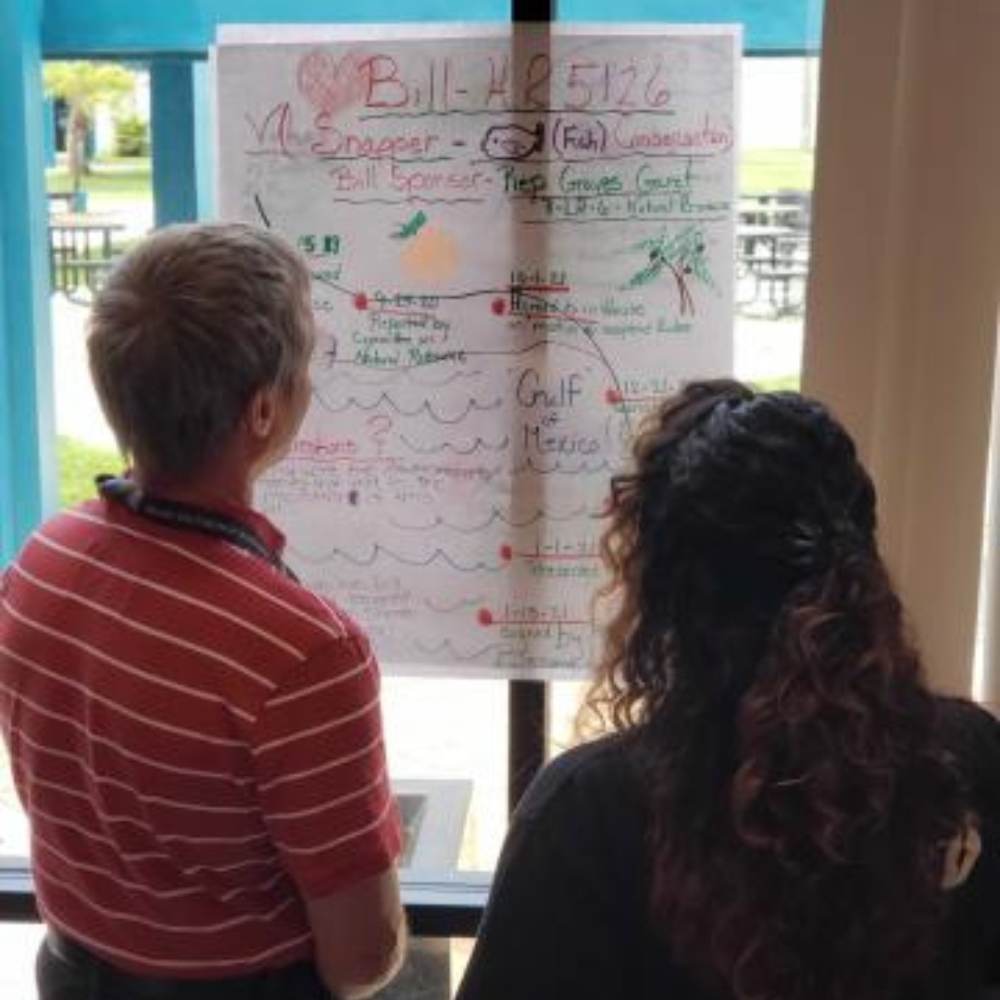
As we take this time to reflect on Independence Day, we want to acknowledge the role that those in public service and the military play in protecting so many of the freedoms we enjoy. The iCivics Civics, Service, and Leadership (iCSL) program aims to prepare students exploring careers in the military and public service with high-quality civic learning experiences that build independent thinking, media literacy, civility, civic knowledge and participation, and service.
An important component of iCSL is the professional development program. We work directly with teachers to understand the iCSL model and the resources available to them. Our teachers are also helping to shape the iCSL lens as teacher expertise will be incorporated into instructional materials.
We recently held our first professional development session with one of our pilot districts, Miami-Dade County Public Schools. Over the course of two days, we worked with a cohort of 12 Miami Master Teachers on the iCSL model and how to implement it in their classrooms. This model aims to work with teachers on developing a service and leadership lens while accessing iCivics resources and facilitating instruction that bridges the connections between civics, service, and leadership.
The Miami-Dade teachers walked away feeling confident in building these connections. They indicated the importance of iCSL in building character, inspiring civic engagement, and creating connections between content and real life.
Our constitutional democracy needs engaged participants with a strong foundation in civics and how the government works. This is especially true in the fields of military and public service. To this end, we are working with students and instructors in Junior Reserve Officers’ Training Corps (JROTC) and elementary, middle, and high school classrooms.
As part of the iCSL Program, we will also be expanding the iCivics library of resources. This will include new online learning experiences such as five DBQuests that will engage students in a range of civic and historical topics, including Women in Service, the real consequences of fake news, U.S. territories, the judicial branch, and resistance to slavery. In addition to our curriculum, we are working with partners in the military community to create a volunteerism guide and civics fair guide, which will work to bring military and school communities together for engaged civic learning.
iCSL’s next steps are to provide professional development to Master Teachers at Prince William County Public Schools and kick off the pilot programs in Florida and Virginia. If you are interested in learning more about the program, reach out to us at [email protected]!
The Department of Defense (DoD) and the National Defense Education Program (NDEP) have awarded the grant that will fund iCivics’ Civics, Service and Leadership program, designed to teach K–12 and JROTC students the foundational knowledge and skills needed to be engaged civic participants in a diverse United States.
Join students like Sophie – Apply for the Equity in Civics Youth Fellowship!
Posted on by Luke O'Connor

Last summer, I was approached by my AP U.S. Government teacher, who presented me with the Equity in Civics Youth Fellowship and motivated me to apply. While civics and politics have always been a passion of mine, I was unsure of what the fellowship entailed. I decided to apply regardless of the specifics because having the opportunity to engage in conversations regarding civics education with other young people was, in my opinion, a fantastic opportunity.
Now that the fellowship is almost over, I look back at all that we have done this year, and I am grateful for all the knowledge and amazing opportunities the EYCF team has given us. Fellows have learned about civics, media, video editing, and more. We have engaged in rich conversation regarding the equity or inequity of civics in the United States and addressed all these challenges and questions with possible solutions based on extensive research we performed.
One of the most valuable aspects from the fellowships has been the ability to connect with young people from all over the country, all of whom come from different states and backgrounds. Some of us are from suburban areas, while others live in rural counties. We all live in communities that represent the political spectrum. All of our differences make this fellowship unique. We’ve learned about new perspectives and ideas while also getting to know people within our age range who are passionate about impacting their communities.
Lastly, without the incredible support of our mentors, Michael Reyes and Natacha Scott, this would not have been possible. Throughout this journey, they have kept us on track with our learning and activities, and they have brought amazing guest speakers. They have given us the necessary tools to become confident in our abilities and empower ourselves to reach out to our communities to spread awareness on topics that mean a lot to us and civic education.
I encourage all of you to participate in this fellowship because it is unlike any other experience you have been a part of. It will build your knowledge and character and allow you to bond with people who otherwise you would probably never come across with.
Authored by Sophie Schmidt
Sophie Schmidt is an 18-year-old senior from Ocean Springs High School, Mississippi, ready to begin her college journey at the University of Southern Mississippi, where she was awarded the presidential scholarship. In her free time Sophie enjoys volunteering and is very involved with her local hospital as she aspires to become a doctor. She is passionate about civics and political advocacy and works hard to raise awareness about LGBTQIA+ rights, women’s rights, and environmental awareness.
iCivics Named Common Sense Education 2022 Selection for Learning, Receives Four-Star Rating
Posted on by Luke O'Connor
We’re proud to share that iCivics has earned an official seal from Common Sense Education 2022 Selections for Learning!
The Common Sense seal program recognizes outstanding media with an official seal for quality and impact. Common Sense Selections for Learning are best-in-class media resources and tools that facilitate great learning experiences for students and educators. Common Sense expert reviewers make hand-picked, official selections annually based on independent rating criteria and pedagogical rubric. Learn more about the criteria used to rate and review.
Our four-star rating, conducted by Common Sense’s Editorial team, consisted of four stars or above in the following categories:
- Engagement: “Games vary in their appeal, but most are amusing, absorbing opportunities to think deeply about civic engagement.”
- Pedagogy: “Each game offers a unique spin on content. Some, like Race to Ratify, mix facts and concepts in fascinating ways. Lessons help make learning stick and offer useful extensions.”
- Support: “Each game has a detailed tutorial, and help screens in each support struggling players. There’s a lot of reading, so it’s handy that some games have a Spanish mode.”
“Wonderful! I have promoted [iCivics] to teachers that want to start in a game-based approach. The material is sound and teachers have data on each of their students’ learning. The website is complete with lessons and suggestions for using the games. If you are interested in engaging your students in civics…this is a must use approach.” – Sandy W. Classroom teacher at Catalyst Charter Middle School
Encourage Your Students to Apply to Join the 2022–23 Equity in Civics Youth Fellowship Cohort!
Posted on by Luke O'Connor
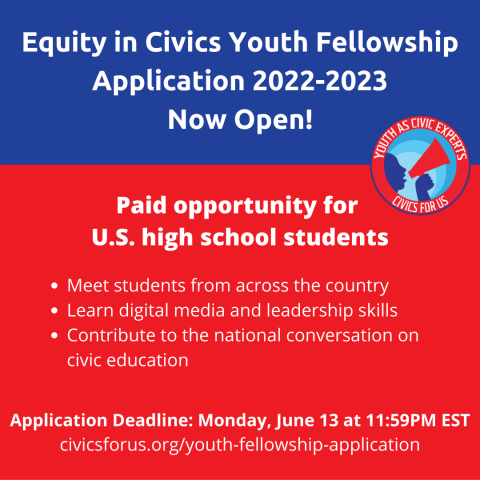
Do you have students entering 9th–12th grade interested in civics, education, equity, government, history, justice, or politics? They may be perfect candidates for the Equity in Civics Youth Fellowship.
This paid, 10-month fellowship brings together a talented group of high school students from around the country to think globally, act locally, listen to others, and build coalitions. Fellows will utilize their lived experiences to shed light on how civic education can include student voices and become more equitable.
During this virtual program, fellows will research issues of equity in civic education in their school communities and address the practices and policies related to their civic learning experiences. They will engage in group projects and guided discussion; build and lead student voice campaigns; and benefit from a variety of other experiences.
We welcome all high school students* who meet the following criteria to apply by June 13, 2022.
- U.S. student in high school* during the 2022–23 school year.
- Interested in civics, education, equity, government, history, justice, or politics.
- Ability to attend an in-person gathering in Washington D.C. in October 2022 (paid for by the fellowship program).
Interested students must complete the student application and also have an educator/mentor complete a nomination form to be considered for the program.
We hope you’ll share this incredible learning and civic engagement opportunity with your students. We appreciate all you do to help develop our nation’s future leaders.
*This program is for rising 9th–12th grade students living in the United States, District of Columbia, and Puerto Rico.
Our mom, Sandra Day O’Connor, knew something about politics that America forgot
Posted on by icivics
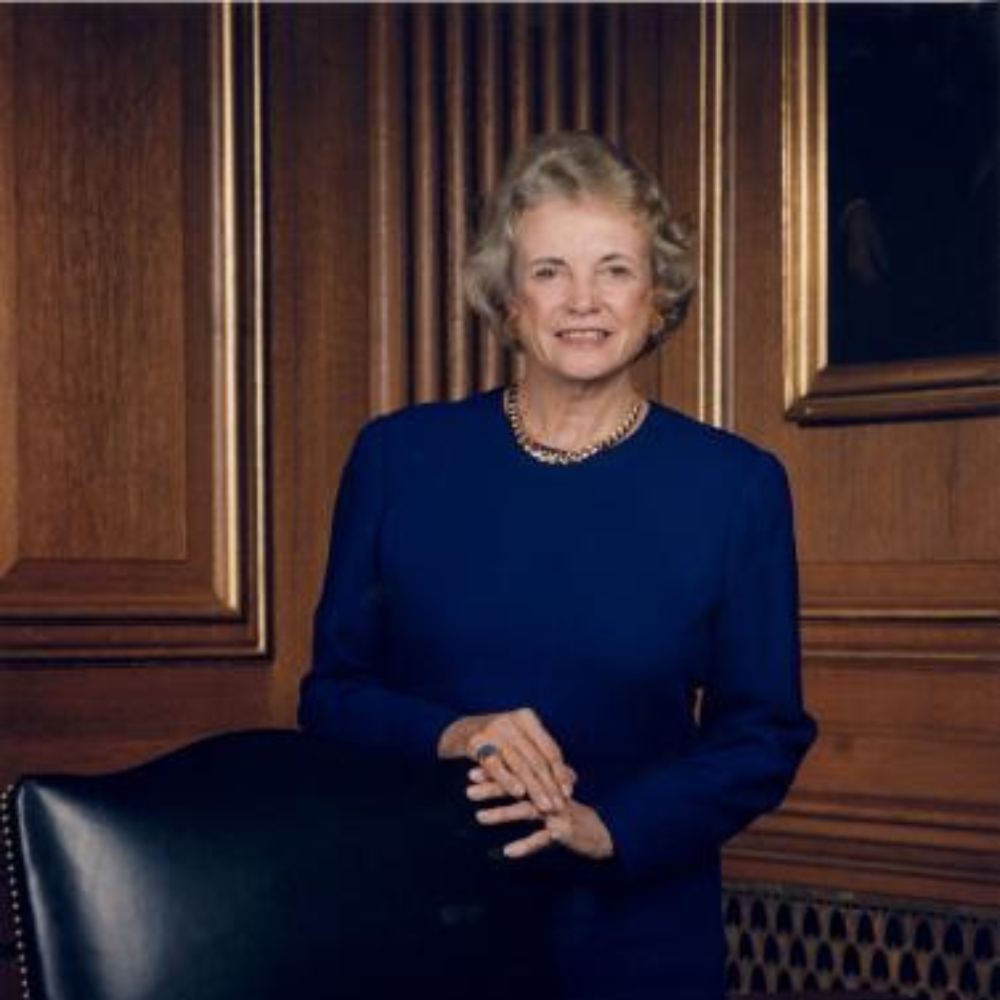
by Jay O’Connor and Scott O’Connor
Some of the most important work our mom, Sandra Day O’Connor, ever did occurred away from the Supreme Court spotlight, in homes and classrooms.
It’s been more than 40 years since our mother made history.
Sandra Day O’Connor became the first female associate justice in the nearly 200-year history of the Supreme Court. The 1981 Senate vote to confirm was 99-0, which seems unfathomable in today’s politically polarized times.
Twelve years later, in 1993, Mom welcomed the second female associate justice in the history of the high court when the Senate confirmed Ruth Bader Ginsburg, also by an impressive margin, 96-3.
This was Bipartisanship with a capital “B.”
And now, President Biden has signed legislation to erect statues of these two women legal pioneers somewhere on the U.S. Capitol grounds after unanimous consent in the Senate and an overwhelmingly bipartisan vote in the House.
The overwhelming support for the statues of these two women with very different backgrounds speaks to something missing from much of today’s politics: respect for the other. Disagreeing without being disagreeable. Understanding that the other point of view is not intended to ruin the country.
Read the full article on USA Today.
Jay O’Connor is a software industry executive. Scott O’Connor is a commercial real estate developer.
Philanthropy Leader Larry Kramer Named iCivics Board Chair
Posted on by icivics
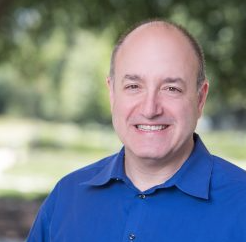
CAMBRIDGE, MA [May 17, 2022] – iCivics, the nation’s leader in civic education, today announced Larry Kramer, President of the William and Flora Hewlett Foundation, as its new Board Chair. Kramer succeeds Wendy May-Dreyer, who took over from founder Sandra Day O’Connor and led the board for two three-year terms.
In recent years, iCivics has expanded its scope and embarked on an ambitious strategic plan to realize its vision of a thriving American democracy supported by informed and civically engaged young people. The leading provider of K-12 civic education content, iCivics creates free, nonpartisan online games and digital resources that are now used by more than half of middle and high school students across the country.
Kramer will lead iCivics as it continues its work to make civic education a national priority in order to sustain and strengthen our constitutional democracy. As part of these efforts, iCivics continues to lead efforts to implement a roadmap developed by more than 300 experts from across the viewpoint spectrum that states and school districts can use to achieve excellence in civics and history education. iCivics also leads a coalition of more than 200 organizations working to advance the civic mission of schools.
“It’s an honor to lead the board of iCivics and to work with its talented team and broad coalition of partners to strengthen civic education, which is essential for a robust and healthy democracy,” Kramer said. “iCivics is doing critical work to ensure that every young person has the knowledge and skills necessary to be an informed, engaged participant in civic life.”
As President of the William and Flora Hewlett Foundation since 2012, Kramer has guided the foundation in maintaining its commitment to enduring issues such as education while responding to pressing and timely problems, such as political polarization and cybersecurity. Kramer previously served as the Richard E. Lang Professor of Law and Dean of Stanford Law School. Earlier in his career, he served as law clerk to U.S. Supreme Court Justice William J. Brennan Jr..
Kramer succeeds May-Dreyer, under whose leadership iCivics grew from reaching 48,000 to 145,000 educators, and serving up to 9 million students. During May-Dreyer’s tenure as Board Chair, Educating for American Democracy and the CivXNow Coalition were both initiated, and contributions to iCivics more than quadrupled. May-Dreyer also founded and chairs the Texas Civic Education Coalition, a cross-ideological coalition of more than 40 organizations with a mission to improve civic education in Texas.
“We’re incredibly excited that Larry Kramer has agreed to become iCivics’ next Board Chair and believe that he is the perfect fit for the organization as it reaches a new growth point,” iCivics Executive Director Louise Dubè said. “Larry’s experience in the nonprofit sector, and his knowledge of the education and political fields – along with his legal expertise – will help steward iCivics into its next phase.”
AAPI Heritage Month: Lesson Plans and Resources for the Classroom
Posted on by Luke O'Connor
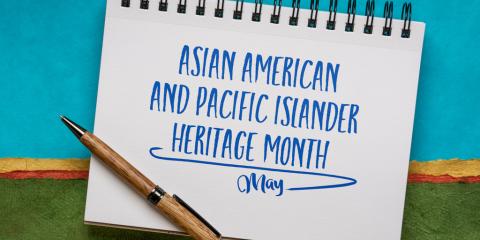
Updated for May 2023
The month of May honors the generations of Asian Americans and Pacific Islanders (AAPI) who have enriched the history of the United States and continue to ensure its success. In celebration of this month that presents an opportunity to introduce classroom discussions and reflections about the contributions of Asian Americans and Pacific Islanders to our collective history, we are sharing resources from iCivics to support learning and conversations in the classroom.
Four iCivics Resources to Use This Month
VIDEO: Patsy Mink: Changing the Rules
In this video, students meet Patsy Takemoto Mink, a third-generation Japanese American born and raised in Hawaii, who was the first woman of color elected to Congress.
LESSON: United States v. Wong Kim Ark
This mini-lesson introduces students to Wong Kim Ark, who was born in San Francisco, California, to Chinese immigrant parent. He sued the United States to be recognized as a citizen, and his case led the Supreme Court to establish that the 14th Amendment to the U.S. Constitution granted citizenship to almost everyone born in the United States.
LESSON: Korematsu v. United States
Students will meet Fred Korematsu, a U.S. citizen born in the United States to Japanese parents who refused to relocate to an internment camp during World War II. This mini-lesson covers the basics of the Supreme Court’s decision that the government acted constitutionally in interning Japanese Americans, and explores the effects of this decision.
LESSON: Lau v. Nichols
In this mini-lesson, students learn about Kenney Kimmon Lau who, when the schools in San Francisco were integrated, was one of the 1,800 students of Chinese ancestry who did not speak English but were placed into classes taught only in English. His case resulted in the Supreme Court decision that required public schools to provide language supports to English and multilingual learners.
iCivics Educator Network Grows to More Than 350 Civics and History Teachers
Posted on by icivics

iCivics, the country’s largest provider of civic education curriculum today announced that it has added 134 new members to its Educator Network. The iCivics Educator Network is made up of more than 350 civics, history, government, and social studies teachers from almost every state in the nation who serve as champions and ambassadors for high-quality equitable civic education.
The Educator Network enables teachers to share best practices in civics and social studies, playing a key role in helping to empower students to engage as citizens in this country’s constitutional democracy, now and in the future. It provides opportunities for teachers to network with their peers, take part in focus groups, beta test new games and products, engage in special professional development opportunities, and build their voices as advocates for high-quality history and civic education.
“The iCivics Educator Network is more than a professional development and affinity group. An integral part of iCivics’ work, it’s a community that has developed over the past 11 years through which our best social studies and civics teachers are building a movement to reinstate the civic mission of schools in every corner of this country,” said Natacha Scott, iCivics Director of Educator Engagement. “Together these educators have worked through some of the most challenging times teachers have ever faced.”
Since it was founded in 2011, many iCivics Educator Network members have become some of the most prominent voices from the field advocating for civic education through the opportunities that the network provides. They are permanent fixtures as speakers at prestigious education conferences, routinely appear in both national and local media, and are recognized as excelling in the classroom.
The iCivics Educator Network includes educators with a variety of talents, interests, and teaching histories representing a diversity of grade levels K–12, geographic areas, and personal demographics. And the teachers who join the network stay a part of the network, as more than 240 members of this year’s cohort are returning, bringing our total to more than 350 educators.
“The iCivics Educator Network has provided me and my students with a platform like the youth civics fellowship to share our passion and elevate the need for equitable civic education throughout the country,” said Michael Martirone, a high school social studies teacher in Egg Harbor Township, New Jersey, and an ed net member since 2016. “I have been invited to serve as a panelist and explain why this is the time to fund civic education and give my perspective from the classroom on other topics, as well. The iCivics Educator Network has given me the opportunity not only to teach civics, but to become a part of it.”
For more information about the iCivics Educator Network, and to find out how you can apply to be a part of the next cohort, visit icivics.org/our-network.