
I teach history as the story of people making choices and living with the consequences. But one of the biggest challenges I find in telling that story is apathy in the audience; students pick up the “why bother” attitude from wider culture. So I try to start local—hyper local, even—by framing lessons around school, friend groups, and real choices students face.
For the Civic Star Challenge, I created a lesson around one line from the Declaration of Independence: governments derive “their just powers from the consent of the governed.” The lesson had three parts: a quick, relatable hook (“What rules would you keep if you ran your ideal school or friend group?”); a close read of an annotated excerpt; and small‑group scenarios work with choice‑based roles. During that last part, students debated classroom policies and social dilemmas: “If the majority of your friend group votes to exclude someone, but you don’t, does that still count as consent?”
As the discussion deepened, one student suddenly said, “So it’s like America isn’t just something we have. It’s something we all have agreed to keep going.” That comment completely shifted the tone of the room. Students began connecting the idea of the “social contract” not just to 1776, but to their own lives. They saw it in the daily balance between personal freedom and responsibility to others. The Declaration became more than a dusty document; the students understood it as a living principle, a blueprint for creating community and cooperation today.
The students decided consent in friendships is ongoing, that belonging involves trade‑offs (such as privacy and spontaneity), and that legitimacy needs clear information and fair processes. They also pointed out instances where consent breaks down, such as when someone accepts online terms without reading them. They even suggested reparative steps, including apologies, new norms, and stepping away, that mirrored civic remedies.
Middle schoolers often don’t get enough credit for what they can understand. But I was impressed by how quickly they pulled 18th century ideas into modern situations. That transfer showed me that giving students clear, relatable stakes can turn apathy into agency and prove to them that civic life matters to everyone—not just old people!
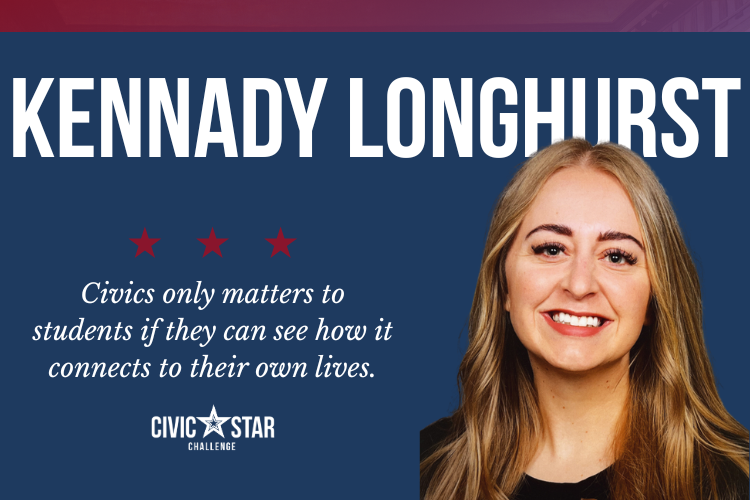
About Kennady
- Teaching experience: 6 years in education
- Currently teaching: 8th Grade Honors US History and 9th Grade Honors World Geography
Kennady is a social studies teacher and department head focused on high expectations for honors learners and making history meaningful, relevant, and worth caring about.