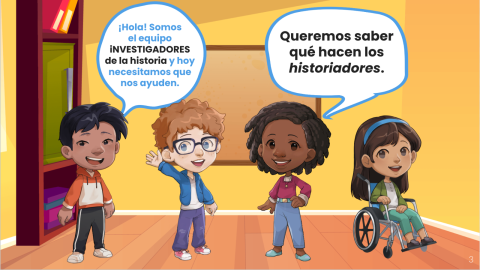
¡Hola, historiadores! Private i History Detectives, our supplemental mystery-themed curriculum, is now available in Spanish for select mysteries. These lessons teach strategies such as notice, wonder, inference, and comparison.
Private i History Detectives can be used in a wide variety of classroom settings, including multilingual and bilingual classrooms. Two mysteries at each grade level, including the Introduction to Inquiry mysteries, are available in Spanish, allowing Spanish-speaking students to practice exploring primary sources, analyzing information, and asking questions.
Each mystery lesson includes English and Spanish student and class materials such as transcripts, handouts, Google Slide decks with audible Spanish narrations, and lesson plans. These resources will help students build social studies content knowledge, foster critical thinking skills, and develop disciplinary language.
Explore these Private i History Detective Spanish Lessons:
Historians are observant. In this introduction to inquiry lesson, students will learn some of the skills and strategies historians use to learn about the past. Students will use their historian skills to uncover a mystery object as they notice, wonder, infer, and compare.
Historians can learn a lot from a hat! In this lesson, students will look at images of historical and modern hats to learn how hats can give us clues about what people do for work and why their hats may need special features.
Historians draw conclusions. In this lesson, students are introduced to the concepts of citizenship and leadership. They are asked to consider the different groups they belong to and how members of each group help one another.
Historians make inferences. In this lesson, students explore primary source images and learn some of the skills and strategies historians use to learn about the past.
Historians observe. In this lesson, students learn some of the skills and strategies historians use to learn about the past. Students will look at an image of a classroom from the past and try to figure out what the class is learning about.
Historians make inferences. In this lesson, students learn some of the skills and strategies historians use to learn about the past. They will analyze information and provide reasoning.
Historians study the past. In this lesson, students learn some of the skills and strategies historians use to learn about the past. Students will gather evidence from primary sources, such as a law created in Virginia in 1617 that required everyone to grow corn.
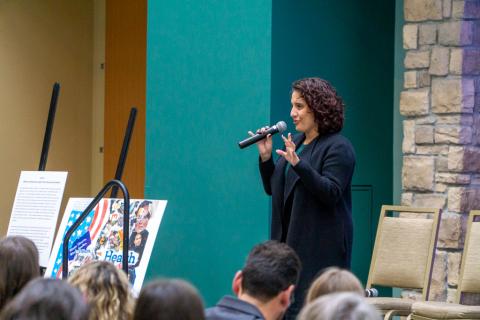
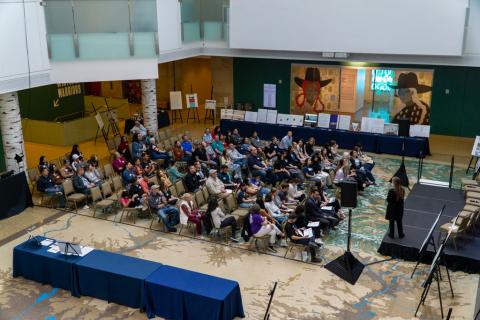
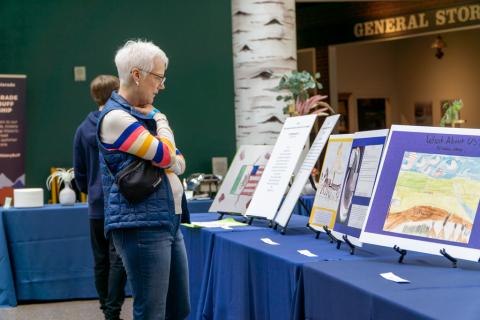
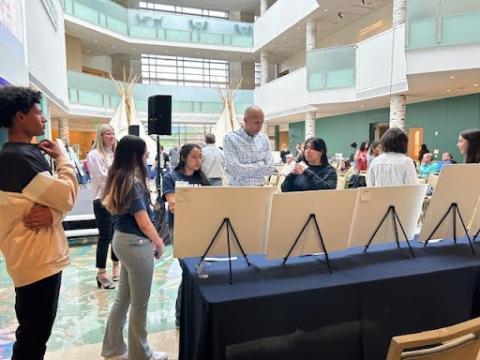
Last Friday, I was fortunate to participate in one of my first iCivics events—a Civics Showcase celebrating the incredible work of Colorado students and educators piloting iCivics’ U.S. History curriculum.
This inquiry-based curriculum was built in collaboration with expert educators, historians, and practitioners from across the nation. It is aligned with state standards, and districts and teachers can customize it to the needs of any state, community, and classroom.
Through the curriculum, students engage with curated primary and secondary sources such as historical documents, speeches, letters, journal entries, photographs, maps, and videos to dig deep and explore this country’s early history. Students are asked to engage in classroom projects that allow them to investigate and answer important questions about our country in the years preceding its founding through Reconstruction.
Colorado has been a trailblazer in this endeavor. Jeffco Public Schools in Jefferson County, Colorado, was one of the first districts to pilot the U.S. History curriculum last year (along with Santa Fe, NM, and Oklahoma City, OK). Building on the success in Jefferson County, another Colorado school district, Cherry Creek Public Schools, implemented the curriculum this year.
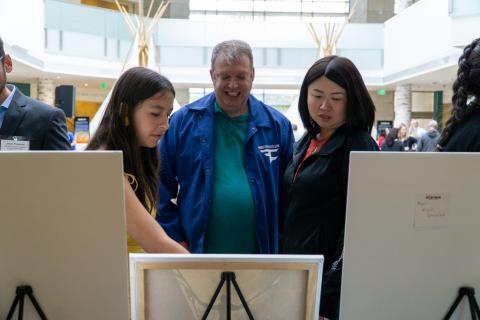
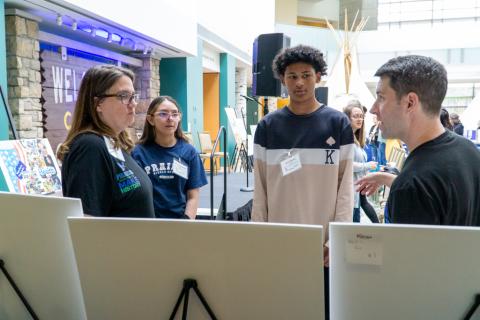
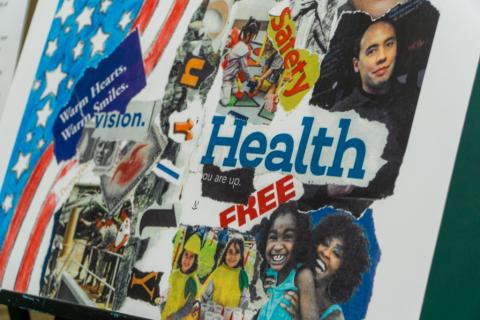
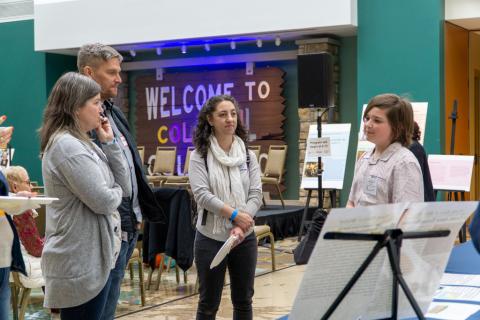
The impact of this project-embedded approach to U.S. History was on full display at the recent showcase. Nearly 100 students, family members, educators, schools leaders, and community members came to the History Colorado Center in Denver to view 22 unique student projects. Against the background of the artifacts, stories, and art that illustrate the history of Colorado and the American West, students presented a range of inspiring projects exploring key moments and questions from early U.S. History, and how they shaped institutions and civic life in the United States today. Their thoughtful, researched reflections touched on everything from the impact of early European settlers to Westward Expansion and Manifest Destiny, from slavery and the Civil War to the Industrial Revolution and evolving rights, responsibilities, and expectations of Americans.
And it wasn’t just students who felt the impact of this modern approach to teaching history and civics. Participating teachers—even 20-year veteran teachers—shared how this curriculum shifted their practice to become more student-centered. I was particularly moved by the exuberance of so many parents who were amazed how different this was from their own history and civic education. Many wondered aloud if they would have loved history if they had learned it this way, and were grateful their children were able to benefit from such a meaningful educational experience.
This incredible event was part of a series of proactive family and community engagements to ensure transparency and promote connection beyond the classroom. This was made possible with additional support from the Carnegie Corporation of New York and the Howard and Geraldine Polinger Family Foundation. These learnings and examples will also feature in an implementation toolkit to emphasize the importance of family engagement for widespread district adoption.
I can’t tell you what it meant to me and my colleagues who worked to make this vision possible to see the real and lasting impact this in-depth learning has on students, educators, and entire communities. We want to reiterate our thanks to all the funders who have made this work possible. Perhaps most importantly, we welcome other districts to adopt this highly engaging and effective curriculum as well. Please feel free to email me for more information.
Written by Mya Baker
Mya joined iCivics in 2024 as the Chief Learning Services Officer. Prior to iCivics, she led TNTP’s consulting work across 14 states, with a focus on helping educators, schools, and school systems expand access to opportunity. Mya also served as the Senior Director of Curriculum and Instruction at Uplift Education in Dallas-Fort Worth. She is a graduate of the University of Texas-Austin (BS in Communications/BA in Government) and earned her Masters in Teaching & Learning from American University.
WASHINGTON, DC — April 29, 2024 — iCivics, the nation’s leading civic education nonprofit, and the White House Historical Association today launched Brief the Chief, a new digital game that teaches students how the President of the United States makes difficult governing decisions, providing insight into how presidents rely on an array of advisors to make tough judgment calls.
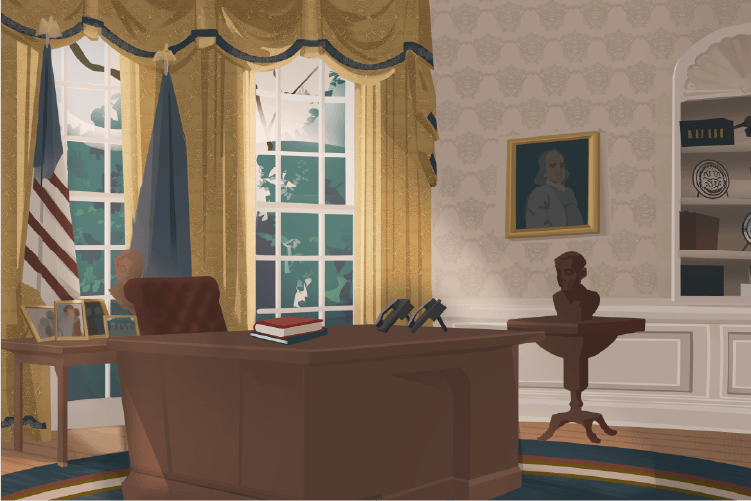
Brief the Chief also gives students an inside look into the historic White House offices of Thomas Jefferson, Abraham Lincoln, and Lyndon B. Johnson as they navigated some of the most pivotal moments of their presidencies.
The game positions students as trusted advisors to the president, challenging them to consult with a variety of sources and confidants within the White House and use evidence-based reasoning to give counsel on a number of different situations. Students advise Jefferson as he determines whether he should continue trade with independent Haiti in 1804 amid tensions with France; Lincoln as he contemplates the Emancipation Proclamation; and Johnson as he decides if he should run for another term as president.
Along the way, students have conversations with likely sources such as secretaries of state, military advisors, and foreign diplomats. They also speak with historical figures such as civil rights leader Amelia Boynton, First Lady Mary Lincoln’s dressmaker Elizabeth Keckly, the Johnsons’ personal cook Zephyr Wright, and Haitian leader Jean Jacques Dessalines. In this way, the game gives students the opportunity to learn from those with unique perspectives and from underrepresented communities throughout history. Students practice listening and contextualizing facts and opinions.
Brief the Chief continues a growing partnership between iCivics and the Association. In 2023, iCivics and the Association released a Spanish-language version of Executive Command, one of iCivics’ most popular games that teaches students how the Executive Branch functions.
“We’re incredibly proud and honored to partner with the White House Historical Association,” iCivics Chief Executive Officer Lousie Dubé said. “Brief the Chief teaches young people a skill that is increasingly more important: how to engage with people from different perspectives, gather important insights, and make evidence-based decisions.”
Brief the Chief leverages the strengths of both iCivics and the Association. Up to 145,000 teachers rely on iCivics resources each year to help some 9 million students learn foundational civic knowledge and the skills needed to become engaged citizens. A team of three Association educators and three Association historians with advanced degrees in public history provided insight into the presidents and their respective administrations. Content experts and educators from the Abraham Lincoln Presidential Library and Museum, the LBJ Presidential Library, and George Washington University provided insights on the history presented throughout the game as well.
“Education is critical to the Association’s mission and investment in civics is vital as the next generation is taught the awesome responsibilities of citizenship and considering different perspectives,” said Stewart McLaurin, President of The White House Historical Association. “We are excited to launch this new tool to help students understand the past as an essential key to understanding who we are today.”
The game presents students with the opportunity to investigate two key decisions from each of the presidencies of Jefferson, Lincoln, and Johnson, and provides educators with incredible flexibility to teach across U.S. History. With nearly 30 characters available to interview, students can play the game multiple times and learn new facts and perspectives with each gameplay.
The game can be used to teach different geographies, content, civics and historical timelines, allowing flexibility for teachers to use it in a variety of different classroom applications. And its content can be tied to current events.
Brief the Chief includes English Language Learner support and is available in Spanish.
On Civic Education and the iCivics Youth Fellowship
I was fortunate to get one of the best civic educations possible when it comes to the iCivics Youth Fellowship and my 8th grade “We the People” class. As a result, I know my constitutional rights and I feel very prepared to vote and otherwise engage.
But there were 200 other students in my grade level who opted out of civics, and I’m not sure a lot of my peers understand much about what is going on in government, how they are affected by it, and how they can affect it in return.
As part of the iCivics fellowship, I interviewed two groups of students—those who got the same classes I did those who did not.. The first group gave long, elaborate answers and there was open communication between the students. But when I interviewed kids who did not get this form of civic education, they gave one- or two- word answers, didn’t seem to really be familiar with the word “civics” or what it entailed, and didn’t really talk to each other. This exercise really put into perspective how even one single class can alter a person completely.
On the State of the Nation
It’s hard to imagine that there was a time when members of opposing political parties could “agree to disagree”—or even come together on certain issues. Today, it seems our elected officials are punished for working with members of another party, yet that’s the very foundation of the U.S. Constitution. As someone who is civically engaged, such actions don’t feel like serving the community—they feel antithetical to what they teach us in civics class.
When I think about what our nation could be, the word that springs to mind is “open.” Open to differences of opinion—not always having to be right. More open to listening to each other, and not always yelling.
On iCivics
With iCivics, it’s not just about supporting a program or a website. but actively supporting the next generation of this country. What iCivics does is amazing: it helps young people find the answers to questions they’re too afraid to ask. If “the next generation will “fix it,” then we need tools, knowledge, and support systems. We need the space to meet up a few times before figuring it all out and supporting programs that provide just this—a space to try, and mess up, and try again, and succeed—it fosters a true interest in our country.It’s about supporting an entire generation that can finally find its voice, and that will want to create a better world for all.
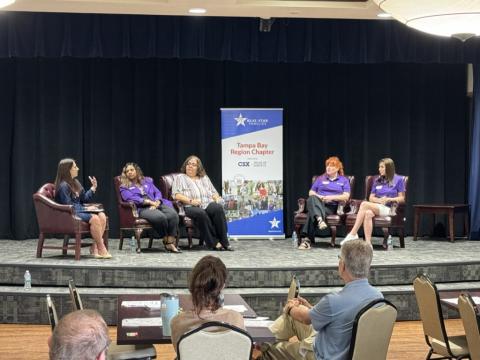
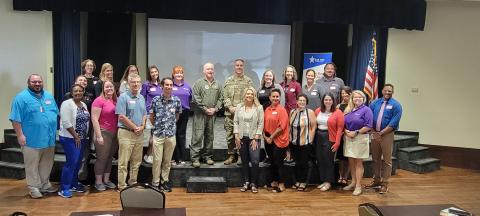
April is the Month of the Military Child. To honor our service members and their children, the iCivics: Civics, Service, and Leadership Program hosted an educator immersion day on MacDill Air Force Base in Tampa, FL in partnership with Blue Star Families and Hillsborough County Public Schools (HCPS).
MacDill Air Force Base is home to over 6,000 people, with an additional 20,000 coming to work on the base each day. The base is a world unto its own, but most military children attend school in the community through HCPS. Next week, MacDill will deploy about 200 service members, one of the largest deployments in recent years. This means a number of students will show up for school coping with that reality. The immersion day was an opportunity for iCSL educators to learn about the unique strengths and challenges our military-connected students and families face, so they might better support them in school.
Teachers started the day with a panel discussion between military parents and school district staff. One parent shared that by the time her son was ready to graduate high school, they had moved 9 times. These transitions are one of the biggest challenges military-connected students face. Moving schools means integrating into a new school culture. It means that different state standards and requirements may delay academic progress. It means, as one parent shared, that key pieces to a child’s education–like learning the branches of government–can fall through the cracks. A parent’s deployment is equally challenging. Another panelist shared, “Deployment affects the whole family.” “Our children are deploying as well.”
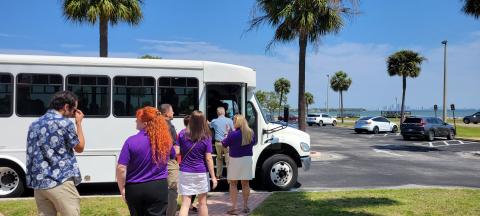
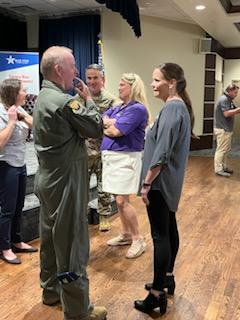
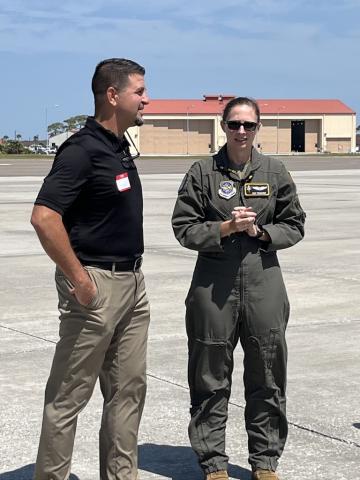
After the panel, our educators met Colonel Bingham, the base commander. They met Champa Boom, the base mascot. They toured the base. They talked with a young pilot and her crew. They walked the flight line and climbed into the cockpit of a KC-137. They learned that our military community, and the base itself, is a place full of opportunities for service members, civilians, and students. They gathered new resources and ideas for how to support military students when they return back to their school communities. We all learned that our military families, including the little ones, know and embody civic values and civic responsibility.
The goal of the day was to foster awareness across our military and school communities. Everyone left empowered and excited to keep building connections and opportunities on behalf of our students and civics education. It was a mission well accomplished!
Written by Frank Anderson
Frank Anderson is the director of special projects at iCivics and the program director for the Civics, Service, and Leadership program. Frank works with educators from across the country to connect them to civics education resources and to help students build a service mindset and leadership skills within the classroom. Before iCivics, Frank taught in alternative education in Baltimore and managed education programming for students involved with the juvenile justice system.
The Civics, Service, and Leadership (iCSL) program aims to prepare students exploring careers in military and public service with high-quality civic learning experiences that build critical thinking, media literacy, civility, civic knowledge and participation, and service. iCSL is sponsored by DoDSTEM, the National Defense Education Program.
“I love iCivics! My kids love to play Win the White House!”
“Awesome! Have you ever used any of the other resources from iCivics? They go great with the games!”
“No, tell me more!”
I had this conversation multiple times with educators I met last fall at the annual National Council for the Social Studies Conference while I was helping out in the Exhibit Hall at the iCivics booth. I teach at Maranacook Community High School in Readfield, Maine, a rural community next to Maranacook Lake just outside the Maine State Capitol. I use iCivics in a variety of ways in AP U.S. History and non-level U.S. History. This Spring, I have a student intern working with me from the University of Maine at Farmington named Tom Tubman. In an effort to promote iCivics beyond the games, I thought it would be interesting to document our use of an iCivics DBQuest in our classes titled “Woman Suffrage and World War I.”
As I said earlier, it seems many educators are familiar with the amazing learning games on the iCivics website, with Win the White House often being the one everyone knows. What seems to be lesser known are the lesson plans and activities iCivics also offers. These resources include connections to state standards and how they can fit into scope and sequence. They also show how they connect to the games iCivics hosts on their site.
I selected this DBQuest because it fits well within the curriculum for content in US History and includes other important aspects such as multiple viewpoints, primary source analysis, argument analysis, sourcing, and inquiry. Most of my students currently in my U.S. history classes have played the iCivics game Cast Your Vote, and so this DBQuest connects well to this game in getting students reflecting on a time when some of them would not have been able to cast their ballots.
My student teacher, Tom, and I took a team-teaching approach to this, each leading a different part of the lesson. Tom led the discussion using the timeline and I facilitated the document analysis. We closed the lesson with an extension video that added context and gave them a sense of how suffrage came to pass.
Our first class was at the end of the day on a Friday! We started with a question to engage students and get their brains working, “What is suffrage?” A brief discussion revealed that most students had heard of this term in conjunction with voting and had a sense of its meaning. As this is a U.S. History course, students had learned previously about the early days of the women’s rights movement, including the work of Elizabeth Cady Stanton and others at Seneca Falls in drafting the “Declaration of Sentiments” and Susan B. Anthony. This historical context is important in getting the most out of this DBQuest to help students draw conclusions about the timeline and the accompanying Primary Source documents. Upon reflection, Tom concluded that historical context was important to this activity. Information about the early days of the push for women’s rights and women’s suffrage going back to Seneca Falls would greatly help students understand that women were fighting for a voice long before the First World War. Ensuring students have this context is important in having a deeper understanding of the agency of women in bringing about Suffrage.
Students received the student handout on paper and went to work highlighting in different colors, events that helped women’s suffrage make progress, and events that worked against Women’s Suffrage. The ensuing discussion elicited several insights from students, such as events may in fact be well-intended and essentially good even if, from the perspective of the Women’s Suffrage movement, the event worked against their progress.
Students worked individually to complete the “Math Moment” and “Reflection,” placing the events from the First World War, and we then had a class discussion around their thoughts about why it took so long for women’s suffrage to pass. This activity revealed many interesting insights including the quotes below.
“The major shifts of WWI, including women proving themselves capable of fully taking charge of duties left behind by men… “
“… because misogyny had been a part of western culture for a long time…”
“… (post-Civil War/Reconstruction) Civil Rights proved more of a pressing issue and women were seemingly unimportant to the government…”
“Because the society of most nations and cultures of the time were built around strict gender roles…”
“The fight for Black suffrage was also occurring at the time and that may have caused more focus on that rather than woman’s suffrage.”
“I think a lot of people in power, men, didn’t see it as an issue and didn’t care…”
The next part of the lesson required students to examine three different types of primary source documents from the era. In the first class, we had students in small groups of 3-4 analyze all 3 documents and draw conclusions. We made a modification in the second class that turned this into more of a jigsaw activity where we had students in 3 groups to start and together they analyzed one document. Then we mixed them into groups so at least 1 student from each of those 3 groups was in the new groupings. Then they took turns sharing out their document and their analysis. We found this produced more discussion between the students and likely gave them more confidence in completing the final section of the handout titled “Argument On!” In this section, students document their analysis and conclusions about the documents. They locate key arguments quoted from the documents and identify where they came from and whether the argument was intended to “inform,” “persuade,” or “inflame”. At the end of this, they discussed the 2 questions at the end: Which wartime argument to promote suffrage appeals to you more? Why? And: Does the way in which the message is communicated affect your decision? (Ex: picket vs. political cartoon vs. leaflet). This was followed by a class discussion on these questions. Students have some interesting responses, some examples are included below.
“The leaflet argument for war… this played on democratic/freedom built pride for America”
“Cartoons are eye-catching and quick to look at, but they can also be thought provoking to the reader.”
“Leaflet… it also has the best view on how women are important to society…”
“…the Article was just informing while the Leaflet was trying to start something…”
“The most convincing argument for me was the rational approaches of the statements that if women can serve the country they should be able to vote in the country’s politics.”
We finally turned to the video we selected to close out the lesson. The video, produced by the History Channel is titled “The 19th Amendment.” We gave students the following questions for discussion that went with the short video.
What were the two approaches taken to get Women’s Suffrage passed?
What happened at the Women’s Suffrage Parade before Wilson’s inauguration in 1913?
What happened to Alice Paul?
What was Wilson’s argument for Women’s Suffrage?
We didn’t have a lot of time for discussion after the video, but we did briefly talk about the different strategies, how Alice Paul and other women suffered, and how the 19th Amendment came down to needing Tennessee’s vote to pass—and how it seemed doomed to failure by one vote until Harry T. Byrne changed his vote at the last minute thanks to a letter from his Mother! Many students expressed amazement and these “Hollywood-like” details!
In the end, we found this DBQuest to be engaging and thought-provoking! It promoted historical thinking skills such as primary source analysis, cause and effect, and change and continuity over time. Additionally, it connected well to civics by getting students to reflect on the importance of voting and the lengths people will go to in order to secure their rights, as well as the various modes available to persuade, inform, or inflame others about one’s cause. Students came away with an understanding of civil rights, discrimination, and changing attitudes around these issues. We thoroughly enjoy the iCivics games and the lessons they support, but it’s awesome that they also have supplemental lessons like this DBQuest! Give it a try!
Shane Gower is passionate about ideas! He considers himself fortunate to have a career as a teacher that allows him to explore his passion as he has done for the past 25 years. He was the 2016 Gilder-Lehrman Maine State History Teacher of the Year and currently teaches AP US History, AP Psychology, Ethics, and History through Film. These courses are all dual enrollment through the nearby Thomas College. In addition to the classroom, he is also Past-President of the Maine Council for the Social Studies and a Retro Report Teacher Ambassador.
Through the iCivics Educator Network, the perspectives of teachers across the country contribute to the public conversation about civic education in the United States. Each contributor represents their own opinion. We welcome this diversity of perspectives.
Leading researchers today released new analyses that indicate areas of focus for the expansion and improvement of K–12 civic education. This includes more robust civic learning opportunities in high school, the positive effects of students openly discussing civics and political issues, the effect of legislation on teachers and students, and the need for more civic role models.
The reports, which were discussed as part of the Civic Learning Week National Forum, come from RAND, Center for Information & Research on Civic Learning and Engagement (CIRCLE) at Tufts University, More in Common, and the Educating for American Democracy Research and Evaluation Task Force.
Civic Learning Week, March 11–15, is a nonpartisan effort that brings together students, educators, policymakers, and leaders in the public and private sectors to highlight and further energize the movement for civic education. It is designed to further understanding of what a modern civic education needs to sustain and strengthen our nation’s constitutional democracy.
This year’s theme, “2024 and Beyond: Civic Learning as a Unifying Force,” focuses on how to make civics a national priority, and how it can provide a way to combat polarization by building civil discourse and understanding.
Research highlights:
Civic learning and engagement among 18–34-year-olds: This latest contribution to CIRCLE’s “Growing Voters” research shows how students’ self-reported civic learning and student voice experiences in high school relate to current levels of civic engagement, including attention and interest in the 2024 election. The data from a nationally representative survey of 18–34-year-olds fielded in fall 2023 shows how schools can contribute to efforts to grow voters by centering student voice in and out of the classroom as well as through civics classes, school climate, adult encouragement and collaboration, and extracurricular activities. According to the report, student voice in high school is essential to growing voters and future active community members, as those who have positive civic experiences in high school in which they feel their voice and or opinion matter are much more likely to say they now vote and are civically engaged than those who did not report these experiences. The full report is here.
Effect of legislation regarding teaching of race and gender: RAND released new data from a survey of more than 8,000 K–12 public school teachers that indicate how restrictions on addressing race- or gender- related topics in the classroom are influencing teachers’ instruction and students’ learning two years after such state-level legislation was first passed. The survey, conducted in spring 2023, updates previous data that found that about one-quarter of teachers reported that limitations influenced their curriculum choices or instructional practices, while only 3 percent said that limitations on race- or gender-related topics positively impact student learning. According to the report, this could lead to long-term consequences for students’ futures and the future of the education system, country, and democracy. The full report is here.
Students learn more when they can discuss civic and political issues openly: The Educating for American Democracy Research and Evaluation Task Force released three research briefs that synthesize existing research and show steps that can be taken to strengthen the way young people engage in democracy. Among their findings:
High-quality assessments and accountability structures lead to increases in young people’s civic knowledge, and students learn more when they are in classrooms where civic and political issues are discussed freely and openly.
When students engage in asking and answering questions by analyzing information, they experience greater engagement and deeper understanding than if they just use a textbook.
Social and emotional learning (SEL) and civic learning are often mutually reinforcing, as students’ social, cognitive and emotional skills can help them critically and collaboratively engage with civic issues.
Few Americans have civic role models, but those who do most often identify parents or family members as these role models: More in Common released data from an online focus group-type of research activity with over 100 American adults. The data underscored the importance of proximate civic learning and helping young people build relationships with mentors and individuals who can help orient them toward constructive, lifelong civic engagement so that they see themselves not only as civic agents, but as role models for others to follow. The full report is available here.
As tens of thousands of people participate in Civic Learning Week across the country March 11-15, major organizations in the growing movement around civic education have announced new resources, opportunities, and fellowships for students, educators, and adults to engage in yearlong civic learning and engagement.
Civic Learning Week is a nonpartisan effort that brings together students, educators, policymakers, and leaders in the public and private sectors to highlight and further energize the movement for civic education. It is designed to further understanding of what a modern civic education needs to sustain and strengthen our nation’s constitutional democracy.
This year’s theme, “2024 and Beyond: Civic Learning as a Unifying Force,” focuses on how to make civics a national priority, and how it can provide a way to address polarization by building civil discourse and understanding.
The new resources announced today include educational content, fellowships, internships, and engagement opportunities from Civic Learning Week cosponsors iCivics, A More Perfect Union, Carnegie Corporation of New York, Corporation for Public Broadcasting, Honey W. Nashman Center for Civic Engagement and Public Service at George Washington University, Microsoft, More Perfect, National Archives and National Archives Foundation, and National Council for the Social Studies.
Civic Digital Literacy: iCivics and the Digital Inquiry Group have partnered to create Civic Digital Literacy, a collection of non-partisan, evidence-based, classroom-ready materials for educators that will equip students to identify and discern credible information online. Launching in Fall 2024, Civic Digital Literacy will include 15 lesson plans, ten student-facing videos, and six videos for teachers covering a range of topics, from determining who’s behind cloaked websites to evaluating political claims shared on social media. A preview of the offering is now available.
New Civics Collection on PBS LearningMedia: GBH and the Corporation for Public Broadcasting announce a new civics collection launching in fall 2024 that will be a companion to the U.S. History Collection. It will include free, interactive, media-rich resources for teachers and students in grades 6–12.
Civic Changemaker Internship: The Honey W. Nashman Center for Civic Engagement and Public Service at George Washington University is offering a summer internship for college students in Washington, D.C., that will provide the opportunity to work with middle school students to make a difference in their communities. The Civic Changemaker curriculum helps students learn more about their local government, neighborhood, and school communities while addressing community issues that are important to them. Interns will live together on the GW campus, and participate in cultural events, and professional development.
National Archives Civics for All of US Teacher Institutes: This summer, educators working with grades 3–12 are invited to apply to attend the 2024 Civics for All of US Teacher Institute with the National Archives in Washington, D.C. Educators will learn how to use National Archives holdings to teach the civic knowledge and skills students need for civic engagement in the 21st century. Participants will explore primary sources that shed light on the successes, failures, debates, and challenges in the history of our democracy. The program will also feature resources for sharing diverse perspectives and historically underrepresented voices in classroom civics lessons. This professional development experience will also highlight student voices in the Archives that demonstrate how civic participation can happen at any age. The application closes on March 15.
Connecting Civic Education and a Healthy Democracy: Carnegie Corporation of New York has issued a report calling for a greater investment in civic education, given the need to prepare young people for informed and engaged citizenship. Connecting Civic Education and a Healthy Democracy highlights the need for state-level policies that expand and improve K–12 civic learning and features examples of how coalition-building has helped advance more robust policies in a number of states. Equipping young people with the tools to think critically, engage in constructive debate, and discover their agency is essential to reducing polarization and strengthening American democracy. Visit Carnegie.org/CivicsPolicy to download the free report.
Rho Kappa National Social Studies Honor Society: The National Council for the Social Studies Rho Kappa Honor Society provides high school juniors and seniors with national recognition and opportunities for exploration in social studies. Any accredited public, private, or charter high school can apply for a local chapter, through which individuals will be inducted into Rho Kappa National Social Studies Honor Society.
For more information about any of these initiatives, contact [email protected] or the organizations directly.
As students, educators, and public and private leaders participate in events across the country highlighting civics as a unifying force for 2024 and beyond, the U.S. Supreme Court Justices will participate in a conversation at Civic Learning Week’s National Forum, and the U.S. Secretary of Education and Archivist of the United States will be featured as part of an evening reception March 12, 2024.
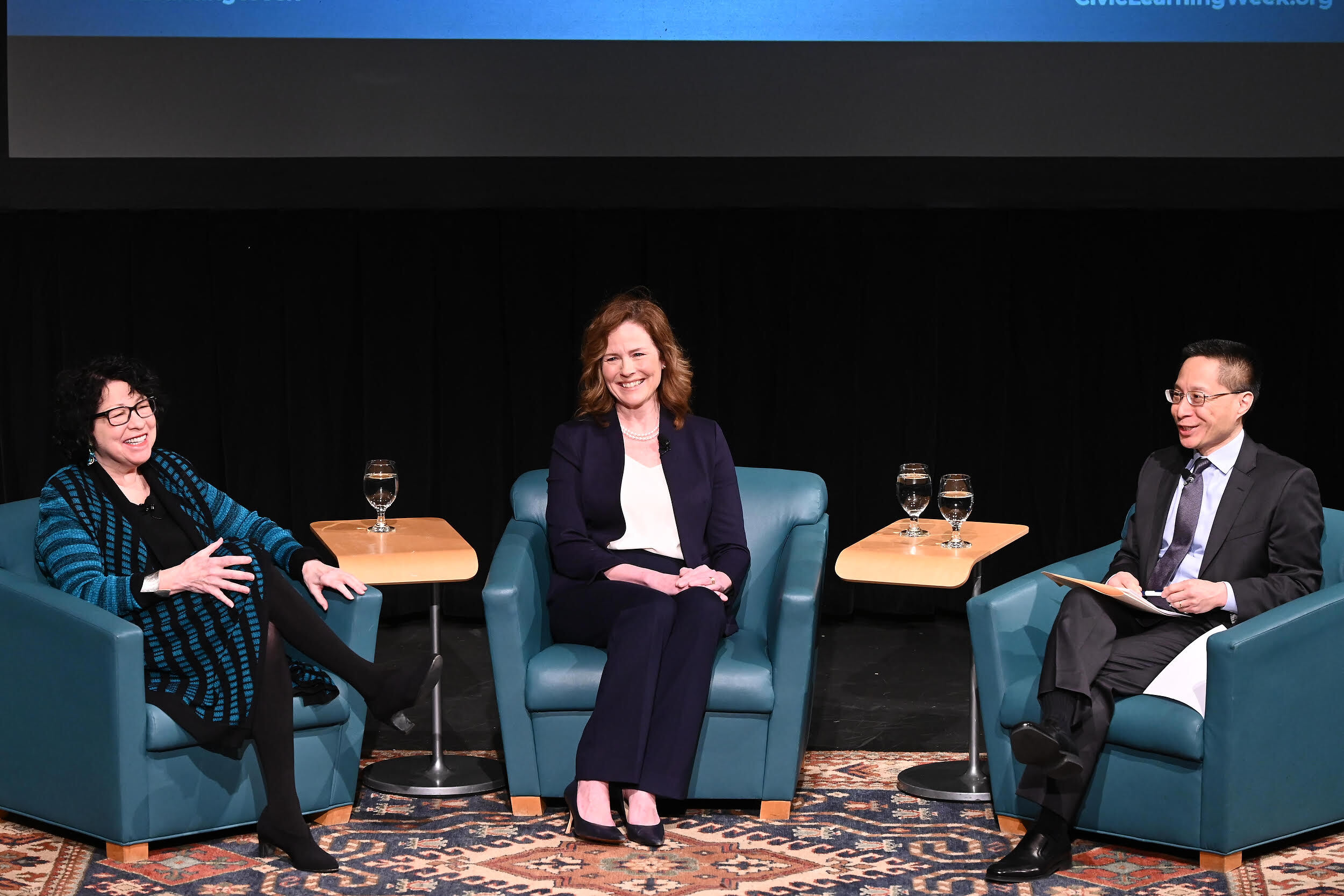
CAMBRIDGE, Mass., March 1, 2024 — U.S. Supreme Court Justices Sonia Sotomayor and Amy Coney Barrett, U.S. Secretary of Education Miguel Cardona, and Archivist of the United States Colleen Shogan will join thousands of people across the country in focusing on the importance of civic education during Civic Learning Week, March 11–15, 2024.
Justices Sotomayor and Barrett will engage in a conversation for the Civic Learning Week National Forum at The George Washington University on Tuesday, March 12, at 1 p.m. ET. Secretary Cardona and Archivist Shogan will engage in a fireside chat at the forum’s closing reception at The National Archives, March 12, at 6:30 p.m. ET.
The two conversations come as part of Civic Learning Week, an annual nonpartisan event that brings together students, educators, policymakers, and leaders in the public and private sectors to highlight and further energize the movement for civic education in states and communities across the nation. This year’s theme, “2024 and Beyond: Civic Learning as a Unifying Force,” focuses on the need to make civics a national priority and a means to combat polarization.
Now in its second year as a nationwide celebration, Civic Learning Week includes hundreds of online and in-person events driving home understanding of what a modern civic education needs, and how the knowledge, skills, and dispositions that civics engenders can sustain and strengthen constitutional democracy and build civil discourse and understanding.
Civic Learning Week is sponsored by iCivics, A More Perfect Union, the Carnegie Corporation of New York; the Corporation for Public Broadcasting, the Honey W. Nashman Center for Civic Engagement and Public Service at George Washington University, Microsoft, More Perfect, the National Archives and National Archives Foundation, and the National Council for the Social Studies.
“Civic learning is a requirement for a healthy democracy. It can be a unifying force for our country, particularly during times of deep division,” said iCivics CEO Louise Dubé. “Civic Learning Week will provide examples of how educators and communities are finding paths forward to bolster the knowledge, skills, and dispositions essential for engaging productively across differences—a hallmark of democracy—and bridging divides.”
The National Forum, which is open to the media, will take place at George Washington University starting at 8 a.m. ET on March 12. It also include panel discussions across several key themes that show how civics can act as a unifying force:
How Disinformation (Including AI) Impacts Civic Learning and What We Can Do: Moderated by The New York Times Technology Reporter Tiffany Hsu, and including FRONTLINE Senior Editor Erin Texeira and Digital Inquiry Group Founder Sam Wineburg.
Overcoming Political Polarization Through Investment in Civic Learning: Moderated by James Bryant Conant University Professor at Harvard University Danielle Allen, and including Virginia Secretary of Education Aimee Rogstad Guidera, Middlebury College President Laurie Patton; and state and local educators.
Teaching Civics During the 2024 Elections—Can It Be Done?: Moderated by George Washington University Graduate School of Education and Human Development Dean and Professor of Education Michael Feuer, and including University of Pennsylvania Graduate School of Education Professor Jonathan Zimmerman and D.C.-area school educators.
The National Forum will also include the release of several pieces of new research on civic education, as well as breakout sessions tied to the themes of the day. The Forum and closing reception are open to media and will be live streamed at civiclearningweek.org/national-forum.
A full list of local and national events that will take place during Civic Learning Week is available at civiclearningweek.org/events
iCivics has received a major vote of confidence from the Massachusetts Department of Elementary and Secondary Education (DESE). In a review by state educators of over 100 history and social studies curriculum materials that was just released as the Massachusetts K-12 History/Social Science Curricular Materials Review Guide, the state found that iCivics ranked among the top resources currently available–at all grade levels, K-12.
At the K-5/elementary grades, the review highlighted iCivics Private i curriculum as a strong supplemental resource. At grade 8, the review noted iCivics’Grade 8 curriculum/scope and sequence as a quality core resource as well as featuring the iCivics Civics Projects Workbook as strong supplemental material. At the high school grades, the review highlighted the new US History I curriculum (that will be publicly available later this year) as a quality core resource.
The guide synthesizes the findings of several review projects and involved state educators directly in the review. It supports Massachusetts educators who are selecting history/social science curricular materials by identifying promising materials worthy of further investigation by schools and districts. It contains information about history/social science curricular materials that meet baseline expectations for quality including alignment to Massachusetts standards, cultural responsiveness, and teacher usability.
We are proud of this acknowledgement of the impact of iCivics resources.