On the eve of the 250th anniversary year of the signing of the Declaration of Independence, I offer 5 Civic Acts for A250. Five practices that assert the enduring power of human beings to shape the common good. These acts are illuminated by many great leaders, organizations, and ordinary people around the nation every day. My hope is that millions of small, civic acts will spark civic renewal, which we so desperately need in 2026. In no particular order (and excluding voting because that must be a given for all local, state, and national elections):
Read the Declaration and Constitution as living invitations.
These documents are not relics; they are calls to engagement that we must recommit to. Our newest GEE! Award-winning game, Investigation Declaration, created in partnership with Colonial Williamsburg, brings this commitment to life.
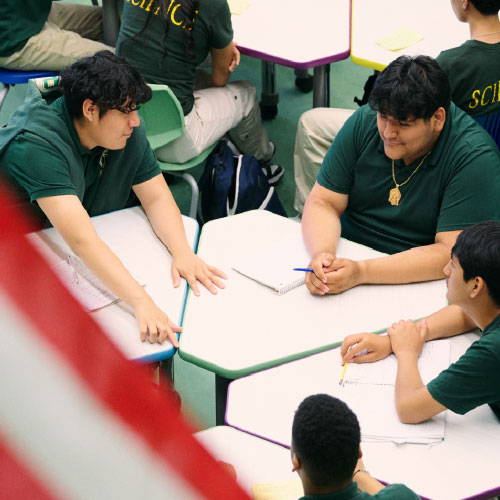
The immersive experience enables students to explore the founding principles that formed the basis for our Great American Experiment. By interacting with these ideas, the developing generations discover what it takes to maintain and strengthen our constitutional democracy.
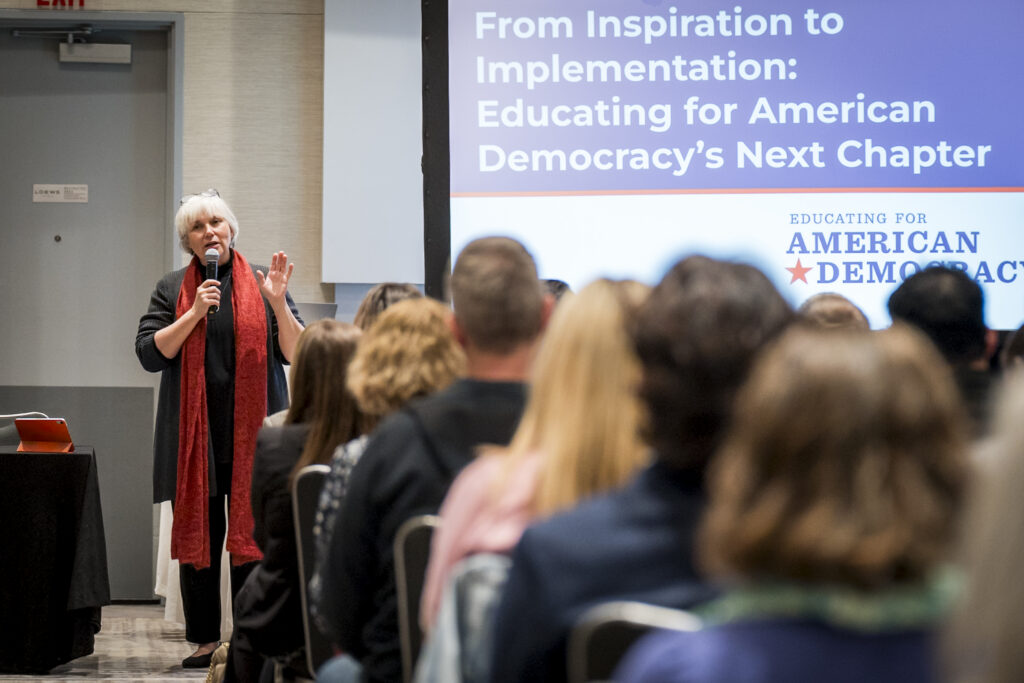
Beyond the classroom, the Educating for American Democracy (EAD) Roadmap—created by more than 300 cross-ideological scholars and educators—helps teachers, parents, and caregivers, and communities interact with our founding texts with nuance and depth, giving them a better understanding of how to bolster civics in and out of classrooms.
Support the civic educators who sustain our democracy.
Teachers, school and district leaders, museum educators, librarians, tribal cultural educators, and after-school mentors—these are the people who bring civic learning into the lives of young people. Support them. Celebrate them. Advocate for them.
Programs like iCivics’ We Can Teach Hard Things, Civic Star Challenge, and other professional development offerings, as well as similar initiatives from the National Council for the Social Studies and local affiliates, new Schools of Civic Thought that have been funded by the Trump Administration and nurtured by the Jack Miller Center, and many others help educators in different ways as they work to bring high-quality civic learning to life for students. This whole ecosystem of learning and engagement is worth supporting from the bottom up.
Strengthen the local civic fabric in your town.
We must also strengthen the out-of-classroom opportunities available to students for engaging with their communities and beyond. Museums, libraries, historical societies, cultural institutions, and business and professional associations have held our shared story and helped keep our civic muscles exercised for generations. One initiative that brings all these critical entities together at the local level is the National Civics Bee from the U.S. Chamber of Commerce Foundation, which is now operational in all 50 states.
Find out more about opportunities closer to home by visiting, supporting, and engaging with our great partners at the American Association of State and Local History, the Association for Rural and Small Town Libraries, the Urban Libraries Council, the Presidential Partners network of presidential centers and sites at More Perfect, and CivxNow.
Choose responsible, pluralistic media.
In an era of algorithmic slop (yes, it’s a word), intentionally seeking trustworthy information is a civic practice. Nonpartisan platforms like Ken Burns’ The American Revolution, PBS’s Civics Made Easy, Crash Course, national and local public media, the Digital Inquiry Group, the upcoming documentary from Roadtrip Nation, the Declaration Book Club from Thomas Jefferson’s Monticello and More Perfect, and many others are doing critical work in this area. And if you want to dive more deeply into history and civics from contemporary writers and reporters, here are the Substack channels I love:
- Daniel Stid’s The Art of Association
- Danielle Allen’s The Renovator
- Gabriel Lerner’s Democracy Notes
Support good civics policy.
Twenty-four politically diverse states have passed 38 policies aligned with the CivxNow Coalition (now more than 400 organizations strong) since 2021—including civic course requirements and Civic Seals that signal readiness for citizenship and work. Your voice can help shape similar efforts in your district, city, or state.
And to make all of this worthwhile, we must engage with and highlight the joy of civics with our kids, grandkids, young people in our community, and anyone we can reach. Play Investigation Declaration with your family. Encourage students in your community to explore the iCivics Youth Fellowship. Be the counterweight to all the slop.
This is all very human and very worthwhile work.
Don’t believe me? Please consider that, before the American Revolution, a small slice of the population had the right to life, liberty, and the pursuit of happiness. Ordinary people had no access to education, professional choice, property ownership, or many of the opportunities we take for granted today. This is not so many years ago in the scope of human history, and we cannot let ourselves fall back into that darkness.
As we approach America’s 250th anniversary, let us choose civics as an affirmation of our shared humanity. And let us honor the educators, institutions, and communities that carry this work forward every day. The future is not prewritten. It is ours to shape—with care, courage, and civic acts big and small.