Grow elementary students’ content knowledge, civic dispositions, and critical thinking skills with our K-5 curriculum that makes teaching social studies easy and fun. Students work together to solve each mystery and develop life-long inquiry skills.
Ways to use Private i History Detectives in the classroom
Introduction
Introduce and break down primary sources for elementary students, creating curious minds ready for learning.
Literacy
Make social studies achievable in busy elementary classes with lessons that integrate social studies with literacy.
Extension
Make learning objectives stick and leverage classroom learning by adding hands-on activities to your existing materials and teaching methods.
Narration
Utilize narration-enabled Google Slides decks to bring lessons to life and make lessons more accessible to all learners.
Teaching Tips
Engage digitally with Kami
Digitized student handouts are available online through our free Kami integration. This dynamic PDF-reading and annotation tool, built into Private i History Detectives lessons, allows you to assign and collect worksheets and readings.
Implement with ease
Build elementary students’ content knowledge and civic dispositions and reinforce historical thinking skills with Private i History Detectives. These lessons include everything you need, including a ready-to-use and adaptable classroom presentation, embedded vocabulary practice, student handouts, and a step-by-step teacher lesson plan.
Develop inquiry skills
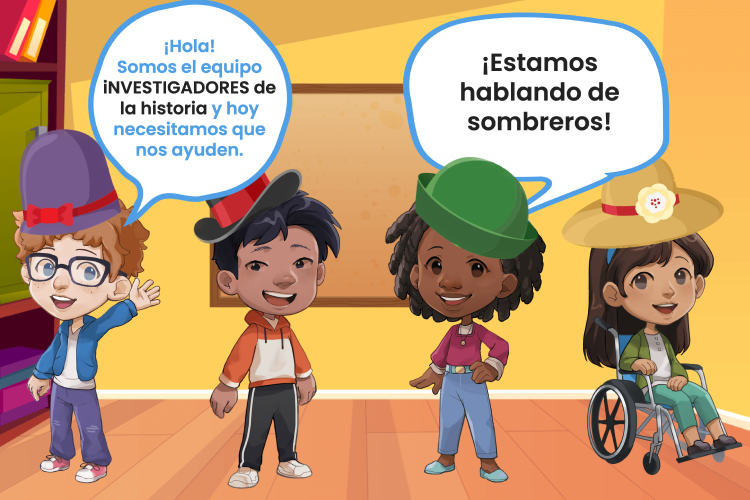
Help your students put on their historian hats as they develop life-long inquiry skills to solve each mystery. By placing students in the role of detective, you can give them a fun and exciting purpose for learning.
Teach with Spanish versions
Engage Spanish-speaking students and multilingual learners with a growing library of Spanish-language mystery-themed lessons. Spanish-translated resources will introduce inquiry, and help build content knowledge and critical thinking skills.
Organized by grade level and topic, these whole-class, mystery-themed units make teaching social studies fun. Guide elementary students through exciting historical investigations to build content knowledge, civic dispositions, and critical thinking skills.
Standards-aligned
Reduce time searching for materials and make teaching civics easy and relevant with lesson plans that meet state standards.
Engaging lessons
Ignite student interest and make social studies fun with whole-class, mystery-themed units that teach lifelong inquiry skills and primary sources analysis.
Timely
Easily incorporated into your curriculum and class time, lessons require 40 minutes or less to complete.
Illuminate untold stories
Introduce students to a diverse and inclusive range of stories with lessons that draw connections between history, civics, geography, economics, and students’ lives.
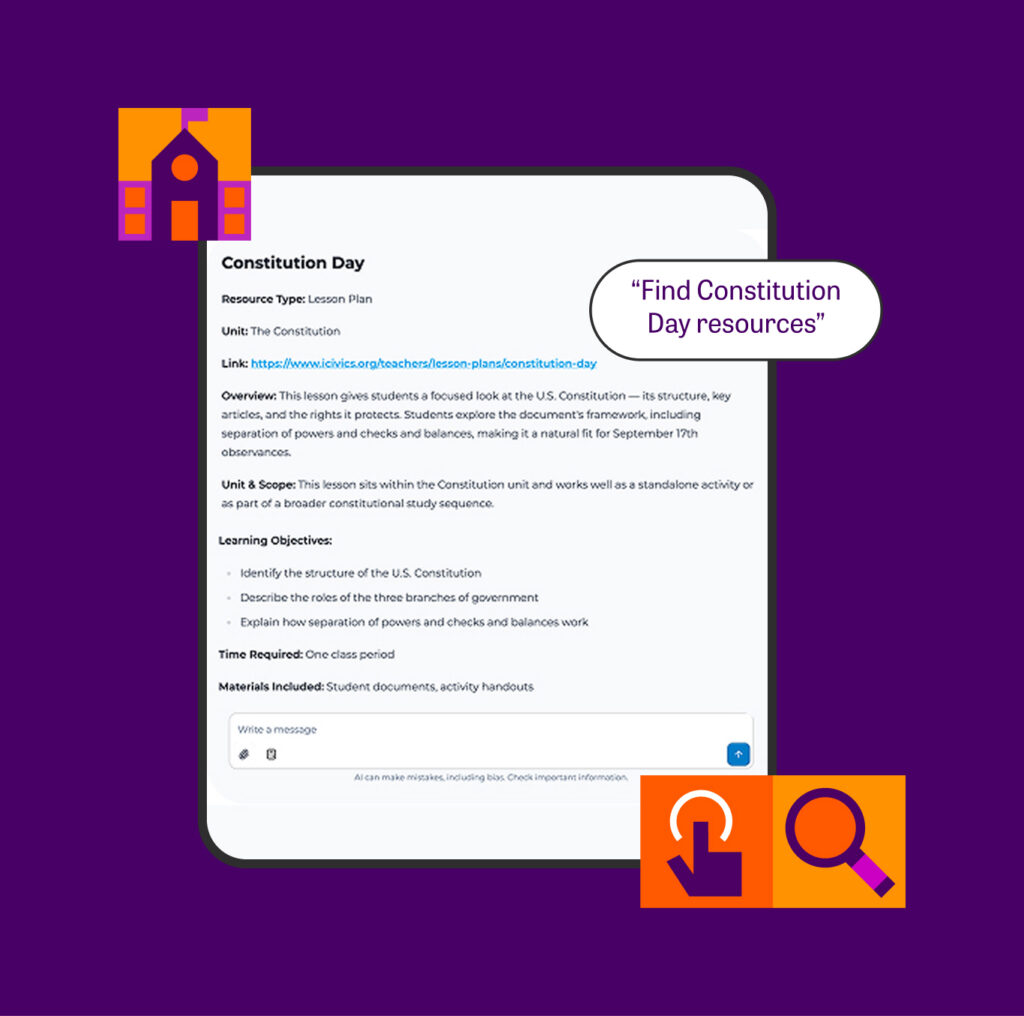
Plan with ASK iCivics, our powerful AI co-planner
Find the resources you are looking for instantly. Our new AI chatbot, ASK iCivics, is the fastest way to discover lessons, activities, and games that align with your instructional goals.
Discover lessons designed to meet all of your instructional needs. Our nonpartisan classroom resources engage students with complex concepts in ways they can understand and relate to.