What is Constitution Day, and how to teach it?

Every September 17th, the nation commemorates the signing of the U.S. Constitution.

What is Constitution Day?

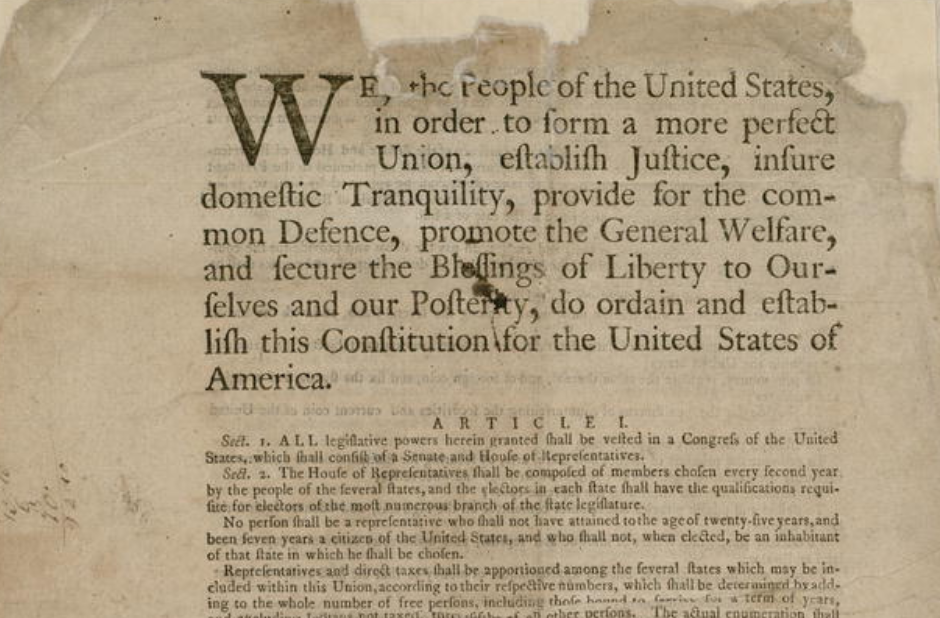
Constitution Day is a historical commemoration marking the signing of the United States Constitution on September 17, 1787.

Constitution Day is an opportunity to reflect on the monumental, difficult compromises that united a diverse group of states. By law, any educational institution that receives federal funding must hold an educational program about the U.S. Constitution on or around September 17.

How to teach Constitution Day?

The actual text of the Constitution can be incredibly dense for students. But that doesn’t mean students can’t engage with and understand this important and influential document.

Rather than just reading it straight through, we recommend engaging your students by breaking the Constitution down using engaging, nonpartisan resources. iCivics offers a variety of teaching resources, activities, and tools that make the Constitution accessible and relevant to students of any age. You can explore the resources here.

How do I make space for Constitution Day?

We recognize that September can be busy and time, both for teaching and planning, is at a premium. Teaching Constitution Day doesn’t need to be complex or time-consuming and you don’t need to overhaul your entire curriculum or pacing guide.

iCivics removes hours of planning by providing vetted, ready-to-use resources so you can focus on the fun of teaching. The Constitution EXPLAINED video series teaches through each aspect of the Constitution in 2–3 minute. Each video introduces students to the text, history, and relevance of the U.S. Constitution in everyday language. Explore The Constitution EXPLAINED and all of iCivics resources here.

Why is Constitution Day important?

Constitution Day reminds students that a functioning democracy requires believing in something greater than oneself and embracing the humanity of people with different viewpoints.

As iCivics founder and former Supreme Court Justice Sandra Day O’Connor stated, “The fact is that knowledge about the Constitution…is not something that is handed down through the gene pool; every generation has to learn it.”

How is Constitution Day celebrated?

The holiday is officially “Constitution Day and Citizenship Day,” and is frequently marked by naturalization ceremonies where immigrants officially take the Oath of Allegiance.

Communities across the country celebrate with public readings of the Preamble, historical reenactments, and guest lectures from civic leaders. Institutions like the National Archives and the National Constitution Center host special virtual tours, podcasts, and exhibits for the public.

By law, any educational institution that receives federal funding must hold an educational program about the U.S. Constitution on or around September 17. You can celebrate by playing one of iCivics’ engaging and educational games that explore the rights granted by the Bill of Rights or the compromises that led to the Constitution.

How do schools celebrate Constitution Day?

There are so many ways that whole schools and individual classrooms can celebrate Constitution Day. We recommend reviewing our Constitution Day page for a full overview of ideas, games, and lesson plans.

How does Constitution Day help encourage civic education?

Constitution Day gives students space to think abstractly about their rights, building the civic digital literacy and critical thinking skills they need to actively participate in the American experiment. iCivics provides high-quality, nonpartisan resources that empower educators to teach foundational government principles without fear of modern political controversy. Explore the full library of Constitution-related resources here.
A Tale of Modern Prep: Meet Your Secure, AI-Powered Co-Planner

It was the most organized of times, and still the most chaotic of times. The age of shiny new platforms and user IDs, and also the age of forgotten passwords.  A season of high expectations, cold coffees, and way too many free trial emails.  Every standard is mapped out, and there is zero wiggle room on the calendar between mastery checks, tests, and school events. You are defaulting into survival mode. In short, the period is just like every back-to-school season. Until you use ASK iCivics to co-plan.

Imagine the time saved if you could surface the iCivics resources that you need directly to your fingertips in seconds.

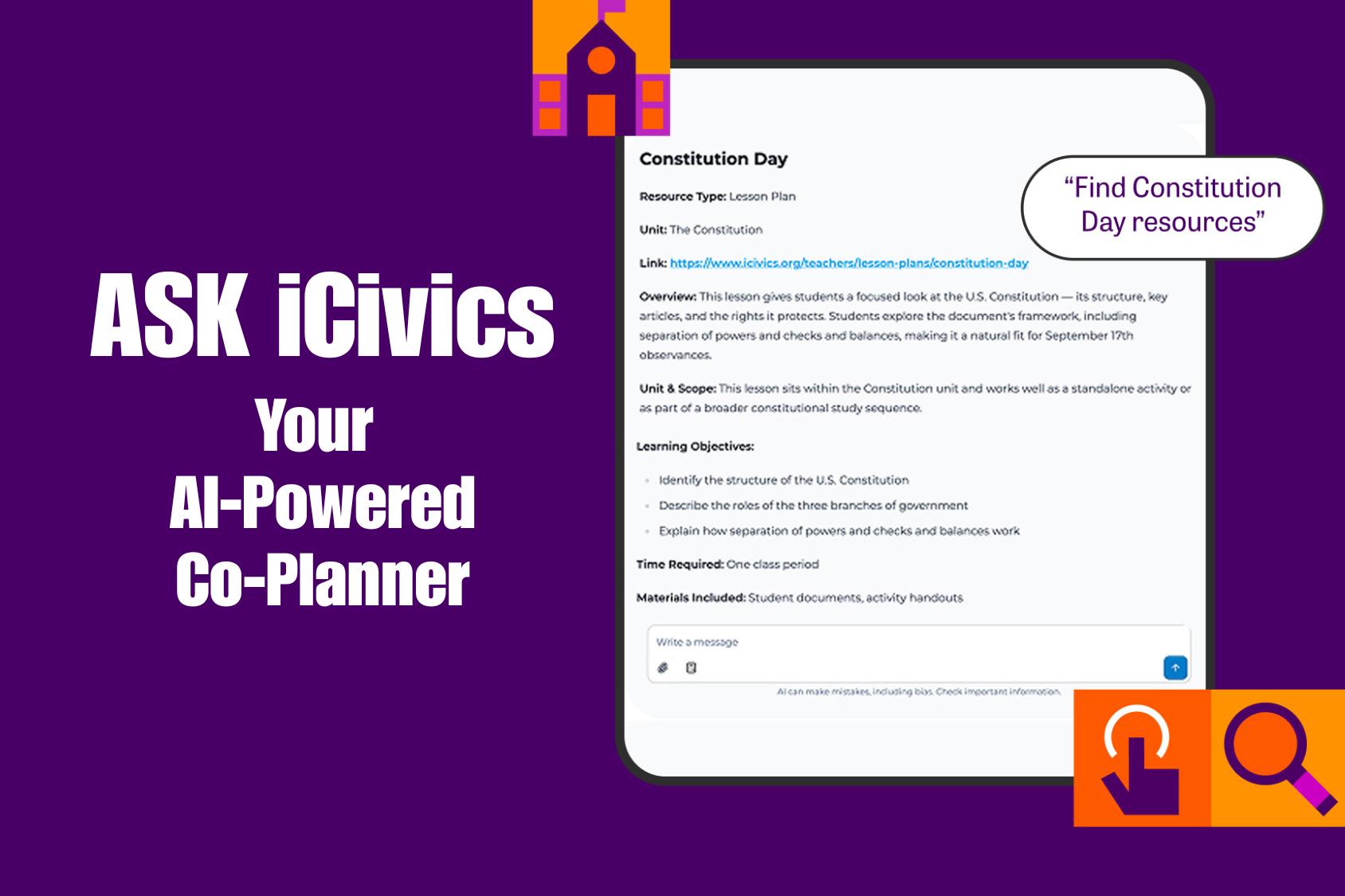
Teachers, rejoice! Meet ASK iCivics: a secure, AI-powered co-planning tool built to streamline your research and help you identify top-tier resources that meet your needs.

What is ASK iCivics? Effortless Resource Discovery

Think of ASK iCivics as your personal curriculum curator. Instead of clicking through endless search results, hunting down forgotten “hidden gems,” or going down late-night rabbit holes on the open web, ASK iCivics brings the best and most relevant parts of our extensive resource library directly to the surface.

Simply tell the tool what you’re teaching—whether it’s a single-day inquiry into executive power or a multi-day unit on the Judicial Branch—and it will  guide you to resources recommendations. It identifies, sorts, and makes connections, but you decide what you need and how to use it. Instead of manually searching our library or reading through scopes and sequences, ASK iCivics brings the right materials directly to you.  ASK iCivics gathers your requested materials.  It can even help organize lessons into a structured sequence based on the time that you have, taking the heavy lifting out of lesson prep. It works with you and for you.

What About State Standards?

We know that even the day-to-day workflow can easily consume a planning period. That’s why ASK iCivics features integrated, state-specific standards alignment to smooth out the back-to-school paperwork burden. You can instantly confirm that your chosen materials meet your state benchmarks without doing extra digging just to submit lesson plans. 

“But Can I Trust It?”

If you’re approaching new technology with a healthy dose of skepticism, you are in good company. We know that there are uncertainties and worries over AI’s impact on student learning. Asking whether a tool is safe isn’t just reasonable;, it’s essential.

Rest assured, ASK iCivics is curated, trusted, tested, and secure.

  • No Open-Web Noise: ASK iCivics operates exclusively within iCivics’ award-winning, nonpartisan, and vetted library to generate its recommendations.
  • Strictly Teacher-Facing: ASK iCivics is a secure co-planning tool closed entirely to student use. Access to the resources and answer keys are only accessible to teachers on the website.  
  • Rigorously Vetted: The tool has been extensively tested to ensure it adheres to the highest standards of nonpartisan neutrality and pedagogical safety.

Most importantly, ASK iCivics is designed to assist your expertise, not replace it. It does not think for you or your students, nor can it ever replace your great teaching; it simply handles the heavy lifting of resource retrieval and analysis, leaving you free to do what you do best.

Ready to Reclaim Your Planning Time?

Teaching civics is more vital than ever, but your time is a finite resource. ASK iCivics was built to respect your professional wisdom, safeguard your classroom, and transform the back-to-school rush from a season of chaos into an age of effortless prep.

Log in this season, ask your first question, and discover just how seamless lesson planning can be. But first… refill that coffee.

Written by Emeka Barclay

Emeka Barclay is a Curriculum Associate at iCivics where she helps create and cultivate curricular materials for educators and students. Prior to joining the iCivics team, Emeka taught secondary language arts and social sciences and worked as a technology and learning coach in Alabama. She then relocated to Florida where she was a dean of students. When not helping save the world, Emeka enjoys exploring the sites with her family and friends, searching for the perfect sip of coffee and nibble of cheese, and supporting public libraries.

iCivics launches Rule Play, a new game that brings the rule of law to life

Created in partnership with More Perfect, this interactive game helps middle and high school students navigate the complexities and competing values of the rule of law.

CAMBRIDGE, Mass. – Aug. 10, 2026iCivics has launched Rule Play, a new interactive game that helps middle and high school students explore how the rule of law shapes everyday life. 

Created through a partnership with More Perfect, this free game helps educators use relatable scenarios – such as dress codes in schools – that invite students to confront difficult choices, identify conflicting values, and discover how exactly they think about the rule of law. 

The rule of law ensures that laws govern society equally and clearly, maintaining individual liberty and limiting the power of both those who govern and those who are governed. Educators need ways to help students examine democratic institutions and practices – their strengths and shortcomings – without classroom discussions becoming politically charged. Rule Play provides a neutral, constructive framework for exploring these questions, giving teachers a safe way to introduce nuance, encourage healthy debate, and help students understand the rule of law as an essential, but continually aspirational, democratic ideal.

Student input shaped Rule Play from its earliest stages. After iCivics consulted teachers about the challenges of teaching the rule of law, the team at iCivics presented initial concepts to a group of iCivics Student Fellows. The students emphasized that the game’s stories needed to reflect experiences relevant to their daily lives, such as driving, school rules, and curfews. They later playtested the developing game and provided feedback that influenced everything from the scenarios and on-screen choice mechanics to the game’s title.

“We designed Rule Play in collaboration with both students and educators because our users are the best judges of what is relevant to their lives,” iCivics CEO Louise Dubé said. “We are thrilled with the result. Rule Play makes the importance and goals of the rule of law tangible to learners.”

Designed to be completed in approximately 15 minutes, Rule Play places students in relatable rule-of-law scenarios, including the inconsistent enforcement of a school dress code and the unequal application of a youth curfew. 

After reading each scenario, players choose how to respond by swiping left, right, or down. There is no obviously right or wrong answer; instead, each choice reflects one or more of five equally important factors: Equality of Law, Clear and Accessible Laws, Judicial Independence, Fair Legal Processes, and Limited and Accountable Government. At the end, players receive a personalized profile showing which factors they gravitated toward most and watch a short explainer video on that factor. Students can play again to see how different choices produce different outcomes.

“A democracy is only as strong as the citizens who understand it,” said John Bridgeland, Founder and CEO of More Perfect. “Rule Play helps students see the rule of law not as an abstraction but as something that shapes their daily lives and depends on their participation. That is the kind of civic learning our country needs right now and that we are proud to support.”

Rule Play is shorter and more streamlined than a traditional iCivics game but maintains the same focus on meaningful choices and clearly defined learning objectives. It helps students understand how the rule of law limits power, protects individual rights, preserves the common good, and affects everyday life. By asking students to weigh imperfect options rather than search for a single correct answer, the game creates space for deeper engagement with the gray areas that make the rule of law both challenging and consequential.

The complete experience includes individual videos about each rule-of-law factor, a five-minute video covering all five factors, and a streamlined two-page Teacher Guide featuring additional real-world scenarios and ready-to-use discussion questions. Teachers can use the game as a bell-ringer, transition activity, introduction to a new unit, or starting point for a broader classroom discussion.

Rule Play is available at iCivics.org/rule-play.

Judy Wurtzel

Judy Wurtzel supports Charles and Lynn Schusterman Family Philanthropies’ efforts to improve K-12 education across the U.S., with a focus on enabling conditions for engaging and affirming literacy instruction, including instructional materials, policy, and research.

Judy has experience in government, philanthropy, associations and nonprofits. Prior to joining the Schusterman Family Philanthropies, Judy was a Senior Advisor to the Noyce Foundation. Previously, Judy served in the U.S. Department of Education under Secretary Duncan as a Deputy Assistant Secretary in the Office of Planning, Evaluation and Policy Development and as the founding Director for Technical Assistance and Policy in the Department’s new Implementation Support Unit. She was also a Senior Advisor to the Deputy Secretary of Education under Secretary Riley. Judy was also Co-Director of the Aspen Institute Program on Education and Society and served as Executive Director of the Learning First Alliance, a permanent partnership of over a dozen national education associations.

Judy has authored or co-authored numerous reports and studies on education improvement and co-edited Teaching Talent: A Visionary Framework for Human Capital in Education. She currently sits on the boards of the Center for Assessment and Open Up Resources. Past board memberships and advisory boards include Achievement Network, English Learner Successful Forum, UnboundEd, Urban Teachers Center and Zearn. Judy started her career in education by teaching English as a foreign language in Morocco. She attended Yale College and earned a law degree from NYU Law School.

Posted in Bio

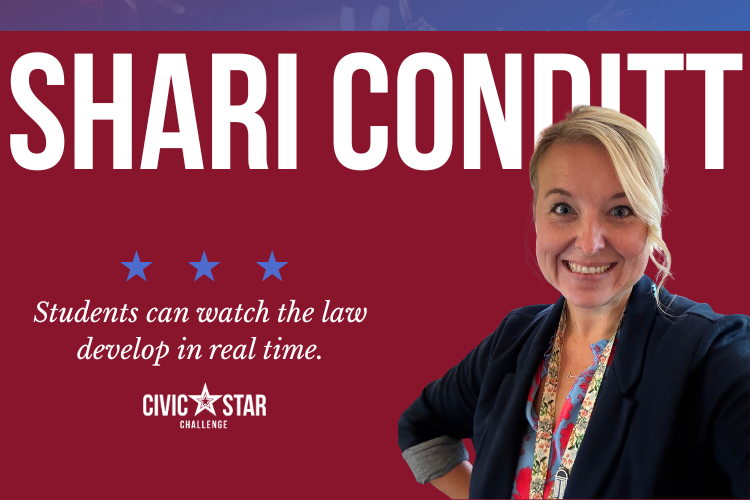
Shari uses Supreme Court cases to help students understand the interpretation of laws

I recently heard a constitutional scholar say, “The law isn’t settled.” That idea stuck with me. Laws change. Court decisions are overturned. Constitutional interpretation evolves over time. That’s one reason I love teaching Supreme Court cases. Students can watch the law develop in real time.

As part of the Civic Star Challenge, my students and I zoomed in on specific Supreme Court cases to understand how the rights outlined in the Constitution have been interpreted and applied over the last 250 years. 

When we started our unit on sex discrimination—looking at cases that considered the 14th, 15th, and 19th amendments—my students assumed we were going to focus on the rights of women. But the law helped them see the issue in a broader, more comprehensive way. 

We jumped in with Reed v. Reed; it was obvious to the students that women should have property rights. Then, I introduced them to Craig v. Boren, which challenged a law that set the drinking age for women at 18, and men at 21. This really resonated with them—which was, of course, the point! Ruth Bader Ginsburg, then a lawyer for the ACLU, helped develop the strategy behind the plaintiff’s argument. She knew what teachers know, too: when you show people how a foreign concept can exist within their own experience, they understand it more deeply. From there, students easily made the leap to our discussions of Frontiero v. Richardson and Weinberger v. Wiesenfeld, in which the Justices ruled that husbands were eligible for the same benefits as wives.

However, the application of the First Amendment proved much more complicated to the students. I watched them weigh the desire for unfiltered expression with the impacts of that speech, especially when it involves falsehoods, threats, and the provocation of violence. We covered a range of cases, including free speech classics such as Schenck v. United States and Brandenburg v. Ohio. But Snyder v. Phelps really gripped the class. The case considered whether the First Amendment protected members of the Westboro Baptist Church when they shouted slurs and picketed outside the funeral of a gay serviceman. The students were surprised to learn that the court did not split down ideological lines, ruling 8 to 1 in support of the protesters. (In his dissent Justice Alito wrote that “our profound national commitment to free and open debate is not a license for the vicious verbal assault that occurred in this case.”) 

Students also really wrestled with the idea that speech inciting violence is punishable but that if no violence occurs, the speech is allowable. They pointed to social media and wondered how difficult it was to determine if an influencer’s impact on a third party’s violent action could be traced. 

Recently, my students and I listened to oral arguments in Trump v. Barbara together. I was struck by how dense the discussion was—but also, how our work in class is helping them to decode it. We caught mentions of Dred Scot, the Slaughter-House cases, and even the Civil Rights Act of 1866! We were witnessing the Court wrestling with its history, as it was simultaneously bringing the Constitution into our present moment. 

About Shari

  • Teaching experience: 26 years
  • Currently: 11th grade AP US History (dual enrollment) and 12th grade AP American Government and Politics (dual enrollment)

Shari is a recent recipient of the Justice Sandra Day O’Connor Prize for Excellence in Teaching Civics and the 2024 Bill of Rights Institute National Civics Teacher of the Year. She is guided by the belief that when students learn civic virtues and practice civil dialogue they can become agents of change in their communities.