
National Endowment for the Humanities Invests $1.7 Million in the Implementation of Roadmap to Educating for American Democracy

WASHINGTON, DC [January 10, 2023] – The National Endowment for the Humanities (NEH) today announced that it will continue its investment in implementation of the Roadmap to Educating for American Democracy (EAD) with $1.7 million to be distributed over the next two years to build the foundations for widespread adoption of EAD-based K–12 civic and history education.

The NEH and the U.S. Department of Education provided initial funding for the Educating for American Democracy Initiative, an unprecedented effort—led by research centers and schools at Harvard, Arizona State and Tufts Universities along with iCivics—that engaged more than 300 experts from multiple perspectives to create a roadmap that states, districts and individual schools can use to provide excellence in civics and history education for all students. 

Since its release in March 2021, the EADRoadmap has reached tens of thousands of educators. EAD’s founding partners continue to work together as part of the EAD Implementation Consortium, and a network of more than 190 “Champion” organizations remains dedicated to advancing the use of inquiry-based instruction for civic learning. School districts in multiple states such as Arizona, Colorado, Massachusetts, New Mexico and Oklahoma are now running pilot programs, creating models and establishing best practices that districts everywhere can use when implementing the EAD Roadmap.

The new funding from NEH will support this work and help achieve the goal of reaching 60 million students and 1 million teachers by the year 2030.

“The NEH is honored to support the implementation of the EAD Roadmap in schools across the country,” said Chair Shelly Lowe. “I’m especially excited about the ways that this investment will create connections between classrooms and local cultural institutions to foster a deeper understanding of our constitutional democracy. As a core component of the NEH’s new American Tapestry initiative, this partnership leverages the best of the humanities to strengthen future generations’ understanding of America and its democratic traditions.” 

Through a cooperative agreement with iCivics, NEH will distribute the funds for activities such as the following:

  • Continuing to grow a network of institutions, organizations and out-of-school educational programs aligning resources with EAD;
  • Building a community of educator leaders to help other educators use EAD and build community and family support for EAD;
  • Curating exemplary resources aligned with state standards;
  • Building a community of professional development providers among civic organizations, colleges and universities; and 
  • Researching and evaluating EAD implementation to help it scale.

“This new round of funding from the National Endowment for the Humanities shows an enormous vote of confidence in the work already being done to build upon and implement the EAD Roadmap,“ said iCivics Executive Director Louise Dubé, who serves as chair of the EAD Implementation Consortium. “EAD is about elevating how civics and history are taught in this country so all Americans are prepared to play a role in sustaining and strengthening our constitutional democracy. This funding is a tremendous boost.”

The largest allocation through this new round of funding from NEH will be focused on implementing EAD in K-5 schools. Harvard University, through the Edmond & Lily Safra Center for Ethics and Project Zero at the Graduate School of Educations, will lead a competitive grant process earmarked for programs such as new EAD pilots in elementary schools, professional development for elementary school educators, and the development of materials and approaches for teaching civics and history education in the lower grades. $600,000 will be awarded through that process. Importantly, these will include pilot programs and projects with a specific focus on underserved communities and collaborative work with local cultural institutions–libraries, museums, historic sites–to broaden access to the project.

“A particularly exciting element of the Educating for American Democracy Initiative is how it has provided an opportunity for universities to work in support of the civic mission of K-12 schools,” the Director of Harvard’s Safra Center, Danielle Allen, said. “Now the question is whether we can build on that opportunity and forge an enduring relationship between higher education and our K-12 system in support of civic learning.” 

The new cooperative agreement represents an unprecedented investment in civic and history education from the NEH, and a commitment to EAD’s goal of creating a new approach that integrates instructional innovation and the blending of civics and U.S. history to teach the knowledge, skills, and dispositions that all Americans need to be engaged citizens and to tell a complete history of the United States and its constitutional democracy. The agreement is a central project of NEH’s new special initiative, American Tapestry: Weaving Together Past, Present, and Future, which uses the humanities to address contemporary challenges and strengthen our democracy.

“This renewed support from the NEH will boost the EAD approach of providing a civic education in reflective patriotism about America’s history, ideals, and challenges,” said Paul Carrese, Director of the School of Civic & Economic Thought and Leadership at Arizona State University. “This national-consensus approach emphasizes preparation of informed and engaged citizens – in constitutional and historical knowledge, but also in the civic virtues needed in our complex, pluralist polity. Those virtues include civil disagreement, and American civic friendship across party and philosophical views. Lincoln warned in 1838 that if America failed to prioritize fundamental civic education we would be risking national self-destruction. The NEH and the broad EAD coalition are doing their part to redress the inadequate priority for and condition of civic learning in our schools.”

What the 2022 Midterm Elections Do and Don’t Tell Us


Voting is one moment in time. Civic engagement is the work that happens between elections—the choices we make and the work that we do every single day as part of this audacious experiment in democracy that is the United States of America. Civics is the preparation we all need for this work.

With the run-off in Georgia now complete, we now know the full results of the 2022 midterm elections. Perhaps the clearest throughline is that voters rejected extremist election deniers. I believe the results validate the American people’s commitment to sustaining our constitutional democracy. 

And it wasn’t just the candidates that were on the ballot, but key issues—whether explicitly or implicitly. All this led to high voter turnout across the board. Likewise, youth (18–29) turnout was 27 percent—second only for midterms in the last three decades to 2018. 

It is perhaps significant that the aggregate youth turnout rose to 31 percent—higher than 2018’s record—in nine key states. In three of these—Florida, North Carolina, and Ohio—Republicans did well, while Democrats won notable victories in the remaining six. (And not only did the midterms see 18–29-year-olds vote, but even be on the ballot, themselves, with 25-year-old Maxwell Frost of Florida’s 10th district being elected the first Gen-Z member of Congress!)

According to exit polls, while 63 percent of the youth vote went to Democrats in House races, this is slightly down from 2018 and Republicans may be gaining ground with some young people in more local races. We need further analysis with data from actual voting to determine whether this holds true. What we do know is that youth prioritized and voted based on issues, and the issue that had the biggest impact on their vote was abortion.

What the analysis of the youth vote also tells us is that the college vote is a key subset. We know from the PACE Civic Language Perceptions Project that the widest gap in both the understanding and perception of civic terms manifest with respondents’ level of education and socioeconomic status. This is why the work of iCivics in reaching kids before this juncture—ensuring that everyone feels a part of this democracy no matter their educational attainment—is essential to sustain and strengthen our constitutional democracy.

We need members of our society to understand their rights and responsibilities, one of which is voting. How will we ensure that 2018 and 2022 are new trends in voter turnout and not anomalies? How can we increasingly ensure students receive the kind of civic education that pushes this key metric to at least be in line with the national average? In what ways can a more civically educated youth population spur greater engagement among the overall populace so midterms see voter turnout break 50 percent of eligible voters?

While the midterms mostly saw a rejection of extremism, our nation’s divisions are far from healed. First, it’s important to note that a “rejection of extremism” is not one-sided. Secondly, much of the analysis around this centers on swing states, while strongholds were further entrenched, underscoring the depth of our divides.

This voter behavior further validates iCivics’ approach to garnering a broad tent across difference to support investing in civic education. I wrote before the election of common ground across our divides I had the privilege of experiencing in my travels. And this only underscores recent polling that once again affirms strong support for civic education across party lines.

The key to a functioning healthy democracy is what happens between elections—the choices we make and the work that we do every single day as part of this audacious experiment in democracy that is the United States of America.

There is urgency to what happens between now and our nation’s 250th anniversary. What iCivics does during this time matters. There are some 17 million middle and high schoolers who will come of age in that time. 

Democracy is not guaranteed—it depends on each of us engaging. With democracies around the world still under threat, it is more important than ever that we ensure that each and every child in this country develops the civic knowledge, skills, and dispositions to take up their part in this self-governing society.

Louise Dubé, Executive Director, iCivics

In Leadup to 2022 Midterm Elections, iCivics and CalMatters Provide News-Based Lesson Plans and Resources for California’s Teachers

Partnership combines CalMatters award-winning nonpartisan nonprofit state news with iCivics lesson plans, games and content to help educators engage students in activities and discussion around the 2022 midterm election.

California’s educators now have a powerful new tool to help teach the 2022 midterm elections through a partnership between the country’s leading civic education nonprofit, iCivics, and California’s premier nonprofit news outlet, CalMatters.

California Election Headquarters, which is available for free for all California teachers and students, is a new portal that combines nonpartisan local journalism and election information with interactive lessons and games to help students improve media literacy skills and increase civic knowledge and skills.

The portal will be updated weekly with relevant news stories from around California that relate to the election as the state determines who will be its next Governor and new U.S. Senator, and weighs a number of important propositions. iCivics will provide games, exercises and lessons to aid discussion in the classroom by helping students understand the news and key civic terms and concepts underlying the news.

Geared toward high school students, the portal includes curated elections resources, organized by week and topic; curricular suggestions and teacher tips for pairing CalMatters news articles with iCivics lessons; and a listing of free professional learning opportunities in teachers’ areas.

“We’re thrilled to be able to share our nonpartisan journalism with California’s social science teachers,” said CalMatters CEO Neil Chase, “supporting them as they educate California’s newest and next voters about the important issues facing our state. We’re especially pleased to partner with iCivics, relying on their expertise in curriculum development and their strong relationships with teachers and students.”

This new and unique resource brings teachers what they need most:

  • Extensive iCivics resources about elections and democracy combined with CalMatters’ midterm-focused reporting and Voter Guide in a California-specific “Election Headquarters” site.
  • Teacher resources including 10-minute discussions, 45-minute lesson plans, interactive games and more.
  • Materials available in a variety of reading levels, in both English and Spanish.
  • Ways to combine important news stories with engaging concept-based lessons.
  • News stories and curriculum updated throughout the fall election period.
  • Live, virtual professional development with free resources, strategies and routines for engaging students on election information.

“Most elections-related teaching resources are either too heavily focused on national elections or simply cover generic information midterms,” iCivics Director of State Professional Programs Tammy Waller said. “This collaboration is different because it provides the California-specific resources focusing on state and local elections that teachers want and students will find most relevant. This makes it easier for teachers to focus on the state and local issues and races that matter to students and their communities.”

The partnership with CalMatters is part of a move toward greater state-based engagement for iCivics in California. As part of these larger efforts, iCivics is implementing a Teacher Facilitator Fellow program to cultivate through a train-the-trainer model a strong network of California educators with the knowledge, skills, and demonstrated abilities to provide each and every student with the kind of high-quality civic education needed to become engaged and informed members of our self-governing society. The first year will focus on Northern California, and expand statewide in coming years. 

FOR MORE INFORMATION:

For media inquires, please contact [email protected]

About iCivics

iCivics was founded in 2009 by U.S. Supreme Court Justice Sandra Day O’Connor to transform civic education and rebuild civic strength through digital games and lesson plans. iCivics is the country’s largest provider of civic education content and is currently used by up to 145,000 educators and 9 million students annually. All of its games are free, nonpartisan and available online at icivics.org

About CalMatters

CalMatters is a nonpartisan and nonprofit news organization bringing Californians stories that probe, explain and explore solutions to quality-of-life issues while holding leaders accountable. CalMatters is the only journalism outlet dedicated to covering America’s biggest state, 39 million Californians and the world’s fifth largest economy.

30 Students Take Civic Education into Their Own Hands Through iCivics Equity in Civics Youth Fellowship

Now in its fourth year, the fellowship works with students from across the country to build civic leadership skills and explore how civic education can become more relevant to all youth in the United States


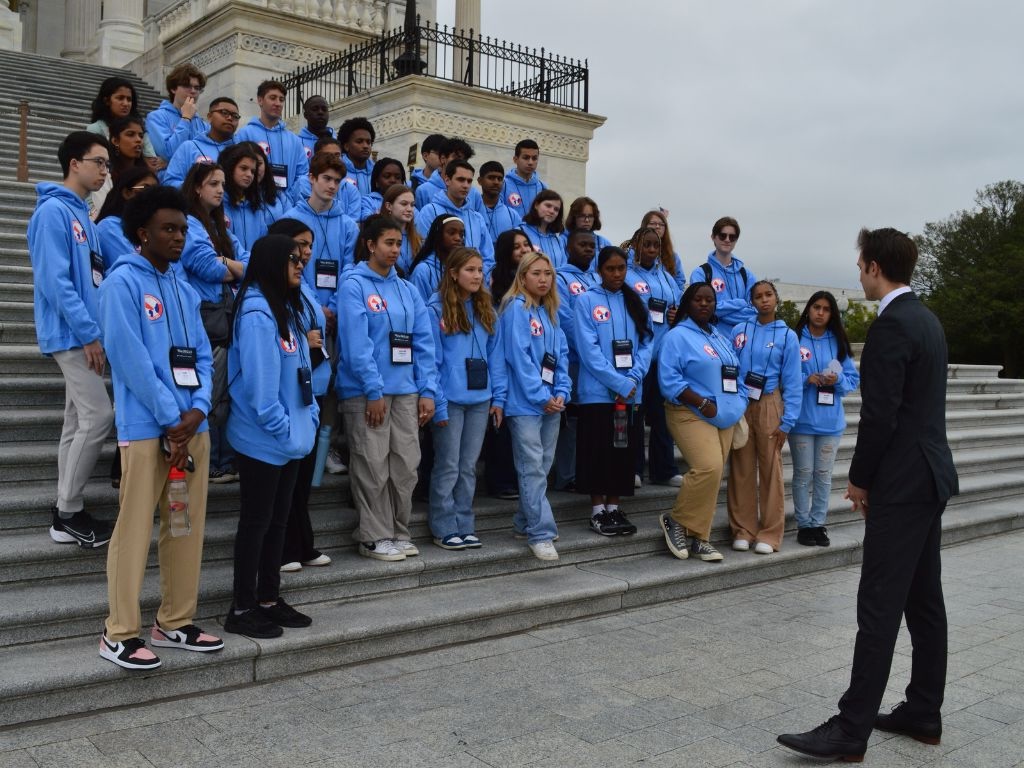
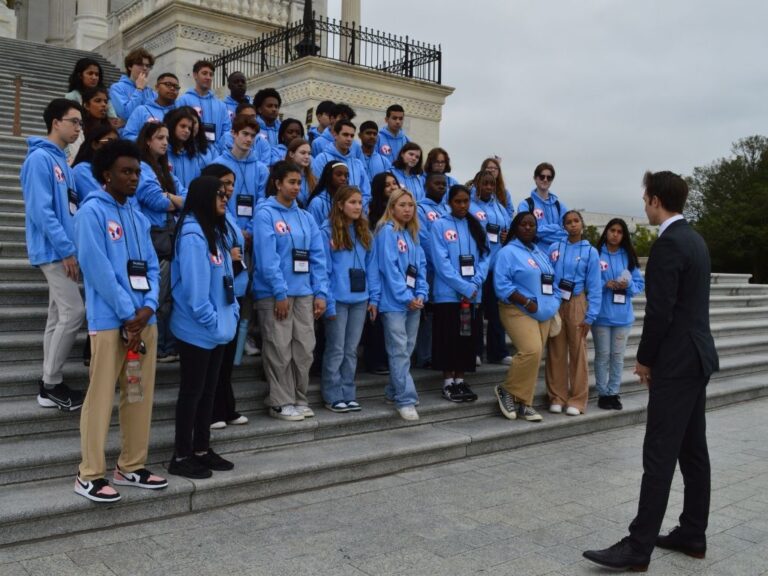
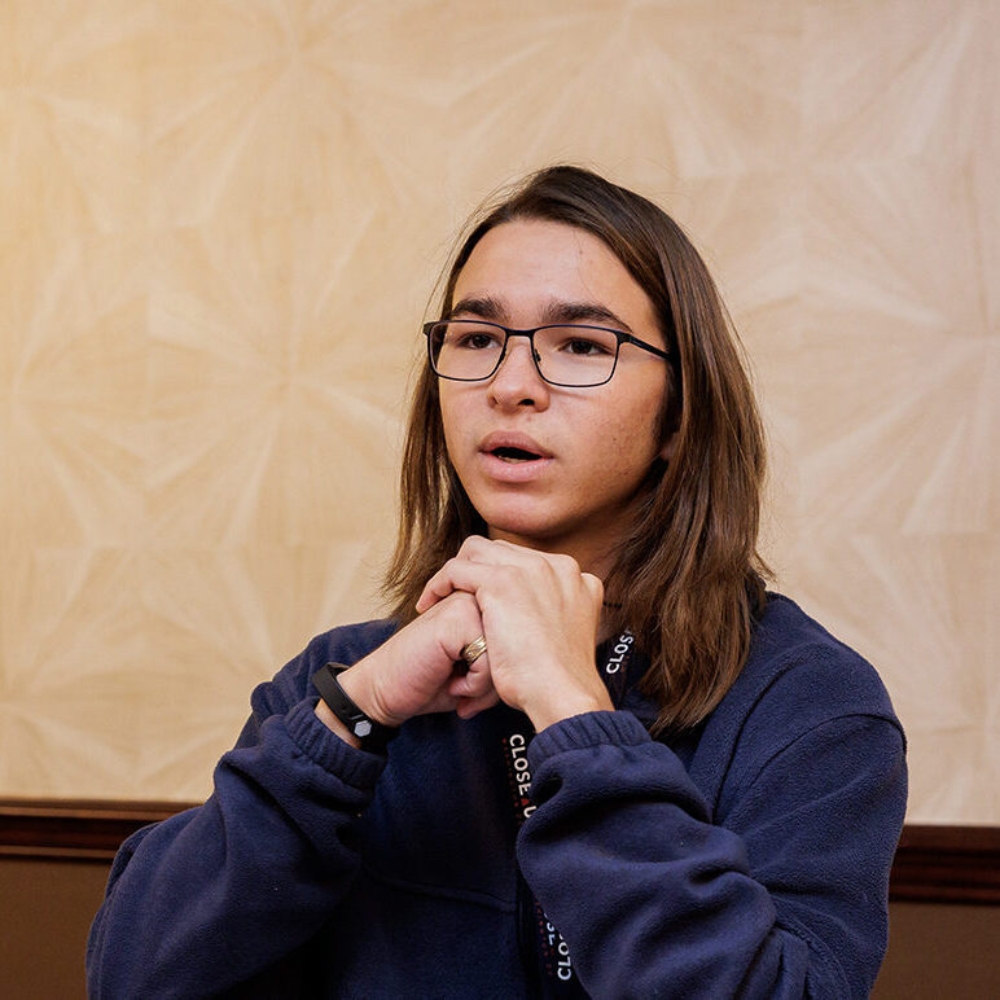
iCivics has selected 30 talented high school students from across the country to take part in the iCivics Equity in Civics Youth Fellowship (ECYF). The students were selected after a competitive process that saw nearly 650 applicants—more applicants than it has in the previous three years combined—from 43 states, Washington, D.C. and Puerto Rico.

The yearlong fellowship helps students develop leadership and communications skills in collaboration with peers and experts in the field of civic education. Throughout the year, students research and explore how civic education can become more equitable for students across the United States, utilizing their own lived experiences to become ambassadors and shed light on how civic education can include student voices from every background. 

“It’s important for the field of civic education to have a student perspective on what we as a field are trying to do to improve civics and create a high-quality education and experience for all students,“ said iCivics Youth Engagement Coordinator Michael Reyes. “Based on the number of applicants we had for this year’s fellowship, and what each of them wrote in their applications, there is a huge appetite for students to be involved. I’m excited for this year’s fellows to come together and learn from each other and hear the perspectives of students from different backgrounds who they may never have met otherwise. That’s a key part of this.”

The fellowship kicked off in late August, moving into full-gear with an in-person symposium in Washington D.C. in early fall. It then continues through the 2022–2023 school year as fellows engage virtually in group discussions with their peers, workshops and lectures with experts in the field, and projects designed to strengthen listening and collaborative skills. All of the fellows’ work will be centered around ensuring that civic education is available and relevant to all students in the United States. 

Over the past four years, students from across the country representing rural, urban and suburban districts have taken part in the fellowship. They have become an integral part of informing the broader civic education movement, sharing their experiences and thoughts at convenings for the Educating for American Democracy initiative, the Ronald Reagan Institute, and the Commonwealth Club. They have been featured in media such as The Wall Street JournalChicago Tribune, and WBUR in Boston. 

“We are incredibly excited to welcome this year’s group of ECYF fellows,” iCivics Executive Director Louise Dubè said. “They are a fantastically talented and diverse group of students, whose voices we value more than our own words can capture, and hope to help empower them as they take the monumental task of improving civic learning into their own hands. We look forward to learning from them.”

iCivics is proud to announce this year’s Equity in Civics Youth Fellows:

  • Camila Alfaro – Egg Harbor Township High School, New Jersey
  • Anaum Allimulla –Newark Charter School, Delaware
  • Denzel Augustin – Dr. Michael M. Krop Senior High School, Florida
  • Grace Clemente – Cambridge Rindge and Latin, Massachusetts
  • Samantha Corpuz-Giron – Salesian High School, California
  • David Culver – Ozark Jr High School, Arkansas
  • Amanda Donley –Fishers High School, Indiana
  • Raymond Fraser – St. Andrews Episcopal School, Mississippi
  • Anika Gamburg – Canyon Crest Academy, California
  • Sophia Gish – Heritage Hall High School, Oklahoma
  • Aine Griffin – Spark Academy of Advanced Technology, New Hampshire
  • Athena Holloway – Classical High School, Rhode Island
  • Milton Hernandez – Gramajo Aiken High School, Ohio
  • Mark Hu – Hamden High School, Connecticut
  • Jatayvia James – King College Prep, Illinois
  • Rose Kelly – Clinton High school, Iowa
  • Jeramie Kim – Crescent Valley High School, Oregon
  • Kate Larsen – Weber High School, Utah
  • Shivi Manchanda – Spring-Ford Senior High School, Pennsylvania
  • Angeles Mejia – College Academy @ BC, Florida
  • Jacob Montney – Alma High School, Michigan
  • William Olmstead – Washington Community High School, Illinois
  • Saturnino Pajkos – Tanque Verde High School, Arizona
  • Autumn Parsons – Walter Wellborn High School, Alabama
  • Mia Quirino – Lubbock High School, Texas
  • Luis Garcia Rivera – East High School, Missouri
  • Kriti Tatia – Johns Creek High School, Georgia
  • Ilelta Tezera – C.D Hylton High School, Virginia
  • Anjali Walsh – Lakeside School, Washington
  • Julia Wolfe – Bosque School, New Mexico

For more information about the iCivics Equity in Civics Youth Fellowship, and how to participate, visit civicsforus.org.

iCivics Launches Pilot Program to Localize Innovative Inquiry-based, Project-embedded 8th Grade U.S. History Curriculum

Jefferson County Public Schools (CO), Santa Fe Public Schools (NM), and Oklahoma City Public Schools (OK) working with nation’s leading civic education provider to pilot teacher-created iCivics Educating for American Democracy curriculum

This fall, a select group of 8th grade teachers from three very different school districts are working with iCivics, the country’s leader in civic education, to localize and implement a new U.S. History curriculum based on the Roadmap to Educating for American Democracy (EAD).

Over the past year, iCivics and experts in history and pedagogy worked together with nine teachers to build a general curriculum based on the EAD Roadmap, a framework designed to strengthen civics and history learning in K–12 classrooms throughout the country. The nonprofit then selected three districts – Jefferson County Public Schools (CO), Santa Fe Public Schools (NM), and Oklahoma City Public Schools (OK) – to take part in a pilot program to localize that curriculum to meet the needs and interests of each district’s students and communities.

Each district’s social studies department is working with iCivics and community partners to support six teachers as they work together to modify the curriculum for their district and students. These districts will provide models for other districts to emulate after this pilot year.

The iCivics EAD curriculum centers on depth of knowledge and understanding, taking a project-embedded approach to engage students in learning that brings a full American history to life.

“Across the country, districts, teachers, students and parents are looking for a way to teach civics and history in a way that inspires students to become informed and engaged members of our constitutional democracy,” iCivics Executive Director Louise Dubè said. “Based on our work with millions of students over the past decade, we believe that the iCivics Educating for American Democracy curriculum will do just that. We are excited that these three districts have joined us in the forefront of efforts to strengthen how we teach one of our most important subjects, and we look forward to seeing how this curriculum will be implemented in the classroom to ensure that the practice of democracy is learned by each new generation.”

Michael C. Martirone

In 2016, I was a first-year government and politics teacher looking to connect with teachers who shared my interest and passion for civic education. A friend suggested I join the iCivics Educators Network and since then, my life hasn’t been the same.

The iCivics Educator Network not only helped me develop best practices for teaching civics and government, but has allowed me to collaborate with educators from across the country. I’ve had the opportunity to engage in meaningful pedagogical conversations, share civics resources, and seek new perspectives about my content matter—all of which has made me a better teacher for my students.

The iCivics Educator Network has provided me and my students with a platform like the youth fellowship to share our passion—and elevate the need—for equitable civic education throughout the country.

I have had speaking opportunities to explain why this is the time to fund civic education and give my perspective from the classroom on other topics, as well. The iCivics Educator Network has given me the opportunity not only to teach civics, but to become a part of it.

About Michael

Teaching experience: 16 years—​high school​ social studies including AP Government & Politics and World History. Over five years teaching Social Studies Education at Stockton University.

School/Organization: Egg Harbor Township High School

Select Awards: 

  • 2015, NJ Teacher of the Year, Finalist.
  • 2016, Princeton University Distinguished Teacher, Finalist.
  • 2020, NJ History Teacher of the Year

Nonprofit Leader and Finance Expert Chuck Harris Joins iCivics Board of Directors

CAMBRIDGE, MA [July 21, 2022] – iCivics, the nation’s leader in civic education, today announced that finance and philanthropy expert Chuck Harris has joined its board of directors. 

After more than 20 years of leadership in the banking industry, Harris retired as co-head of Corporate Finance in the Americas at Goldman Sachs to take on a new and ambitious endeavor—amplifying the impact of philanthropy on some of our nation’s most pressing and complex challenges.

Harris refocused his business acumen to help innovate the nonprofit sector, most recently serving as Managing Director and Chief Operating Officer of Blue Meridian Partners, where he continues to serve as a special advisor. There, he planned and oversaw the execution and advancement of Blue Meridian’s strategy and operations, engaging and supporting new philanthropic partners within the organization’s pioneering model for finding and funding scalable solutions to address poverty and limited economic mobility. Harris spearheaded the effort to establish Blue Meridian as an independent 501(c)(3) and then led a $2 billion fundraising effort using insight and tactics from the best models in both the private and public sectors. 

Harris brings his social impact, nonprofit, and financial expertise to iCivics as it continues on an ambitious path toward sustaining and strengthening constitutional democracy in the United States by providing free, engaging, civic education to all K–12 students. 

“I believe civic education is a long-term investment in the strength of our democracy and I look forward to contributing to iCivics’ efforts to lead the growing movement for more and better civic learning on the cusp of affecting real and lasting change at this critical time for our nation,” Harris said. 

Known for its engaging games, iCivics has expanded its scope in recent years. It continues to be the leading provider of K–12 civic education content, with hundreds of free, nonpartisan digital curricular resources benefiting more than half of the nation’s students in grades 4–12 every year. iCivics also supports excellence in civics and American history education through high-quality professional learning and its continued leadership as part of the Educating for American Democracy Implementation Consortium. And, through its leadership of the CivXNow Coalition of more than 270 organizations, iCivics also works to advance civic education as a national priority. 

“I have gotten to know Chuck during this process and I am thrilled to work with someone of such deep courage and commitment to fundamental values, and to have his partnership to support our mission and these same values that animate our work,” iCivics Executive Director Louise Dubé said. “iCivics is a social impact organization and Chuck brings all of the skills we need to address this enormous social problem: how to train and engage all young people to support our constitutional democracy.”

iCivics Launches iCSL Professional Development in Miami

As we take this time to reflect on Independence Day, we want to acknowledge the role that those in public service and the military play in protecting so many of the freedoms we enjoy. The iCivics Civics, Service, and Leadership (iCSL) program aims to prepare students exploring careers in the military and public service with high-quality civic learning experiences that build independent thinking, media literacy, civility, civic knowledge and participation, and service.

An important component of iCSL is the professional development program. We work directly with teachers to understand the iCSL model and the resources available to them. Our teachers are also helping to shape the iCSL lens as teacher expertise will be incorporated into instructional materials.

We recently held our first professional development session with one of our pilot districts, Miami-Dade County Public Schools. Over the course of two days, we worked with a cohort of 12 Miami Master Teachers on the iCSL model and how to implement it in their classrooms. This model aims to work with teachers on developing a service and leadership lens while accessing iCivics resources and facilitating instruction that bridges the connections between civics, service, and leadership.

The Miami-Dade teachers walked away feeling confident in building these connections. They indicated the importance of iCSL in building character, inspiring civic engagement, and creating connections between content and real life.

Our constitutional democracy needs engaged participants with a strong foundation in civics and how the government works. This is especially true in the fields of military and public service. To this end, we are working with students and instructors in Junior Reserve Officers’ Training Corps (JROTC) and elementary, middle, and high school classrooms. 

As part of the iCSL Program, we will also be expanding the iCivics library of resources. This will include new online learning experiences such as five DBQuests that will engage students in a range of civic and historical topics, including Women in Service, the real consequences of fake news, U.S. territories, the judicial branch, and resistance to slavery. In addition to our curriculum, we are working with partners in the military community to create a volunteerism guide and civics fair guide, which will work to bring military and school communities together for engaged civic learning.

iCSL’s next steps are to provide professional development to Master Teachers at Prince William County Public Schools and kick off the pilot programs in Florida and Virginia. If you are interested in learning more about the program, reach out to us at [email protected]!

The Department of Defense (DoD) and the National Defense Education Program (NDEP) have awarded the grant that will fund iCivics’ Civics, Service and Leadership program, designed to teach K–12 and JROTC students the foundational knowledge and skills needed to be engaged civic participants in a diverse United States.

Our mom, Sandra Day O’Connor, knew something about politics that America forgot

by Jay O’Connor and Scott O’Connor

Some of the most important work our mom, Sandra Day O’Connor, ever did occurred away from the Supreme Court spotlight, in homes and classrooms.

It’s been more than 40 years since our mother made history.

Sandra Day O’Connor became the first female associate justice in the nearly 200-year history of the Supreme Court. The 1981 Senate vote to confirm was 99-0, which seems unfathomable in today’s politically polarized times.

Twelve years later, in 1993, Mom welcomed the second female associate justice in the history of the high court when the Senate confirmed Ruth Bader Ginsburg, also by an impressive margin, 96-3.

This was Bipartisanship with a capital “B.”

And now, President Biden has signed legislation to erect statues of these two women legal pioneers somewhere on the U.S. Capitol grounds after unanimous consent in the Senate and an overwhelmingly bipartisan vote in the House.

The overwhelming support for the statues of these two women with very different backgrounds speaks to something missing from much of today’s politics: respect for the other. Disagreeing without being disagreeable. Understanding that the other point of view is not intended to ruin the country.

Read the full article on USA Today.


Jay O’Connor is a software industry executive. Scott O’Connor is a commercial real estate developer.

Philanthropy Leader Larry Kramer Named iCivics Board Chair

CAMBRIDGE, MA [May 17, 2022] – iCivics, the nation’s leader in civic education, today announced Larry Kramer, President of the William and Flora Hewlett Foundation, as its new Board Chair. Kramer succeeds Wendy May-Dreyer, who took over from founder Sandra Day O’Connor and led the board for two three-year terms.

In recent years, iCivics has expanded its scope and embarked on an ambitious strategic plan to realize its vision of a thriving American democracy supported by informed and civically engaged young people. The leading provider of K-12 civic education content, iCivics creates free, nonpartisan online games and digital resources that are now used by more than half of middle and high school students across the country.

Kramer will lead iCivics as it continues its work to make civic education a national priority in order to sustain and strengthen our constitutional democracy. As part of these efforts, iCivics continues to lead efforts to implement a roadmap developed by more than 300 experts from across the viewpoint spectrum that states and school districts can use to achieve excellence in civics and history education. iCivics also leads a coalition of more than 200 organizations working to advance the civic mission of schools.

“It’s an honor to lead the board of iCivics and to work with its talented team and broad coalition of partners to strengthen civic education, which is essential for a robust and healthy democracy,” Kramer said. “iCivics is doing critical work to ensure that every young person has the knowledge and skills necessary to be an informed, engaged participant in civic life.”

As President of the William and Flora Hewlett Foundation since 2012, Kramer has guided the foundation in maintaining its commitment to enduring issues such as education while responding to pressing and timely problems, such as political polarization and cybersecurity. Kramer previously served as the Richard E. Lang Professor of Law and Dean of Stanford Law School. Earlier in his career, he served as law clerk to U.S. Supreme Court Justice William J. Brennan Jr..

Kramer succeeds May-Dreyer, under whose leadership iCivics grew from reaching 48,000 to 145,000 educators, and serving up to 9 million students. During May-Dreyer’s tenure as Board Chair, Educating for American Democracy and the CivXNow Coalition were both initiated, and contributions to iCivics more than quadrupled. May-Dreyer also founded and chairs the Texas Civic Education Coalition, a cross-ideological coalition of more than 40 organizations with a mission to improve civic education in Texas.

“We’re incredibly excited that Larry Kramer has agreed to become iCivics’ next Board Chair and believe that he is the perfect fit for the organization as it reaches a new growth point,” iCivics Executive Director Louise Dubè said. “Larry’s experience in the nonprofit sector, and his knowledge of the education and political fields – along with his legal expertise – will help steward iCivics into its next phase.”