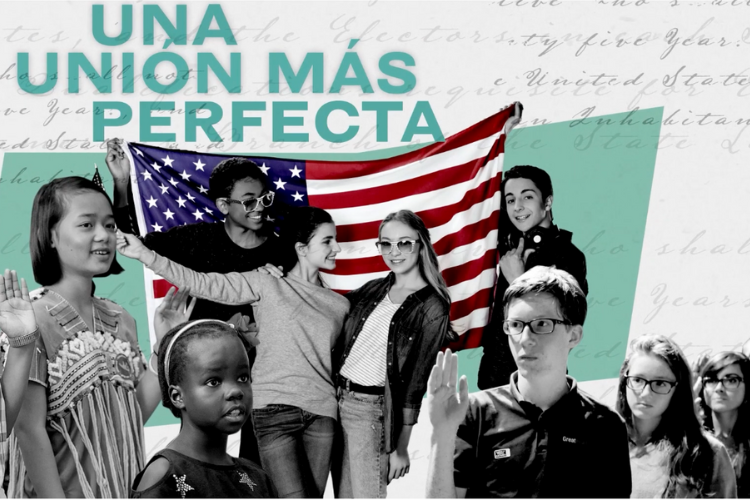
As we celebrate National Bilingual/Multilingual Learner Advocacy Month this April, it’s the perfect time to explore effective strategies for supporting these students, and our Constitution EXPLAINED, or Todo sobre la constitución (in Spanish), video series offers a powerful example of how to do just that.
Videos are a great resource for teaching English and multilingual learners (ELs/MLs) because they provide:
Multimodal Input: Videos don’t just present text; they combine audio and visual cues. This is crucial for ELs/MLs, who benefit from seeing concepts illustrated. For example, when explaining the “separation of powers,” visuals show the three branches of government in action. This helps ELs/MLs connect complex legal terms with concrete images, enhancing comprehension and retention. This is especially helpful with the complex vocabulary of social studies. Visuals can help explain the meaning of words like “legislative,” “ratification,” and “compromise.”
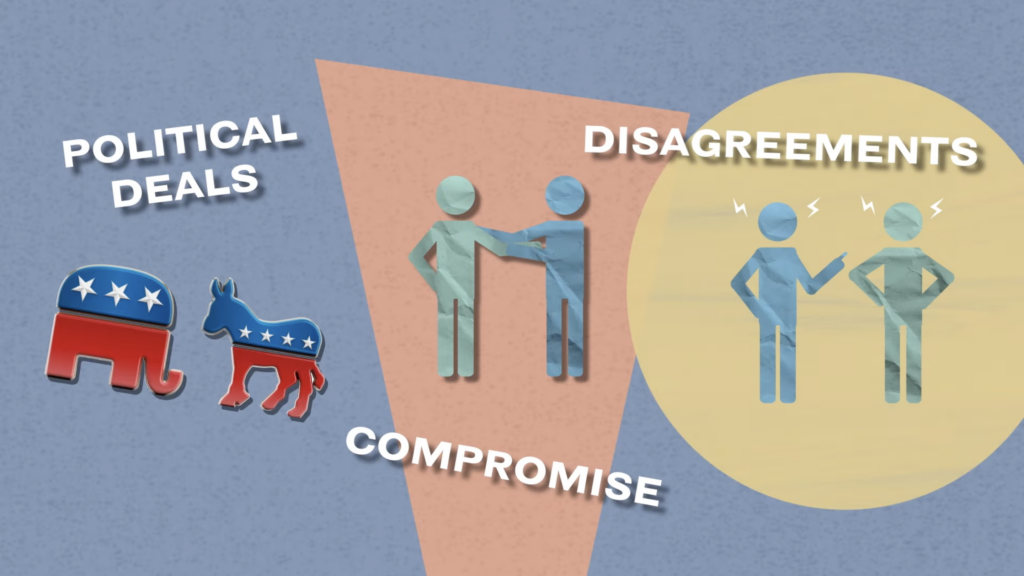
The People's Branch episode uses visuals to explain the meaning of "political deals," "compromise," and "disagreements."
The Spanish version of the episode, El poder del pueblo, uses the same visuals to explain the meaning of the same terms in Spanish.
Authentic Language and Context: These videos use a conversational approach and were designed with students in mind. ELs/MLs see and hear about constitutional concepts in everyday language in a way that builds upon their background knowledge, exposing them to new concepts along with familiar language, thus providing valuable and relatable context.
Engaging and Motivating Learning: The short, digestible format of the Constitution EXPLAINED videos keeps MLs engaged. The clear, concise explanations, coupled with visuals, make learning about the Constitution less intimidating and more enjoyable. The call to action questions at the end of each video encourage the students to want to learn more.
Listening Comprehension and Language Support:
Videos provide valuable listening practice, helping MLs develop their ability to understand spoken English within an academic context.
Crucially, the availability of both English and Spanish versions, along with bilingual Teacher Guides, provides essential support. Spanish-speaking MLs can listen in their native language and then reinforce their understanding in English.
Subtitles/closed captioning or transcripts can be used to support comprehension, allowing learners to connect spoken and written language.
Flexibility and Accessibility: The short video format (2-3 minutes in length) allows for flexible learning. Teachers can assign videos as needed, and MLs can review them at their own pace. This is particularly beneficial for students who need extra time to process information. They can watch the videos multiple times.
Extending Learning with Teacher Guides: Our bilingual (English/Spanish) guides are designed for maximum versatility, supporting diverse classroom needs and maximizing and extending learning. The English component benefits all multilingual learners, regardless of their native language, while the Spanish component specifically caters to dual-language programs and Spanish-speaking MLs, ensuring targeted support. The guides include:
Content-specific vocabulary: Taken directly from the video scripts, these terms are presented in context, aiding comprehension.
Guiding questions: These questions activate prior knowledge and encourage critical thinking, both before and after viewing.
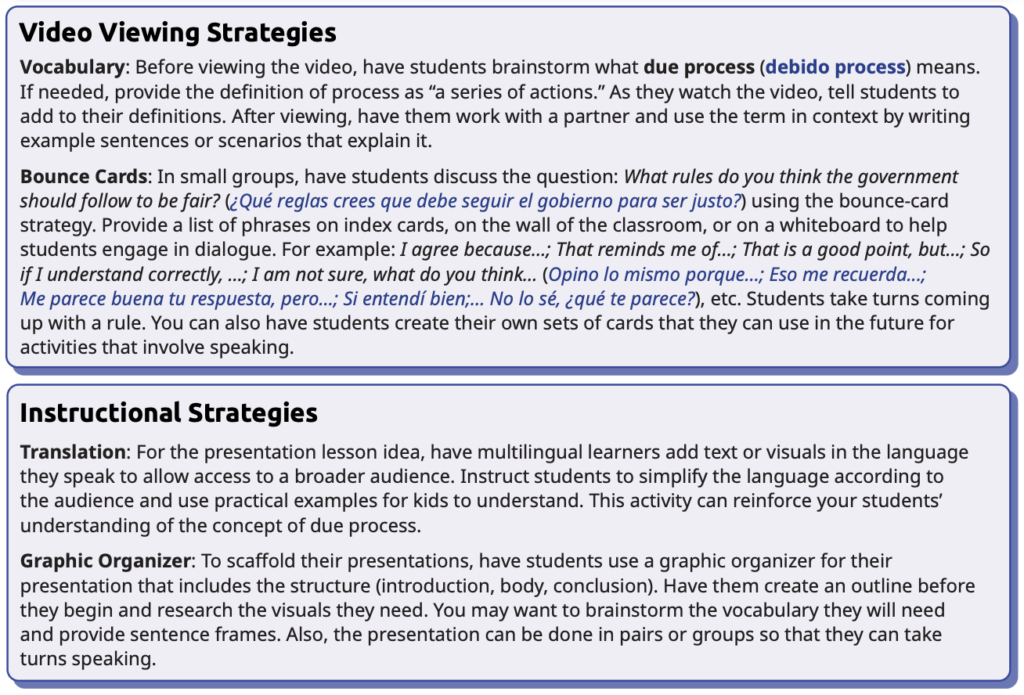
Video Viewing Strategies and Instruction Strategies: These provide teachers with tools to support MLs, such as: “Turn and Talk” activities for collaborative learning; Identifying cognates in Spanish and English to build connections; Sentence frames to guide writing and discussion, and more.
In conclusion, the Constitution EXPLAINED video series harnesses the power of video to make learning about the Constitution accessible and engaging for all students, particularly English and multilingual learners. The combination of multimodal input, language support, and flexible resources creates a rich learning experience that promotes both language acquisition and civic understanding.
Written by Kristen Chapron
Kristen Chapron is Senior Editor of Digital Learning and ELL at iCivics. She worked on the Todo sobre la constitución series and looks forward to creating even more materials for English and multilingual learners.
Man, it’s not easy to be a civics teacher right now. No matter where you teach, things may feel a bit tricky. For some of you, it may feel like a minefield. You may think, “I’m not sure how to do my job.”
We recognize that. We get it.
Here’s what I want to say: Yes, you do. You know how to do your job. Moreover, the parents of America want you to do your job. The public overwhelmingly agrees that our country needs K-12 civic education. It’s more than popular. It’s more than bipartisan. Americans from all political stripes think civic education will have a positive impact on strengthening our national common identity. I have receipts. See here and here.
There are lots of ways to be a patriot. For us civics teachers of America, it is by doing our jobs—teaching the knowledge, skills, and dispositions our students deserve and our constitutional democracy requires.
With full appreciation for just how busy you are, I’d like to suggest that this moment calls for even more from us. It calls for us to take our mission to our students’ parents.
When we’re scared or uncertain, it’s only natural to seek shelter and weather the storm. As someone who is extraordinarily afraid of lightning (I grew up in South Florida—the trauma is real), I don’t take this metaphor lightly. But now is not the time to hunker down and hope the tempest soon retreats. We need to put on our <insert your preferred regional term for rainboots> and take our case to parents and even the broader community.
Here are some ideas on how to structure your outreach:
Start with the Personal. Share what drew you to the teaching of history and civics. For me, it was a passion for our founding ideals and an enthusiasm for the complexity of our system of government (I’m looking at you, federalism and the Electoral College). I’m always telling folks, “Listen, social studies teachers don’t go into this line of work because we hate America. On the contrary, we love our country, our history, our founding documents, and our system of government, and nothing gives us greater joy than sharing this passion with our students.”
Move to the Philosophical: No, I’m not talking Socrates or Kant, but if that’s your jam, you do you. I’m talking about your teaching philosophy. Briefly, here’s mine, which you are welcome to borrow from: I’m not here to tell students what to think. I’m here to help them learn how to think. My job is to bring enthusiasm and knowledge and just enough self-deprecating nerdiness to protect myself from students’ relentless if not clever (and sometimes hilarious) jabs at my civics teacher identity. When students leave my classroom, they will know more, care more, and feel more confident in their ability to think critically about and contribute to their communities. As for this talk of indoctrination, I don’t mean to be trite, but we can hardly get our students to write their names on their assignments. It’s quite a stretch to think we can get them to fundamentally shift their worldview.
Highlight the Practical: High-quality civic education has a lot of known benefits, including but not limited to literacy gains, college and career readiness, enhancement of durable skills, and thriving communities. Also…ALSO, it’s a requisite for healthy democratic governance. As Thomas Jefferson wrote in an 1818 letter to William Jarvis, “I know no safe depository of the ultimate powers of the society but the people themselves; and if we think them not enlightened enough to exercise their control with a wholesome discretion, the remedy is not to take it from them, but to inform their discretion by education.” Research shows that education does precisely what Jefferson suggests. Students who receive a high-quality civic education are more likely to vote and discuss current issues and events at home, be confident in speaking publicly and communicating with elected officials, and volunteer and work on community issues.
Celebrate the Promise: Thomas Jefferson wasn’t the only President who expressed strong support for civic education as a sustaining pillar of liberty in a constitutional democracy. James Madison posited that civic education and engagement were bulwarks against “crafty and dangerous encroachments on the public liberty.” And George Washington, in his Eighth Annual Address to Congress in 1796, said, “a primary object of such a National Institution should be, the education of our Youth in the science of Government. In a Republic, what species of knowledge can be equally important? And what duty, more pressing on its Legislature, than to patronize a plan for communicating it to those, who are to be the future guardians of the liberties of the Country?” As a parent myself, I can think of no greater honor than for my children to be grow up to be guardians of liberty in our country.
Lastly, INVITE.THEM.IN. Forgive the all-caps, but I feel strongly about this one. It doesn’t have to be a literal invitation to visit your classroom, although it can be. Rather, it could be as simple as inviting them into your scope and sequence or a particular unit or lesson plan. You’re teaching your state-mandated standards. You have nothing to hide! So make that visible. Visibility promotes transparency, and transparency promotes trust.
Just know that I trust you. I always have.
And if you need a little help to get started on that parental outreach, I’ve got you covered. Here’s a letter template for parents/guardians you can customize for your voice and local context.
We’re also happy to provide a separate letter template for parents/guardians that introduces iCivics and our approach and academic values that you customize and use.
Written by Emma Humphries
Dr. Emma Humphries, iCivics’ Chief Education Officer, brings extensive classroom experience teaching government, history, and economics, where she discovered the impact of engaging learning tools. With a deep commitment to empowering educators, she continues to champion innovative civic education resources and strategies.
With information at our fingertips like never before, the sharing of misinformation happens faster than you think. In fact, by the time you see that post or check the credibility of the information, it has been shared hundreds of times, has thousands of likes, and everyone already has an opinion.
As educators, we know to question the credibility of what we see and share online; we’ve learned and honed those skills and put them into practice constantly. But most students don’t have those skills yet, or they haven’t practiced those skills enough for them to become second nature. And because our students have grown up in the digital era, the speed at which they receive and share information is often more important than the credibility of the information itself.
The problem isn’t just misinformation or disinformation. In reality, we are missing something very important: students’ curiosity and desire to know.
Educators have a unique opportunity to foster that curiosity and critical thinking in ways that help students develop a positive and ethical relationship with media and information. Imagine a future where the desire to have credible information sparks a change in the information that is shared. Imagine a future where misinformation isn’t leading the narrative, dividing society, and preventing people from receiving the help that they need. Now don’t just imagine it; join us in making that future a possibility.
How, might you ask? It starts with teaching students media literacy and information literacy. This includes teaching the critical thinking skills students need to:
verify the information they encounter,
assess the credibility of sources,
identify biases in the media,
understand how they influence what is shared and how it is shared, and
evaluate the use of advertising techniques to grab their attention.
This is an opportunity for educators to foster a culture where students feel comfortable expressing their thoughts and are respectful of others’ opinions. By developing students’ media and digital literacy skills, they learn what is happening in the world around them. And being able to acknowledge, trust, and share that information is how they feel able to participate. The classroom gives students a safe place that encourages their exploration and provides them with opportunities to engage with information, digital tools, and online resources.
We recognized the need for resources that foster learning opportunities and environments. We partnered with the digital literacy experts at Digital Inquiry Group to create Civic Digital Literacy, a collection of nonpartisan, evidence-based, classroom-ready resources that prepares students to skillfully verify the various pieces of information they encounter online. From understanding the value of conserving their attention to investigating the purpose of interest groups, these lessons and videos encourage students to apply digital literacy skills to real-world situations. Use these lesson plans and videos to give students regular opportunities to practice these important critical thinking skills. We even have professional development videos to help teachers understand and teach the key pillars of digital literacy.
My personal favorites are the resources focused on artificial intelligence. Before teaching the topic, familiarize yourself with some of the impacts that AI can have on civic life by watching our professional development video, What Students Need to Know About AI, featuring Sam Wineburg, co-founder of the Digital Inquiry Group.
From there, introduce students to the topic of AI and elections with the video, How Artificial Intelligence Could Influence Elections. It explores how AI could influence elections and comes with a teacher’s guide that includes discussion questions, lots of ideas, links to other lessons, and resources for teachers. It also includes worksheets for guided and independent practice that encourage students to think deeply about the benefits and concerns that the use of AI could pose.
With the foundation set, venture into the lesson, Artificially Speaking: AI Chatbot Claims. Here, students practice lateral reading to investigate claims produced by AI chatbots. We all know that chatbots are pretty impressive, but are they really as smart as they seem? Have students investigate how and where they use chatbots.
Or, use each resource independently or with other amazing iCivics lessons. Each resource is designed to support and complement your needs. Society will give us inquisitive students curious about the world. By equipping them with digital literacy skills, they’re empowered to become informed and engaged citizens, ready to navigate the complex landscape of the digital age and contribute to a thriving democracy.
Written by Emeka Barclay
Emeka Barclay is a Curriculum Associate at iCivics where she helps create and cultivate curricular materials for educators and students. Prior to joining the iCivics team, Emeka taught secondary language arts and social sciences and worked as a technology and learning coach in Alabama. She then relocated to Florida where she was a dean of students. When not helping save the world, Emeka enjoys exploring the sites with her family and friends, searching for the perfect sip of coffee and nibble of cheese, and supporting public libraries.
As a middle school civics teacher, not only do I need to teach the importance of voting like my high school colleagues, but I have to do it four or more years before the students will even be eligible to register. This makes holding their interest more difficult. I have also found that while students understand the importance of making informed decisions, they do not know how to find information about the candidates in order to make those decisions. The solution? I have students take part in the actual research, comparison, and election processes through an in-depth mock election project that kicks off with the iCivics game, Cast Your Vote.
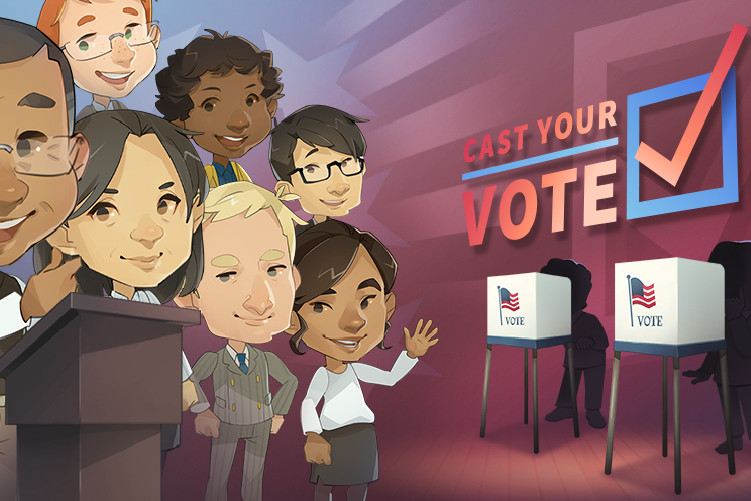
Cast Your Vote is one of the more challenging games offered as part of the We the People program because of the amount of analysis required of students regarding candidates, including their stances on issues and voting history. Students must also identify red flags related to misinformation or bias.
In the game, the player has four simulated weeks to attend town halls, research candidates through digital news sources and campaign literature, and decide their own personal stance on issues to find the candidate who best matches. At the end of the game, students not only get a score based on voting for a candidate who best matches their decided-upon stance on issues but also on the amount of facts and red flags identified.
Once we’ve played the game in class, students are ready to try out the same skills with the real upcoming elections. I assign one race to each period, and each student gets a graphic organizer that documents the candidates’ stances or plans for at least five issues affecting our government.
After a few days of at-home research and a quick grade based on completed research, students are then put in pairs or small groups to choose one of the issues and create an informational poster contrasting the candidates on that issue. Our hallway quickly fills with research-based, unbiased comparisons using the candidates’ own stances and comments. The staff and visiting adults in the building love to comment about how helpful this research is for their own voting preparation.
Finally, it’s time for our mock election. After students have had a few days to look over other classmates’ work and see a sample ballot, I publish their mock election ballot taken from screenshots of the real sample ballots from my local election office. Students are warned to follow the directions of the ballot just like at a real polling location and, during a period, are given privacy in booths to take their ballot and vote. I have even begun buying stickers for the students who choose to participate, which is almost 100%.
During the project, the students comment that the amount of work often surprises them, and they now not only understand the importance of voting more but feel like they are better prepared than many of the adults in their households with whom they talk about the project a lot.
Written by Erin Merrill
Erin Merrill is an award-winning educator in her 19th year of teaching middle school social studies and her 10th year as Department Chair and Middle School lead at Pennington Traditional School in Prince William County, VA. She is passionate about making her students aware and engaged in the current events around them, and thankfully, Civics provides the perfect platform for this.
Through the iCivics Educator Network, the perspectives of teachers across the country contribute to the public conversation about civic education in the United States. Each contributor represents their own opinion. We welcome this diversity of perspectives.
On July 17, 2024, we were filled with excitement and anticipation to bring together 60 K–12 educators for our first iCivics Educator Convening held in Sacramento, California. This event was hosted in partnership with California’s Power of Democracy Civic Learning Initiative, sponsored by Chief Justice Patricia Guerrero to bring equity to civic learning across the state of California by connecting courts with educators.
The majority of the participants consisted of 44 educators representing 19 counties from across California, who were thrilled to connect with the educators who traveled from 14 other states: Alabama, Arizona, Florida, Idaho, Illinois, Louisiana, Nebraska, New York, Oklahoma, Pennsylvania, Rhode Island, Texas, Utah, and Virginia.
Teachers came to the convening with a vast range of personal goals, from learning how to “utilize strong resources in helping students understand our government and their role within it,” to “meeting with enthusiastic civics teachers, get[ting] inspired and energized.”
The agenda for the day was packed with learning opportunities, including a student panel discussion, two sets of breakout sessions exploring a variety of topics and resources, and a conversation about building relationships with the judicial branch. The two Californian students from the iCivics youth fellowship kicked off the day with a conversation around the importance of engaging youth in politics and sparking conversations that show how civics can be relevant in students’ daily lives and future career paths.
New and current iCivics educators got great insight into iCivics curriculum resources and how to implement them in the classroom. Sessions helped participants understand how to amplify their voice to advocate for civic education, teach the 2024 election using the iCivics Election Headquarters, engage students in civics projects using our step-by-step approach, bring U.S. Supreme Court cases from iCivics’ Landmark Library and games like Brief the Chief into civics classrooms, and integrate inquiry into classroom instruction.
After the interactive sessions, educators reconvened for a plenary session featuring Justice Judith McConnell, who presides over the state’s Fourth District Court of Appeal, and Santa Clara County Superior Court Judge Julia Alloggiamento. Together they presented why and how courts support educators in classrooms starting in elementary school. Teachers were invited to connect with the Power of Democracy’s Judges in the Classroom program, modeled after similar efforts in the state of Washington. Many put in their requests on the spot for visits this September, Constitution Month.
We worked hard to make sure that our iCivics Educator Convening felt unique. We were intentional about designing an experience for our educators that not only focused on the knowledge, skills, and dispositions of civic learning, but also modeled best practices for the classroom. Educators were given space to connect with peers, collaborate, and process the information they were exploring in sessions to help the learning stick a little bit stronger. And we were delighted this was reflected in participating educators’ feedback!
“I was SO impressed by the convening. I am used to being disappointed by professional developments... This experience was a full 180 for me. The civic project curriculum was DIVINE. ... [It] has SO much more than I have learned yet, and is perfectly and expertly laid out for students. I was also deeply heartened to be in a room full of teachers like me—that kind of solidarity is so precious and rare in K–12 education. ... You all inspired me to keep pushing for civics education—which presently does not exist at all for 6th graders in my district. I am going to be told that there ‘is no time’ to teach the election, and I feel much stronger and prepared to defend my stance now.”
“I felt very seen as an educator. I enjoyed getting to know people from around the country and making new friends. This has also sparked an excitement in me when I've been feeling burnt out and a bit hopeless… so thank you for re-lighting my spark!!”
“The tools and resources provided through today's convening illustrate how important civics education at the elementary school level needs to be implemented statewide. This education directly impacts the trust and understanding of our civic responsibilities and our democratic process; it shouldn't be a mystery or a ‘figure it out’ mindset.”
Our first iCivics Educator Convening in California concluded with a sense of optimism and determination among educators to elevate civic education as a priority. We hope to make this an annual event to bring together educators to re-energize, build community, and leave with a deeper understanding of the amazing resources available for their classrooms.
Our great thanks to the Koret and Stuart Foundations for making this event possible as part of their commitment to supporting iCivics’ robust professional learning for CA civics educators.
Written by Natacha Scott
As the Director of Educator Engagement at iCivics, Natacha focuses on growing the engagement of educators in-person and virtually through professional development sessions, curriculum, and other experiences. Prior to joining iCivics, Natacha was an educator at Boston Public Schools for 14 years, serving in various roles from elementary classroom teacher to the district K-12 Director for History and Social Studies. She is passionate about place-based learning and engaging educators in meaningful learning experiences that can immediately translate into the classroom.
Kickstart the school year with iCivics! As you prepare to welcome students back into the classroom, we have your back with engaging civics and election-related resources for all ages.
Join us for one of three free webinars that explore engaging election resources, civic lessons, and other exciting updates to help you inspire the next generation. Additionally, participants will get a tour of the new iCivics Education website, designed to provide a more user-friendly experience and launch just days before the webinar.
Natacha Scott, iCivics Director of Educator Engagement, will share previews of yet-to-be-released resources for your classroom and an overview of our elections-related resources and support.
For High School and Middle School Educators
Back-to-School (in an Election Year)
August 21, 2024, from 7–8 p.m. ET
For Elementary Educators
Back to School Elementary Webinar
August 22, 2024, from 7–8 p.m. ET
For Administrators
Bringing iCivics to Your District in an Election Year
August 22, 2024, from 1–2 p.m. ET
Whether you are new to iCivics or just need a refresher on our resources, this webinar is a great place to start planning your school year.
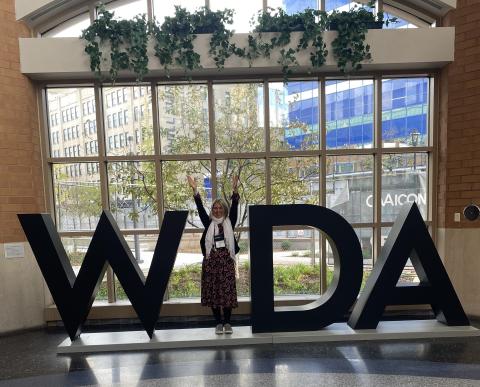
“My aunt always said that knowing more than one language was a superpower.” Shareen Marisol Meraji, keynote speaker kicked off the WIDA 2023 Conference by talking about the importance of “Giving children a strong foundation in their heritage language so that children could be proud of where they come from.”
Being multilingual is a superpower indeed. Knowing another language boosts your memory, gives you a greater ability to multitask, and improves social skills since you draw experiences from different cultures and look at issues from multiple perspectives. One of the important aspects of teaching multilingual learners is to focus on the assets they bring into the classroom.
I attended this year’s WIDA conference because, as part of our mission, iCivics aims to empower and equip ELs and MLs by making our games and resources accessible to all. We are continuously working to improve our ELL materials. In the field of civics and social studies, it’s particularly important to make sure that students see themselves reflected in the stories we tell and we want to make sure that the content has the support and scaffolding that ELs and MLs need in order to be successful. I was able to connect with several leaders in the field and get their thoughts.
One of these leaders was Dr. Luciana de Oliviera, Associate Dean for Academic Affairs and Graduate Studies and Professor of the Department of Teaching and Learning at Virginia Commonwealth University. She said, “The WIDA 2023 conference was my first and I absolutely loved everything!! The fact that this conference is for K-12 teachers by teachers was prevalent throughout the program. What I loved the most was to see the value and interest in a functional approach to language development. For those of us doing research and practicing this for over 20 years, it is incredible to notice the changes in the field impacted by the inclusion of this approach in WIDA 2020.!”
Many of the sessions focused on the WIDA English Language Development (ELD) Standards Framework which is centered on equity and fosters the assets, contributions, and potential of multilingual learners. It focuses on a functional approach to language development and one of the big ideas is the integration of content and language. WIDA’s Key Language Uses—narrate, argue, inform, and explain—are core to communicating ideas and content in social studies and civics.
Another leader (former WIDA researcher and one of the authors of the WIDA ELD Standards), I spoke to was Dr. Ruslana Westerlund, an educational consultant at the Cooperative Educational Service Agency 2 serving Wisconsin school districts and Associate Adjunct Faculty in the Graduate School of Education at Bethel University. She was one of the authors of the WIDA ELD Standards who worked hard to represent disciplinary genres such as explanations and arguments through the Key Language Uses. To illustrate the synergy between C3 and WIDA, she wrote Scaffolding ML Access to Social Studies Inquiry Through the WIDA ELD Standards. When asked about this year’s conference, she said, “This year’s WIDA Conference exemplified the strength of what happens when we do transdisciplinary work. We are seeing math (such as Dr. Karen Terrel) and science (like Dr. David Crowther) and social studies (like iCivics)… CONTENT people come to language conferences! Now we, language people have work to do and go to science and math and social studies conferences. We have so much to learn from each other. We are stronger together. Our students will only benefit when adults start working together, walk across the hallway and humbly ask for help.”
Our students are learning content and language at the same time. We are integrating content and language instruction in our materials in many different ways through instructional strategies, language objectives, scaffolding, vocabulary integration, visuals, video viewing, and more. This is the very approach iCivics is using to develop its core curriculum for U.S. History, which will be published in summer of 2024. ELs/MLs can soar higher when their skills and superpowers are supported by high-quality instructional materials and celebrated.
Kristen Chapron is Senior Editor of Digital Learning and ELL at iCivics. She has worked on all of the EL and bilingual resources and looks forward to creating even more materials for English and multilingual learners.
April is the Month of the Military Child. To honor our service members and their children, the iCivics: Civics, Service, and Leadership Program hosted an educator immersion day on MacDill Air Force Base in Tampa, FL in partnership with Blue Star Families and Hillsborough County Public Schools (HCPS).
MacDill Air Force Base is home to over 6,000 people, with an additional 20,000 coming to work on the base each day. The base is a world unto its own, but most military children attend school in the community through HCPS. Next week, MacDill will deploy about 200 service members, one of the largest deployments in recent years. This means a number of students will show up for school coping with that reality. The immersion day was an opportunity for iCSL educators to learn about the unique strengths and challenges our military-connected students and families face, so they might better support them in school.
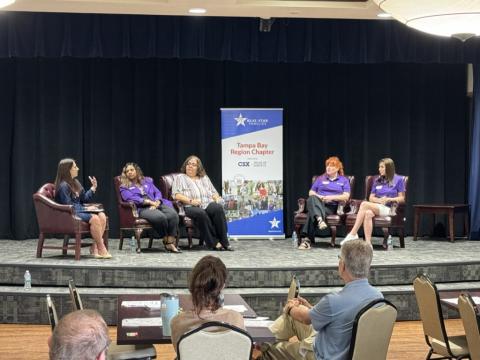
Teachers started the day with a panel discussion between military parents and school district staff. One parent shared that by the time her son was ready to graduate high school, they had moved 9 times. These transitions are one of the biggest challenges military-connected students face. Moving schools means integrating into a new school culture. It means that different state standards and requirements may delay academic progress. It means, as one parent shared, that key pieces to a child’s education–like learning the branches of government–can fall through the cracks. A parent’s deployment is equally challenging. Another panelist shared, “Deployment affects the whole family.” “Our children are deploying as well.”
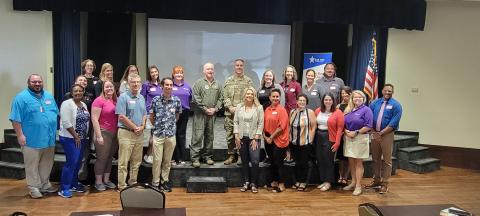
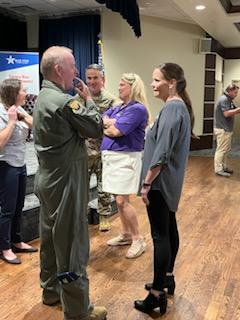
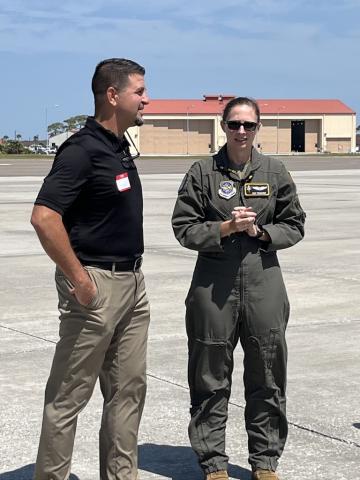
After the panel, our educators met Colonel Bingham, the base commander. They met Champa Boom, the base mascot. They toured the base. They talked with a young pilot and her crew. They walked the flight line and climbed into the cockpit of a KC-137. They learned that our military community, and the base itself, is a place full of opportunities for service members, civilians, and students. They gathered new resources and ideas for how to support military students when they return back to their school communities. We all learned that our military families, including the little ones, know and embody civic values and civic responsibility.
The goal of the day was to foster awareness across our military and school communities. Everyone left empowered and excited to keep building connections and opportunities on behalf of our students and civics education. It was a mission well accomplished!
Written by Frank Anderson
Frank Anderson is the director of special projects at iCivics and the program director for the Civics, Service, and Leadership program. Frank works with educators from across the country to connect them to civics education resources and to help students build a service mindset and leadership skills within the classroom. Before iCivics, Frank taught in alternative education in Baltimore and managed education programming for students involved with the juvenile justice system.
The Civics, Service, and Leadership (iCSL) program aims to prepare students exploring careers in military and public service with high-quality civic learning experiences that build critical thinking, media literacy, civility, civic knowledge and participation, and service. iCSL is sponsored by DoDSTEM, the National Defense Education Program.
“I love iCivics! My kids love to play Win the White House!”
“Awesome! Have you ever used any of the other resources from iCivics? They go great with the games!”
“No, tell me more!”
I had this conversation multiple times with educators I met last fall at the annual National Council for the Social Studies Conference while I was helping out in the Exhibit Hall at the iCivics booth. I teach at Maranacook Community High School in Readfield, Maine, a rural community next to Maranacook Lake just outside the Maine State Capitol. I use iCivics in a variety of ways in AP U.S. History and non-level U.S. History. This Spring, I have a student intern working with me from the University of Maine at Farmington named Tom Tubman. In an effort to promote iCivics beyond the games, I thought it would be interesting to document our use of an iCivics DBQuest in our classes titled “Woman Suffrage and World War I.”
As I said earlier, it seems many educators are familiar with the amazing learning games on the iCivics website, with Win the White House often being the one everyone knows. What seems to be lesser known are the lesson plans and activities iCivics also offers. These resources include connections to state standards and how they can fit into scope and sequence. They also show how they connect to the games iCivics hosts on their site.
I selected this DBQuest because it fits well within the curriculum for content in US History and includes other important aspects such as multiple viewpoints, primary source analysis, argument analysis, sourcing, and inquiry. Most of my students currently in my U.S. history classes have played the iCivics game Cast Your Vote, and so this DBQuest connects well to this game in getting students reflecting on a time when some of them would not have been able to cast their ballots.
My student teacher, Tom, and I took a team-teaching approach to this, each leading a different part of the lesson. Tom led the discussion using the timeline and I facilitated the document analysis. We closed the lesson with an extension video that added context and gave them a sense of how suffrage came to pass.
Our first class was at the end of the day on a Friday! We started with a question to engage students and get their brains working, “What is suffrage?” A brief discussion revealed that most students had heard of this term in conjunction with voting and had a sense of its meaning. As this is a U.S. History course, students had learned previously about the early days of the women’s rights movement, including the work of Elizabeth Cady Stanton and others at Seneca Falls in drafting the “Declaration of Sentiments” and Susan B. Anthony. This historical context is important in getting the most out of this DBQuest to help students draw conclusions about the timeline and the accompanying Primary Source documents. Upon reflection, Tom concluded that historical context was important to this activity. Information about the early days of the push for women’s rights and women’s suffrage going back to Seneca Falls would greatly help students understand that women were fighting for a voice long before the First World War. Ensuring students have this context is important in having a deeper understanding of the agency of women in bringing about Suffrage.
Students received the student handout on paper and went to work highlighting in different colors, events that helped women’s suffrage make progress, and events that worked against Women’s Suffrage. The ensuing discussion elicited several insights from students, such as events may in fact be well-intended and essentially good even if, from the perspective of the Women’s Suffrage movement, the event worked against their progress.
Students worked individually to complete the “Math Moment” and “Reflection,” placing the events from the First World War, and we then had a class discussion around their thoughts about why it took so long for women’s suffrage to pass. This activity revealed many interesting insights including the quotes below.
“The major shifts of WWI, including women proving themselves capable of fully taking charge of duties left behind by men… “
“… because misogyny had been a part of western culture for a long time…”
“… (post-Civil War/Reconstruction) Civil Rights proved more of a pressing issue and women were seemingly unimportant to the government…”
“Because the society of most nations and cultures of the time were built around strict gender roles…”
“The fight for Black suffrage was also occurring at the time and that may have caused more focus on that rather than woman’s suffrage.”
“I think a lot of people in power, men, didn’t see it as an issue and didn’t care…”
The next part of the lesson required students to examine three different types of primary source documents from the era. In the first class, we had students in small groups of 3-4 analyze all 3 documents and draw conclusions. We made a modification in the second class that turned this into more of a jigsaw activity where we had students in 3 groups to start and together they analyzed one document. Then we mixed them into groups so at least 1 student from each of those 3 groups was in the new groupings. Then they took turns sharing out their document and their analysis. We found this produced more discussion between the students and likely gave them more confidence in completing the final section of the handout titled “Argument On!” In this section, students document their analysis and conclusions about the documents. They locate key arguments quoted from the documents and identify where they came from and whether the argument was intended to “inform,” “persuade,” or “inflame”. At the end of this, they discussed the 2 questions at the end: Which wartime argument to promote suffrage appeals to you more? Why? And: Does the way in which the message is communicated affect your decision? (Ex: picket vs. political cartoon vs. leaflet). This was followed by a class discussion on these questions. Students have some interesting responses, some examples are included below.
“The leaflet argument for war… this played on democratic/freedom built pride for America”
“Cartoons are eye-catching and quick to look at, but they can also be thought provoking to the reader.”
“Leaflet… it also has the best view on how women are important to society…”
“…the Article was just informing while the Leaflet was trying to start something…”
“The most convincing argument for me was the rational approaches of the statements that if women can serve the country they should be able to vote in the country’s politics.”
We finally turned to the video we selected to close out the lesson. The video, produced by the History Channel is titled “The 19th Amendment.” We gave students the following questions for discussion that went with the short video.
What were the two approaches taken to get Women’s Suffrage passed?
What happened at the Women’s Suffrage Parade before Wilson’s inauguration in 1913?
What happened to Alice Paul?
What was Wilson’s argument for Women’s Suffrage?
We didn’t have a lot of time for discussion after the video, but we did briefly talk about the different strategies, how Alice Paul and other women suffered, and how the 19th Amendment came down to needing Tennessee’s vote to pass—and how it seemed doomed to failure by one vote until Harry T. Byrne changed his vote at the last minute thanks to a letter from his Mother! Many students expressed amazement and these “Hollywood-like” details!
In the end, we found this DBQuest to be engaging and thought-provoking! It promoted historical thinking skills such as primary source analysis, cause and effect, and change and continuity over time. Additionally, it connected well to civics by getting students to reflect on the importance of voting and the lengths people will go to in order to secure their rights, as well as the various modes available to persuade, inform, or inflame others about one’s cause. Students came away with an understanding of civil rights, discrimination, and changing attitudes around these issues. We thoroughly enjoy the iCivics games and the lessons they support, but it’s awesome that they also have supplemental lessons like this DBQuest! Give it a try!
Shane Gower is passionate about ideas! He considers himself fortunate to have a career as a teacher that allows him to explore his passion as he has done for the past 25 years. He was the 2016 Gilder-Lehrman Maine State History Teacher of the Year and currently teaches AP US History, AP Psychology, Ethics, and History through Film. These courses are all dual enrollment through the nearby Thomas College. In addition to the classroom, he is also Past-President of the Maine Council for the Social Studies and a Retro Report Teacher Ambassador.
Through the iCivics Educator Network, the perspectives of teachers across the country contribute to the public conversation about civic education in the United States. Each contributor represents their own opinion. We welcome this diversity of perspectives.
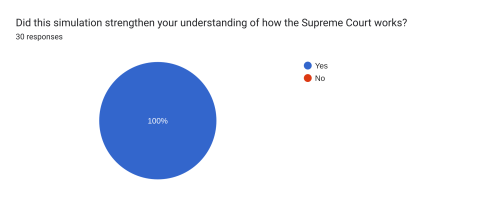
One hundred percent of my students responded that the new iCivics’ Supreme Decision simulation strengthened their understanding of how the U.S. Supreme Court works. In full transparency, there were thirty students who responded to the survey. (At the time of this writing, five students did not respond due to absence at the time the survey was given.) And, if I’m being honest, it’s challenging to have one hundred percent of my Advanced Placement United States Government and Politics (AP GOV) students agree on anything. They often mirror the American electorate—divided on a variety of issues. But not on this. Not today.
iCivics rolled out Supreme Decision in early January. When I saw their promotion of the simulation on social media sites, I decided to dig in a little to see what value add this might bring to my current curriculum. I watched the seven-minute preview video and decided that I wanted to lean in further.
Admittedly, I am a self-labeled Supreme Court nerd. I follow scholars and experts on social media, wake up early in June on opinion days, and have had the good fortune of being in the Court a few times. I have been incorporating moot courts and a March Madness-style case showdown into my AP Gov course for many years. Students have offered feedback that some of these activities created core memories as they’ve reflected on their high school experience. It was only natural that I would want to look into this simulation to see whether I could implement it into my current practice.
I should also share: sometimes I get nervous trying new things. It’s not that I won’t try new strategies, materials, activities, games, etc… but I’m a bit of a type A control freak, and I like to feel like I have some sense of management over what’s happening in my classroom. As an educator, I can’t control much, so I try to grasp on to what I can. So hear me when I say, if this is you, this simulation works well. As the teacher, you control the advancement of the slides on the student screens, the videos (and if you want to replay them), and the addition of enrichment/ supplemental activities.
iCivics is known for its professional development around resources, so it shouldn’t have surprised me that they offered a webinar on how to use the simulation. And talk about timing. I was able to attend the training the day before I launched the simulation. The team from iCivics walked attendees through the simulation experience, offering suggestions, support, and reflective prompts so we could think through the application in our settings. I printed out the simulation directives and took some additional notes so I would be ready for the next day.
And then I launched it.
Supreme Decision is a purely digital simulation. The teacher sets it up and creates a classroom. The simulation kicks back a login PIN, very similar to some of the quiz-like gaming sites that many classroom teachers use. When students log in, they create a username (good news: if it’s inappropriate, a teacher can boot the student until an appropriate name change occurs) and are assigned a profile: respondent, petitioner, or justice. Students are given the background of a fictional case, inspired by an actual Supreme Court case. Students also learn what their roles are, and justices are given one of three lenses: “looking back,” “looking closely,” or “looking ahead.” Once students read through their role and better understand the case, they work through the background of the case (how the case arrived at the court) and the facts of the case. Students work in role-alike teams to examine precedent and constitutional application. Students are also given time and a digital resource to take notes on their screens. Justices are given space on their screens to write questions. The simulation allows for the students representing the petitioners to only see the notes of the petitioner. The same applies to the respondents and the justices. After note-taking and discussion, students craft and present oral arguments. Justices ask questions of the petitioner and respondent and then deliberate. Finally, justices cast a vote to determine which argument they see as having more merit. As justices rule, students can see the voting process. Teachers can freeze screens if they don’t want students to see live voting.
After our justices ruled, the students engaged in a content-rich discussion around the topic and it became clear to me that my students truly understood not only the process but the content application, as well. One student shared, “I enjoyed actually feeling like I was taking part in a Supreme Court decision. For me, learning has to be done firsthand, and with this simulation, I really got a grasp and got my needed firsthand experience to fully understand how the court works.” Another shared, “I learned how the Supreme Court works through a case, how petitioners and respondents present their arguments, and how the judges work through the arguments and ask questions to make their decision.” One student expressed how this gave them a better sense of what the Court looks like. “It is more of a conversation than anything. You are just talking to each other trying to understand every side.” Another student shared that they always thought that the Supreme Court Justices debated one another. They did not realize that this was a discussion.
Overall, our class invested a total of two class periods (about 80 minutes) working through the simulation. The timing worked well, and I am glad I decided to launch this new learning experience. In our post-case survey, I asked my students how many of them liked learning from simulations. A resounding 96% of students expressed that they either favored this approach or considered it on par with traditional delivery methods, like reading or lecture. My initial apprehensions about introducing something new were met with enthusiastic engagement and high levels of student satisfaction. I am now confident incorporating more iCivics simulations given the evident enjoyment and educational value my students gain from these experiences.
Written by Shari Conditt
Shari Conditt is in her 24th year of teaching secondary social studies. She currently teaches AP US History, AP American Government and Politics, and serves as the building instructional coach at Woodland High School in Woodland, Washington. Shari is also an adjunct professor at two local colleges- teaching survey level social studies courses and Methods for Teaching Social Studies. Shari is passionate about student leadership and serves as the school’s ASB Director where she actively supports student voice in school policy decision making. In 2015, Shari was selected as a finalist for State Teacher of the Year and in 2016 she was selected as Washington’s Gilder Lehrman History Teacher of the Year.
Through the iCivics Educator Network, the perspectives of teachers across the country contribute to the public conversation about civic education in the United States. Each contributor represents their own opinion. We welcome this diversity of perspectives.