New Collection of Resources Teaches Students How to Verify Online Information

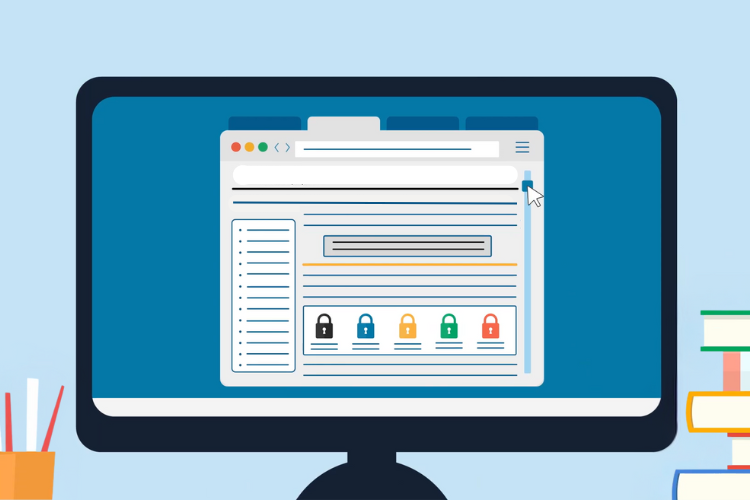
Civic Digital Literacy, developed by the Digital Inquiry Group and iCivics, is a collection of nonpartisan, evidence-based resources to help middle and high school students learn how to navigate misinformation, disinformation, and AI-generated content.

CAMBRIDGE, MA [August 26, 2024] – As Election Day nears and Americans are flooded with related online content, iCivics and the Digital Inquiry Group (DIG) have released a collection of resources to equip students with everything they need to know about deciphering the veracity of what they encounter online.

The new Civic Digital Literacy collection is designed to prepare young people to be informed, engaged members of our democracy. It meets an urgent need to make digital literacy a key component of civic education.

These new materials help students better understand how to navigate online sources and to build the digital literacy skills integral to our democracy.

Civic Digital Literacy helps students understand a range of topics, including who’s behind cloaked websites, how to evaluate political claims on social media, and whether online content is clickbait or legitimate.

“In a digital age, civic engagement requires the ability to find credible information online,” DIG’s co-principal Sam Wineburg said. “The internet, however, can be a perilous place to become informed. Social media is a minefield of misinformation where bad actors peddle mistruths. Fortunately, there are evidence-based approaches to teaching people how to better discern online information. The Civic Digital Literacy materials are based on a decade of research by our team at DIG to develop and rigorously evaluate curriculum tools in real classrooms.”

Designed for middle and high school students, Civic Digital Literacy currently has nine lesson plans, ten student-facing videos, and six professional development videos for teachers. It was built with the digital literacy and curriculum expertise of DIG, an independent nonprofit established by the team behind the Stanford History Education Group, and the curriculum and pedagogy expertise of iCivics, the nation’s leading civic education nonprofit. The nonpartisan resources are research- and evidence-based.

“The average young person spends more than eight hours per day online, but even though they are digital natives, that does not mean they have the skills needed to counteract the information overload in which we all live,” iCivics Chief Executive Officer Louise Dubé said. “Teaching young people how to understand the information they receive is critical so they can become informed and engaged participants in our now digital democracy.”

Civic Digital Literacy is a valuable tool for any civics or social studies teacher. The resources are flexible and can be woven into existing curricula or expanded into lessons of their own. The critical thinking skills that Civic Digital Literacy teaches are applicable across many content areas.

Each of Civic Digital Literacy’s videos and lesson plans can be used independently. Lesson plans include step-by-step instructions for teachers and learning objectives that help make the content relevant to students—and guide them through a productive conversation. Each student-facing video features a call-to-action question to encourage students to reflect on and discuss the content.

iCivics and the White House Historical Association Launch “Brief the Chief,” a New Digital Game Showing Students How Presidents Throughout History Relied on Multiple Perspectives to Make Difficult Choices

WASHINGTON, DC — April 29, 2024 — iCivics, the nation’s leading civic education nonprofit, and the White House Historical Association today launched Brief the Chief, a new digital game that teaches students how the President of the United States makes difficult governing decisions, providing insight into how presidents rely on an array of advisors to make tough judgment calls.

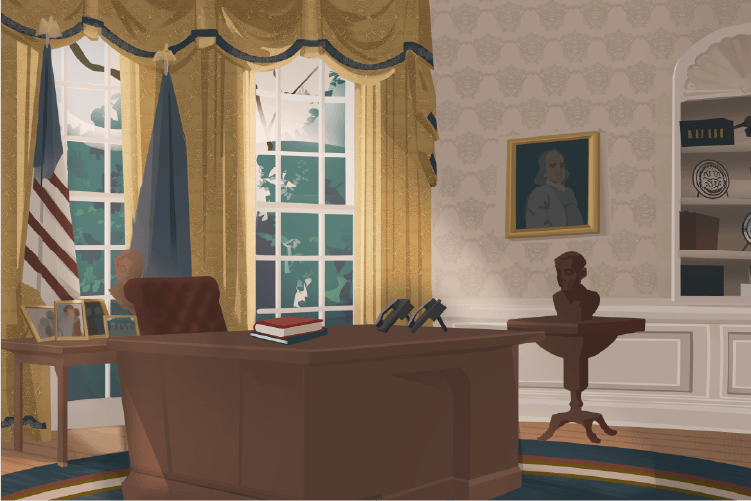
Brief the Chief also gives students an inside look into the historic White House offices of Thomas Jefferson, Abraham Lincoln, and Lyndon B. Johnson as they navigated some of the most pivotal moments of their presidencies.

The game positions students as trusted advisors to the president, challenging them to consult with a variety of sources and confidants within the White House and use evidence-based reasoning to give counsel on a number of different situations. Students advise Jefferson as he determines whether he should continue trade with independent Haiti in 1804 amid tensions with France; Lincoln as he contemplates the Emancipation Proclamation; and Johnson as he decides if he should run for another term as president.

Along the way, students have conversations with likely sources such as secretaries of state, military advisors, and foreign diplomats. They also speak with historical figures such as civil rights leader Amelia Boynton, First Lady Mary Lincoln’s dressmaker Elizabeth Keckly, the Johnsons’ personal cook Zephyr Wright, and Haitian leader Jean Jacques Dessalines. In this way, the game gives students the opportunity to learn from those with unique perspectives and from underrepresented communities throughout history. Students practice listening and contextualizing facts and opinions.

Brief the Chief continues a growing partnership between iCivics and the Association. In 2023, iCivics and the Association released a Spanish-language version of Executive Command, one of iCivics’ most popular games that teaches students how the Executive Branch functions.

“We’re incredibly proud and honored to partner with the White House Historical Association,” iCivics Chief Executive Officer Lousie Dubé said. “Brief the Chief teaches young people a skill that is increasingly more important: how to engage with people from different perspectives, gather important insights, and make evidence-based decisions.”

Brief the Chief leverages the strengths of both iCivics and the Association. Up to 145,000 teachers rely on iCivics resources each year to help some 9 million students learn foundational civic knowledge and the skills needed to become engaged citizens. A team of three Association educators and three Association historians with advanced degrees in public history provided insight into the presidents and their respective administrations. Content experts and educators from the Abraham Lincoln Presidential Library and Museum, the LBJ Presidential Library, and George Washington University provided insights on the history presented throughout the game as well.

“Education is critical to the Association’s mission and investment in civics is vital as the next generation is taught the awesome responsibilities of citizenship and considering different perspectives,” said Stewart McLaurin, President of The White House Historical Association. “We are excited to launch this new tool to help students understand the past as an essential key to understanding who we are today.”

The game presents students with the opportunity to investigate two key decisions from each of the presidencies of Jefferson, Lincoln, and Johnson, and provides educators with incredible flexibility to teach across U.S. History. With nearly 30 characters available to interview, students can play the game multiple times and learn new facts and perspectives with each gameplay.

The game can be used to teach different geographies, content, civics and historical timelines, allowing flexibility for teachers to use it in a variety of different classroom applications. And its content can be tied to current events.

Brief the Chief includes English Language Learner support and is available in Spanish.
New Research Provides K-12 Civic Education Insights

Leading researchers today released new analyses that indicate areas of focus for the expansion and improvement of K–12 civic education. This includes more robust civic learning opportunities in high school, the positive effects of students openly discussing civics and political issues, the effect of legislation on teachers and students, and the need for more civic role models.

The reports, which were discussed as part of the Civic Learning Week National Forum, come from RAND, Center for Information & Research on Civic Learning and Engagement  (CIRCLE) at Tufts University, More in Common, and the Educating for American Democracy Research and Evaluation Task Force.

Civic Learning Week, March 11–15, is a nonpartisan effort that brings together students, educators, policymakers, and leaders in the public and private sectors to highlight and further energize the movement for civic education. It is designed to further understanding of what a modern civic education needs to sustain and strengthen our nation’s constitutional democracy.

This year’s theme, “2024 and Beyond: Civic Learning as a Unifying Force,” focuses on how to make civics a national priority, and how it can provide a way to combat polarization by building civil discourse and understanding. 

Research highlights:

  • Civic learning and engagement among 18–34-year-olds: This latest contribution to CIRCLE’s “Growing Voters” research shows how students’ self-reported civic learning and student voice experiences in high school relate to current levels of civic engagement, including attention and interest in the 2024 election. The data from a nationally representative survey of 18–34-year-olds fielded in fall 2023 shows how schools can contribute to efforts to grow voters by centering student voice in and out of the classroom as well as through civics classes, school climate, adult encouragement and collaboration, and extracurricular activities. According to the report, student voice in high school is essential to growing voters and future active community members, as those who have positive civic experiences in high school in which they feel their voice and or opinion matter are much more likely to say they now vote and are civically engaged than those who did not report these experiences. The full report is here.
  • Effect of legislation regarding teaching of race and gender: RAND released new data from a survey of more than 8,000 K–12 public school teachers that indicate how restrictions on addressing race- or gender- related topics in the classroom are influencing teachers’ instruction and students’ learning two years after such state-level legislation was first passed. The survey, conducted in spring 2023, updates previous data that found that about one-quarter of teachers reported that limitations influenced their curriculum choices or instructional practices, while only 3 percent said that limitations on race- or gender-related topics positively impact student learning. According to the report, this could lead to long-term consequences for students’ futures and the future of the education system, country, and democracy. The full report is here.
  • Students learn more when they can discuss civic and political issues openly: The  Educating for American Democracy Research and Evaluation Task Force released three research briefs that synthesize existing research and show steps that can be taken to strengthen the way young people engage in democracy. Among their findings:
    • High-quality assessments and accountability structures lead to increases in young people’s civic knowledge, and students learn more when they are in classrooms where civic and political issues are discussed freely and openly.
    • When students engage in asking and answering questions by analyzing information, they experience greater engagement and deeper understanding than if they just use a textbook.
    • Social and emotional learning (SEL) and civic learning are often mutually reinforcing, as students’ social, cognitive and emotional skills can help them critically and collaboratively engage with civic issues.
    • The full reports are here.
  • Few Americans have civic role models, but those who do most often identify parents or family members as these role models: More in Common released data from an online focus group-type of research activity with over 100 American adults. The data underscored the importance of proximate civic learning and helping young people build relationships with mentors and individuals who can help orient them toward constructive, lifelong civic engagement so that they see themselves not only as civic agents, but as role models for others to follow. The full report is available here.

New Resources and Opportunities for Yearlong Civic Learning and Engagement Announced as Part of Nationwide Civic Learning Week

As tens of thousands of people participate in Civic Learning Week across the country March 11-15, major organizations in the growing movement around civic education have announced new resources, opportunities, and fellowships for students, educators, and adults to engage in yearlong civic learning and engagement.

Civic Learning Week is a nonpartisan effort that brings together students, educators, policymakers, and leaders in the public and private sectors to highlight and further energize the movement for civic education. It is designed to further understanding of what a modern civic education needs to sustain and strengthen our nation’s constitutional democracy.

This year’s theme, “2024 and Beyond: Civic Learning as a Unifying Force,” focuses on how to make civics a national priority, and how it can provide a way to address polarization by building civil discourse and understanding. 

The new resources announced today include educational content, fellowships, internships, and engagement opportunities from Civic Learning Week cosponsors iCivics, A More Perfect Union, Carnegie Corporation of New York, Corporation for Public Broadcasting, Honey W. Nashman Center for Civic Engagement and Public Service at George Washington University, Microsoft, More Perfect, National Archives and National Archives Foundation, and National Council for the Social Studies. 

Civic Digital LiteracyiCivics and the Digital Inquiry Group have partnered to create Civic Digital Literacy, a collection of non-partisan, evidence-based, classroom-ready materials for educators that will equip students to identify and discern credible information online. Launching in Fall 2024, Civic Digital Literacy will include 15 lesson plans, ten student-facing videos, and six videos for teachers covering a range of topics, from determining who’s behind cloaked websites to evaluating political claims shared on social media. A preview of the offering is now available.

New Civics Collection on PBS LearningMedia: GBH and the Corporation for Public Broadcasting announce a new civics collection launching in fall 2024 that will be a companion to the U.S. History Collection. It will include free, interactive, media-rich resources for teachers and students in grades 6–12.

Civic Changemaker Internship: The Honey W. Nashman Center for Civic Engagement and Public Service at George Washington University is offering a summer internship for college students in Washington, D.C., that will provide the opportunity to work with middle school students to make a difference in their communities. The Civic Changemaker curriculum helps students learn more about their local government, neighborhood, and school communities while addressing community issues that are important to them. Interns will live together on the GW campus, and participate in cultural events, and professional development. 

National Archives Civics for All of US Teacher Institutes: This summer, educators working with grades 3–12 are invited to apply to attend the 2024 Civics for All of US Teacher Institute with the National Archives in Washington, D.C. Educators will learn how to use National Archives holdings to teach the civic knowledge and skills students need for civic engagement in the 21st century.  Participants will explore primary sources that shed light on the successes, failures, debates, and challenges in the history of our democracy. The program will also feature resources for sharing diverse perspectives and historically underrepresented voices in classroom civics lessons. This professional development experience will also highlight student voices in the Archives that demonstrate how civic participation can happen at any age. The application closes on March 15. 

Connecting Civic Education and a Healthy DemocracyCarnegie Corporation of New York has issued a report calling for a greater investment in civic education, given the need to prepare young people for informed and engaged citizenship. Connecting Civic Education and a Healthy Democracy highlights the need for state-level policies that expand and improve K–12 civic learning and features examples of how coalition-building has helped advance more robust policies in a number of states. Equipping young people with the tools to think critically, engage in constructive debate, and discover their agency is essential to reducing polarization and strengthening American democracy. Visit Carnegie.org/CivicsPolicy to download the free report.

Rho Kappa National Social Studies Honor Society: The National Council for the Social Studies Rho Kappa Honor Society provides high school juniors and seniors with national recognition and opportunities for exploration in social studies. Any accredited public, private, or charter high school can apply for a local chapter, through which individuals will be inducted into Rho Kappa National Social Studies Honor Society. 

For more information about any of these initiatives, contact [email protected] or the organizations directly.

U.S. Supreme Court Justices Sonia Sotomayor and Amy Coney Barrett, U.S. Secretary of Education Miguel Cardona and Archivist of the United States Colleen Shogan Headline Civic Learning Week, March 11-15, 2024

As students, educators, and public and private leaders participate in events across the country highlighting civics as a unifying force for 2024 and beyond, the U.S. Supreme Court Justices will participate in a conversation at Civic Learning Week’s National Forum, and the U.S. Secretary of Education and Archivist of the United States will be featured as part of an evening reception March 12, 2024.

CAMBRIDGE, Mass., March 1, 2024 — U.S. Supreme Court Justices Sonia Sotomayor and Amy Coney Barrett, U.S. Secretary of Education Miguel Cardona, and Archivist of the United States Colleen Shogan will join thousands of people across the country in focusing on the importance of civic education during Civic Learning Week, March 11–15, 2024.

Justices Sotomayor and Barrett will engage in a conversation for the Civic Learning Week National Forum at The George Washington University on Tuesday, March 12, at 1 p.m. ET. Secretary Cardona and Archivist Shogan will engage in a fireside chat at the forum’s closing reception at The National Archives, March 12, at 6:30 p.m. ET.

The two conversations come as part of Civic Learning Week, an annual nonpartisan event that brings together students, educators, policymakers, and leaders in the public and private sectors to highlight and further energize the movement for civic education in states and communities across the nation. This year’s theme, “2024 and Beyond: Civic Learning as a Unifying Force,” focuses on the need to make civics a national priority and a means to combat polarization.

Now in its second year as a nationwide celebration, Civic Learning Week includes hundreds of online and in-person events driving home understanding of what a modern civic education needs, and how the knowledge, skills, and dispositions that civics engenders can sustain and strengthen constitutional democracy and build civil discourse and understanding.

Civic Learning Week is sponsored by iCivics, A More Perfect Union, the Carnegie Corporation of New York; the Corporation for Public Broadcasting, the Honey W. Nashman Center for Civic Engagement and Public Service at George Washington University, Microsoft, More Perfect, the National Archives and National Archives Foundation, and the National Council for the Social Studies.

“Civic learning is a requirement for a healthy democracy. It can be a unifying force for our country, particularly during times of deep division,” said iCivics CEO Louise Dubé. “Civic Learning Week will provide examples of how educators and communities are finding paths forward to bolster the knowledge, skills, and dispositions essential for engaging productively across differences—a hallmark of democracy—and bridging divides.”

The National Forum, which is open to the media, will take place at George Washington University starting at 8 a.m. ET on March 12. It also include panel discussions across several key themes that show how civics can act as a unifying force:

  • How Disinformation (Including AI) Impacts Civic Learning and What We Can Do: Moderated by The New York Times Technology Reporter Tiffany Hsu, and including FRONTLINE Senior Editor Erin Texeira and Digital Inquiry Group Founder Sam Wineburg.
  • Overcoming Political Polarization Through Investment in Civic Learning: Moderated by James Bryant Conant University Professor at Harvard University Danielle Allen, and including Virginia Secretary of Education Aimee Rogstad Guidera, Middlebury College President Laurie Patton; and state and local educators.
  • Teaching Civics During the 2024 Elections—Can It Be Done?: Moderated by George Washington University Graduate School of Education and Human Development Dean and Professor of Education Michael Feuer, and including University of Pennsylvania Graduate School of Education Professor Jonathan Zimmerman and D.C.-area school educators.

The National Forum will also include the release of several pieces of new research on civic education, as well as breakout sessions tied to the themes of the day. The Forum and closing reception are open to media and will be live streamed at civiclearningweek.org/national-forum.

A full list of local and national events that will take place during Civic Learning Week is available at civiclearningweek.org/events

First Woman on Supreme Court Sandra Day O’Connor Will be Remembered as Country’s Foremost Advocate for Civic Education

CAMBRIDGE, MASS. [December 1, 2023] — As the nation mourns the passing of former U.S. Supreme Court Justice Sandra Day O’Connor, she will be remembered not just for her seminal work with the Court, but as the founder of a movement to revitalize civic education. 

Appointed to the U.S. Supreme Court in 1981 by Ronald Reagan, O’Connor was known as a moderate and master of intelligent compromise. When she retired in 2006, O’Connor began work on what she would see as her true legacy—ensuring that millions of young Americans were educated on how our government works and empowered to become informed and engaged participants in our self-governing society.

In 2009, O’Connor founded the nonprofit iCivics with the goal of transforming civic education for every student in the United States. 

iCivics started this work by creating innovative, engaging online games and resources. Since its inception, iCivics’ games have been played more than 189 million times. All iCivics content is completely free and nonpartisan—and is now used by up to 9 million students and 145,000 teachers annually in all 50 states and the District of Columbia. 

“Justice O’Connor was both a great Justice and a great person. She brought such experience and integrity to everything she did. Her legal and political career was exceptional, at a time when the obstacles for women were formidable; providing a thoughtful ballast and balance to the Court, and continuing to make important contributions to America and its civic institutions after she stepped down,” iCivics Board Chair Larry Kramer said. “iCivics was her brainchild. She spotted the need and importance of reinvigorating civic education before others, and she led the creation of an innovative leader in the field. As important, she was kind and generous, a friend and mentor to countless young people.”

Remembered as a trailblazer for her work on the Court, it was the path Justice O’Connor blazed after she retired from the U.S. Supreme Court—as a pioneer in advancing civic education—that she stated both privately and publicly was what she considered her true legacy. 

“If we want our democracy to thrive, we must commit to educating our youth about civics, and to helping young people understand their crucial role as informed, active citizens in their communities and in our nation,” Justice O’Connor said in her final remarks to the public in 2018, as she withdrew from public life because of her health. “We must arm today’s young people with innovative civic education that is relevant to them. Bringing high-quality civics to every school in every state of our union is the only way that the next generations will become effective citizens and leaders.”

Over the last decade, iCivics has supported its work in the classroom through its leadership of a movement to make civic education a nationwide priority. iCivics founded CivXNow.org, a politically and culturally diverse coalition of more than 300 major organizations, universities, and foundations that are working across political lines to improve civic education. 

In 2021, iCivics along with Harvard, Tufts and Arizona State Universities unveiled the Roadmap to Educating for American Democracy (EAD). The initiative, first funded under the Trump Administration and continued under the Biden Administration, crafted a framework that charts the path toward a vibrant and diverse constitutional democracy through civics and history education. 

“I came to work at iCivics to fulfill Justice O’Connor’s vision for a civic education that prepares students for civic engagement. During my interview for the position, she told me that it was not enough for students to know, they must also do, be engaged and solve problems,” iCivics Chief Executive Officer Louise Dubé said. “The Justice’s career is a testimony to civic service and dedication to the country. My goal remains to fulfill her vision and make her proud. And there are no words for how much she has meant for iCivics, civic education, and how deeply we will miss her.”

For more information about Justice O’Connor’s work with iCivics, visit iCivics.org. To arrange an interview, please contact [email protected].

34 Students Take Civic Education into Their Own Hands Through iCivics Equity in Civics Youth Fellowship

Now in its fifth year, the fellowship helps students from across the country build civic leadership skills and explore how civic education can become more relevant to all youth in the United States

September 20, 2023—iCivics has selected 34 talented high school students from across the country to take part in the iCivics Equity in Civics Youth Fellowship (ECYF). The students were selected after a competitive process that saw nearly 350 applicants from 38 states and Washington, D.C.

The yearlong fellowship helps students develop leadership and communications skills in collaboration with peers and experts in the field of civic education. Throughout the year, students research and explore how civic education can become more equitable for students across the United States, utilizing their own lived experiences to become ambassadors and shed light on how civic education can include student voices from every background.

“I am excited for this year’s fellows to come together, learn from one another, and use their lived experiences to shed some light on the current state of civic education for our young people,” said iCivics Youth Engagement Coordinator Michael Reyes.

The fellowship kicked off in late August, and moves into full-gear with an in-person symposium in Washington D.C. in early fall. It continues through the 2023-2024 school year as fellows engage virtually in group discussions with their peers, workshops and lectures with experts in the field, and projects designed to strengthen listening and collaborative skills. All of the fellows’ work will be centered around ensuring that civic education is available and relevant to all students in the United States. 

Over the past five years, students from across the country representing rural, urban and suburban districts have taken part in the fellowship. They have become an integral part of informing the broader civic education movement, sharing their experiences and thoughts at convenings for the Educating for American Democracy initiative, the Ronald Reagan Institute, Civic Learning Week, and the Commonwealth Club. They have been featured in media such as The Wall Street Journal, Chicago Tribune, and WBUR in Boston. 

iCivics is proud to announce this year’s Equity in Civics Youth Fellows:

  • Maurits A. – Florida
  • Titus A. – Arizona
  • Liana A. –Maine
  • Addison A. – Louisiana
  • Alexandra B. – Oregon
  • Erica B. – Minnesota
  • Maya B. – California
  • August B. – Delaware
  • Jayla C. – Georgia
  • Rainie C. – Oregon
  • Ace C. – Iowa
  • Shreya D. – Washington
  • Miranda D. – New Jersey
  • Kora D. – Massachusetts
  • HamzaE. – California
  • Pablo G. – California
  • Kaimy I. – North Carolina
  • Daye K. – Georgia
  • Shirin K. – Pennsylvania
  • Wyatt L. – Arizona
  • Mia L. – Illinois
  • Dontrell M. – Georgia
  • Ronald M. – North Carolina
  • Aser M. – Maryland
  • Tithi M. – New Jersey
  • ColtonM. – New Hampshire
  • Folasade O. – Connecticut
  • Cian O. – Massachusetts
  • Saghana P. – Michigan
  • Ellie P. – Virginia
  • Elijah S. – Tennessee
  • Pratheek T. – Virginia
  • AlyssaV. – Ohio
  • Sarah V. – New York

For more information about the iCivics Equity in Civics Youth Fellowship, and how to participate, visit the website.

iCivics and George Washington’s Mount Vernon Launch Free Online Game About Civility and Compromise at the Constitutional Convention

MOUNT VERNON, VA – September 7, 2023 – This Constitution Day, iCivics and George Washington’s Mount Vernon will release Constitutional Compromise, a new online game that takes students through the major issues – and key compromises – that shaped our nation’s governing charter, the United States Constitution.

Developed with support from philanthropist Kenneth C. Griffin, Constitutional Compromise is the first game that iCivics has created specifically for use within a museum exhibit. The game will be available for free for anyone to use at icivics.org, and it will be available for on-site play to the over one million visitors to Mount Vernon every year. By 2026, the game will move into a new permanent exhibit on George Washington at Mount Vernon.

Designed for middle and high school students, the game places students in Philadelphia in 1787 and challenges students to grapple with the intense debates that occurred between the delegates to the Constitutional Convention, including: the scope of national government, representation of power, how population is determined, executive functions, the transatlantic slave trade, and whether the country should have a Bill of Rights.

George Washington, who served as President of the Constitutional Convention, leads players through the debates by requiring them to weigh the arguments they hear and decide how they might have moved forward if they were writing the Constitution. The game then compares their decisions with the compromises that delegates had to make to create a new system of self-government, even though they were difficult and sometimes imperfect (and, on the issue of slavery, morally unacceptable).

It was built by award-winning educational games developer Filament Games. It is free to use and is also available in Spanish and with full support for English Language Learners and has supporting documents for educators to use during Constitution Week and beyond to teach about the Constitution.

More than 100 students from the Alice Deal Middle School in Washington, D.C. will gather on Sept. 18 at Mount Vernon, President Washington’s home, for an event that will be live streamed to thousands of students across the country, starting at 9:30 AM EST. The livestream will be available at: https://www.youtube.com/watch?v=k7T7ImWrpgs

“Now more than ever it’s critical that Americans have a firm grounding in the important framework that the U.S. Constitution provides for our democracy,” Mount Vernon President & CEO Doug Bradburn said. “Mount Vernon is delighted to have the perfect partner in iCivics as we worked together to create Constitutional Compromise.”

iCivics Calls for Greater Investment in Civic Education Following Release of National Assessment of Educational Progress (NAEP) on Civics

As “The Nation’s Report Card” shows that only 22 percent of eighth graders in the United States were deemed proficient or better in civics, iCivics calls for greater prioritization of civic education to sustain and strengthen our nation’s constitutional democracy.

CAMBRIDGE, MA. [May 3, 2023] – Following this morning’s release of results from the 2022 National Assessment of Educational Progress (NAEP) in civics for 8th graders once again showing a lack of proficiency, the country’s leading civic education nonprofit, iCivics, is calling for greater investment in civic education. 

Commonly known as “The Nation’s Report Card,” the results of the latest NAEP Civics indicate that only 22 percent of 8th graders are proficient in civics. This is a slight decrease since the subject was last tested in 2018, when only 24 percent graded out as proficient, meaning students have knowledge of the subject and know how to apply it. 

In addition, the 2022 NAEP Civics shows that dedicated resources for teaching civics results in better student performance, but that those resources are sorely lacking:

  • Eighth graders who learned about civics in a designated class outperformed those where it was embedded in another class (157 to 153 average scale score), with a wider gap for those with no civics instruction (143).
  • Only 49 percent of students who took the NAEP said that they had a class that is mainly focused on civics or U.S. Government, and only 29 percent said they had a teacher whose primary responsibility is teaching civics.

“Today’s results are indeed a report card for our nation, reflecting a failure to prioritize and invest in civic education—the knowledge and skills fundamental to the responsibilities of citizenship in our self-governing society,” said iCivics Executive Director Louise Dubé. “If there is one thing we can all agree on, it is the importance of preparing our kids to be informed and engaged participants in our 21st-century democracy. It is time that our policymakers at the federal, state, and local levels pass legislation to ensure schools are supported to provide high-quality civic education for each and every student in the United States.”

Polling by Cygnal of more than 3,000 voters conducted just before the 2022 midterm elections shows that nearly 80 percent—Republicans and Democrats alike—believe that civic education is more important now than it was just five years ago, and 65 percent said they would support more funding of civics.

Civics for Democracy: Civics with Ben Sheehan

iCivics Chief Education Officer Emma Humphries talks civic education with Ben Sheehan, award-winning executive producer, formerly with the YouTube channel Funny or Die, and author of “OMG WTF Does the Constitution Actually Say?”

Read the full transcript:

Emma Humphries: From I Civics, a podcast hosted by me, Emma Humphries. (Music)

Emma: In May of 1787, representatives from the 13 states gathered in Philadelphia to strengthen the government by amending the Articles of Confederation. Instead, they closed the shutters, locked the doors, and went about the important work of drafting a whole new constitution. Almost four months later, on the last day of what we now call the Constitutional Convention, a crowd gathered around Independence Hall to learn what type of government their representatives had formed for the new nation. When Benjamin Franklin emerged, a certain Mrs. Power could no longer wait. She marched up to Franklin and asked, Well, Doctor, what have we got? A republic or a monarchy? Franklin’s famous response A republic, Madam, if you can keep it.

I wonder what Franklin or Mrs. Powell, for that matter, would think today. I mean, certainly they’d be impressed that we’ve made it this far. But would they be confident about the future? Would they think that we could actually keep our republic much longer?

My name is Emma Humphries and I’m the chief education officer of iCivics, the national nonprofit founded by retired Supreme Court Justice Sandra Day O’Connor to reimagine civic education for American democracy. Teachers know us for our comprehensive library of trusted standards aligned, highly engaging instructional materials. Students know us for our super fun video games that cover everything from the Electoral College to the federal budget and foreign affairs. And I’m hopeful that more and more Americans will know us as the folks who are working every day to sustain and strengthen our democracy by ensuring each and every student in the United States has access to high quality K-12 civic education.

Our guest on this podcast is Ben Sheehan. He’s an award-winning executive producer, formerly with the YouTube channel Funny or Die, and was listed as one of the entertainment industry’s 35 rising executives under age 35 by The Hollywood Reporter. Now, Ben is doing projects related to civic education. He founded something called OMG WTF, which was established to teach voters about the state executive races during the 2018 midterms. Now, those initials may have other meanings elsewhere, but in this case they stand for Ohio, Michigan, Georgia, Wisconsin, Texas, Florida. And if you’re not sure why those states are important, you should definitely read his book. OMG WTF does the Constitution actually say? Ben has unique insights as to how our government works. Growing up in Washington, D.C., the child of federal workers, Ben learned civics from his parents. 

Ben Sheehan: I had no choice but to listen to them as they talked about their days working in and with the federal government over the dinner table. And this was my civics education. I also remember going to school in D.C., and I had one year, actually a half year of government and civics education. I think the first half of eighth grade. And my school was like four miles from the Capitol. I learned this at home just by total luck of having parents who worked in and with the federal government. They taught me over the dinner table. It didn’t really dawn on me how rare getting that early exposure was. And I wish that that was the norm and not the exception. 

Emma Humphries: I was lucky I had the same sort of minimal requirements to graduate high school, but I went to school down in Broward County, Florida. I went to a public school. You could see it from the turnpike, nothing fancy, but we had what I would consider an award winning social studies department, really great faculty of educators who were passionate about history and civics and instilled that in me. But just one semester. So you grew up believing this was important. Knowing it was important, you went to college and majored in political science, but you didn’t become a lawyer or a politician. You became a writer and a comedy producer who is now trying to bring civic education to the masses.

Ben Sheehan: Well, I’ll be honest with you, I didn’t really have any interest in going into politics from a young age. I was just around it and soaked it in and I wanted to pursue the things that I found entertaining, which was music and playing in bands and making stupid videos with my friends. The moment that those sort of things converged was when I was working at Funny or Die, and I got this incredible opportunity to do videos with people like Will Ferrell and Adam McKay and to sort of see comedy as a way to present ideas in a new way. And what I learned making videos there was that it wasn’t that people were necessarily not interested in information about government or civics, it’s just that the presentation was creating a barrier. That kind of became a personal challenge for me to find a way to take something that I thought other people might think is boring, that I personally find interesting and find a way to like, go to them. And so to find the entry point, that became a fun personal challenge. And that’s kind of been the guiding principle for all the work that I’ve done since.

Emma Humphries: What would you say is the best joke you found, or just an example of a time where you’re like, Nailed it? 

Ben Sheehan: I do think that the video we did like a ‘We Are the World’-style song, obviously much like ‘We Are the World’ and like, you know, these big like celebrity anthems. But we felt that the climate change denier movement didn’t have their big, beautiful song to rally around. And so the song is called The Earth Is Not Getting Warmer. (Song clip) And it’s this big, heartwarming, uplifting song about the denial of climate change. Just finding the unusual, weird entry point is such an important way to present information to people. 

Emma Humphries: Teaching civics was once a fundamental goal of education. It was seen as essential for citizenship training as retired Supreme Court Justice Sandra Day O’Connor has reminded us: “The practice of democracy is not transferred through the gene pool. It must be taught and learned anew by each generation of citizens.” Through the 1950s, three courses in civics and government were commonplace in the high school curriculum, and two of them focused on the role of citizens and encouraged discussion of social issues. But then something changed, and it was big. On October 4th, 1957, the Soviet Union launched into orbit the satellite Sputnik. 

News clip: “Russia had blasted a manmade moon into outer space on every continent and in every land. The story of the main Soviet papers today devote more than half their space to the satellite, with front page headlines such as rarely seen in this country.”

Emma Humphries: This event rattled America’s confidence and precipitated a major school reform movement. Legislators on both sides of the aisle joined forces to pass the nation’s first comprehensive education bill. Less than a year later, President Dwight D. Eisenhower signed the National Defense of Education Act into law authorizing more than a billion dollars — and remember, this was the late 1950s — for improving mathematics, science and foreign language instruction. Notably, the bill did not include any funds for social studies, which would include civics. So for the next six decades, civic education took a backseat to science, technology, engineering and math, and later reading and language arts. And here we are in 2023, when we’re lucky if students receive one semester of government during their senior year of high school. In fact, the only civics thing we do starting from kindergarten is expect students to recite the Pledge of Allegiance at the start of every school day.

(Kids reciting Pledge)

That’s it. That’s the only consistent civics instruction we have from kindergarten through 12th grade in the United States. Then Sheehan suggests we need a two-step approach to address this problem. 

Ben Sheehan: You’re talking about bringing civics back into schools for people who are still in school. But then you also have to give civics to people who are no longer in school and never got it. The work that organizations like yours are doing and others are really focused on getting that back into schools. I mean, there’s one stat that sticks with me, and that is the discrepancy between people who have to take the citizenship test, obviously, in order to become an American citizen who have to pass that citizenship test. Studies have shown that people who are born in the United States, only about a third of those adults can pass the citizenship test. So there’s a huge discrepancy with people here not knowing this information. So one solution is to get civics back in schools. I’d love to see a full year at fourth grade, a full year at eighth grade, a full year at 12th grade. Other civics sprinkled in. I think people should be required to pass a citizenship test or something like it in order to graduate. I think that would be a really good first step for schools. But for the people who are no longer in school, who don’t have this information where do you get it ? So using pop culture, using entertainment, also challenging our media to focus more on the actual underlying information on how things work.

Emma Humphries: How can comedy help us? 

Ben Sheehan: I think of comedy as sort of shocking people awake in a weird way. So I’ll use the gerrymandering example, right? So how do you teach something like gerrymandering that’s really dry and kind of complicated to somebody who’s unfamiliar with? So in 2018, myself and a friend of mine, we started a line of very high end, beautiful jewelry called gerrymander. And every piece and every necklace of your pain was shaped like one of the worst congressional gerrymandered districts the United States. And we decided to create a very real website, a very real ad, a jewelry ad in the style of Jared or Zales, you know, beautiful shots of a couple on the beach and the ocean going over their toes. That’s just one example. But, you know, again, it goes back to my whole mission of like, how can I find, like the weird thing and the odd entry point to kind of hook people? And then once I have that inform them, catch them up on the basics on something like gerrymandering.

Emma Humphries: Did you really make the jewelry? Can I go online and buy gerrymander jewelry? 

Ben Sheehan: You can’t. The store is no longer active because it turns out it’s expensive. But we did for about a year had a very real website. GerrymanderJewelry.com You could go there, you could buy jewelry, you could pick your district, you could pick your material. We had white gold, rose, gold, silver. But it was a very real store, a very real website, very real jewelry that we shipped all over the country. 

Emma Humphries: So that’s one really interesting vehicle for getting civic education out there. Can you tell us about some other vehicles you’ve had for spreading the message, getting the word out there about civic education? 

Ben Sheehan: Well, really, the books, they’re annotated guides to the Constitution for different age groups. The kids one is for ages 8 to 12. The adult one is for people 16 and up, or if you have cool parents, 14 and up. But the idea is basically to take away any sort of barrier to call out all the unusual, weird things you’d come across in the Constitution. Also calling up the fact that even though this document is written in English, it feels like a different language. English of 1787 is a lot different than English of 2023. People get tripped up on certain words. There are things that sound like they mean one thing that actually means something else, and translating that, updating that, putting that into understandable English alongside the original text so people can go and read that text for themselves and then when appropriate, offering my own opinion as a conversation starter, a jumping off point. People can agree with it, disagree with it, whatever they like.

Emma Humphries: Teaching with primary sources is a great way to reach kids and to teach history. But if you’re not reading on grade level, you’re certainly not going to be reading the Constitution and feeling comfortable. And so one activity I would do with my kids is when I was a high school teacher down in north central Florida is have them translate the preamble or an important speech and put it in their own words. What I love to do is talk about what we would hope that people would know about our form of government, about our history, or just WTF does the Constitution actually say, what’s your favorite article, section or clause of the United States Constitution? 

Ben Sheehan: My favorite amendment is the ninth, and there’s a part of Article five that I really like. And the reason I think these are like just because they drive home the point that the Constitution is not a sacrosanct, impenetrable document that isn’t supposed to be changed. The Ninth Amendment specifically says not all of our rights are in here. We listed some. They’re not all here. And what is here can’t be used to deny the rights that we didn’t list or enumerate. And similarly, the fact that Article five gives us the ability to change the Constitution, whether it’s by proposing an amendment to the states, whether it’s gathering together a constitutional convention to amend it, which has never happened, the idea that the people that wrote this document, they wanted it to be changed. They wanted us to update it with the times. I mean, Thomas Jefferson, who obviously wasn’t in the room when the Constitution is being written, but he was corresponding by letter with James Madison and he thought the Constitution should be rewritten in totality every 19 years. There was recently a study done by the National Constitution Center where they convened experts from sort of like liberal constitutional scholars, conservative constitutional scholars and libertarian constitutional scholars. And you would think that they may not agree on everything, but they proposed five new amendments that they all agreed on, and one of them was lowering the barrier to amend the Constitution. They thought that that three quarters was really too hard and that we should have a little bit less of a barrier to change. 

Emma Humphries: Well, and in the spirit of educating folks and perhaps some of our listeners, we have only amended our Constitution 27 times in all this time. It’s pretty remarkable, but also problematic. That’s what those scholars were getting out of the National Constitution Center like. It shouldn’t be this hard and maybe we should be amending it more. You agree?

Ben Sheehan: I think so. I mean, although there have been periods where we’ve amended it a lot. Right. The entire Bill of Rights was all ratified together. So we ratified all ten amendments all at once. And then there was a period after the Civil War where in a span of five years we had three amendments. But one of the periods of massive constitutional change that I don’t think gets enough attention or publicity is there were four constitutional amendments added from 1961 to 1971, the 23rd ascribing voting rights to D.C. in the Electoral College, banning poll taxes in 1964, clarifying, solidifying what happens with presidential and vice presidential vacancies with the 25th Amendment, and then protecting voting rights for people 18 and up. 

Emma Humphries: You know, you mentioned the D.C. voting rights. And I thought, oh, what a great opportunity for me to ask you, Ben, O-M-G asked, does the Constitution say about voting rights? The U.S. Constitution is kind of interesting on this topic, right? 

Ben Sheehan: A lot of people think that the 15th Amendment, the 19th Amendment, the 26th Amendment, they proactively give people the right to vote. But if you look at the language, it’s a little bit different. It says that if you’re a citizen and you have the right to vote, that right can’t be taken away because of your race. It can’t be taken away because of your sex. It can be taken away because of you being 18 and up. It can’t be taken away because of your ability to pay a poll tax or tax. It’s not saying that every single citizen has the right to vote. It says that it can’t be taken away. And it’s kind of like you’re at a restaurant and getting like, I don’t know, beef tenderloin. It’s like the waiter can’t come in the middle of your meal and take that away. But it doesn’t say that you have a right to beef tenderloin in the first place. It’s been up to each state to sort of set the rules for who is and isn’t allowed to vote. And we see this even today, right? I mean, different states have different rules around felony voting rights. Some people are allowed to vote while they’re sitting in prison in Maine and Vermont, in other states, you have to complete your sentence. You have to complete probation and parole to get your rights back. (Reset Music)

Emma Humphries: We’re talking with Ben Sheehan about innovative ways to engage people in lessons about civics. I’m your host, Emma Humphries. What is the most WTF thing in the Constitution? 

Ben Sheehan: I would say the one that I thought was the absolute weirdest thing. The more I thought about it was in Article one, Section eight. It’s something called Letters of Marque and Reprisal. This is the section in Article one that basically says well here are all the things Congress has the power to do? Things like declare war and coin money and all these powers that are enumerated. But what’s really fascinating is this thing about letters of marque and reprisal. It’s almost like the militia for the water. The idea that they were private citizens who had boats and this is a brand new country, we didn’t really have a Navy, so people who owned boats could get a letter from Congress saying that they’re okay to go and, you know, act like a member of the Navy and capture enemy ships and plunder them. And then, like a court would help decide what they get to keep. It’s just really weird that you could kind of become like a legal pirate. Obviously, we don’t really do this today, but in my research I found that we haven’t actually banned it explicitly in treaties with other countries. So it is possible to bring that back and give people who were, you know, vacationing on yachts or having fun on their jetskis, you know, some letter from Congress and go, you know, see what they can grab out there on the open seas. It is really bizarre that that’s a part of our Constitution basically like legal pirating. 

Emma Humphries: You said, oh, there’s so many. So I need to know, like, what’s your second favorite part of the Constitution to talk about after letters of Marque and Reprisal? 

Ben Sheehan: I think the thing that surprised me the most that I was stunned wasn’t added until 1992, is the fact that, you know, members of Congress didn’t just give themselves a pay raise and have it take effect tomorrow. They had to let an election come between. The way that this amendment got added is like my favorite story because I relate to it on such a personal level in terms of pettiness. It was the student named Gregory Watson at the University of Texas in the early eighties. He wrote this paper for his policy sci class and he got a C and it was about this amendment that had been part of the original proposed Bill of Rights to the States but hadn’t been ratified but also hadn’t expired. There was no expiration date on it. And it said, as I mentioned, that, you know, in order for Congress to give itself a pay raise, an election had to come in between. So they weren’t just giving themselves money and, you know, changing their salaries tomorrow. And instead of taking a C, he decided to write letters to state legislatures all across the country, trying to get them to ratify this amendment. And over a ten year period, he got enough state legislatures, I think it was Alabama became the 38th state to ratify this amendment, leading to its addition to the Constitution. And years later, only like seven or eight years ago, he went back to his alma mater and said, Can I have an A-plus? And they only gave him an A. 

Emma Humphries: So we also know it’s maybe not in the Constitution. Like what are some things that, every American should know that it’s not in the Constitution, but it’s pretty important stuff. 

Ben Sheehan: One thing is I think everyone should know who represents them at the federal level. It’s not too many people that you vote directly for. Really. You’re one member of the House or two senators, obviously, the president. But then you start to get the people at the state level. You know, you’re voting for governors, state executives in most states like secretary of state and treasurer, attorney general. Then you go further, things like school boards, especially today, we’re seeing this huge shot of interest in school board races and the control of what people learn. It’s a way to control how much information people have about their own government. There is sort of a dark element to that. If you don’t teach the full picture of the United States history and the struggle for voting rights, and you don’t understand, your vote impacts you, then you may be less inclined to do it. So I think sort of like depriving people of civic education and accurate history is a more insidious form of voter suppression. If you teach people not to care, then you’re going to teach them as a byproduct of that not to vote.

Emma Humphries: What I want to do now is play a little bit of a game. You’ve written a book. I fancy myself a civic educator. So let’s see if we can stump each other. You ask me a question, and I’m going to pray to God that I don’t just completely strike out on the first pitch. So let’s. Let’s see what you got. 

Ben Sheehan: I’m going to be honest. I chose some hard questions, to be honest with you. All right. I’m going to start with the first one. The Bill of Rights, the first ten amendments to the Constitution. There were actually 12 that were sent to the states. But how many did James Madison originally draft? 

Emma Humphries: I know it’s firm. Well, is it far more? I used to teach this. I used to know what I could Google and I get it. I get to Google it, you know, and I’m going to I’m going to do. 

Ben Sheehan: I can’t see your computer, so I would have no idea if you did. 

Emma Humphries: I’m going to buy some time by just saying how I’m a huge fan of James Madison. I’m a James Madison fellow, which means I received some funding for grad school because I was going to be a teacher of the Constitution. Apparently not a good one because I don’t know the answer to your question, But I found it remarkable that, you know, during the debate over ratification of the Constitution. Madison would argue so passionately about the fact that we didn’t need a Bill of Rights. It wasn’t necessary. But, you know, those important rights were already embedded in the Constitution. And by the way, speaking of an amendment, if you were to list them all, what if you left one out? Does that mean someone doesn’t have that rights? We don’t need a bill of rights. And then because he’s a baller and as smart as he is, he sits down and writes, I don’t know the answer. What is it. 15?

Ben Sheehan: 19 

Emma Humphries: I feel good about being in the zone. Okay. Nine 19 19 You definitely know this better than I do. Now you’re going to know the answer. This isn’t easy. This is a softball. What are the first five words to the Bill of Rights? 

Ben Sheehan: The first five words to the, as in the First Amendment right? Congress shall make no law. 

Emma Humphries: That’s the answer. 

Ben Sheehan: I thought you were going to ask me about the preamble to the Bill of Rights, which I absolutely did. But there was like a small preamble that went with the Bill of Rights that was sent to the States, but I definitely could not recite them.

Emma Humphries: Through another one at me. 

Ben Sheehan: Okay. Second question. The United States Constitution is the oldest governing document in the world for a country, but it is not the oldest governing document. There are actually two states that have older constitutions that are still in effect than the US Constitution. What are those two states? 

Emma Humphries: Is one of them, Virginia?

Ben Sheehan: It is not.

Emma Humphries: I mean, I’d be guessing. I would, you know, to sort of start at the top of the 13 colonies. Is it one of the 13 colonies?

Ben Sheehan: Yes, they are both. We’re talking about Massachusetts and New Hampshire. So the Massachusetts constitution was in 1780 and it is still in effect today. And New Hampshire was 1784 and it’s still in effect today.

Emma Humphries: All right, Ben, can you name first middle, last name. All nine Supreme Court justices. 

Ben Sheehan: Are you asking me to name all nine Supreme Court justices? 

Emma Humphries: I want to hear the last names. I want to see if you can do it. 

Ben Sheehan: Do you want list? Okay. John Roberts. Clarence Thomas. Neil Gorsuch. Brett Kavanaugh. Amy Coney Barrett. Sonia Sotomayor. Elena Kagan. What am I at? 

Emma Humphries: Seven?

Ben Sheehan: Seven? Ketanji Brown Jackson. All right. Uh, Samuel Alito. Nine

Emma Humphries: That was impressive. I was quizzing myself on this on the treadmill today at the gym, and I got stuck. I couldn’t think of Gorsuch. Whom I’ve met. 

Ben Sheehan: Okay, so we’ve talked a lot about negative rights. Congress shall make the law how the Bill of Rights and a lot of a lot of rights mentioned in the Constitution throughout are negative rights. You can’t take something away. There’s one amendment that is completely full of positive rights. Which amendment. And I will say it is one of the rights

Emma Humphries: It’s going to be the rights that something with the rights of the accused. 

Ben Sheehan: Yes. Yeah. I’ll give you a hint. The accused shall enjoy the right to a speedy and public trial in the state, in the district where the crimes being committed and statistics always contain by law and has compulsive thought of. Should note that. Which amendment is that?

Emma Humphries: At what number is that?

Ben Sheehan: Would be the the Sixth Amendment. 

Emma Humphries: Okay might it’s not eight because that’s cruel and unusual. No.

Ben Sheehan: The Sixth Amendment is the only one with those positive those positive rights, which I find really interesting. 

Emma Humphries: Yeah, I am getting rusty. You know, when you teach this day in and day out like I do, you have it’s it’s muscle memory and oh, it is weak. But importantly, you know, everything that we’ve asked each other so far are things that we can Google. And that’s really important for Google, by the way, on devices that are attached to our persons. 24 seven you know, whether it’s our watch or our phones. And so, you know, every year the Annenberg Public Policy Center does this, and it’s helpful. I’m glad they do it right. They do this survey of of Americans knowledge. And it’s always really embarrassing how few Americans can name all three branches and how, you know, folks think that Judge Judy is on the Supreme Court and can’t name any other Supreme Court justices. And, you know, every year that comes out and every year someone asks I civics to make a statement about that. And I’m always just like. I’m just 

Emma Humphries: [00:14:29] Like we can Google those things, that that’s not what makes the hairs stand up on my neck. What makes the hair stand up on my neck are the surveys that show that fewer and fewer Americans think that democracy is the best form of government, that more and more Americans, particularly younger Americans, would prefer a different system, perhaps one that is is more fascist. To me, that’s really why we need civic education. It’s not so that Emma can finally memorize all of these things that she should have memorized long ago, although I really should aspire to do so, but so that Emma understands the importance of living in a democratic system and has faith in democracy. 

“I’m just a Bill”: I’m just a bill. Yes. I’m only a Bill, and I’m. Sitting here on Capitol Hill. 

Emma Humphries: Everyone knows Schoolhouse Rock, and we’re all so sentimental about it. This beloved musical show from the 19..

Ben Sheehan: 70’s. It was the early seventies. 

Emma Humphries: But everyone loves ‘I’m just a bill’ and we don’t know what’s in the bill. What and what if we were to do a state where we find out what’s in the bill?

Ben Sheehan: Yeah, I mean, it’s it’s very adorable. Bill. He’s like the kind of a loser. It’s like a sad sap on the steps, and we kind of emotionally gravitate toward that. And that’s one reason I think, that that video has had such a lasting impact. The song is fun, but it’s just like immediately we’re drawn to like this sad bill.

Emma Humphries: So iCivics started as a nonprofit that made games to teach civics. We still do this. We have this really incredible library of video games to teach kids about running for president, being a Supreme Court justice, being a county manager, running the Council on Foreign Relations really cool things that kids wouldn’t otherwise do. What’s a civics game that you’d like to see? What’s it what’s a concept that let’s say that is hard to teach and you know, it would be really nice if we had a video game.

Ben Sheehan: Well, my answer to this question is just highly implausible, and I don’t think anyone would agree to. But if children were allowed to play in real time active members of Congress in a live civics quiz and figure out how many children either do or don’t know more than an active sitting member of Congress when it comes to questions on the citizenship test, when it comes to questions on even just like a middle school, a government or constitution test, because obviously there is no test required to hold federal office. We only have three requirements really for the House and the Senate. And it’s age and it’s residency and it’s length of citizenship. You know, most jobs you have to have some demonstrated capacity to understand how your job works, some sort of expertise. But as long as you if you’re a certain age or been a citizen for a certain amount of time and you live in the state you represent, there’s no constitutional quiz required to hold office. So I think it would be really fascinating to see how children who are studying civics in elementary school stack up in real time against members of Congress. 

Emma Humphries: I’m so grateful to you. The field is grateful to you. We need as many champions as possible. In the meantime, we’ve got this whole country of people who are not in our K-12 schools who did not have the benefit of a full, comprehensive civic education. And I appreciate what you’re doing to help fill in that gap. This has been a real treat. Thank you so much. 

Ben Sheehan: Thank you for having me. 

Emma Humphries: My guest was Ben Sheehan, formerly with Funny or Die. He’s now using his comedy skills to help people understand how our system of government works. He’s written a book called OMG. WTF Does the Constitution actually say you’ve been listening to a podcast from I Civics? I’m your host, Emma Humphries. Thanks for listening.

For more information about iCivics, please visit www.icivics.org.