Blog

The Proof Is in: iCivics Games Strengthen Civic Knowledge and Dispositions

This year, we had 37,000 students test two of our best election games: Win the White House and Cast Your Vote. In the first, you are challenged to build a winning campaign for the presidency: strategic messaging, fundraising, and polling included! In the second, you must discover what it takes to become an informed voter – values, key issues, and candidates’ stances – before casting a vote in an imaginary local election. Both games were modified. Slightly. 

Before game-play, students had to answer a short quiz. Questions assessed content knowledge (such as “What is an incumbent?”), but also civic dispositions – meaning a set of tendencies and qualities that lend to democratic character formation – such as “How likely are you to get involved in a political campaign?” or even “I plan on following the news around the next election.” Then, once they played the game, students answered those same questions.

The results exceeded our best expectations.

Students improved on every question. For questions touching on civics content, scores increased 26% on average; for questions touching on civic dispositions and behaviors, we saw an astonishing 38% jump. In other words, 30 pleasant minutes of gaming and a few clicks later: students gained knowledge on the Electoral College and voting, expressed greater personal interest in these topics as well as dispositions to take part in them.

Here is the good news: we have 14 more high-quality games that would benefit.

While simple on its face, such a tool has value for teachers. One Wisconsin civics teacher put it clearly, “pre- and post- assessments are a huge opportunity to determine what students are learning from playing the simulations.” We now have a model that can be replicated in all of our games. Moreover, questions could be personalized for the classroom or game, according to each teacher’s wishes. It would help them inform their classroom instruction on a national scale. To be clear, iCivics firmly believes that the best teaching involves, well, teaching. Games cannot replace educators – but they can empower their teaching. 

iCivics has pioneered game-based philosophy since 2009. Educational games, when done well, are one of the great tools of modern learning. Games involve students in the learning. Through simulation, students step into a new civic world. They become the President, a lawmaker, a community activist, a pamphleteer in 1787 (with the fancy wig, too), a mayor, and so many other roles. With iCivics, they get to do their jobs and explore their world. Most importantly: they see where they fit in it. 

Even at the tender age of 79, having never touched a video-game in her life, our founder Sandra Day O’Connor was convinced of the merits of edu-gaming. Today – nearly 12 years later – 120,500 teachers all across America agree. Beyond gains in knowledge and dispositions, games get young people to wonder, to ask questions, and to be open to learning. We inspire students for civics life. Only then do we teach it.

Written By Gabriel Neher

Gabriel oversees much of iCivics’ institutional fundraising, with a focus on foundation relationships. He serves as principal grant writer, and manages the grants and report calendar. Gabriel graduated from Northeastern University in 2015 with a degree in psychology and criminal justice.  

This research was made possible through the generosity of the Stanton Foundation.

Black History Month: Lesson Plans and Resources for the Classroom

Black history is American history, and February is an opportunity to introduce classroom discussions and reflections about how Black Americans have shaped our nation. In celebration of Black History Month, we are sharing resources from iCivics, as well as partner organizations to support learning and conversations in the classroom.

Five iCivics Resources to Use This Month

Discover the people, groups, and events behind the Civil Rights Movement. Learn about means of non-violent protest, opposition to the movement, and identify how it took all three branches of the federal government to effect change. Protest posters, fictional diary entries, and a map of the movement’s major events develop a greater understanding of the struggle for civil rights.

This mini-lesson covers the basics of the Supreme Court’s decision that overturned “separate but equal” in public schools. Students learn about segregation and “equality under the law.” 

When President Eisenhower authorized troops under federal authority to desegregate Little Rock Central High School in 1957, he became the first president since Reconstruction to use federal forces to help enforce equal rights for African Americans. Using the example of Executive Order 10730, students will explore how executive orders can be used to enforce the law. The story of integrating Little Rock Central High School doesn’t start or stop with Eisenhower’s executive order. Dive into the downloadable teaching resources to share more of the history with your students through the use of primary source documents. 

More inclusive coverage of national and world events is due, in part, to Ethel Payne, the second Black woman to become a member of the White House Press Corps. In her position, she asked leaders tough questions and wrote hard-hitting news stories. Her persistence brought civil rights issues to a national audience and put Black people’s experiences on the front page.

Find all of our animated videos, lessons, and DBQuests for teaching Black history all month (and all year) long conveniently located together on a resources page.

Resources From Our Partners

Black history is more than teaching about the civic strategy and achievements of the Civil Rights Movement. As we work to expand our resources to better integrate the contributions as well as social, political, and historical contexts of Black Americans in civics, we invite you to check out these collections from a few of our partners:

iCivics and Kami Partner to Provide Educators With Accessible, Interactive Digital Lessons for Teaching Civics

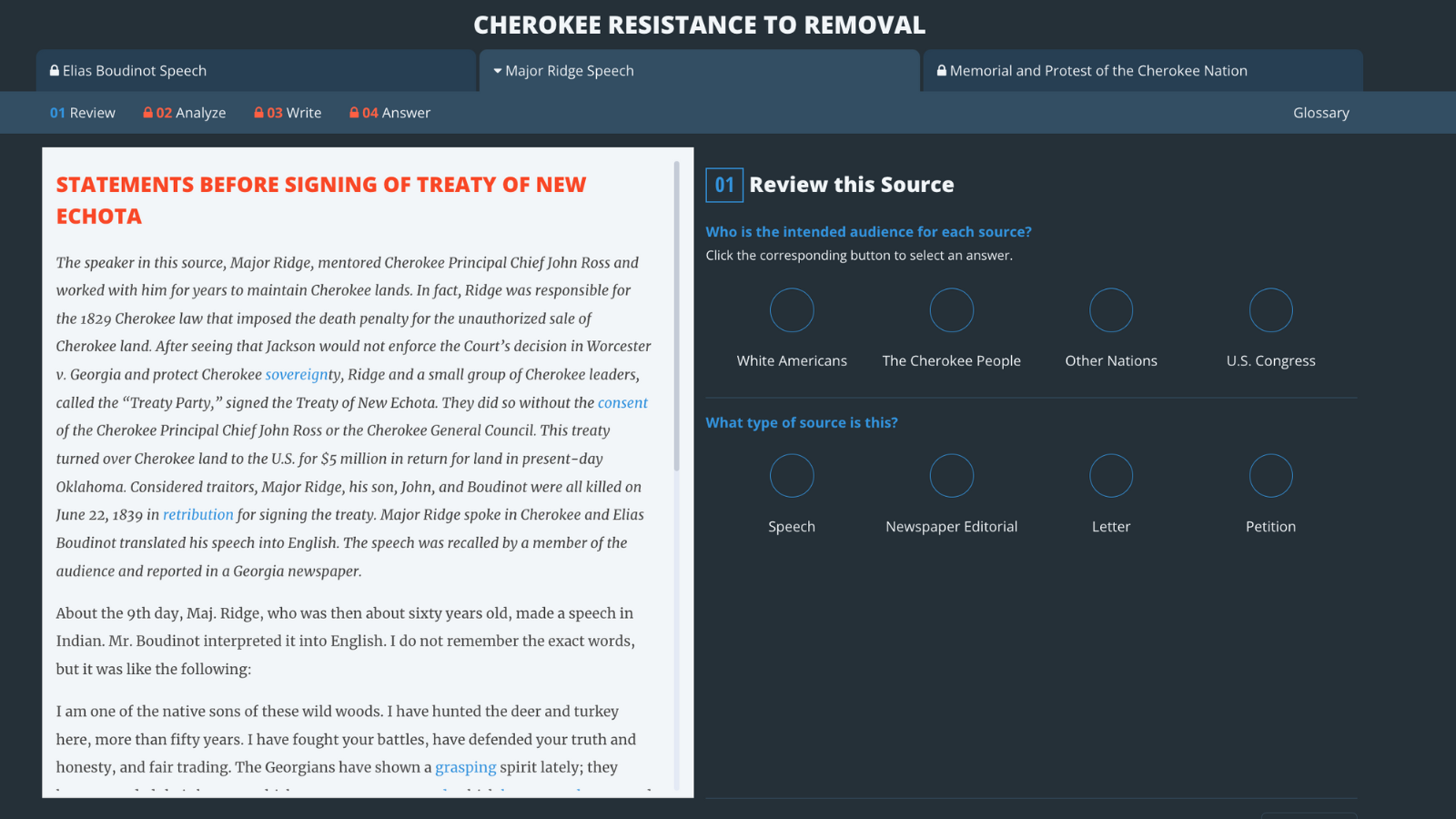
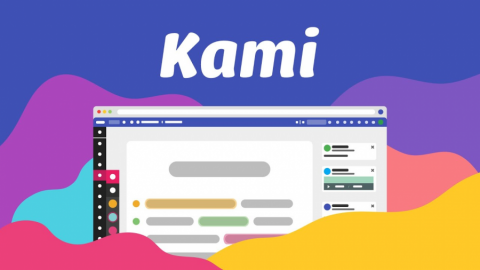
CAMBRIDGE, MASS — iCivics, the U.S.’s leading civic education provider, has partnered with Kami, one of the world’s fastest growing educational technology companies, to equip educators with interactive, accessible digital lesson plans. The new partnership will make iCivics’ curriculum even more adaptable for use in-person or remotely as virtual learning continues into the spring of 2021 due to COVID-19. And with social and political crises, more and more educators are in need of non-partisan, high-quality, engaging civics lessons to approach challenging conversations around current events to help inform their students—whether they are behind a desk or a screen.

Kami, which is based in Auckland, New Zealand, is used by more than 23 million educators and students around the world, including more than two thirds of US-based schools. Kami’s innovative technology allows teachers and students to annotate digital documents or teaching resources of any kind, empowering them to think, collaborate, and succeed in more creative ways. 

iCivics offers digital games and a full civics curriculum that includes hundreds of lesson plans, and is used by more than 120,500 teachers and 7.6 million K-12 students each year across the U.S. The partnership with Kami will help bring iCivics’ lesson plans to life by enabling teachers and students to write, draw, type, annotate, comment, augment, enhance, illustrate, embed audio or video, all within their web browser. And it will enhance both individual and collaborative student work in real-time or asynchronously. 

This partnership comes at a time when educators across the U.S. are striving to help their students grapple with complex current events, and must do so from home or in hybrid settings. iCivics has seen a significant increase in usage over the past year, as teachers seek more help dealing with civics topics in the news such as the 2020 presidential election, social unrest, and the insurgency against the U.S. Capitol on January 6, 2021. 

“We are thrilled to partner with Kami to make our high demand digital civics resources even more accessible and interactive for teachers and students alike. Teachers asked, we answered,” Julie Silverbrook, iCivics’ Senior Director of Partnerships, said. “We are grateful to the Kami team for helping us make our resources even more engaging, especially at a time of hybrid and remote learning. We are committed to making sure we continue to meet the real-time needs of civic educators and students across the country.”

Use of Kami on iCivics.org will be free for educators, as is all of iCivics’ content. Kami will allow teachers to assign iCivics lessons, and then students can use Kami’s interactive tools to complete their work and submit the assignments. 

“I have been using my own Kami account with iCivics for several years now and am so excited that Kami will now be accessible right on iCivics’ website. I strive to have a paperless classroom, and Kami allows students to interact with documents in a number of ways, including typing in answers, highlighting text, and drawing on the documents. It helps students who learn in different ways be able to manipulate the documents in a manner that best suits their learning style, and the fact that Kami and iCivics integrate fully with Google Classroom is an added bonus,” noted Kymberli Wregglesworth, a high school social studies teacher from Onaway, Michigan and member of iCivics’ Educator Network. “I know that this partnership will save me time and allow me to better serve my students, both those who are in-person and remote.”

Kami will add a number of new features to iCivics’ lesson plans, including:

  • Text box: allows students to place text anywhere in the document
  • Highlighter: students can mark up readings and activities (active reading support)
  • Drawing: freehand drawings to be placed anywhere on the document
  • Dictionary: allows students to select and define a word
  • Text-to-speech: reads text aloud
  • Equation: create equations by using the symbols palette 
  • Shapes: draw shapes, ideal for marking areas that need to be quickly recognized
  • Eraser: erase shapes, text, and drawings that have been made on the PDF
  • Insert Image: easily insert images into a document, such as maps or diagrams for drawing on

“At Kami our goal is to make the lives of educators and students easier by making learning more accessible, engaging and equitable. We’re excited to be partnering with the team at iCivics to reimagine civic education and create a more informed generation during these challenging times,” said Kami CEO, Hengjie Wang.

For more information, visit: iCivics.org/Kami  

About iCivics:

US Supreme Court Justice Sandra Day O’Connor founded in 2009 to transform civic education and rebuild civic strength through digital games and lesson plans. It is the largest provider of civic education content in the U.S. and is currently used by more than 120,500 educators and 7.6 million students annually. All of its games are free, nonpartisan, and available at: www.icivics.org

About Kami:

Kami is a leading digital classroom app built to transform an existing document of any kind into an interactive learning experience. Kami is currently used across 23 million educators and students looking to improve engagement and collaboration while teaching in the classroom or online. Learn more about Kami at: www.kamiapp.com 

The First 100 Days and Beyond: Lesson Plans and Classroom Resources for Teaching the Executive Branch

January 20th, Inauguration Day, marks the official start of the four-year term of the President of the United States, but the real work begins after the ceremony ends. The first 100 days of the presidency is a critical period for setting the stage for what is to come in the next four years. Explore the many resources we offer to help students understand what they should expect during this period and the steps the executive branch can take to turn campaign promises into a reality.

All Eyes on the First 100 Days

Just like with any job, there are a lot of expectations when a new presidential term begins. Use our lesson, The First 100 Days, to explore the history of this concept, its impact on the presidency, and how success is judged. A customizable Google Slides deck is available for this lesson.

From Campaign Promises to an Agenda

This mini-lesson explains what a presidential agenda is and how it’s executed and communicated to the American people. Students will also examine the relationship between the president and Congress as it relates to the presidential agenda.

Mini-Lesson: Vice President

The president may be front and center, but the vice president plays an important part in our nation’s government. This new lesson will help students better understand the history of this office and the modern role of the vice president. 

What’s It Like to Be President?

In Executive Command, students get to be the president and learn firsthand the many different responsibilities that come with the job. From proposing a legislative agenda and signing bills to commanding the military, this interactive game takes students deep into the Oval Office.

Answer Students’ Questions About the Election, Presidency, Cabinet, and More!

Our Election Headquarters is the place to find our curated collection of lessons, games, and activities all about the electoral process and the executive branch.

Meeting the Needs of EVERY iCivics Student

Millions of students play “Do I Have a Right?” each school year. Within the game, they have the opportunity to create new identities for themselves, to exercise agency, and to behave altruistically through helping people solve problems around constitutional law issues. Students bring their knowledge of the outside world into a fictitious environment, and along the way become well-versed in the legal protections provided in the Bill of Rights and other amendments. An additional bonus is that it’s just fun!

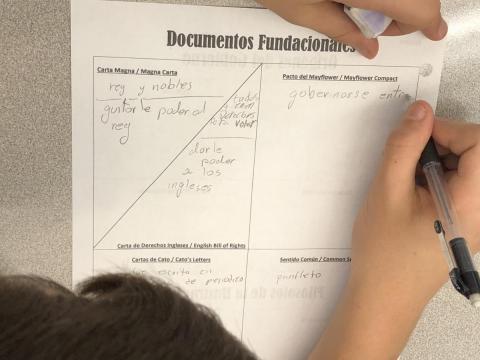
What about students who are learning English as an additional language, emergent bilinguals? How can they reap the same educational benefits? What opportunities are there for them to connect their personal experiences with the world of “Do I Have a Right?” How can they access the content of this game? How can their teachers best support them in the process?

Developing answers to these pressing questions was the charge of the iCivics ELL Convening. For two days in May, a small group of bilingual researchers, teacher trainers, curriculum experts and classroom teachers, along with a video game designer and members of the iCivics team met for this important task. The work was simultaneously expansive, philosophical, and precise, as we wrestled with issues such as:

  • How can the curriculum materials be designed to focus on the rich academic assets emergent bilingual students bring instead of on the learning obstacles they may face?
  • Would it be possible to add voice-over audio files in English for the lawyer-client conversations within the game?

How can the prohibition of cruel and unusual punishment in the Eighth Amendment be represented appropriately in a visual?As I write this a week later, I am still trying to process the experience. It was transformative both professionally and personally. I teach United States history and government to emergent bilingual students. My students come to this country in pursuit of the American dream. As they learn about our country’s history and system of government, they also explore ways in which they can participate in the civic life of their new home. To work closely with a group of professionals so passionately invested in the success of these children, whom I love, was awe-inspiring. To tour the Supreme Court building later on with the group and experience the deep feeling of history in my bones was powerful.

I left the iCivics ELL Convening inspired and invigorated. The guiding words from our final session:  

Dream big! Contribute freely!

Listen enthusiastically! Write stuff down!

Ada Bélanger teaches ESOL and US history/government at Fox Lane High School in Bedford, New York. She is excited to continue her work with the iCivics ELL project and is eager to introduce a new version of “Do I Have a Right?” to her students in the fall.