

Note: This blog post covers the concept of foreign policy, both from a traditional perspective and a current event standpoint, in response to U.S. military operations in Venezuela.
On the morning of January 4, 2026 — about 36 hours after U.S. forces launched airstrikes and ground operations in Venezuela, resulting in the capture of President Nicolás Maduro and his wife — I was sitting in a coffee shop to get a little work done. Before popping in my earbuds and blasting Mozart Radio, as I typically do, I overheard a father speaking to his middle school-aged daughter about the news.
Which is to say that I waited to pop in my earbuds. Obviously.
I then spent the next three minutes, that’s all, listening to an honest, authentic, and humble conversation in which it was clear that the father’s only goal was to help his daughter understand what was happening. In fact, I wouldn’t even try to guess the father’s politics, who he voted for, or if he approved of the military action. Here’s how it went:
Dad: I want to tell you about something that happened yesterday. The United States sort of invaded the country of Venezuela, captured the President and his wife, and declared that we’re running the country now. Have you heard anything about it?
Daughter: Kind of, but I have no idea what’s going on. Why did we do it?
Dad: Well, the President, his name is Maduro, isn’t a great guy. He’s a bit of a dictator. Our government is accusing him of drug trafficking, corruption, and other bad things.
Daughter: So we’re running the country now? Has that ever happened before?
Dad: Um, well, yes. But not in my lifetime. At least I don’t think so. Not like this.
Now hear me out, because I know what you’re thinking: I could give way more specifics than that! Yeah, but you’re a social studies teacher. This Dad is either a banker, doctor, or firefighter (I have no idea what this Dad does). That said, I thought his approach was masterclass! He asked his daughter if she had heard anything about it, and he provided his best and honest answers, admitting when he wasn’t sure of something.
Of course, as social studies teachers, we have a lot more to work with, including history, executive power, and foreign policy. I’ll admit, despite the uncertainty of what happened and what lies ahead, the history nerd in me started licking my lips. There is a lot of good stuff here!
Others have already written solidly-substantive pieces on how to teach the event, rife with facts, wisdom, and practical approaches. Our friends at CFR provide ‘Three Ways to Teach About Venezuela in a Nonpartisan Way,’ which I easily endorse.
However, another question has arisen that I’d like to address directly: Should social studies teachers be teaching this at all? Doesn’t the decision to cover the military operation betray a teacher’s commitment to non-partisanship?
In short: Yes. No. At least not necessarily.
To the first question: Should social studies teachers be teaching this at all? Yes, yes, they should. It is timely, interesting, and relevant to most of the social studies disciplines we teach in school:
- American History ✅
- World History ✅
- American Government ✅
- Geography ✅
- Economics ✅
- Psychology (certainly not my area of expertise, but ✅)
And in this way, it is appropriate and prudent to cover in any of these classes, and therefore, the decision to teach it is not a partisan decision; it’s a professional and responsible one.
Let’s then discuss some approaches or frames for those very classes:
American History. This one depends on what period your American History course covers. Do you only teach through the Civil War or Reconstruction? Then perhaps you’ll want to spend a little time on the Monroe Doctrine (first articulated in 1832) or James Polk and the Mexican-American War (1846). If your course spans the 20th Century, then take your pick: Theodore Roosevelt and the Roosevelt Corollary (1904), Harry Truman’s use of the CIA in Guatemala (1948), or John F. Kennedy and the Bay of Pigs invasion (1961), among other historical examples.
American Government. Any U.S. Military action necessarily raises Constitutional questions related to the separation of powers, checks and balances, war powers, executive power, congressional oversight/approval, and more! I’ve written before about my suggestion to focus students’ attention on two places: the Constitution (including relevant legislation, such as the War Powers Act) and historical examples. Remember: the appropriate and timeless question is not, “What do you think about President Trump invading Venezuela?” but rather, “Should the president be able to conduct military operations without Congressional approval?”
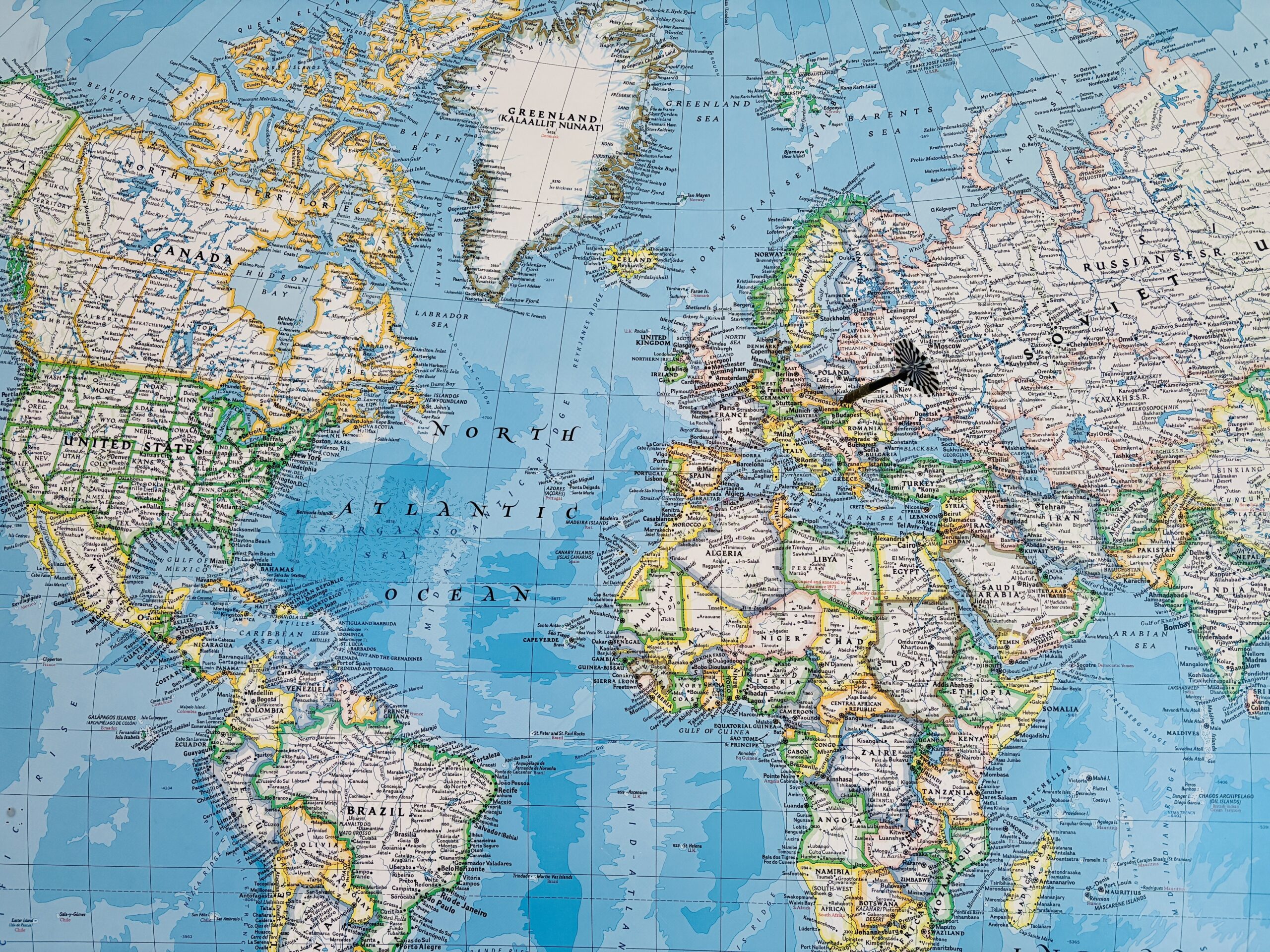
Geography. Where is Venezuela? Why would the United States have an interest there? (Encourage students to consider this question from a resource perspective, a national security perspective, a physical geography/settlement perspective, and a human geography/crisis perspective)
Does Venezuela feel too recent, too fraught, too political, too complex? Then skip it! Tell students that you are going to teach them about foreign policy, hoping that their stronger historical, political, and/or geographic understanding will help them make better sense of what is happening in the world at any point in time.
The first time I fell in love with foreign policy was when I learned about Theodore Roosevelt’s “Big Stick Diplomacy” in high school. That’s not to say that I was enamored with the approach, so much as I was immediately intrigued by the simplicity, imagery, and, well, chutzpah of it all. And as easy as it was to turn Teddy into a caricature — what with the round glasses, epic stache, and storied strength and bravery — adding a giant stick and transposing him over map drawings of Latin America just added to the allure.
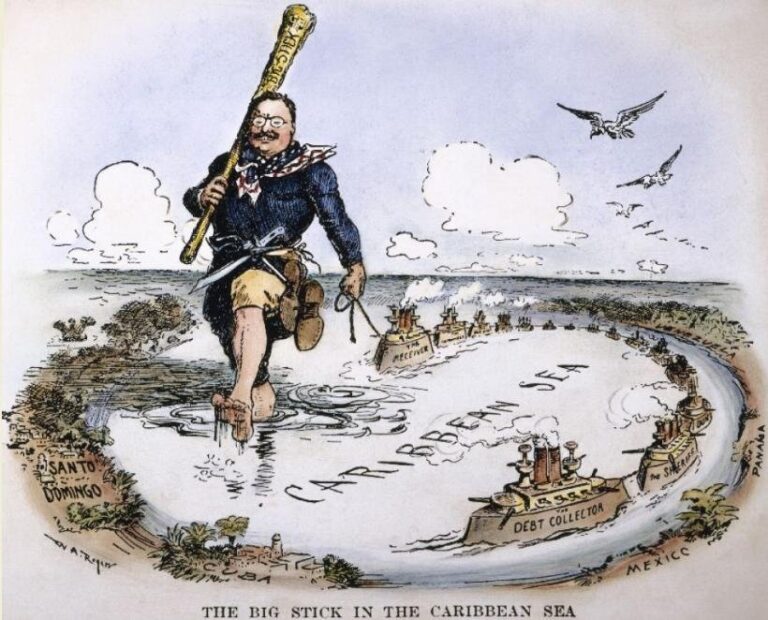
But TR wasn’t the only president with unique doctrines and/or diplomatic approaches. There are plenty more under many other presidents, all of which students find interesting (if not comical), and, most importantly, probably won’t inspire the type of emotional response that more current events and approaches are likely to evoke. Some of my favorites, in addition to Big Stick, include The Monroe Doctrine, Dollar Diplomacy, Containment, and Shuttle Diplomacy.
Or, you could stick to the fundamentals! Here are some great resources to get you started:
iCivics Resources
- Lesson Plan: Foreign Policy: War & Peace, and Everything In Between
- Lesson Plan: Mexican Cession (1848) from our Geography Library
- Video: The Constitution Explained: Faithfully Execute
- Game: Convene the Council
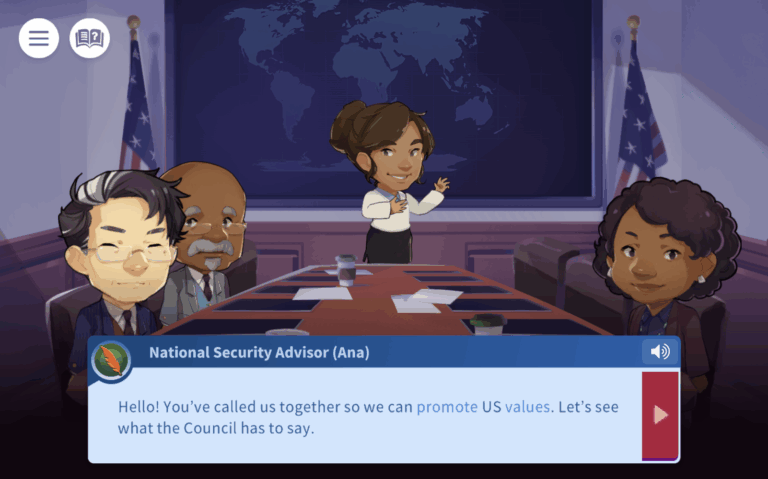
Step inside the White House Situation Room and make the tough choices as conflicts around the world escalate. In Convene the Council, your students will take on the role of president of the United States and discover why foreign policy matters. They will engage with members of the National Security Council to weigh the pros and cons of various policy options and make foreign policy decisions. They will address international crises through strategic action and work to improve core metrics of U.S. prosperity, values, security, and world health. Can your students make the tough choices as conflicts around the world escalate?
Objectives:
- Explain the basics of foreign policy–making in the United States
- Evaluate the effectiveness of various foreign policy options in a variety of situations
- Distinguish among foreign policy tools such as aid, sanctions, and military force
- Evaluate the potential effect of economic, military, and cultural influence on other countries
Admin Tip: Offer to sit in on a lesson plan or, better yet, co-teach it! Doing so signifies to the teacher, the students, and perhaps even parents/guardians (if you tell them or they otherwise find out about it) that you’re a champion for social studies and teaching hard things!